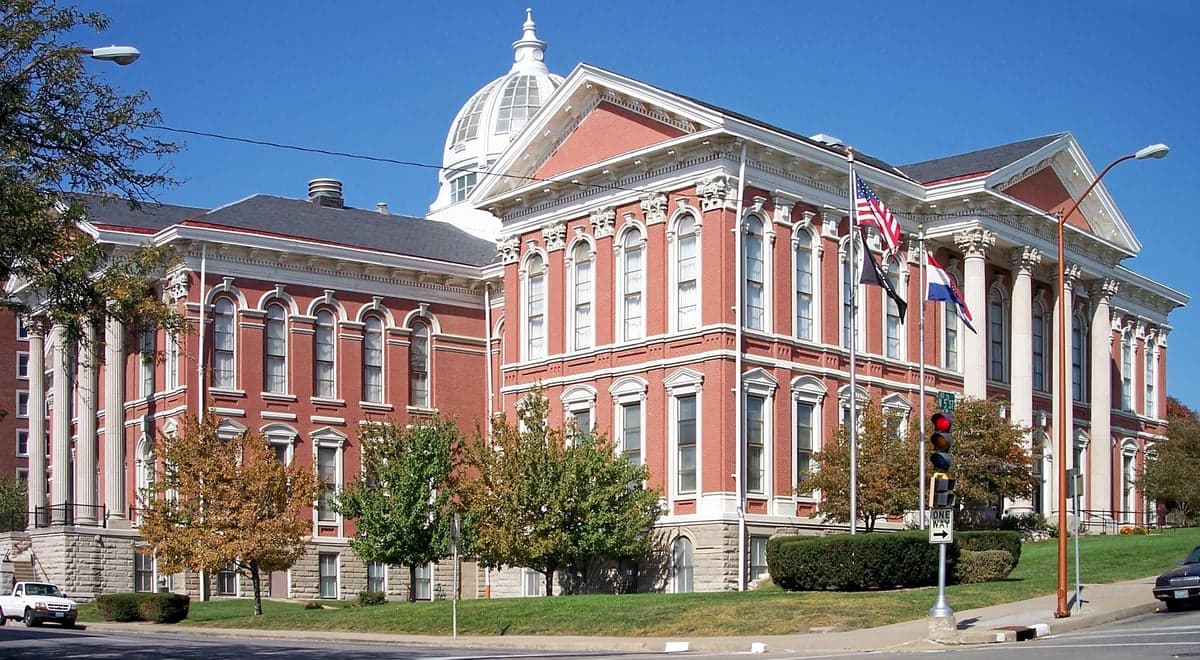
Photo: Wikipedia
Political ClimatePolitical Climate in St Joseph, MO
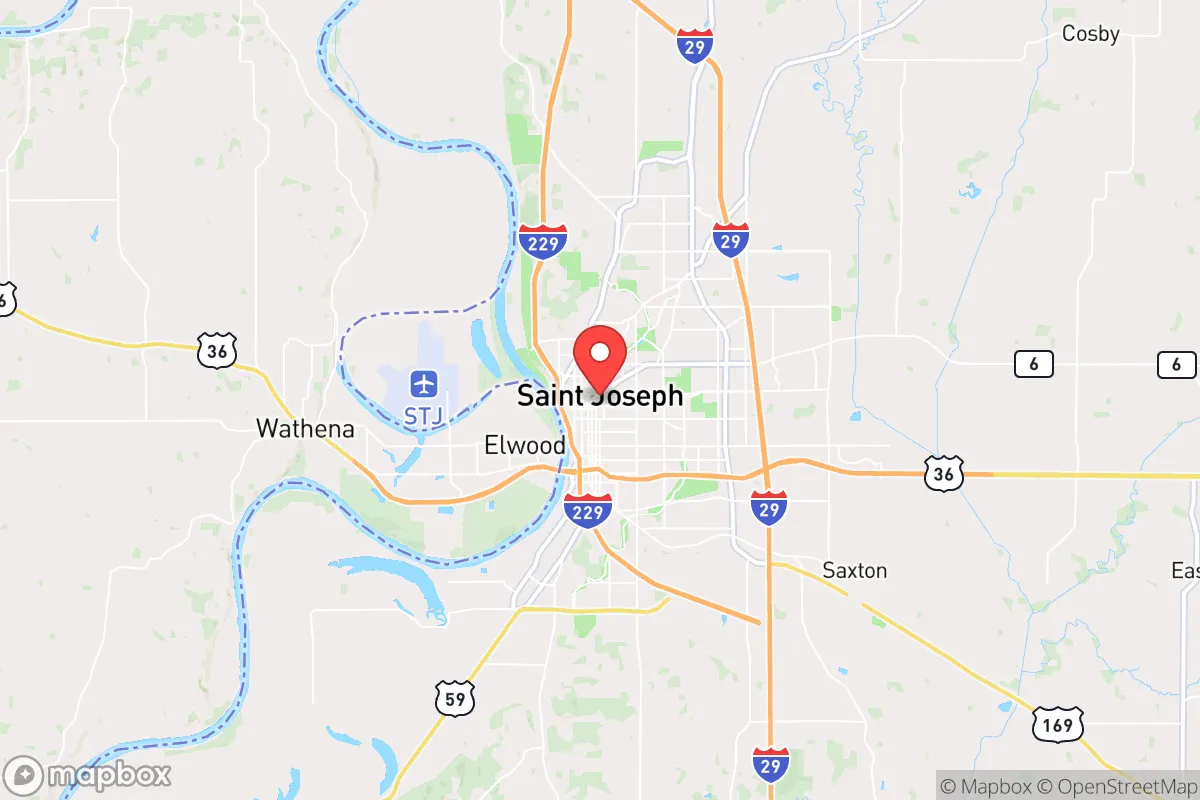
District shown is the primary district for this city’s centroid. Cities may span multiple districts.
Local Political AnalysisPolitical Analysis of St Joseph, MO
St. Joseph, Missouri, sits solidly in the red, with a Cook PVI of R+19 that tells you pretty much everything you need to know about the local political DNA. This isn’t a place that’s been trending blue or flirting with progressive ideas—it’s a community that’s held its conservative ground for decades, and if anything, the surrounding rural areas have only gotten more entrenched. You’ll hear folks say it’s a “good, God-fearing town,” and while that’s a bit of a cliché, it captures the reality: people here value personal responsibility, limited government, and the freedom to live without a bureaucrat looking over your shoulder.
How it compares
Drive 50 miles east to Kansas City, and you’re in a different world—a deep blue urban stronghold where the city council is pushing things like sanctuary city policies and defunding police initiatives. St. Joseph couldn’t be more different. The contrast is stark: while KC’s mayor is cozying up to progressive activists, St. Joe’s leadership has consistently pushed back on state-level overreach, especially during the pandemic when local officials resisted mask mandates and business closures. Surrounding towns like Savannah and Cameron are even more conservative, but St. Joseph itself is the regional anchor for that worldview. The 2020 election saw Buchanan County go +19 for Trump, and the 2022 midterms only reinforced that, with local Republicans winning every county-level race by double digits. The only real political tension here is between traditional conservatives and the occasional libertarian-leaning independent who thinks the city council is still too cozy with special interests.
What this means for residents
For someone moving here, the political climate translates into a pretty hands-off approach to daily life. Property taxes are low—around 0.8% of assessed value—and there’s no city income tax, which means you keep more of what you earn. The school board has resisted critical race theory and gender ideology curricula, and the local library board has kept drag queen story hours out. You won’t see the kind of government overreach that’s become common in blue states—no vaccine passports, no green energy mandates on homeowners, no zoning laws that tell you what you can plant in your front yard. The biggest concern among locals is that as Kansas City’s progressive policies drive up crime and taxes there, some of that spillover could push St. Joseph leftward if enough refugees from the city move here. So far, that hasn’t happened, but it’s something people keep an eye on.
Culturally, St. Joseph still feels like a place where the Second Amendment isn’t debated—it’s just a given. Open carry is common, and the local gun shows are packed. The city’s biggest annual event, the Apple Blossom Parade, is as much a celebration of small-town values as it is of agriculture. There’s a strong sense of community self-reliance here, with churches and volunteer fire departments filling gaps that government programs might handle elsewhere. The long-term trajectory looks stable: as long as the state legislature in Jefferson City stays conservative—and it’s gerrymandered to do so—St. Joseph will remain a refuge from the coastal progressive agenda. The only real wildcard is if federal policies start overriding local control, but for now, this is one of those rare places where you can still raise a family without feeling like the government is your co-parent.

State Political ClimatePolitical Climate in Missouri
State Political AnalysisPolitical Environment in the State
Missouri has long been considered a bellwether state, but over the past 20 years it has shifted decisively from a classic purple swing state to a solidly red one. The Show-Me State now leans Republican by about 10-12 points in statewide elections, with the GOP controlling the governorship, both chambers of the legislature, and both U.S. Senate seats. This wasn’t always the case—as recently as the 1990s and early 2000s, Missouri voted for Bill Clinton and Al Gore, and it was a perennial battleground. The shift accelerated after 2008, driven by a combination of rural realignment, suburban flight from Democratic policies, and a growing cultural conservatism that now defines the state’s political identity.
Urban vs. rural divide
The political map of Missouri is a textbook example of the urban-rural chasm. The two major metros—St. Louis and Kansas City—are deep blue islands in a sea of red. St. Louis City and County, along with Jackson County (Kansas City), consistently deliver 60-70% of their votes to Democrats, powered by union households, academic institutions like Washington University and UMKC, and a growing minority population. But the rest of the state is overwhelmingly Republican. The rural Ozarks, including Springfield and Branson, are among the most conservative regions in the country, with Greene County voting +40 points for Trump in 2024. The Bootheel region in the southeast, once a Democratic stronghold due to its rural, working-class roots, has flipped hard red over the past decade. Suburban counties like St. Charles (west of St. Louis) and Cass (south of Kansas City) have become reliable GOP anchors, while Boone County (home to Columbia and the University of Missouri) remains a competitive purple enclave—one of the few true swing areas left in the state.
Policy environment
Missouri’s policy environment is broadly conservative, with a strong emphasis on limited government and low taxes. The state has a flat income tax rate of 4.95%, which is being phased down to 4.5% by 2027 under a 2022 law. There is no state property tax on vehicles, and property taxes on real estate are among the lowest in the nation—averaging about 0.8% of assessed value. The regulatory climate is business-friendly, with right-to-work laws (though repealed by ballot initiative in 2018, the legislature has since passed a new version) and a tort reform system that caps non-economic damages. On education, Missouri has a robust school choice movement: the MOScholars program provides tax-credit scholarships for private school tuition, and charter schools are expanding in St. Louis and Kansas City. The state also passed a constitutional amendment in 2024 requiring photo ID to vote, and it maintains a voter-roll cleanup process that has removed hundreds of thousands of inactive registrations. Healthcare policy is mixed—the state expanded Medicaid under the 2020 ballot initiative (Amendment 2), but the legislature has resisted further expansion and has passed laws restricting abortion to the first eight weeks of pregnancy, with no exceptions for rape or incest.
Trajectory & freedom
Missouri has been on a clear trajectory toward greater personal freedom, particularly in the areas of gun rights, parental rights, and medical autonomy. In 2021, the state passed a Second Amendment Preservation Act (SAPA), which declares federal gun laws that infringe on the right to keep and bear arms as “invalid” in Missouri—a direct challenge to federal authority that has sparked legal battles but remains popular. The state also enacted a “Parental Bill of Rights” in 2022, requiring schools to notify parents of any curriculum involving sexual orientation or gender identity and to obtain parental consent before providing mental health services. On medical freedom, Missouri passed a law in 2023 prohibiting employers and schools from mandating COVID-19 vaccines, and it has banned the use of vaccine passports. Property rights are strong, with no state-level rent control and a homestead exemption that protects a portion of home equity from creditors. The tax burden is low and falling, and the state has no estate or inheritance tax. However, there are concerns: the 2020 Medicaid expansion, while popular at the ballot box, has increased state spending, and some conservatives worry about long-term fiscal sustainability. Overall, Missouri is moving in a direction that prioritizes individual liberty over government mandates, but the tension between ballot initiatives (which often lean progressive) and legislative action (which leans conservative) remains a defining feature.
Civil unrest & political movements
Missouri has a history of civil unrest, most notably the 2014 Ferguson protests following the shooting of Michael Brown, which sparked a national movement and exposed deep racial divides in the St. Louis region. Since then, the state has seen periodic protests over police reform, abortion rights, and election integrity. The left is organized through groups like Missouri Organizing and Action (MOA) and Indivisible chapters in St. Louis and Kansas City, while the right has a strong grassroots presence through the Missouri Republican Assembly and local 2A groups. Immigration politics are relatively quiet compared to border states, but there have been flashpoints: in 2023, the legislature passed a bill requiring local law enforcement to cooperate with federal immigration authorities, and St. Louis has been a focal point for sanctuary city debates. Election integrity remains a hot-button issue—Missouri was one of the first states to require photo ID to vote, and the 2020 election saw a surge in voter fraud allegations, though no widespread irregularities were found. The state has also seen a rise in “constitutional sheriff” movements, with some rural sheriffs refusing to enforce certain state or federal laws they deem unconstitutional. For a new resident, the most visible political flashpoint is likely the ongoing battle over abortion, with Planned Parenthood clinics in St. Louis and Kansas City remaining open but operating under heavy restrictions.
Projection
Over the next 5-10 years, Missouri is likely to become even more conservative, driven by two key demographic trends. First, the continued exodus of liberal-leaning residents from St. Louis and Kansas City to the suburbs and out of state is shrinking the Democratic base. Second, in-migration from blue states like California, Illinois, and New York is bringing a wave of new residents who are often conservative-leaning or at least seeking lower taxes and fewer regulations. The state’s population is projected to grow modestly, with the fastest growth in the southwestern corridor around Springfield and Branson, and in the exurbs of St. Charles and Cass counties. This will likely strengthen the GOP’s supermajority in the legislature and make it harder for ballot initiatives to pass progressive policies. However, there are wild cards: the growing Hispanic population in the Bootheel and southwest Missouri could shift the political calculus over time, and the state’s reliance on federal funding (about 40% of the budget) could create friction if the federal government tightens spending. For someone moving in now, expect a state that is increasingly red, with a policy environment that prioritizes low taxes, gun rights, and parental control, but with persistent urban-rural tensions and a lively grassroots political scene on both sides.
Bottom line for a new resident: If you’re looking for a state where your personal freedoms—especially your right to own firearms, make medical decisions without government interference, and control your children’s education—are respected, Missouri is a strong bet. The cost of living is low, the taxes are falling, and the political climate is increasingly aligned with conservative values. Just be prepared for the culture war to be a constant presence, especially if you live near St. Louis or Kansas City, where the political divide is most visible. If you’re a parent, you’ll find a state that is actively pushing back against progressive education policies, and if you’re a single person, you’ll appreciate the low taxes and the growing job market in logistics, manufacturing, and tech. Missouri isn’t perfect—the infrastructure is aging, and the healthcare system has gaps—but for someone prioritizing freedom and affordability, it’s one of the best bets in the Midwest.
* Values derived from national, state, county, city and local statistics and may differ in a specific area. Last updated: 2026-04-30T02:35:25.000Z
Narrative content on this page is AI-generated and may contain mistakes. Verify any details that matter before acting on them.
ReloMaps may earn a commission from affiliate links at no extra cost to you.

