Photo: Wikipedia
Political ClimatePolitical Climate in Springfield, MA
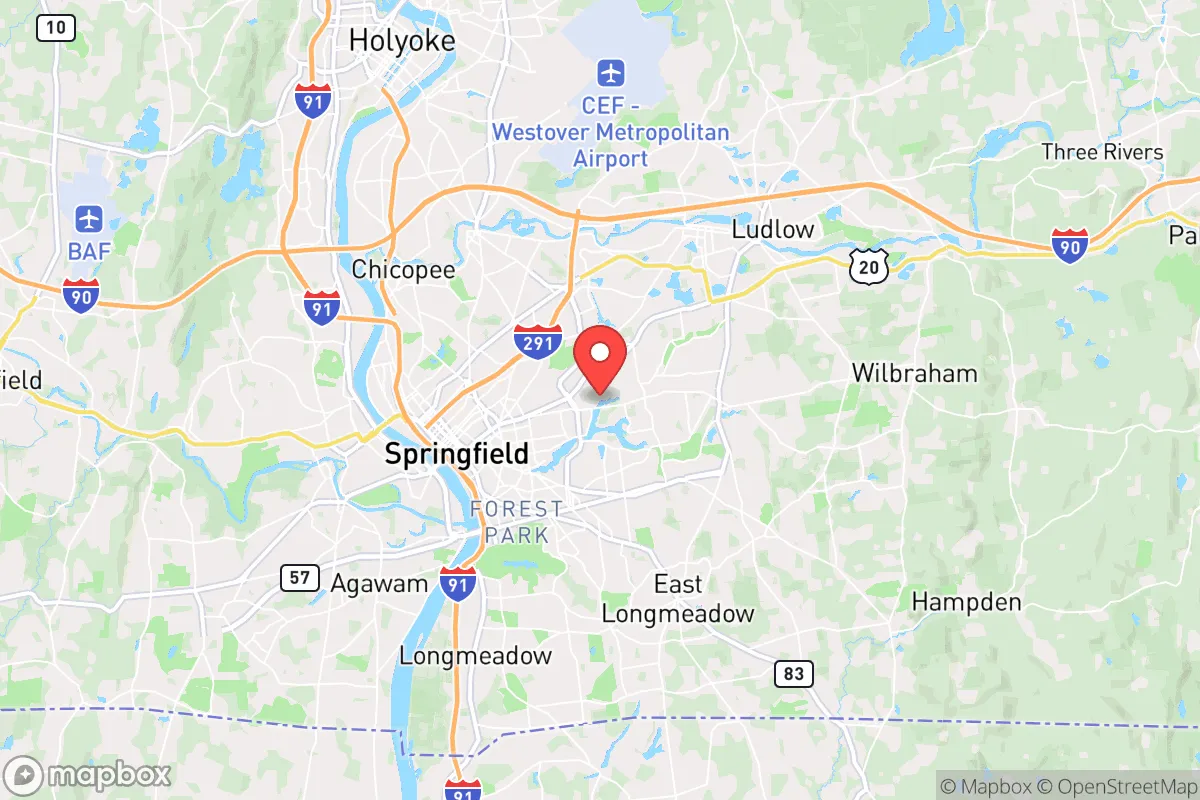
District shown is the primary district for this city’s centroid. Cities may span multiple districts.
Local Political AnalysisPolitical Analysis of Springfield, MA
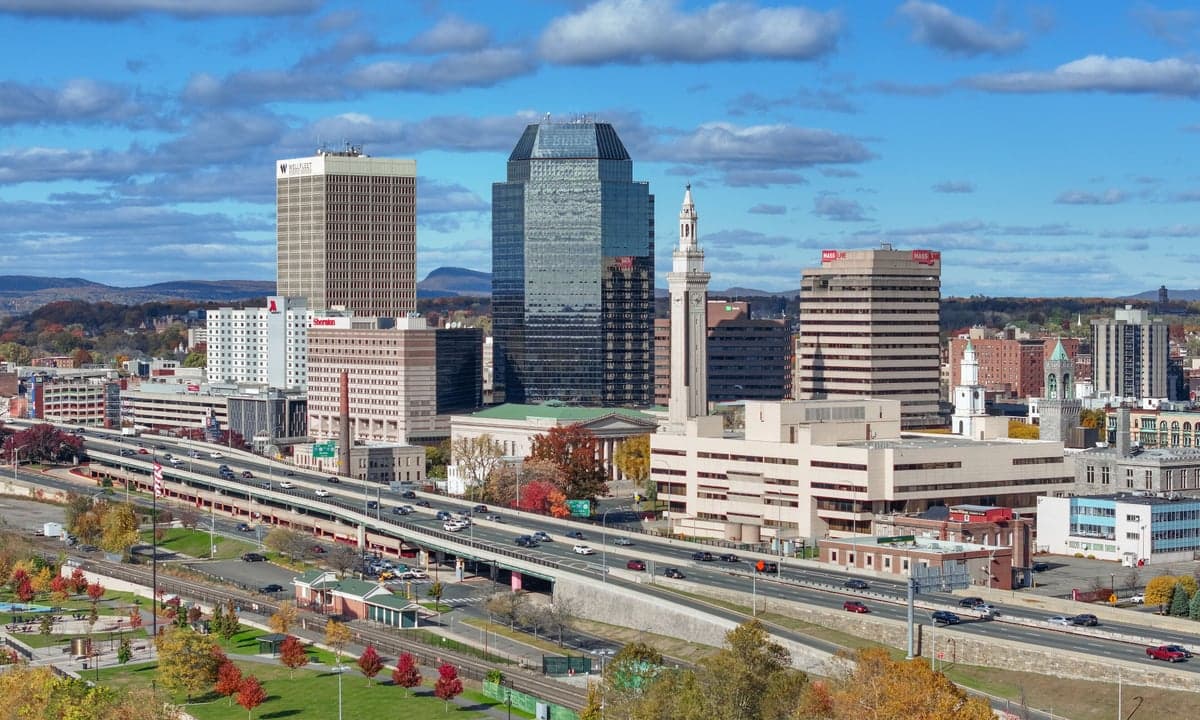
Springfield, Massachusetts, has been a Democratic stronghold for decades, and that’s not changing anytime soon. The Cook PVI rating of D+8 tells you the city leans heavily blue, but what that really means on the ground is a steady march toward progressive policies that a lot of us old-timers didn’t sign up for. I’ve lived here long enough to remember when the city was more about common-sense pragmatism than ideological purity, but those days are fading fast. The local government has shifted noticeably left in the last ten years, and it’s showing in everything from tax policy to how they handle public safety.
How it compares
If you drive just 20 minutes east to Longmeadow or Wilbraham, you’ll find a completely different political vibe—those towns are reliably Republican, with lower taxes and a much stronger emphasis on local control. Even Holyoke, just north of us, has a more mixed political landscape, with a vocal conservative minority that actually gets heard. But Springfield? It’s surrounded by a sea of blue, and the city council and mayor’s office have been solidly Democratic for as long as anyone can remember. The contrast is stark: while our neighbors in East Longmeadow are fighting to keep school choice and property taxes low, Springfield is doubling down on progressive priorities like sanctuary city policies and expanding social programs. It’s like living in a different country sometimes.
What this means for residents
For the average person, this political climate translates into a few concrete realities. First, taxes are higher here than in surrounding towns, and they keep creeping up to fund initiatives that a lot of us never voted for. Second, personal freedoms feel more restricted—whether it’s the city’s aggressive gun control ordinances that go beyond state law, or the way local officials have embraced COVID-era mandates long after they were dropped elsewhere. There’s a sense that the government knows what’s best for you, and they’re not shy about enforcing it. Small business owners I know are frustrated with the red tape and the constant pressure to align with progressive social stances just to get a permit or a contract. It’s not the Springfield I grew up in, where you could mind your own business and the city left you alone.
Looking ahead, I don’t see the trajectory changing much. The younger generation moving in tends to be more progressive, and the city’s reliance on state and federal funding means there’s little incentive to rock the boat. If you value low taxes, limited government, and the freedom to live your life without a lot of bureaucratic interference, Springfield is probably not your best bet. The cultural shift is real—you’ll see more pride flags than American flags downtown, and the local paper rarely runs a story that questions the prevailing liberal orthodoxy. It’s a fine place if you agree with the direction, but if you don’t, you’ll feel like a minority in your own hometown. My advice? Keep an eye on the school board elections and the city council races—that’s where the real battles are happening, and they’re only going to get more intense.

State Political ClimatePolitical Climate in Massachusetts
State Political AnalysisPolitical Environment in the State
Massachusetts has long been one of the most reliably Democratic states in the nation, but its political climate is far more nuanced than the national headlines suggest. Over the past 20 years, the state has shifted from a moderate, blue-collar Democratic stronghold to a deeply progressive one, driven by the Boston metro area’s explosive growth and the exodus of conservative-leaning residents from rural towns. While the state hasn’t voted Republican in a presidential election since 1984, the real story is the widening chasm between the urban core and the rest of the state—a divide that’s reshaping everything from tax policy to school choice.
Urban vs. rural divide
The political map of Massachusetts is a tale of two worlds. Greater Boston—including Boston proper, Cambridge, Somerville, and Brookline—is the engine of the state’s progressive tilt, routinely delivering 80%+ margins for Democrats. These dense, transit-oriented communities are home to the state’s most educated and affluent voters, who overwhelmingly support high taxes, strict regulations, and expansive social programs. Drive 30 miles west, and you hit Worcester, a former industrial hub that’s now a purple battleground—its working-class neighborhoods and growing immigrant population keep it competitive, but it’s trending left. Further west, Springfield and Holyoke are reliably Democratic but more moderate, with a strong union and Catholic influence that resists the most radical social policies. The real conservative redoubts are the rural towns of Central and Western Mass—places like Sturbridge, Palmer, and the hill towns of the Berkshires—where Trump won by double digits in 2020. These areas are shrinking, aging, and losing political clout as Boston’s population booms. The 2022 gubernatorial race saw Republican Geoff Diehl win only 34% statewide, but he carried 12 of the 14 counties outside the I-495 belt, a clear sign of the urban-rural fracture.
Policy environment
Massachusetts’ policy environment is a mixed bag for a conservative-leaning newcomer. On the plus side, the state has a flat income tax rate of 5% (recently reduced from 5.15% via a 2000 ballot initiative), and property taxes are moderate compared to New York or New Jersey. But the 2022 “Millionaire’s Tax” (Question 1) added a 4% surcharge on income over $1 million, pushing the top rate to 9%—a clear signal that the state sees high earners as ATMs. The regulatory posture is among the densest in the country: Massachusetts has the 4th-highest business tax burden according to the Tax Foundation, and the state’s environmental review process can delay construction projects for years. Education policy is a bright spot—the state has the nation’s best public schools, and the 1993 Education Reform Act created a strong accountability system that’s still intact. But school choice is limited: charter schools are capped, and there’s no voucher program. Healthcare is dominated by the state’s 2006 universal coverage law (Romneycare), which served as the model for Obamacare. Election laws are among the most liberal: no-excuse mail-in voting, same-day registration, and early voting are permanent fixtures. For a conservative, the policy environment feels like a trade-off: excellent services and infrastructure, but a heavy hand on your wallet and your choices.
Trajectory & freedom
On the freedom index, Massachusetts is moving in the wrong direction for conservatives. The most glaring example is gun rights: the 2024 “Massachusetts Gun Safety Act” (H.4885) expanded the state’s already strict licensing system, banned “ghost guns,” and gave police broad discretion to deny licenses based on “suitability”—a subjective standard that’s been used to deny permits to law-abiding citizens. The state also has a near-total ban on AR-15s and a 10-round magazine limit, with no sign of loosening. Parental rights took a hit in 2023 when the state passed a law allowing schools to withhold a child’s gender identity from parents if the school deems it “in the best interest” of the student—a direct challenge to family authority. On medical freedom, Massachusetts was one of the first states to mandate COVID-19 vaccines for schoolchildren (though that mandate was later repealed in 2023), and it retains one of the strictest vaccine schedules in the country. Property rights are under constant pressure from the state’s powerful zoning boards and the 2021 “MBTA Communities Law,” which forces towns near transit to upzone for high-density housing—a move that’s sparked fierce local resistance in suburbs like Milton and Lexington. The state’s tax burden is the 7th highest in the nation, and the new surtax on high earners is already driving wealthy families to consider Florida or New Hampshire. In short, personal liberty is shrinking, not expanding.
Civil unrest & political movements
Massachusetts has a long history of organized activism, but the flashpoints have shifted. The Black Lives Matter protests in Boston during summer 2020 were among the largest per capita in the country, with sustained demonstrations for weeks. The state’s sanctuary policy is enshrined in a 2017 executive order (expanded in 2023) that limits local police cooperation with ICE, making Massachusetts a magnet for undocumented immigrants—a source of tension in gateway cities like Lawrence and Lowell, where housing and school resources are strained. On the right, the Massachusetts Fiscal Alliance and local gun rights groups like the Gun Owners’ Action League are active but outgunned. The 2022 election integrity debate was muted compared to swing states, but there were credible concerns about the state’s universal mail-in system—voter rolls are notoriously bloated, with a 2021 audit finding 12,000+ deceased voters still registered. The most visible political movement today is the “No on 1” campaign against the millionaire’s tax, which failed to stop it but showed that a coalition of small business owners and suburban homeowners can still organize. For a new resident, the most noticeable flashpoint will be the constant local battles over housing density and school curriculum—these are the front lines of the culture war in Massachusetts.
Projection
Over the next 5-10 years, Massachusetts will likely become more progressive, more expensive, and more stratified. Demographic trends favor the left: Boston is one of the fastest-growing major cities in the Northeast, driven by international immigration and young professionals from other states. The rural counties will continue to lose population and political power. The state’s in-migration pattern is a net negative—more people are leaving than arriving—but those who leave tend to be older, more conservative, and less wealthy, while newcomers are younger, more liberal, and more affluent. This self-selection reinforces the political monoculture. The millionaire’s tax will likely be followed by a wealth tax or a higher corporate tax as the state’s pension liabilities (currently $40+ billion underfunded) come due. The housing crisis will worsen, driving up rents and forcing more middle-class families out. The only wildcard is a potential Republican governor in 2026—the state has a history of electing moderate GOP executives (Romney, Baker) who can veto the worst excesses. But with the legislature at a 85% Democratic supermajority, even a Republican governor can only slow the leftward march, not reverse it. Someone moving in now should expect a state that’s increasingly comfortable with high taxes, strict regulations, and progressive social norms—and increasingly hostile to the values of personal responsibility and limited government.
Bottom line for a new resident: If you’re a conservative considering Massachusetts, you’re moving into a state where your vote will rarely matter in statewide races, but your voice can still be heard in local town meetings and school board elections. The trade-off is access to world-class schools, healthcare, and infrastructure—but you’ll pay for it in taxes, regulations, and a cultural environment that’s increasingly at odds with traditional values. The best bets for a conservative-friendly community are the outer suburbs and rural towns west of Worcester—places like Sturbridge or Palmer—where you can still find a sense of community and a lower cost of living. But don’t expect the state to change direction anytime soon. Massachusetts is doubling down on its progressive experiment, and the next decade will test whether that model can sustain itself without driving out the very people who built it.
* Values derived from national, state, county, city and local statistics and may differ in a specific area. Last updated: 2026-05-01T21:25:33.000Z
Narrative content on this page is AI-generated and may contain mistakes. Verify any details that matter before acting on them.
ReloMaps may earn a commission from affiliate links at no extra cost to you.

