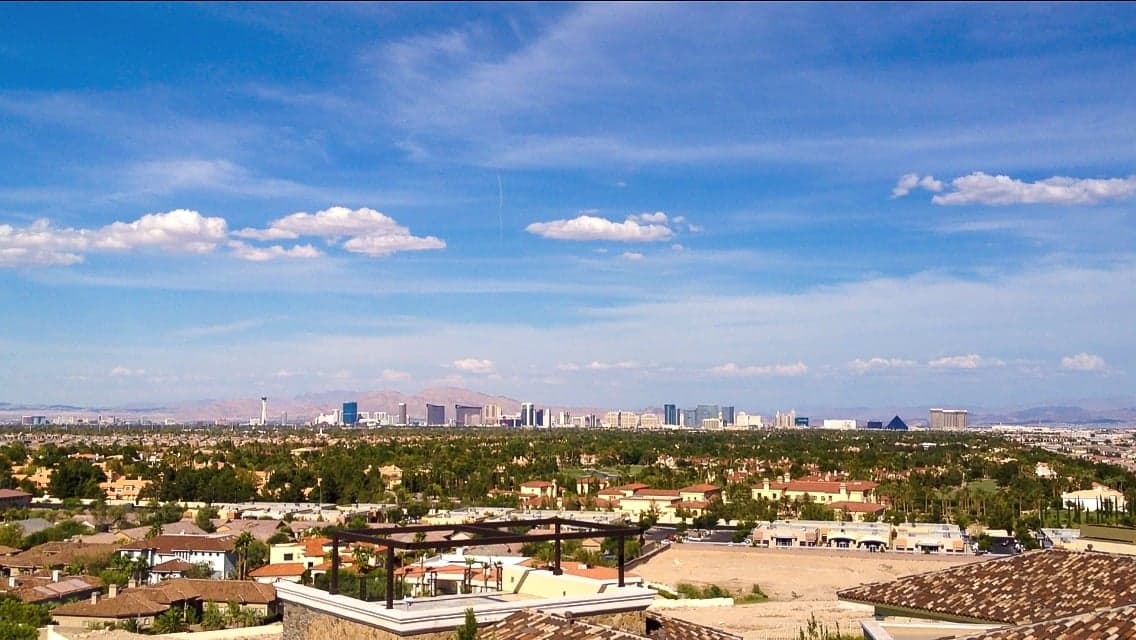
Photo: Wikipedia
Political ClimatePolitical Climate in Spring Valley, NV
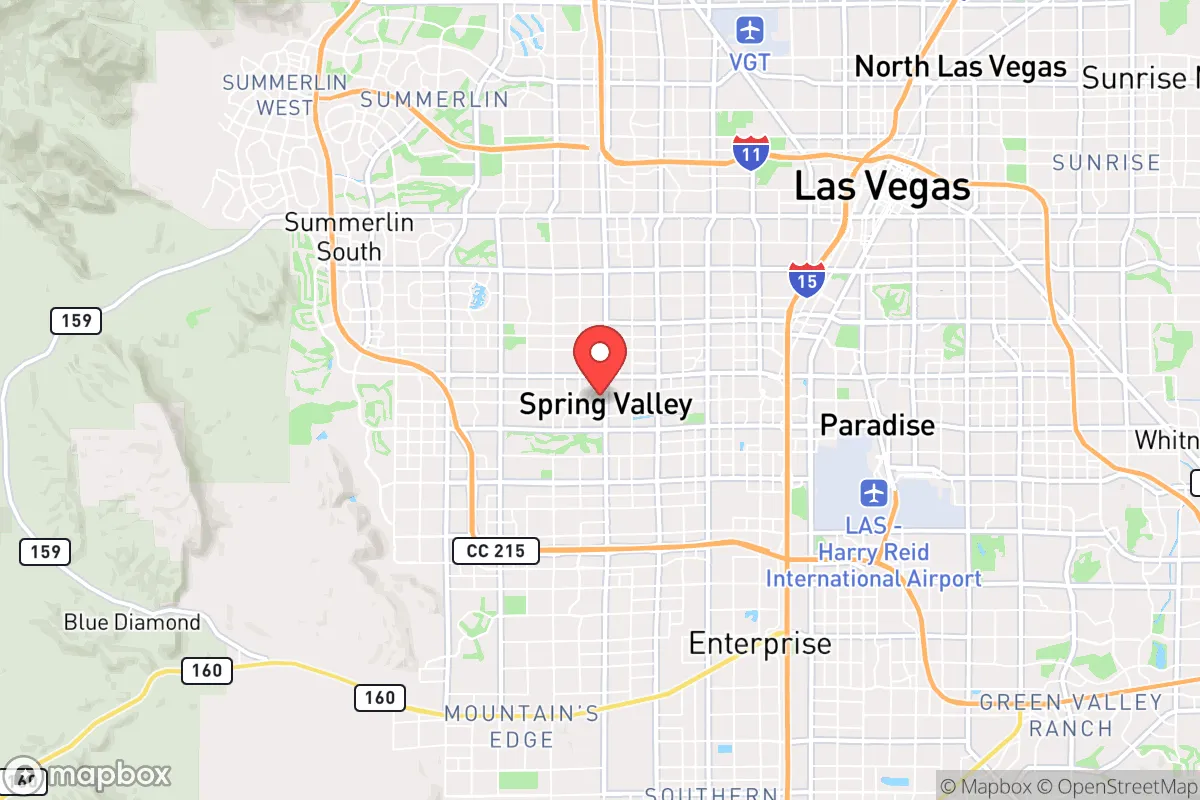
District shown is the primary district for this city’s centroid. Cities may span multiple districts.
Local Political AnalysisPolitical Analysis of Spring Valley, NV
Spring Valley, Nevada, sits in a politically interesting spot. Officially, the Cook PVI for this area is D+1, which tells you it’s a true toss-up—a place where a few thousand votes can flip an election. But if you’ve lived here as long as I have, you know that label doesn’t tell the whole story. This used to be a reliably conservative community, with folks who valued low taxes, minimal government interference, and the right to live your life without a bunch of red tape. Over the last decade, though, we’ve seen a slow but steady shift toward progressive policies, especially as more people move in from California and other high-tax states. The trajectory is concerning if you value personal freedoms and local control.
How it compares
To really understand Spring Valley, you have to look at its neighbors. Head west into the Summerlin area, and you’ll find a much more conservative vibe—stronger Republican turnout, lower taxes, and a general “leave me alone” attitude. But drive east toward the Las Vegas Strip or into downtown, and you’re in deep blue territory, where government programs and progressive social policies are the norm. Spring Valley is the buffer zone. We’re sandwiched between these two worlds, and the tension shows. In local elections, you’ll see candidates who talk a big game about fiscal responsibility but then vote for new regulations on short-term rentals, higher property taxes for “affordable housing,” and stricter building codes that make it harder to run a small business. Meanwhile, surrounding towns like Blue Diamond or Sandy Valley are still holding the line on conservative values, but they’re smaller and don’t have the population to swing county-wide decisions.
What this means for residents
For the average person living here, the political climate translates into a few real-world headaches. First, there’s the constant push for new taxes and fees—whether it’s a proposed sales tax increase for a new sports complex or a “climate action” fee on your utility bill. These measures get sold as necessary for progress, but they hit your wallet hard, especially if you’re on a fixed income or running a small business. Second, you’ll notice more government overreach in daily life: stricter noise ordinances, limits on how you can use your own property, and a growing list of permits required for even minor home improvements. The county commission has been leaning left in recent years, and that means less emphasis on individual liberty and more on top-down planning. If you value the freedom to make your own choices—like whether to send your kids to public school or homeschool, or whether to carry a firearm for protection—you’ll find yourself fighting an uphill battle here.
One cultural distinction that stands out is the area’s relationship with the Second Amendment. Spring Valley used to have a strong gun-friendly culture, with local ranges and shops doing steady business. But recent county-level ordinances have made it harder to carry in public parks and government buildings, and there’s talk of further restrictions. Another policy shift to watch is the push for “complete streets” and bike lanes, which sounds nice but often means narrower roads and less parking for residents. These changes are sold as progressive improvements, but they feel like a slow erosion of the practical, no-nonsense way of life that made this valley a great place to raise a family. If the trend continues, I’d expect more people to move further out to places like Pahrump or Mesquite, where the government still remembers its place.

State Political ClimatePolitical Climate in Nevada
State Political AnalysisPolitical Environment in the State
Nevada is a genuine battleground state, but its overall partisan lean has shifted leftward over the past two decades, driven almost entirely by the explosive growth of the Las Vegas metro area. The state voted for the Democratic presidential candidate in every election from 2008 through 2020, though margins have narrowed—Biden won by just 2.4 points in 2020 after Obama won by nearly 7 in 2008. The dominant coalition is a union-heavy, service-industry workforce in Clark County (Las Vegas) combined with a growing Latino population, while the rest of the state—rural counties and the Reno-Carson City corridor—remains reliably Republican. The 10-20 year trajectory shows a slow but steady blue shift in statewide races, but the 2024 election saw Trump flip the state back to red by about 3 points, signaling that the state is still very much in play and not a lost cause for conservatives.
Urban vs. rural divide
The political map of Nevada is a tale of two worlds. Clark County, home to 73% of the state's population, is the Democratic engine. Las Vegas, Henderson, and North Las Vegas deliver massive vote margins for Democrats, powered by the Culinary Union (the state's most powerful political force), a large Latino electorate, and a transient population that leans younger and more progressive. Washoe County (Reno) is the true bellwether—it voted for Obama twice, then Trump in 2016, then Biden in 2020, then Trump again in 2024. Reno itself is a purple city with a growing tech and outdoor recreation scene, but the surrounding suburbs like Spanish Springs and Cold Springs are solidly red. The rural counties—Elko, Nye, Lander, White Pine, and Eureka—are deeply Republican, often voting 70-80% for GOP candidates. Elko County, in the northeastern corner, is the conservative stronghold, driven by mining and ranching culture. The divide is stark: drive 30 minutes outside of Las Vegas or Reno, and you're in Trump country where "Keep Nevada Red" signs outnumber everything else.
Policy environment
Nevada's policy environment is a mixed bag for conservatives. On the plus side, there is no state income tax—a major draw for individuals and businesses. The sales tax rate is moderate (6.85% state rate, plus local add-ons that can push it to 8.5% in Clark County). Property taxes are relatively low, capped by a 2005 law that limits annual increases to 3% for owner-occupied homes. However, the regulatory posture has become more progressive in recent years. The state has a red flag law (SB 143, passed in 2023) that allows courts to temporarily confiscate firearms from individuals deemed a threat, which gun rights advocates view as a due process violation. Nevada also expanded mail-in voting permanently after the 2020 election (AB 321), which conservatives argue increases fraud risk. The education system is a sore point: Nevada consistently ranks near the bottom nationally in K-12 outcomes, and the state has a school choice program (Nevada Educational Choice Scholarship Program) but it's limited to low-income students and capped. The state's healthcare landscape is dominated by the expansion of Medicaid under the Affordable Care Act, which was accepted in 2013. On election integrity, Nevada's same-day voter registration and universal mail-in ballots remain contentious issues among conservatives.
Trajectory & freedom
The trajectory of personal freedom in Nevada is concerning for conservatives. The state was once known for a "live and let live" libertarian ethos, but recent legislation has moved toward more government control. Gun rights have been eroded by the 2023 red flag law (SB 143) and a 2024 law raising the age to purchase semiautomatic rifles from 18 to 21 (AB 355). Parental rights took a hit with the passage of AB 261 in 2023, which prohibits school districts from notifying parents if a child changes their gender identity or pronouns—a direct assault on family authority. On the economic freedom front, the state's minimum wage is set to rise to $12 per hour by 2024, with a ballot measure (Question 5) in 2024 proposing to eliminate the tipped wage entirely, which would devastate the restaurant and casino industries. Medical autonomy has been expanded in the wrong direction: Nevada legalized recreational marijuana in 2016, and while that's popular, it also opened the door to a growing cannabis bureaucracy. Property rights are relatively strong, but the state's housing crisis—driven by massive in-migration and limited supply—has led to rent control proposals in Las Vegas, which would be a major infringement on property owners. The overall trend is toward more regulation, not less.
Civil unrest & political movements
Nevada has seen its share of political flashpoints. The 2020 election integrity controversy was intense here, with the Trump campaign filing multiple lawsuits over mail-in ballot procedures in Clark County. The state's Republican Party remains deeply divided between establishment and Trump-aligned factions, with the 2024 state GOP convention devolving into chaos over delegate selection. The "Battle Born" spirit is alive in rural counties, where there's talk of secession from Clark County—a movement called "State of Jefferson" that would carve out a new state from rural Nevada and Northern California. Immigration politics are a constant flashpoint: Nevada has a large undocumented population (estimated at 180,000), and Las Vegas has seen protests from both pro-immigrant and anti-immigrant groups. The Culinary Union, which represents 60,000 casino workers, is a powerful left-leaning force that organizes heavily for Democratic candidates. On the right, the "Nevada Republican Assembly" and "Nevada Gun Owners" are active grassroots groups. The 2023 legislative session saw massive protests at the state capitol in Carson City over the red flag law and parental rights bills, with thousands of conservatives busing in from rural counties. The divide is not just political but cultural—rural Nevadans feel increasingly alienated from the Las Vegas-dominated state government.
Projection
Over the next 5-10 years, Nevada is likely to remain a purple state but with a slight rightward tilt if current trends hold. The 2024 election showed that Trump's message resonated with working-class Latinos and rural voters, and the state's in-migration from California is actually a mixed bag—many are conservatives fleeing high taxes and regulation, but they're also bringing California-style housing politics. The key demographic shift is the growth of the Las Vegas exurbs—places like Pahrump, Mesquite, and Laughlin are attracting conservative retirees and families. The rural counties are growing slowly but remain deeply red. The wild card is the Latino vote: Nevada's Latino population is 30% and growing, but it's not monolithic. In 2024, Trump made significant inroads with Latino men in Clark County, suggesting the Democratic lock on that demographic is weakening. The state's economy is heavily dependent on tourism and gaming, which makes it vulnerable to recessions, but the diversification into tech (with Tesla's Gigafactory near Reno and data centers in Las Vegas) is bringing in a more conservative workforce. Expect continued legislative battles over gun rights, parental rights, and election laws, with the state legislature likely remaining narrowly Democratic but the governorship flipping between parties. A new resident moving in now should expect a state that is politically competitive but increasingly polarized, where your vote truly matters.
Bottom line for a new resident: Nevada offers the huge advantage of no state income tax and relatively low property taxes, but you'll be living in a state where the political culture is split between a progressive Las Vegas machine and a conservative rural and exurban base. If you're moving to Elko or rural Nye County, you'll find a community that shares your values. If you're moving to Las Vegas or Reno, you'll need to be politically engaged to push back against the leftward drift. The state is still winnable for conservatives, but it requires active participation—voting in every election, attending school board meetings, and supporting local Republican organizations. The freedom you enjoy here is not guaranteed; it has to be defended every legislative session.
* Values derived from national, state, county, city and local statistics and may differ in a specific area. Last updated: 2026-04-29T01:41:44.000Z
Narrative content on this page is AI-generated and may contain mistakes. Verify any details that matter before acting on them.
ReloMaps may earn a commission from affiliate links at no extra cost to you.

