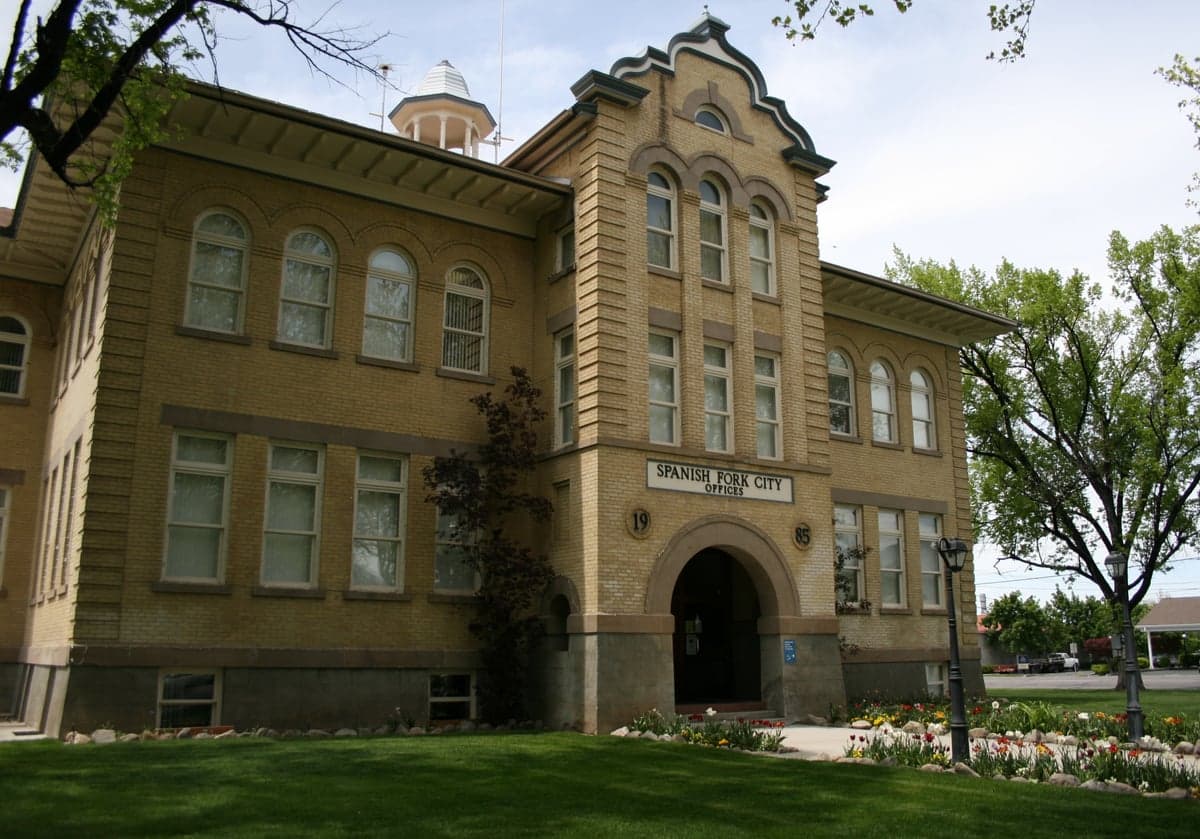
Photo: Wikipedia
Political ClimatePolitical Climate in Spanish Fork, UT
District shown is the primary district for this city’s centroid. Cities may span multiple districts.
Local Political AnalysisPolitical Analysis of Spanish Fork, UT
Spanish Fork is about as reliably conservative as a place gets in Utah County, and that's saying something for one of the most Republican counties in the nation. The Cook PVI of R+14 is a solid baseline, but honestly, that number feels low if you've lived here a while—most local races are decided in the GOP primary, and the general election is a formality. The real political story in Spanish Fork isn't about whether it's red, but how deep that red runs and whether the shade is starting to fade at the edges.
How it compares
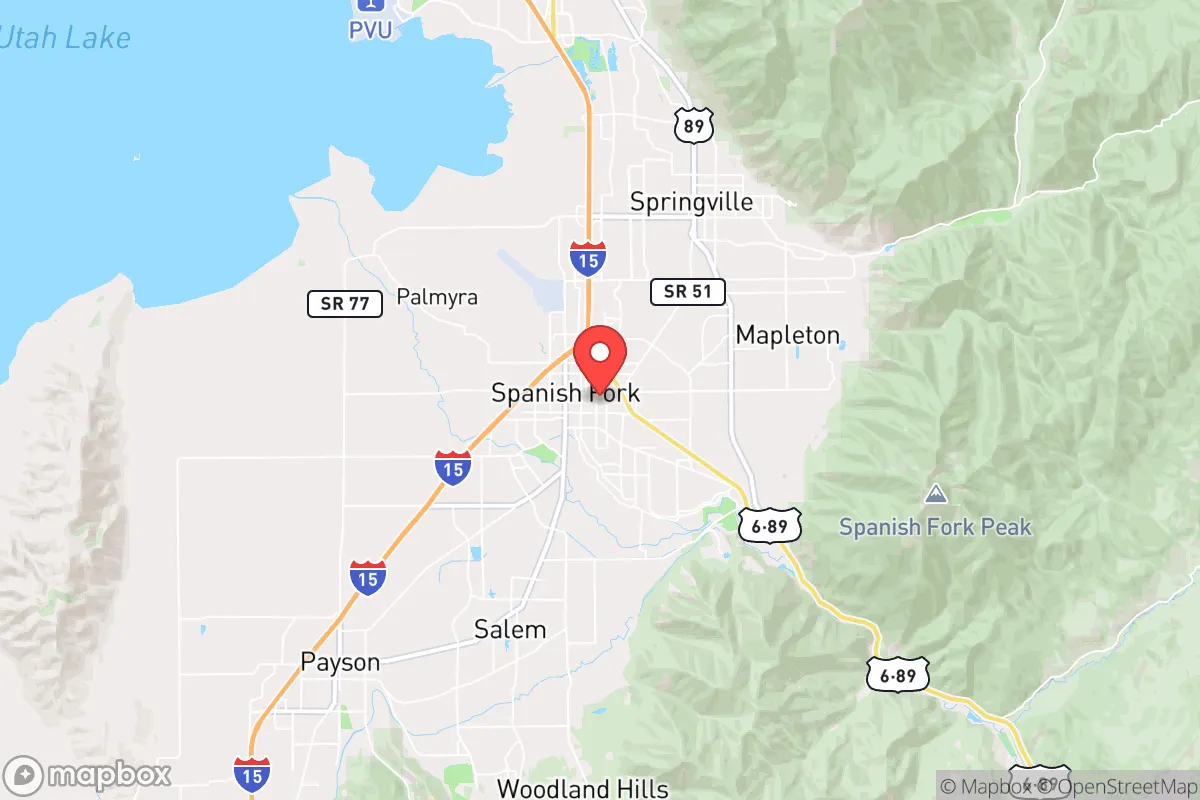
Drive ten minutes north to Provo, and you'll find a more moderate, university-influenced vibe—still conservative, but with a noticeable libertarian streak and a younger population that's less reflexively partisan. Head south to Salem or Payson, and you're in even more traditional territory, where the church and the family are the dominant political forces. Spanish Fork sits right in the middle: it's not as buttoned-up as Orem, but it's more settled and family-oriented than the fast-growing exurbs to the west like Eagle Mountain. The contrast that matters most, though, is with Salt Lake County. Drive up I-15 for 45 minutes, and you're in a completely different world—one where progressive policies on taxes, land use, and social issues are the norm. That's the direction most locals here are wary of, and it's why Spanish Fork tends to vote against any ballot measure that smells like Salt Lake City influence.
What this means for residents
For the most part, it means you can live your life without a lot of government noise. The city council and mayor's office are reliably conservative, so you're not going to see the kind of overreach you hear about in blue states—no heavy-handed zoning that tells you what you can do with your own property, no aggressive tax hikes to fund pet projects, and no social engineering from the school board. The local government's philosophy is basically: keep the roads paved, the water clean, and the cops funded, and stay out of people's business. That said, there's a growing concern among long-time residents about the influx of new people from out of state—California, mostly—who bring different ideas about what a community should look like. You see it in the push for more density, more transit-oriented development, and more "equity" initiatives in the schools. So far, those efforts have been beaten back, but it's a fight that's going to keep coming as the valley fills up.
Culturally, Spanish Fork still holds onto its agricultural roots and its strong LDS community values, which means a lot of the political conversation happens at the neighborhood level rather than in city hall. There's a healthy skepticism of federal mandates and state-level overreach, whether it's about public health orders, land management, or education curriculum. The long-term trajectory depends on whether the city can maintain its independent, small-government character while absorbing the growth that's coming. If the newcomers keep voting like the old-timers, Spanish Fork will stay the course. If they don't, you'll start to see the same kind of political drift that's already reshaped places like Park City and Moab. For now, though, it's still a place where you can trust your neighbor to have your back and the government to stay out of your way.

State Political ClimatePolitical Climate in Utah
State Political AnalysisPolitical Environment in the State
Utah has long been one of the most reliably conservative states in the Union, with a Republican trifecta controlling state government for decades and a political culture deeply shaped by the LDS Church’s emphasis on family, self-reliance, and community. Over the past 20 years, the state has shifted from a solidly red, almost one-party system to a more nuanced landscape where the Wasatch Front’s explosive growth is introducing new political dynamics, but the overall trajectory remains firmly right-of-center. In 2024, Donald Trump won Utah by 21 points, down from his 26-point margin in 2020, signaling a slight but notable erosion in the GOP’s dominance, driven largely by suburban voters in places like Salt Lake County and Summit County trending left while rural and exurban areas double down on conservative values.
Urban vs. rural divide
The political map of Utah is a study in contrasts. The Wasatch Front—home to 80% of the state’s population—is where the real action is. Salt Lake County, the state’s most populous, has become a battleground: it voted for Joe Biden in 2020 by a slim margin and went for Kamala Harris in 2024, driven by the liberalizing influence of Sugar House and Downtown Salt Lake City. Meanwhile, Utah County, anchored by Provo and Orem, remains a GOP stronghold, though even there, the Lehi and American Fork tech corridor is seeing a younger, more libertarian-leaning crowd that’s less enamored with the old-guard establishment. Head east to Moab or Grand County, and you’ll find a blue island in a red sea, driven by tourism and outdoor recreation. But the real conservative heartland is in the rural counties: San Juan County, Carbon County, and Uintah County routinely vote 70-80% Republican, with a fierce independence that resents any hint of federal overreach, especially on land use and energy policy. The divide isn’t just urban vs. rural—it’s also cultural, with the LDS influence waning in the urban core but still dominant in the suburbs and small towns.
Policy environment
Utah’s policy environment is a model of limited government, but with a few wrinkles that conservatives should watch. The state has a flat income tax of 4.65% (down from 5% in 2022) and no state-level property tax on vehicles, which keeps the tax burden relatively low. The regulatory posture is business-friendly, with right-to-work laws and a tort reform system that caps non-economic damages. On education, Utah offers a robust school choice program, including the Utah Fits All Scholarship, a universal education savings account (ESA) that lets parents use public funds for private school, homeschooling, or tutoring—a major win for parental rights. Healthcare policy is mixed: the state expanded Medicaid under the Affordable Care Act via a 2018 ballot initiative, but the legislature has since added work requirements and a per-capita cap to control costs. Election laws are solidly conservative: voter ID is required, same-day registration is not allowed, and the state has a strict mail-in ballot system with signature verification. However, the Count My Vote compromise in 2014 created a dual-pathway primary system that some conservatives see as weakening party control. Overall, the policy environment leans heavily toward personal freedom, but the state’s heavy reliance on federal land (over 60% is federally owned) creates constant friction over property rights and resource extraction.
Trajectory & freedom
Utah is becoming more free in several key areas, but there are warning signs. On gun rights, the state passed constitutional carry in 2021, allowing permitless concealed carry for adults 21 and older—a clear expansion of Second Amendment freedom. Parental rights got a boost with the Utah Parental Rights in Education Act (2023), which requires schools to notify parents about curriculum changes and prohibits instruction on sexual orientation and gender identity in K-3 classrooms. On medical autonomy, Utah banned gender-affirming surgeries for minors in 2023 (SB 16), a move that aligns with conservative values on protecting children. Property rights remain a flashpoint: the Utah Public Lands Transfer Act (2012) demands the federal government hand over 31 million acres of land, but it’s largely symbolic—the feds aren’t budging. On the downside, the state’s Inland Port Authority and Point of the Mountain development projects have given government broad eminent domain powers, which some locals see as a creeping overreach. The biggest threat to freedom, however, is the rapid influx of out-of-state transplants—especially from California—who are driving up housing costs and pushing for more progressive zoning and transit policies in places like Salt Lake City and Park City. If this trend continues, expect more pressure on the state’s libertarian-leaning ethos.
Civil unrest & political movements
Utah is not a hotbed of civil unrest, but there have been notable flashpoints. The John Birch Society has a historical presence in the state, and modern iterations like the Utah Patriot Movement and We the People have organized around election integrity and anti-lockdown protests. During COVID-19, Salt Lake City saw large protests against mask mandates and business closures, with the Utah Freedom Collective leading the charge. On the left, the Utah Democratic Party has been energized by the Mormon Women for Ethical Government and the Indivisible groups, which have pushed for environmental justice and immigrant rights. Immigration politics are relatively calm: Utah has a Guest Worker Program (HB 116, 2011) that’s unique in the nation, allowing undocumented immigrants to get a state-issued work permit—a pragmatic compromise that avoids the sanctuary city wars seen in other states. Election integrity controversies flared in 2020 when the state’s all-mail voting system was challenged by some conservatives, but the legislature responded with stricter signature verification and ballot tracking. The most visible flashpoint for a new resident would be the Utah State Capitol protests during legislative sessions, where both sides clash over issues like abortion (Utah has a trigger law banning most abortions) and transgender rights. Overall, the political climate is civil but passionate, with a strong undercurrent of constitutionalism that resists federal overreach.
Projection
Over the next 5-10 years, Utah’s political trajectory is a tug-of-war between growth and tradition. The state is projected to add over 1 million new residents by 2035, with most settling along the Wasatch Front. This influx is already diluting the LDS cultural dominance, which has historically been the glue holding the conservative coalition together. Expect Salt Lake County to become more competitive, possibly flipping to a Democratic-leaning county by 2030, while Utah County remains red but with a more libertarian, tech-driven flavor. The rural counties will stay deeply conservative, but their political power will shrink as the urban population grows. The biggest wildcard is housing: if the state can’t build enough affordable homes, the backlash against growth could fuel a populist, anti-establishment movement that challenges the current GOP leadership. On policy, expect more school choice expansion, continued resistance to federal land control, and a slow but steady push for tax cuts. However, the progressive influence from transplants will likely lead to more ballot initiatives on issues like Medicaid expansion, marijuana legalization, and environmental regulation—which the legislature will try to preempt. For a conservative moving in now, the state will still feel very red in a decade, but the battles will be more intense, and the cultural consensus will be less certain.
For a new resident, the bottom line is this: Utah offers a high degree of personal freedom, low taxes, and a strong sense of community, but it’s not immune to the national trends of polarization and demographic change. If you’re looking for a place where your values are still the default, you’ll find it in the suburbs of Utah County or the rural counties. If you want to be on the front lines of the culture war, Salt Lake City is where the action is. Just be prepared for the housing sticker shock and the growing pains of a state that’s becoming more like the rest of America every year.
* Values derived from national, state, county, city and local statistics and may differ in a specific area. Last updated: 2026-04-21T07:25:44.000Z
Narrative content on this page is AI-generated and may contain mistakes. Verify any details that matter before acting on them.
ReloMaps may earn a commission from affiliate links at no extra cost to you.

