Photo: Wikipedia
Personal Sovereignty in Clay County
Strong independent fundamentals that actively favor personal liberty and low regulation.
What does Personal Sovereignty tell us?
Personal Sovereignty measures your capacity for self-reliance and independence with minimal government friction. Higher scores mean fewer barriers between you and the way you want to live... but it assumes you have the space you need and good neighbors.
What does this tell us?
Personal Sovereignty measures your capacity for self-reliance and independence with minimal government friction. Higher scores mean fewer barriers between you and the way you want to live... but it assumes you have the space you need and good neighbors.
State Policy
Energy independence: Importer (35% of energy produced in-state)
Personal Liberty
Homesteading

Personal Liberty Analysis
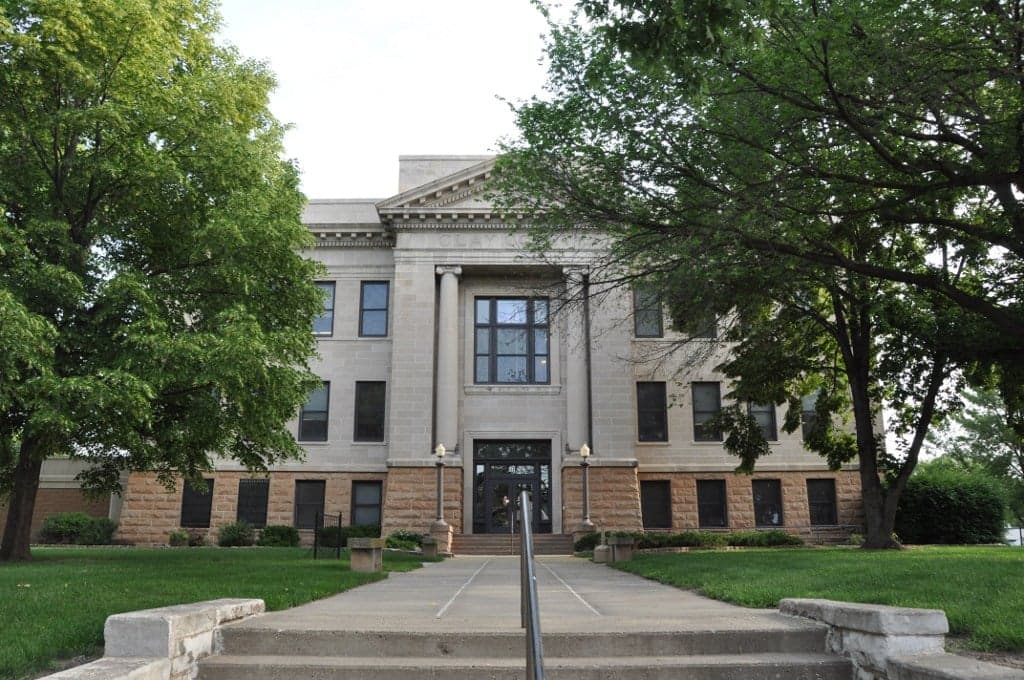
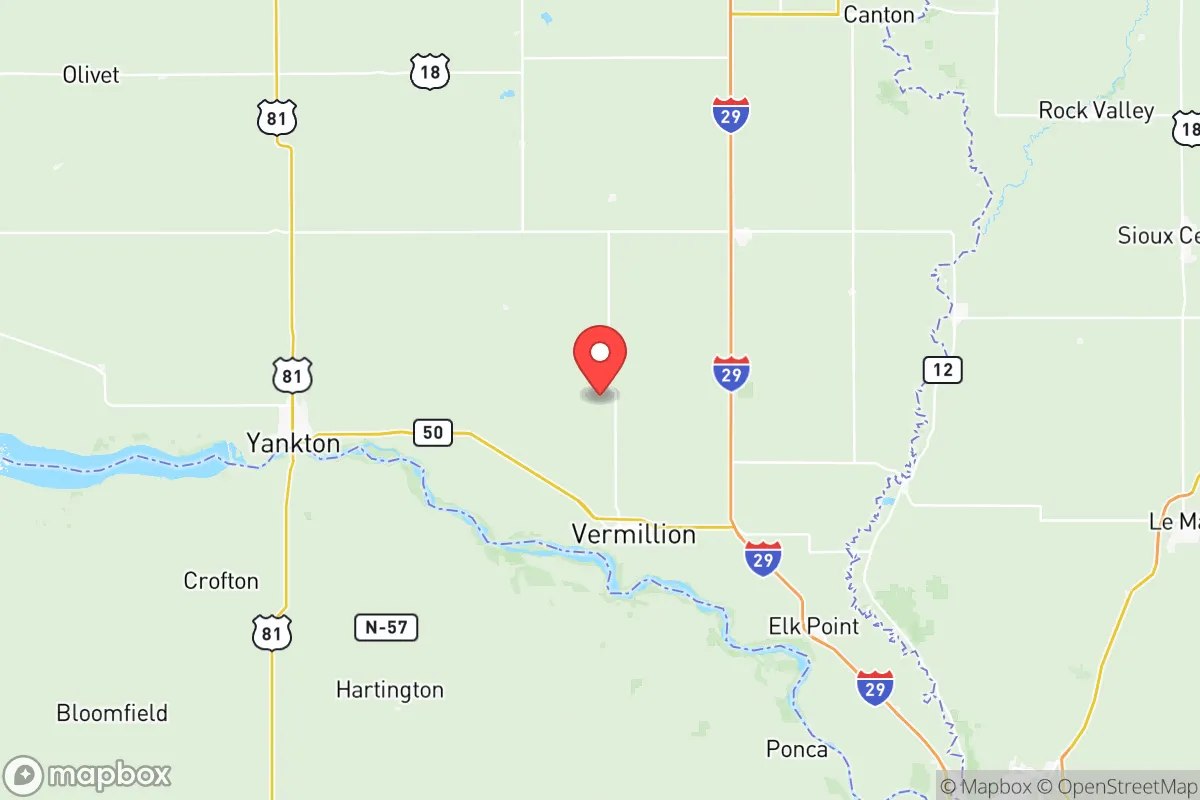
Clay County, South Dakota, offers a notably high degree of personal sovereignty, driven by the state’s consistently low tax burden, minimal regulatory interference, and strong protections for individual rights. Located in the southeastern corner of the state along the Missouri River, the county presents a distinct autonomy environment compared to neighboring states like Minnesota and Iowa, where income taxes and more extensive business regulations are the norm. For individuals and families prioritizing self-reliance, Clay County provides a legal and economic framework that rewards personal initiative with fewer government-imposed constraints.
Tax burden and regulatory posture: How South Dakota’s policies shape daily life
South Dakota’s absence of a state income tax is the cornerstone of its tax-friendly posture, and Clay County residents benefit directly. There is no tax on wages, salaries, or retirement income, which means a family earning $75,000 annually keeps roughly $3,000–$4,000 more compared to a similar household in a state with a 4–5% income tax. Property taxes in Clay County are moderate, with the effective rate hovering around 1.1% of assessed value, slightly below the national average. Sales tax is 4.5% at the state level, with Clay County adding a local option of up to 2%, bringing the total to 6.5% in unincorporated areas and within towns like Vermillion and Beresford. Regulatory posture is light-touch: South Dakota has no state-level minimum wage above the federal $7.25, no paid family leave mandate, and no broad occupational licensing for many trades. For a small business owner in Wakonda or Irene, this means fewer compliance costs and faster startup times compared to more regulated states. The state’s right-to-work law further reinforces an environment where employment is voluntary and union membership cannot be compelled.
Self-defense and gun law specifics: Constitutional carry and stand your ground
Clay County is part of a state with some of the most permissive firearm laws in the nation. South Dakota is a constitutional carry state, meaning any adult legally allowed to possess a firearm can carry it openly or concealed without a permit. No training, background check beyond the federal point-of-sale requirement, or registration is needed for private possession. The state also has a stand-your-ground statute, which removes any duty to retreat before using deadly force in self-defense when lawfully present. Clay County’s sheriff’s office in Vermillion generally interprets these laws with a pro-Second Amendment stance, and local gun culture is robust. Shooting ranges are accessible, including the Vermillion Gun Club and private land in rural areas like Burbank and Spink. For a family moving from a restrictive state like California or New York, the shift is dramatic: no waiting periods, no magazine capacity limits, and no firearm roster. The only notable restriction is that concealed carry on school grounds requires a permit, but otherwise, the legal environment strongly favors individual self-defense rights.
Self-reliance and homesteading viability: Lot sizes, zoning, and off-grid feasibility
Clay County’s rural character makes it highly viable for homesteading and off-grid living, though local zoning varies by jurisdiction. Unincorporated areas of the county, including land near Meckling and Gayville, have minimal zoning restrictions. A 5-acre parcel in these areas can typically support a single-family home, a workshop, and livestock without needing a conditional use permit. Off-grid systems—solar panels, rainwater collection, composting toilets—are generally allowed, provided they meet basic health and safety codes. The county does not enforce a building code in unincorporated areas, though a permit is required for new construction to ensure septic and well compliance. In contrast, the city of Vermillion has more structured zoning, with minimum lot sizes of 6,000–8,000 square feet in residential zones and restrictions on livestock within city limits. For a family seeking true self-reliance, a parcel in the West Vermillion area or near the Missouri River bluffs offers the best balance of access to town amenities and rural freedom. The county’s agricultural heritage means soil quality is excellent for gardening, and the growing season averages 150 frost-free days, supporting a wide range of crops. Water access is generally reliable via private wells, though drilling costs can run $5,000–$10,000 depending on depth.
Personal liberties: Parental rights, medical autonomy, speech, and property
South Dakota law strongly protects parental rights, including the right to direct a child’s education, medical care, and religious upbringing. Clay County is home to several private and religious schools, and homeschooling is straightforward: parents need only file a basic notification with the local school district and provide instruction in core subjects. No standardized testing or curriculum approval is required. Medical autonomy is more limited, as South Dakota has some of the most restrictive abortion laws in the country, banning the procedure at conception with narrow exceptions. For families who prioritize this restriction, it aligns with conservative values; for others, it may be a factor to weigh. Vaccine mandates are absent at the state level for adults, and COVID-era mandates were minimal. Free speech protections are robust, with no state-level hate speech laws that could chill expression. Property rights are strongly protected: South Dakota has no statewide rent control, no inclusionary zoning mandates, and a relatively low rate of eminent domain use. Clay County’s planning commission in Vermillion does enforce a comprehensive plan, but rural landowners generally face few restrictions on how they use their land, including the right to hunt, fish, and harvest timber without state interference.
Overall, Clay County ranks among the more sovereignty-friendly areas in the Upper Midwest, comparable to counties in western Nebraska or eastern Montana. The combination of no income tax, constitutional carry, minimal zoning in rural areas, and strong parental rights creates an environment where individuals and families can operate with a high degree of personal autonomy. For a conservative-leaning reader weighing relocation, Clay County offers a concrete alternative to the regulatory density of the Twin Cities or Sioux Falls metro, while still providing access to services in Vermillion, Beresford, and the broader region. The trade-off is a quieter, more rural lifestyle with fewer amenities, but for those who value freedom over convenience, the balance tilts decisively toward self-reliance.

* Values derived from national, state, county, city and local statistics and may differ in a specific area. Last updated: 2026-07-30T03:34:58.000Z
Narrative content on this page is AI-generated and may contain mistakes. Verify any details that matter before acting on them.
ReloMaps may earn a commission from affiliate links at no extra cost to you.

