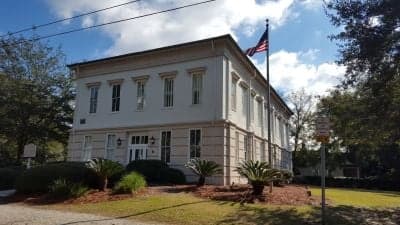
Photo: Wikipedia
Political ClimatePolitical Climate in Berkeley County
Showing district-level results — no local-only data available.
Local Political AnalysisPolitical Analysis of Berkeley County
Berkeley County, South Carolina, has long been a solidly conservative stronghold, and while it still leans that way with a Cook PVI of R+6, I've seen some subtle shifts over the years that are worth keeping an eye on. The county's politics are a bit more nuanced than the state's overall R+8 rating might suggest, especially when you look at the different towns and communities within its borders. The real story here is how the rapid growth from the Charleston metro area is slowly changing the political landscape, and not always in ways that sit well with folks who value limited government and personal freedoms.
How it compares
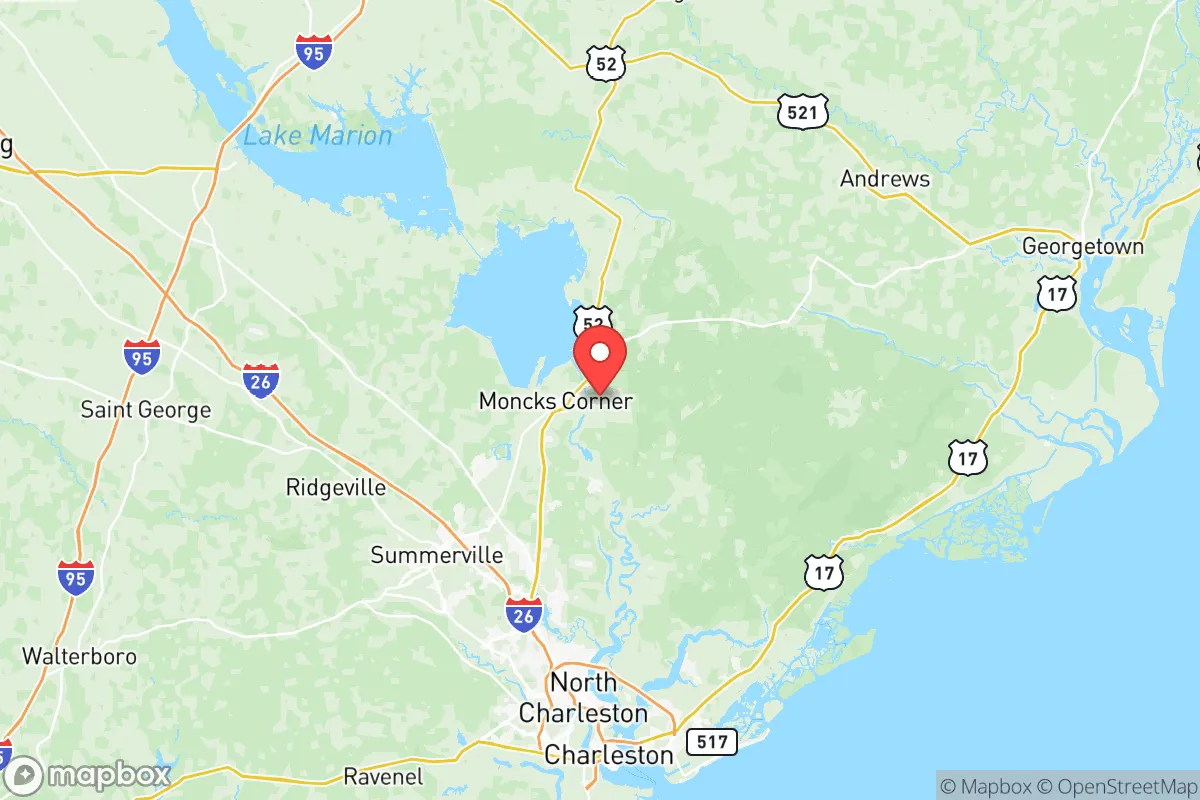
Compared to the rest of South Carolina, Berkeley County is actually a touch more moderate on paper, but that's a recent development. The state as a whole is R+8, meaning it's a deeper shade of red than Berkeley County's R+6. But that one-point difference hides a lot of local variation. For instance, Moncks Corner and St. Stephen are reliably deep red, where you'll find strong support for conservative candidates and a general skepticism of government overreach. On the other hand, Goose Creek and Hanahan have become more of a mixed bag, with some precincts swinging toward the center or even leaning blue in recent cycles, especially as younger families and military personnel from the Naval Weapons Station move in. The swing precincts are mostly around the Carnes Crossroads area and parts of Summerville that spill over into Berkeley County—these are the places where you see the most political volatility. It's not a blue wave by any means, but it's a noticeable shift from the solid red I remember from twenty years ago.
What this means for residents
For those of us who value personal liberty and want to keep government out of our lives, the trend is a bit concerning. The influx of people from more progressive areas often brings with it a push for higher taxes, more regulations, and a general expansion of government authority—things that used to be non-starters around here. Property taxes have already crept up as the county tries to fund new schools and infrastructure for the growing population, and there's been chatter about zoning changes that could limit what you can do with your own land. The local school board races have also gotten more contentious, with some candidates pushing for policies that feel more like what you'd see in Charleston proper. If you're the kind of person who believes the best government is the one that governs least, you'll want to pay close attention to local elections, because that's where the real battles are happening.
Culturally, Berkeley County still holds onto its traditional Southern values—church, family, and a strong sense of community—but you can feel the tension as new developments pop up and old farms get paved over. The county's leadership remains mostly conservative, but the margin for error is shrinking. If you're considering a move here, just know that the political climate is still friendly to conservative ideals, but it's not the lock it used to be. The long-term trajectory depends on whether the newcomers assimilate into the local culture or try to change it. For now, it's a good place to raise a family with less government interference than you'd find in many other parts of the country, but keep your eyes on those local elections—that's where the future of your freedoms will be decided.

State Political ClimatePolitical Climate in South Carolina
State Political AnalysisPolitical Environment in the State
South Carolina is a solidly Republican state with a Cook PVI of R+8, and if you've been watching the last few cycles, you've seen the conservative coalition here only strengthen. The GOP holds every statewide office, supermajorities in both legislative chambers, and the state has voted Republican in every presidential election since 1980 — with margins actually widening in 2024 compared to a decade ago. The dominant coalition is a mix of traditional Southern conservatives, evangelical Christians, and a growing wave of transplants from the Northeast and Midwest who are fleeing high taxes and progressive policies. Over the last 20 years, the state has shifted from a purple-ish lean to a deeper red, driven by suburban growth in places like Greenville and Spartanburg and by the steady rightward drift of rural and coastal areas.
Urban vs. rural divide
The political map of South Carolina is a classic story of a few blue islands in a red sea. Charleston County is the most notable Democratic stronghold, with the city of Charleston itself trending left over the past decade as young professionals and out-of-state newcomers have poured in. But even there, the surrounding suburbs like Mount Pleasant and Summerville remain reliably Republican. Richland County, home to Columbia, is another blue pocket driven by the state capital's government workforce and the University of South Carolina. Meanwhile, Greenville County — the state's most populous — is deeply red, with the city of Greenville itself becoming a magnet for conservative-leaning transplants who want economic opportunity without the cultural baggage of larger metros. The rural counties in the Pee Dee region (Florence, Darlington) and the Lowcountry (Beaufort, Jasper) vote overwhelmingly Republican, though Hilton Head and Beaufort have small liberal enclaves among retirees. The real story is the suburban ring around Charlotte — places like Rock Hill and Fort Mill in York County — which are growing fast and voting redder than their counterparts in North Carolina. Myrtle Beach (Horry County) is a tourist-driven red zone, though its rapid growth is starting to introduce some political diversity.
Policy environment
South Carolina's policy environment is a conservative's dream on paper, though implementation can be messy. The state has a flat income tax rate of 6.2%, with a scheduled phase-down to 6% by 2027, and no estate or inheritance tax. Property taxes are among the lowest in the Southeast for owner-occupied homes thanks to a 4% assessment cap. The regulatory climate is business-friendly — South Carolina is a right-to-work state with weak unions and a tort reform system that caps noneconomic damages. Education policy has been a battleground: the state expanded school choice through the Education Scholarship Trust Fund program in 2023, allowing families to use public dollars for private school tuition. On healthcare, South Carolina did not expand Medicaid under the Affordable Care Act, and the state has some of the strictest abortion laws in the country — a fetal heartbeat ban (with limited exceptions) was signed in 2023. Election integrity is taken seriously: the state requires photo ID to vote, has a voter roll maintenance program, and in 2021 passed a law banning ballot drop boxes and limiting absentee voting. For a conservative moving in, the policy environment feels like a deliberate counterweight to the chaos of blue states.
Trajectory & freedom
The trajectory="" freedom="">The trajectory of personal freedom in South Carolina has been mostly upward over the last five years, but there are warning signs. On the positive side, the state passed constitutional carry (permitless concealed carry) in 2024, making South Carolina the 29th state to allow law-abiding citizens to carry a handgun without a permit. Parental rights were strengthened with the 2023 "Parental Rights in Education" bill, which requires schools to notify parents of any changes in a child's mental or physical health and prohibits classroom instruction on sexual orientation and gender identity in K-5. The state also passed a ban on transgender athletes in girls' sports and a "bathroom bill" for public schools. On the economic freedom front, the state has resisted occupational licensing expansion and kept unemployment insurance taxes low. However, there are concerning trends: the state government has grown its budget significantly, and some conservatives worry about the creeping influence of federal dollars in education and infrastructure. Medical freedom took a hit during COVID with mask mandates in schools (since repealed) and vaccine passport requirements for state employees (also repealed). The biggest red flag for liberty-minded residents is the state's eminent domain record — South Carolina has a history of using it aggressively for economic development, as seen in the failed "Boeing" deal controversies. Overall, the state is moving in the right direction on guns, education, and taxes, but vigilance is needed on government overreach.
Civil unrest & political movements
South Carolina has seen its share of political flashpoints, but they tend to be less intense than in other Southern states. The George Floyd protests in 2020 were relatively muted compared to Portland or Atlanta, but there were significant demonstrations did occur in Charleston and Columbia, with some property damage and clashes with police. In response, the legislature passed an anti-riot bill in 2021 that increased penalties for rioting and blocking highways — a move that drew criticism from the left but was popular among conservatives. The state has a strong Moms for Liberty presence, with chapters in Greenville, Charleston, and Lexington that have been active in school board races and curriculum fights. Immigration politics are less heated than in border states, but South Carolina has an E-Verify requirement for public employers and contractors, and there are no sanctuary cities. The "Confederate flag debate" was largely settled in 2015 when the flag was removed from the Statehouse grounds after the Charleston church shooting — a decision that still rankles some traditionalists but has allowed the state to move on. Election integrity remains a live issue: the 2020 and 2022 cycles saw lawsuits over absentee ballot procedures, and the state's voter ID law was upheld by the courts. New residents will notice that political signs everywhere during election season, but actual civil unrest is rare — the culture war is fought more in school board meetings and legislative hearings than in the halls than in the streets.
Projection
Looking ahead five to ten years, South Carolina is likely to remain a reliably red state, but the margins could narrow in specific areas. The biggest demographic shift is in-migration from the Northeast and Midwest — places like New York, New Jersey, and Illinois are sending thousands of new residents to the Greenville-Spartanburg corridor, the Charleston suburbs, and the Myrtle Beach area. Many of these transplants are conservative-leaning, but a significant minority bring more moderate or even liberal views, especially on social issues. The Hispanic population is growing, particularly in the Upstate counties like Beaufort and Greenville, but this group tends to vote more Republican in South Carolina than in other states. The real wild card is the suburban shift in suburban women — if national trends toward suburban moderation continue, places like Mount Pleasant and Fort Mill could become more competitive. However, the state's strong Republican infrastructure, gerrymandered legislative districts, and the continued exodus of liberals from high-tax states suggest the overall partisan lean will hold. Expect more school choice expansion, further tax cuts, and continued battles over transgender policies and abortion. For someone moving in now, the South Carolina of 2035 will look a lot like today — conservative, growing, and increasingly diverse, but with a political culture that still prizes individual liberty and limited government.
For a conservative individual or family looking to relocate, South Carolina offers a political environment that aligns with traditional values, low taxes, and a respect for personal freedoms — but it's not without its challenges. The state's growth is bringing new voices and some cultural friction, especially in the suburbs and coastal areas. If you're moving here, expect a place where your vote matters, where school boards are still contested, and where you can carry a gun without a permit. The key. The key is to pick
* Values derived from national, state, county, city and local statistics and may differ in a specific area. Last updated: 2026-05-18T15:27:55.000Z
Narrative content on this page is AI-generated and may contain mistakes. Verify any details that matter before acting on them.
ReloMaps may earn a commission from affiliate links at no extra cost to you.

