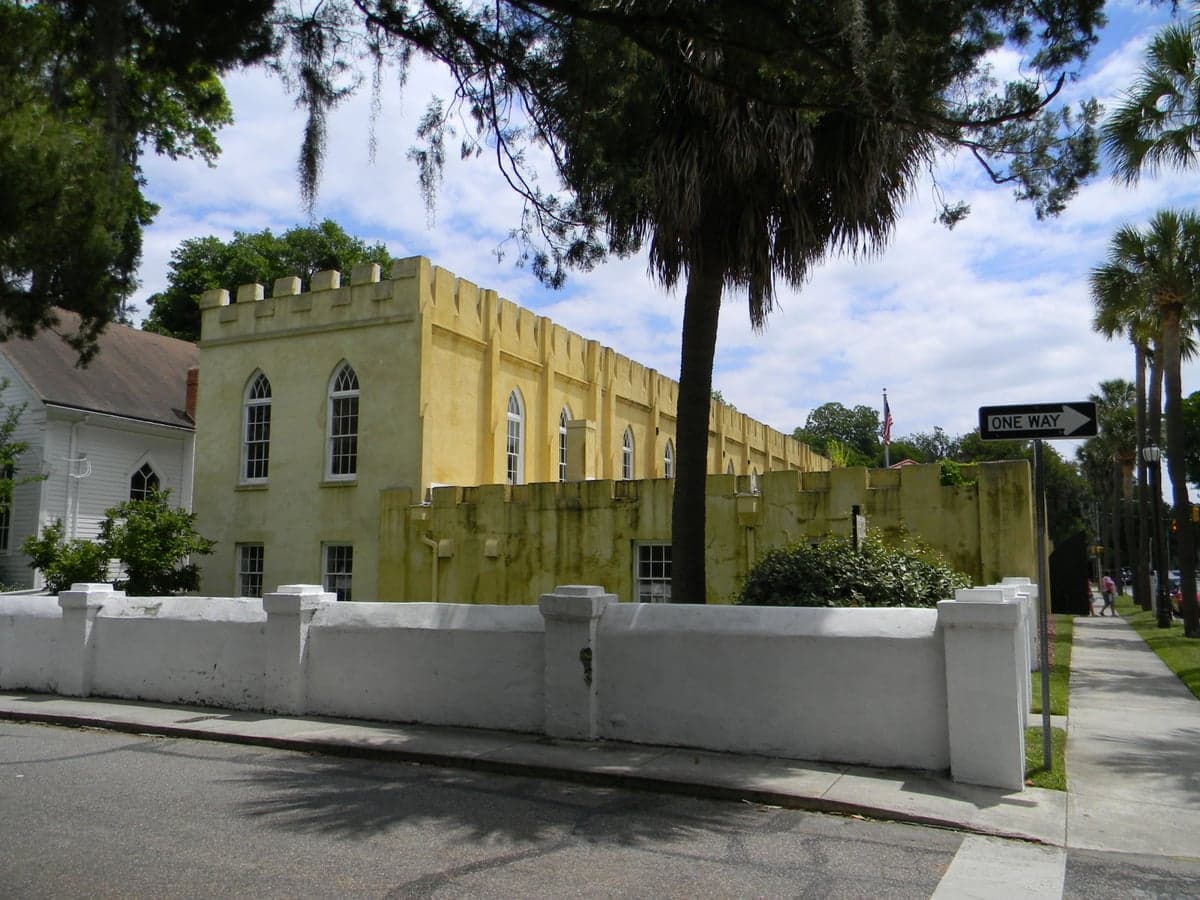
Photo: Wikipedia
Strategic Assessment of Beaufort County
Meaningful friction. Expect exposure to either population pressure, blast zones, or natural disaster risk. Consider buying a retreat property.
What does the Strategic Assessment tell us?
Our Strategic Assessment grades tactical survivability of an area. Major population centers, military targets, fallout zones, natural disasters, and border exposure all drive risk — lower exposure means a more defensible position in a crisis.
This is heavily inspired by Joel Skousen's Strategic Relocation book. Highly recommended you checkout the book ($)What does this tell us?
Our Strategic Assessment grades tactical survivability of an area. Major population centers, military targets, fallout zones, natural disasters, and border exposure all drive risk — lower exposure means a more defensible position in a crisis.
This is heavily inspired by Joel Skousen's Strategic Relocation book. Highly recommended you checkout the book ($)Strategic Pillars

Key Distances
Strategic Assessment Analysis
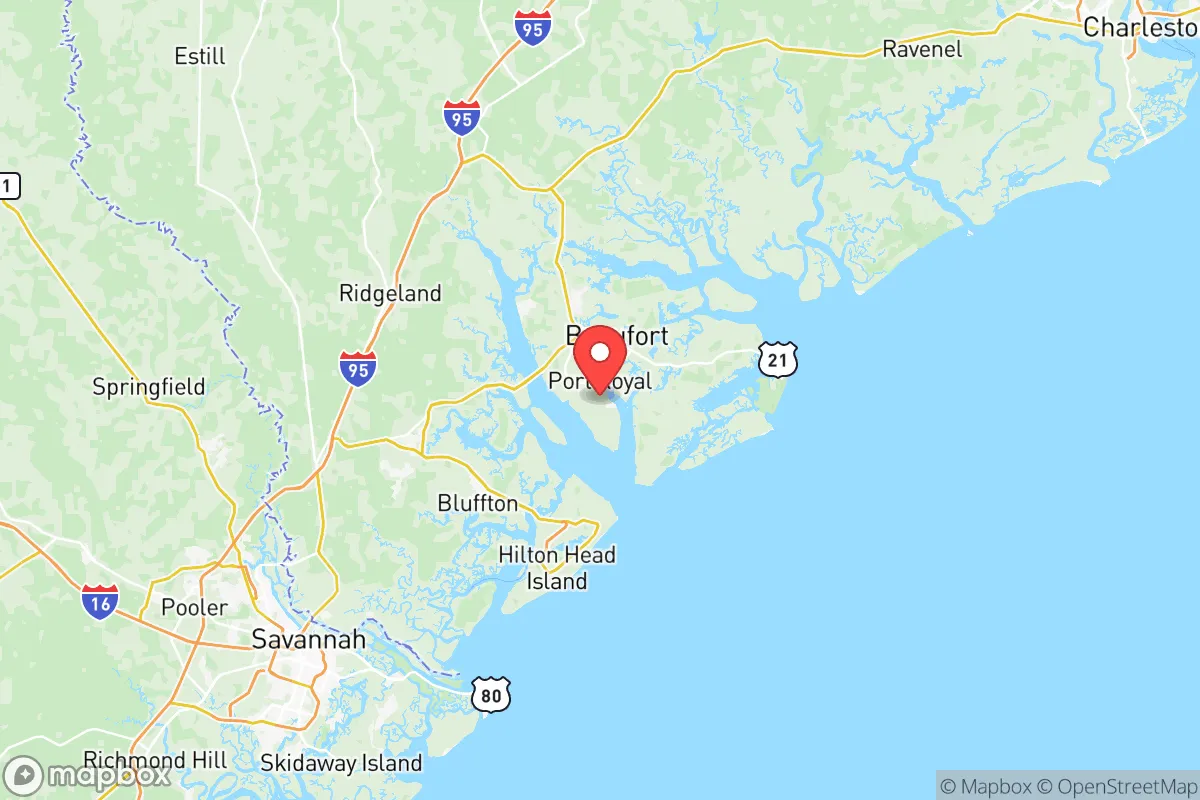
Beaufort County, South Carolina, offers a compelling mix of natural defensibility and logistical access for the relocation-minded reader focused on resilience. Its position along the Atlantic coast, roughly 90 miles southwest of Charleston and 30 miles northeast of Savannah, Georgia, places it within a day’s drive of major population centers while maintaining a distinctly low-density, semi-rural character. The county’s strategic value lies in its combination of barrier islands, deepwater ports, and proximity to military infrastructure, balanced against real exposure to hurricane threats and the vulnerabilities of coastal living.
Geographic position and natural advantages for long-term stability
Beaufort County’s geography is defined by the Port Royal Sound and the network of rivers and creeks that carve through its low-lying terrain. The county seat, Beaufort, sits on Port Royal Island, while towns like Hilton Head Island, Bluffton, and Okatie anchor the southern half. The area’s primary natural advantage is its access to fresh water via the Savannah River and the Broad River, both of which feed into the sound and provide reliable surface water sources. The county’s position on the Intracoastal Waterway also offers a secondary transportation corridor independent of road networks, which is valuable for supply movement in a disruption scenario. The surrounding Lowcountry marshlands act as a natural buffer against storm surge in many inland areas, though this is not uniform. For a relocator, the key takeaway is that Beaufort County is not a remote wilderness—it’s a coastal region with established infrastructure, but one where the population density remains low enough (roughly 200,000 residents countywide) to avoid the congestion and target risks of a major metro area.
Risk exposures, hurricane threats, and proximity to fallout-relevant landmarks
The most significant risk in Beaufort County is hurricane landfall and associated storm surge. The county sits in a high-risk zone for Atlantic tropical systems, with Hilton Head Island and the coastal barrier islands facing direct exposure. Inland areas like Beaufort and Bluffton are less exposed to surge but still vulnerable to wind damage and flooding from heavy rainfall. The county’s evacuation routes—primarily US-278, SC-170, and I-95—can become congested during mandatory evacuations, a practical concern for anyone without a self-sufficient retreat plan. Beyond weather, the area’s proximity to Savannah’s port and industrial corridor (including the Port of Savannah, one of the busiest container ports on the East Coast) introduces a moderate risk profile for secondary effects from a major disruption. The Marine Corps Recruit Depot at Parris Island and the Marine Corps Air Station Beaufort are both located within the county, which provides a stabilizing military presence but also makes the area a potential target in a conflict scenario. The Savannah River Site, a nuclear weapons facility about 70 miles west near Aiken, SC, is another landmark worth noting—its presence adds a low-probability but high-consequence risk. For the resilience-minded relocator, these factors mean that Beaufort County is not a fallout-free zone, but its risks are primarily natural rather than industrial or geopolitical, and the military bases actually enhance local emergency response capabilities.
Practical resilience for a relocator: food, water, energy, and defensibility
Beaufort County offers a mixed picture for self-sufficiency. Local food production is viable but not abundant—the county has a small agricultural sector focused on row crops (corn, soybeans, cotton) and some livestock, but the majority of food is trucked in from outside the region. The Lowcountry’s long growing season (roughly 8 months) and ample rainfall make home gardening and small-scale farming practical, and the coastal waters provide year-round access to seafood (shrimp, oysters, fish) for those with the skills to harvest it. Water availability is a strength: the county sits atop the Floridan Aquifer, a major groundwater source, and surface water from the Savannah and Broad Rivers is plentiful. Private wells are common in rural areas, and most homes in unincorporated parts of the county can drill for water without excessive depth. Energy infrastructure is moderately resilient. The county is served by Dominion Energy and Palmetto Electric Cooperative, with power lines running along major corridors. Solar adoption is growing but not yet widespread. For off-grid capability, the area’s tree cover and moderate sun exposure make solar panels viable, though hurricane winds require robust mounting. Defensibility is a mixed bag. The county’s many waterways and marshes create natural chokepoints for road access, particularly on the islands, but the flat terrain offers little concealment. The presence of the Marine Corps bases means a well-trained population and a likely rapid federal response in a crisis, but also means the area could be a focal point for military activity. For a relocator, the practical takeaway is that Beaufort County is best suited for someone who wants a coastal lifestyle with decent baseline resilience, not for someone seeking a remote, off-grid bunker location.
Overall, Beaufort County presents a balanced strategic picture for the relocation-minded reader. Its natural advantages—fresh water, moderate climate, low population density, and military presence—are offset by real hurricane risks and moderate exposure to industrial and military-related hazards. The county is not a survivalist’s paradise, but it offers a livable, defensible environment for someone who values coastal access and is willing to invest in hurricane hardening, food storage, and a solid evacuation plan. For families and individuals who want to be near the coast without being in a major city, and who accept the trade-offs of living in a hurricane zone, Beaufort County is a credible option that deserves serious consideration.

* Values derived from national, state, county, city and local statistics and may differ in a specific area. Last updated: 2026-06-12T22:55:08.000Z
Narrative content on this page is AI-generated and may contain mistakes. Verify any details that matter before acting on them.
ReloMaps may earn a commission from affiliate links at no extra cost to you.

