
Photo: Wikipedia
Personal Sovereignty in Beaufort County
Viable for self-reliance. Generally workable, though some barriers may limit total independence.
What does Personal Sovereignty tell us?
Personal Sovereignty measures your capacity for self-reliance and independence with minimal government friction. Higher scores mean fewer barriers between you and the way you want to live... but it assumes you have the space you need and good neighbors.
What does this tell us?
Personal Sovereignty measures your capacity for self-reliance and independence with minimal government friction. Higher scores mean fewer barriers between you and the way you want to live... but it assumes you have the space you need and good neighbors.
State Policy
Energy independence: Importer (25% of energy produced in-state)
Personal Liberty
Homesteading

Personal Liberty Analysis
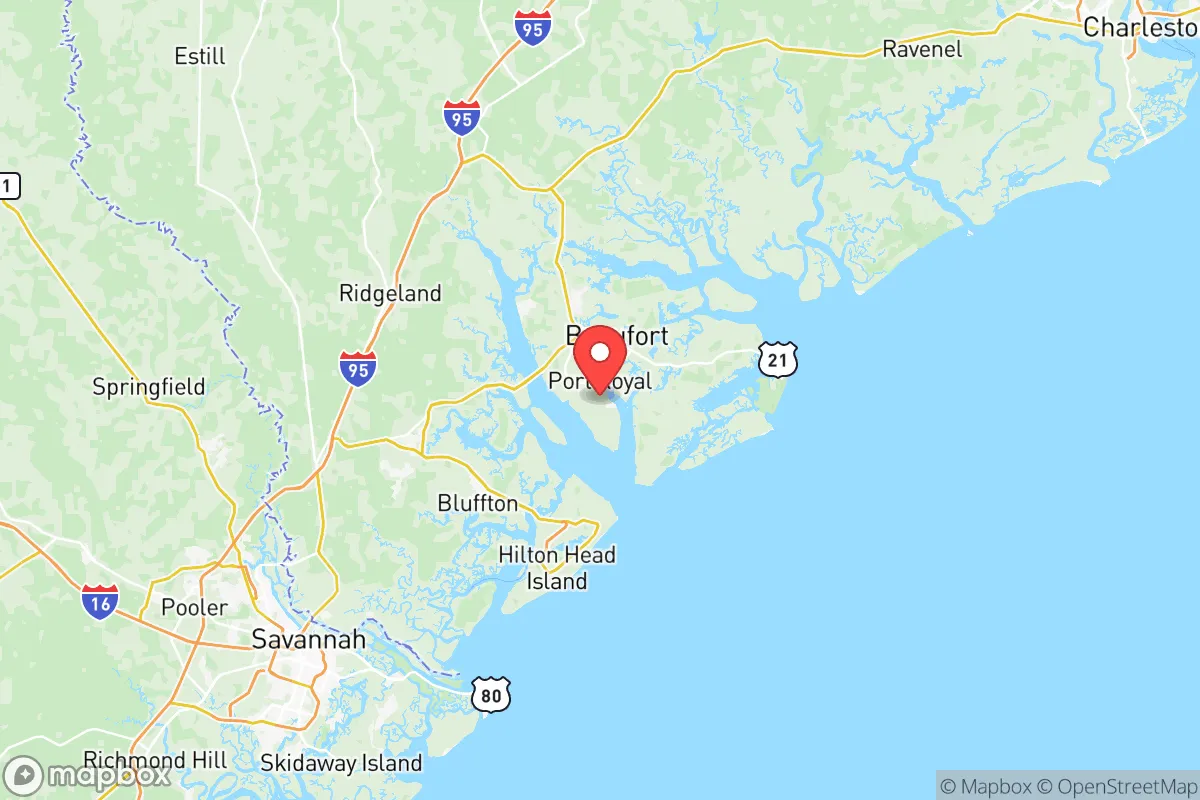
Beaufort County, South Carolina offers a notably high degree of personal sovereignty compared to many coastal regions in the Southeast, but the autonomy environment varies significantly depending on whether you are inside the historic district of Beaufort, the planned community of Bluffton, the rural stretches of northern Beaufort County around Ridgeland, or the sea islands like Hilton Head and St. Helena. The county balances a strong tradition of property rights and self-defense with a growing regulatory framework tied to tourism and environmental preservation, meaning the practical experience of personal freedom depends heavily on location and lifestyle choices.
Tax burden and regulatory posture in Beaufort County
South Carolina’s state-level posture is generally light-touch, and Beaufort County largely reflects that, though with local nuances. The state has a flat income tax rate of 6.2% (as of 2025, with scheduled reductions to 6.0% by 2026), and no state-level tax on Social Security benefits. For retirees and remote workers, this is a meaningful advantage. Property taxes in Beaufort County are assessed at 4% of fair market value for owner-occupied residences, with a millage rate that varies by municipality. In unincorporated areas and towns like Ridgeland and Hardeeville, the combined millage rate is lower than inside Beaufort city limits or on Hilton Head Island, where higher service demands and tourism infrastructure drive rates up. The county does not impose a local income tax. Business licensing is straightforward, with no county-level business license fee for most home-based enterprises, though zoning restrictions in planned communities like Bluffton’s gated neighborhoods can limit home occupations. The regulatory posture is most permissive in the northern and western rural tracts, where agricultural exemptions and fewer building codes apply. Conversely, the Hilton Head Island and Beaufort historic district have stricter design review boards and environmental overlay zones that can delay or deny construction projects. Overall, the tax burden is moderate-low for the region, but the regulatory touch is uneven—light in the countryside, heavier in the tourist corridors.
Self-defense and gun law specifics in the Lowcountry
South Carolina is a shall-issue state for concealed weapons permits, and Beaufort County’s sheriff’s office processes permits efficiently, typically within 30-45 days. The state does not require a permit to openly carry a handgun, and as of 2024, permitless concealed carry is legal for residents 18 and older who are not prohibited possessors. This makes Beaufort County one of the more gun-friendly coastal areas in the South, especially compared to Georgia’s stricter local ordinances or Florida’s post-2023 permitless carry limitations. Stand-your-ground laws apply statewide, with no duty to retreat in any place where the individual is lawfully present. Castle doctrine protections extend to occupied vehicles and workplaces. Local gun culture is strong in the rural northern parts of the county—around Sheldon and Coosawhatchie—where shooting ranges and private land use for target practice are common. On Hilton Head and in Bluffton’s planned communities, homeowners’ associations often restrict firearm discharge on common property, though possession inside the home is protected by state preemption. The county does not have any local ordinances that exceed state law on firearms, meaning no additional waiting periods or magazine capacity bans. For a relocation-minded individual or family prioritizing self-defense rights, Beaufort County offers a legally permissive environment, with the practical caveat that dense residential areas and HOAs may impose de facto restrictions on outdoor use.
Self-reliance and homesteading viability across the county
Homesteading and off-grid living are viable in Beaufort County, but feasibility is sharply divided by location. In the northern and western rural areas—Ridgeland, Hardeeville, and the unincorporated tracts near the Savannah River—minimum lot sizes in agricultural zones are 2 to 5 acres, with many parcels available at $8,000–$15,000 per acre. Zoning in these areas permits livestock, poultry, and accessory dwelling units without special permits. Off-grid systems such as rainwater collection and solar panels are allowed, though the county requires a building permit for any structure over 200 square feet. Septic systems must meet DHEC standards, which are moderate but not prohibitive. In contrast, inside the Beaufort city limits and on Hilton Head Island, lot sizes are typically under a quarter-acre, and HOAs or historic district regulations prohibit livestock, outdoor storage, and non-standard utility setups. Bluffton’s newer subdivisions often have deed restrictions that ban chickens, gardens over a certain size, and solar panels visible from the street. The county’s soil is sandy and well-drained, suitable for raised-bed vegetable gardening, but the humid subtropical climate requires pest management and irrigation. For a family seeking true self-reliance—raising animals, generating power, and storing water—the northern rural corridor from Ridgeland to Coosawhatchie is the most practical area. The county does not have a specific "off-grid" exemption in its building codes, but enforcement is minimal in unincorporated areas as long as structures are safe and sanitary.
Personal liberties in daily life: parental rights, medical autonomy, and property
South Carolina law provides strong protections for parental rights, including a 2023 law requiring school districts to notify parents of any changes in a student’s mental, emotional, or physical health, and to obtain parental consent for any medical or counseling services beyond basic first aid. Beaufort County School District has implemented these policies, and local school board meetings have seen active parental engagement on curriculum and library materials. Medical autonomy is more limited: the state has not expanded Medicaid, and telemedicine access is good in Beaufort and Bluffton but spotty in rural northern areas. Vaccine mandates are not enforced at the county level, and religious exemptions for school immunizations are available. Property rights are robust, with no county-level rent control or landlord licensing, though short-term rental regulations in Beaufort and Hilton Head require permits and occupancy limits. The county does not have a noise ordinance that applies to private property outside municipal limits, and burning of yard debris is allowed with a simple permit. Speech and assembly are protected under standard First Amendment jurisprudence; the county has not passed any local ordinances restricting public protest or signage beyond state traffic safety rules. For a conservative-leaning individual or family, the legal environment in Beaufort County supports a high degree of personal discretion in parenting, property use, and medical choice, with the primary friction points being HOA restrictions in planned communities and municipal codes in the denser tourist areas.
Overall, Beaufort County offers a sovereignty profile that is strong for the coastal Southeast, particularly in its rural northern half. The tax burden is moderate, gun laws are permissive, and homesteading is feasible on larger lots outside the urbanized islands. The trade-off is that the county’s most desirable coastal areas—Hilton Head, Bluffton, and Beaufort’s historic district—come with more regulation, higher costs, and HOA constraints that reduce personal autonomy. For a relocation-minded individual or family who prioritizes self-reliance and minimal government interference, the northern and western tracts around Ridgeland, Hardeeville, and Sheldon provide a better fit than the gated communities of the sea islands. Compared to neighboring counties like Chatham County, GA (Savannah) or Charleston County, SC, Beaufort County is lighter on business regulation and heavier on property rights, making it a competitive choice for those seeking personal sovereignty within driving distance of coastal amenities.

* Values derived from national, state, county, city and local statistics and may differ in a specific area. Last updated: 2026-06-12T22:55:08.000Z
Narrative content on this page is AI-generated and may contain mistakes. Verify any details that matter before acting on them.
ReloMaps may earn a commission from affiliate links at no extra cost to you.

