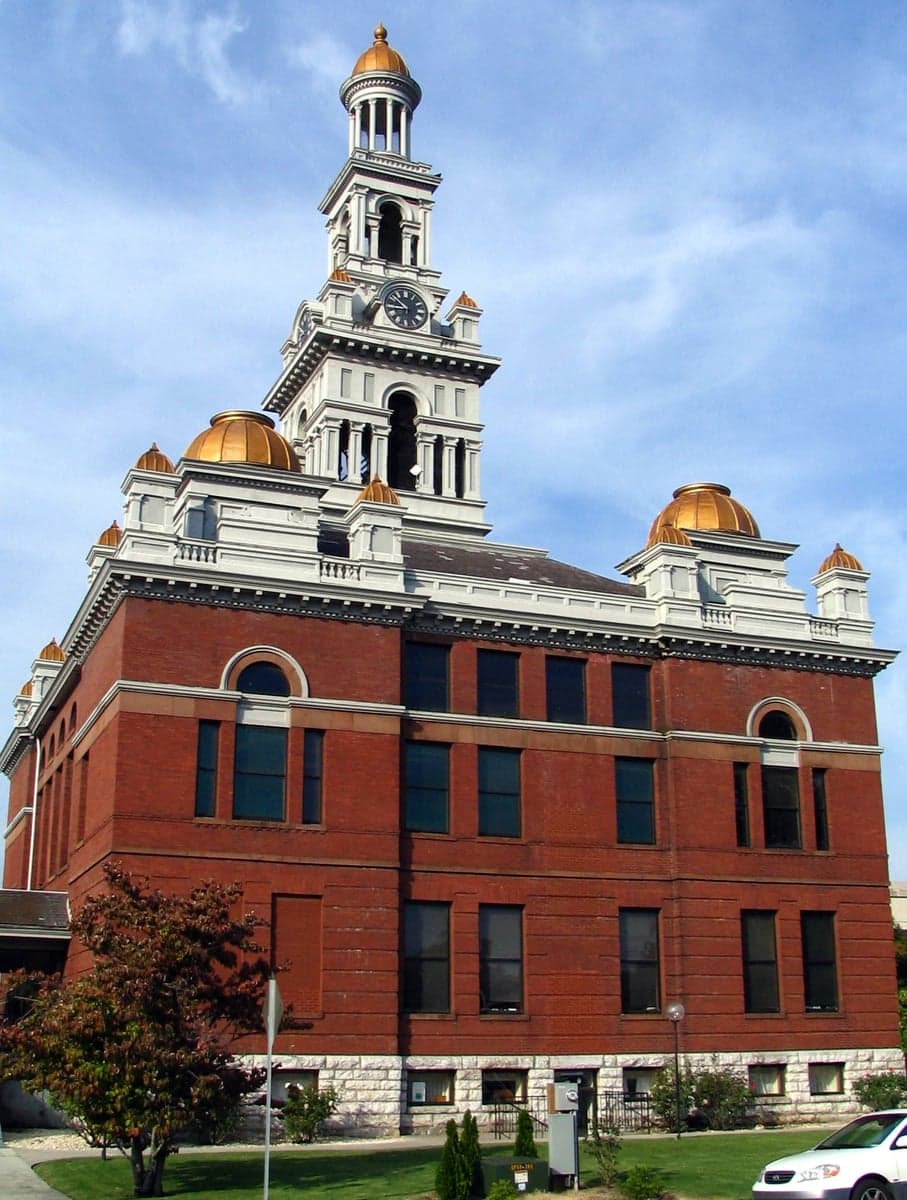
Photo: Wikipedia
Political ClimatePolitical Climate in Sevierville, TN
District shown is the primary district for this city’s centroid. Cities may span multiple districts.
Local Political AnalysisPolitical Analysis of Sevierville, TN
Sevierville is about as solidly conservative as it gets in Tennessee, and that's not changing anytime soon. The Cook PVI of R+29 tells you everything you need to know—this area votes Republican by a massive margin, and it's been that way for decades. You don't see the kind of political flip-flopping here that you do in places like Nashville or even Knoxville, which has gotten a little more purple over the years. The local culture, the economy, and the way folks live their lives all lean heavily toward traditional values, limited government, and personal responsibility.
How it compares
If you drive 30 minutes west to Knoxville, you'll start to notice a different vibe—more college kids, more transplants, and a city council that's occasionally flirted with progressive policies like bike lanes and density zoning. But Sevierville? It's a different world. Compare it to nearby Gatlinburg, which is more tourist-driven and transient, or Pigeon Forge, which is basically one big strip of attractions. Sevierville still feels like a real town where people raise families and run small businesses. The contrast with places like Chattanooga or even Maryville (which is conservative but has a growing tech sector) is stark. Here, the politics are rooted in the land—farming, construction, hospitality—and the people who live here don't take kindly to outsiders telling them how to live.
What this means for residents
For the people who call Sevierville home, the political climate means a lot of freedom from the kind of government overreach you see in blue states or even in some of Tennessee's bigger cities. There's no talk of defunding the police or imposing strict mask mandates here. The local government tends to stay out of your business, which is exactly how most folks want it. Property taxes are low, zoning is minimal, and you can pretty much run your life without a bunch of red tape. That said, there's been a slow creep of development—more chain stores, more traffic, more people moving in from places like California or New York—and with that comes pressure to adopt some of the policies those folks left behind. So far, the local leadership has held the line, but it's something to keep an eye on.
Cultural and policy distinctions
One thing that sets Sevierville apart is its strong Second Amendment culture. You won't find many people here who think gun control is a good idea. The local sheriff's office is pro-2A, and concealed carry permits are common. There's also a deep-rooted religious influence—churches are everywhere, and they're not shy about being involved in community life. On the policy side, the city has kept its hands off things like short-term rental regulations (unlike Nashville, which has cracked down hard), and there's no talk of raising the minimum wage or adding new business taxes. The biggest concern among locals is that as more people move in, the political balance could shift. If you're looking for a place where your rights are respected and the government stays small, Sevierville is still that place—but it's worth paying attention to who's moving in and what they're bringing with them.

State Political ClimatePolitical Climate in Tennessee
State Political AnalysisPolitical Environment in the State
Tennessee has been a reliably red state for decades, but the political climate here is more layered than a simple partisan label suggests. The state leans solidly Republican at the statewide level, with Donald Trump winning by over 30 points in 2020 and 2024, and the GOP holding supermajorities in both chambers of the General Assembly. However, the last 10-15 years have seen a noticeable shift: the rural and suburban areas that once voted for moderate Democrats have moved decisively right, while the major metros—Nashville, Memphis, and to a lesser extent Knoxville and Chattanooga—have become increasingly blue, creating a sharper urban-rural divide than ever before.
Urban vs. rural divide
The political map of Tennessee is a study in contrasts. The state’s three largest cities—Nashville (Davidson County), Memphis (Shelby County), and Chattanooga (Hamilton County)—are Democratic strongholds, with Nashville and Memphis routinely voting 65-70% for Democratic candidates. Knoxville (Knox County) is more of a purple-to-light-red area, but the city itself leans left. Meanwhile, the vast rural and exurban counties—like Lincoln County (south of Nashville), Blount County (south of Knoxville), and Rutherford County (a fast-growing suburban ring around Nashville)—are deeply red, often voting 75-80% Republican. The divide is most visible in the state’s political geography: the I-40 corridor from Memphis to Nashville is a blue island surrounded by a sea of red, while the eastern part of the state, anchored by Knoxville and the Tri-Cities (Bristol, Johnson City, Kingsport), is more consistently conservative but with pockets of blue in college towns like Johnson City (home to East Tennessee State University). The real story is the suburban shift: places like Williamson County (south of Nashville) were once swing areas but are now reliably red, driven by families fleeing the city’s liberal policies.
Policy environment
Tennessee’s policy environment is one of the most conservative in the country, and it’s been getting more so. The state has no income tax on wages, a low property tax burden, and a sales tax that’s high (around 9.5% in most areas) but capped on groceries. The regulatory posture is business-friendly, with right-to-work laws and minimal zoning restrictions in most rural counties. On education, the state has embraced school choice: the Education Savings Account (ESA) program, expanded in 2023, allows families in certain counties (including Davidson, Shelby, and Hamilton) to use public funds for private school tuition. The state also passed a law in 2024 requiring public schools to post all instructional materials online for parental review—a win for transparency. Healthcare is a mixed bag: Tennessee did not expand Medicaid under the Affordable Care Act, and the state’s private option, TennCare, has strict eligibility. Election laws are tight: voter ID is required, early voting is available but limited to 14 days, and the state purged over 100,000 inactive voters in 2023. The legislature also passed a law in 2024 banning ranked-choice voting, which is a clear signal against progressive electoral experiments.
Trajectory & freedom
On the freedom front, Tennessee is moving in a decidedly pro-liberty direction, but it’s not without its contradictions. The state has expanded gun rights significantly: permitless carry (constitutional carry) was signed into law in 2021, and in 2024, the legislature passed a law prohibiting local governments from enforcing federal gun laws that conflict with state law—a direct challenge to federal overreach. Parental rights have been a major focus: the 2023 “Parental Bill of Rights” (HB 1189) requires schools to notify parents of any changes in a child’s health or well-being, and the 2024 law banning transgender procedures for minors (SB 1) was one of the strongest in the nation. On medical autonomy, the state has a broad religious exemption for vaccine mandates, and in 2023, it banned COVID-19 vaccine mandates for state employees and contractors. Property rights are generally strong, with no statewide rent control and a low property tax cap. However, there are concerns: the state’s sales tax is regressive, and the lack of income tax means the burden falls disproportionately on lower-income families. Also, the state’s “abortion trigger law” (HB 883) went into effect in 2022, banning nearly all abortions with no exceptions for rape or incest—a move that pleased conservatives but has created legal uncertainty for doctors.
Civil unrest & political movements
Tennessee has seen its share of political flashpoints, but they’ve been relatively contained compared to states like Oregon or Washington. The most visible unrest came in 2023 after the Covenant School shooting in Nashville, when thousands of protesters—mostly from the city’s progressive base—marched on the state capitol demanding gun control. The Republican supermajority responded by passing a law in 2024 that made it a felony to block a public building entrance, a direct response to the protests. Immigration politics have been heated: the state passed a law in 2024 (SB 267) requiring local law enforcement to cooperate with federal immigration authorities, effectively banning sanctuary city policies. There’s been no serious secession or nullification rhetoric, but the state’s “Second Amendment Sanctuary” resolutions (passed in over 60 counties) signal a willingness to resist federal overreach. Election integrity controversies have been minimal, but the 2020 election saw a small number of activists question the state’s Dominion voting machines—though no evidence of fraud was found. The most visible movement is the “Moms for Liberty” chapter in Williamson County, which has been active in school board meetings and book challenges.
Projection
Over the next 5-10 years, Tennessee is likely to become even more conservative, but with a growing tension between the red supermajority and the blue metros. In-migration is a key driver: the state is one of the fastest-growing in the country, with most newcomers coming from blue states like California, Illinois, and New York. These transplants tend to be more moderate or even conservative on fiscal issues but may bring some cultural liberalism—especially in Nashville’s booming tech and healthcare sectors. The rural areas will continue to harden their conservatism, while the suburbs (like Murfreesboro in Rutherford County) will become the battlegrounds. The state’s political future likely involves a continued push on school choice, further tax cuts (possibly a reduction in the sales tax), and more preemption of local ordinances (like Nashville’s attempts at rent control or plastic bag bans). The biggest wild card is the 2026 gubernatorial race, where a more moderate Republican could emerge, but the legislature’s supermajority will keep the state on a rightward trajectory. A new resident moving in now should expect a state that is increasingly protective of individual liberties but also increasingly polarized between the cities and the countryside.
For a new resident, the bottom line is this: Tennessee offers a high degree of personal freedom—low taxes, strong gun rights, and a government that generally stays out of your life—but you’ll need to be comfortable with the trade-offs. The state’s conservative policies are a feature, not a bug, but they come with a high sales tax and limited public services. If you’re moving from a blue state, you’ll find the political climate refreshingly hands-off, but you’ll also notice the cultural divide between the liberal cities and the conservative countryside. Choose your county wisely: Williamson County offers top schools and a conservative suburban lifestyle, while Rutherford County is more affordable but growing fast. Avoid Davidson County if you want to escape progressive policies, but if you work in Nashville, you’ll have to deal with the city’s left-leaning government. Overall, Tennessee is a solid bet for anyone seeking a state that respects personal liberty and pushes back against federal overreach—just be prepared for the occasional culture war flare-up.
* Values derived from national, state, county, city and local statistics and may differ in a specific area. Last updated: 2026-10-10T16:28:54.000Z
Narrative content on this page is AI-generated and may contain mistakes. Verify any details that matter before acting on them.
ReloMaps may earn a commission from affiliate links at no extra cost to you.

