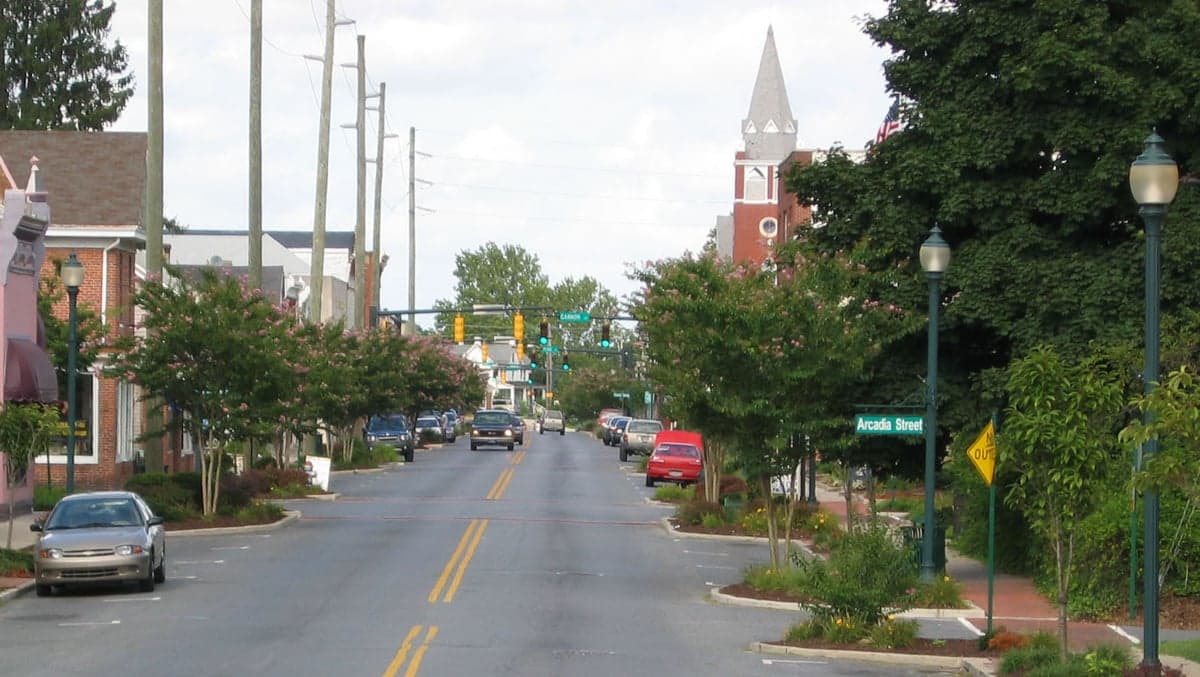
Photo: Wikipedia
Strategic Assessment of Seaford, DE
Multiple tactical vulnerabilities. Population density, target proximity, or disaster risk are likely compounding. A retreat property and exit planning is required.
What does the Strategic Assessment tell us?
Our Strategic Assessment grades tactical survivability of an area. Major population centers, military targets, fallout zones, natural disasters, and border exposure all drive risk — lower exposure means a more defensible position in a crisis.
This is heavily inspired by Joel Skousen's Strategic Relocation book. Highly recommended you checkout the book ($)What does this tell us?
Our Strategic Assessment grades tactical survivability of an area. Major population centers, military targets, fallout zones, natural disasters, and border exposure all drive risk — lower exposure means a more defensible position in a crisis.
This is heavily inspired by Joel Skousen's Strategic Relocation book. Highly recommended you checkout the book ($)Strategic Pillars

Key Distances
Regional Safe Places
Below is our recommended "safe zones" in Delaware and the surrounding area based on our strategic heuristics. For most people, it's unrealistic to live in a “safe zone” full-time due to work, family or other personal reasons. They tend to be more rural. However, many of these areas are perfect for second homes and retreat properties that double as a vacation home or even a short-term rental.
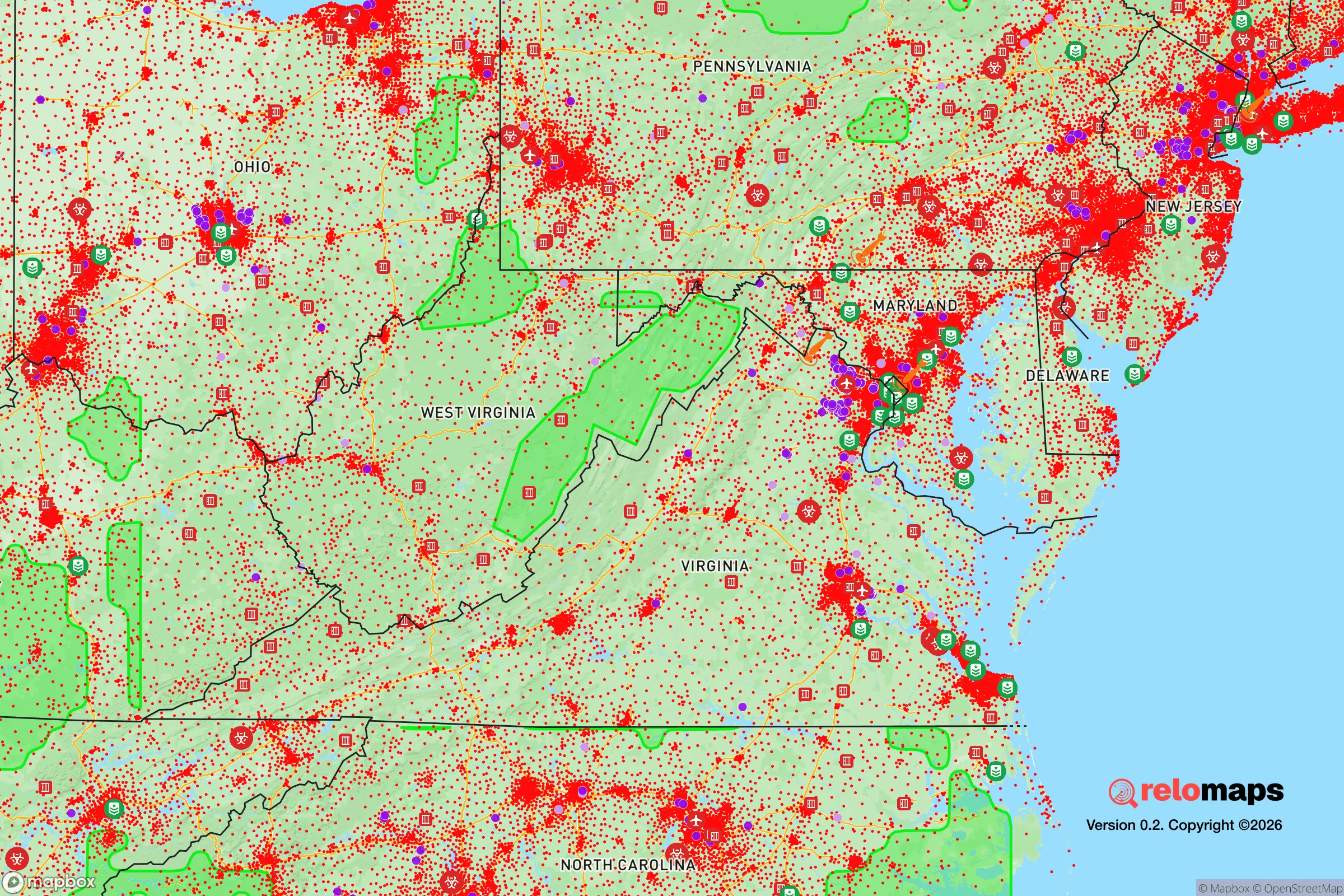
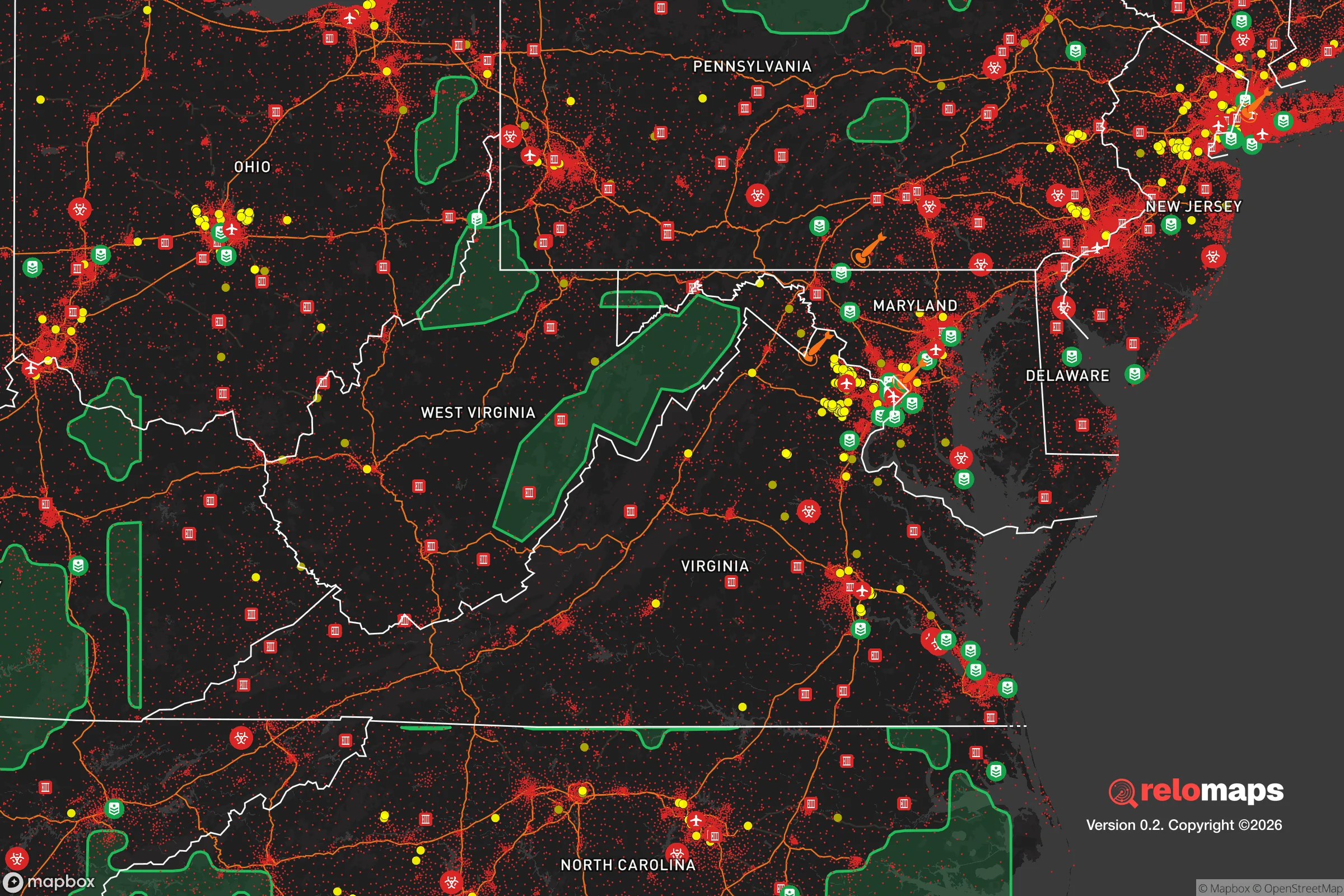


Important Note: For informational purposes only. This does not mean nothing bad ever happens in the green zones. Please use common sense. This is based on public data and modeled with AI. We tried to take a conservative approach but mistakes happen. We update this regularly as new information becomes available.
Solar Generator Recommendations
Backup power matters more here than in safer locations. We've picked three solar generators across budgets and capacity tiers — start with the budget unit if you only need a few essentials, or step up if you want to run a fridge and HVAC for days at a time.

Jackery Portable Power Station Explorer 300
Budget OptionPower on the Go: Weighing only 11 lbs, it's convenient to set up and store with book-sized foldable solar panels

BLUETTI Portable Power Station AC180
Designed for both indoor and outdoor scenarios, AC180 is highly capable as it has a robost capacity and continuous output power.

EF ECOFLOW DELTA Pro Ultra Power Station
Upgraded PickEcoFlow DELTA Pro Ultra is a whole-home energy system designed to grow with your family. Integrated with the Smart Home Panel 2, it scales to meet your evolving energy needs — keeping your home powered, intelligent, and secure through every stage of life.
We earn a commission, at no additional cost to you.
Strategic Assessment Analysis
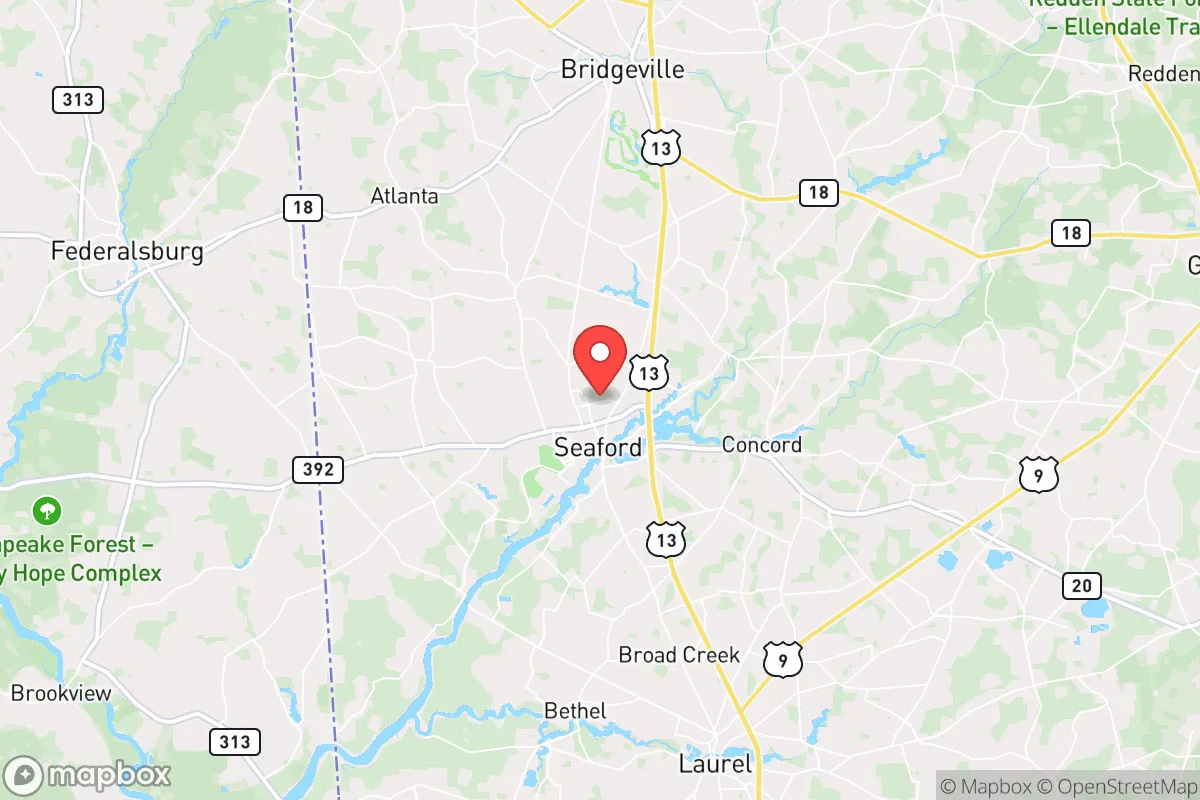
Seaford, Delaware, sits in a strategic sweet spot that preppers and survivalists should take seriously: far enough from the major East Coast pressure points to avoid the worst of a collapse scenario, yet close enough to access critical resources if you plan ahead. Located in Sussex County, roughly 30 miles from the Atlantic coast and 20 miles from the Maryland line, this small city of about 8,000 people offers a blend of rural buffer and logistical access that makes it a viable relocation target for those prioritizing self-sufficiency and low-profile living. The Nanticoke River runs through town, providing a natural water source, and the surrounding agricultural land means food production potential is baked into the local geography. For a conservative-leaning relocator worried about civic unrest, mass casualty events, or supply chain disruptions, Seaford’s position—away from the I-95 corridor and the dense populations of Wilmington, Philadelphia, and Baltimore—offers a tangible advantage in staying off the radar while still being within a day’s drive of those zones if you need to move supplies or people.
Geographic position and natural advantages for long-term stability
Seaford’s location in southern Delaware places it in one of the least densely populated regions on the Eastern Seaboard. Sussex County has a population density of roughly 190 people per square mile—compared to over 1,100 in New Castle County near Wilmington. That low density translates directly into fewer targets for looting, less competition for resources, and more room to operate. The Nanticoke River is a major asset: it’s a tidal river that feeds into the Chesapeake Bay, offering a reliable freshwater source for drinking, irrigation, and even small-scale transport if roads become compromised. The surrounding landscape is flat and agricultural—corn, soybeans, and poultry operations dominate—meaning you’re not far from working farms that could become critical food nodes in a prolonged disruption. The Delmarva Peninsula’s climate is moderate, with mild winters and humid summers, which reduces the risk of extreme weather events that could cripple infrastructure elsewhere. Hurricanes are a periodic threat, but Seaford sits inland enough to avoid the worst storm surge, and the area’s drainage systems handle heavy rain better than coastal towns. For a relocator, the natural advantages here are about buffer and sustainability: you’re not in a floodplain, you’ve got a river, and you’re surrounded by productive land that’s been farmed for generations.
Risks, exposures, and proximity to fallout-relevant landmarks
No location is without vulnerabilities, and Seaford has a few that demand attention. The most obvious is its proximity to the Indian River Power Plant, a coal and natural gas facility about 25 miles east near Millsboro. While not a nuclear reactor, it’s a major industrial target that could become a liability in a grid-down scenario—think cascading failures if the plant is damaged or abandoned. More concerning is the Salem-Hope Creek nuclear generating station in New Jersey, roughly 50 miles north across the Delaware Bay. In a worst-case event—a meltdown, a terrorist strike, or a wartime strike—Seaford sits within the 50-mile emergency planning zone. That’s not a dealbreaker, but it’s a factor to weigh. The area also has a significant poultry industry, with Perdue and Mountaire farms operating nearby. Concentrated animal feeding operations (CAFOs) can become disease vectors or attract unwanted attention during a breakdown of public health systems. On the human threat side, Seaford is about 30 miles from Dover Air Force Base, a major military installation that could become a target or a staging ground for federal forces during unrest. The base’s presence means the area might see military traffic or even martial law enforcement if things go sideways. The biggest risk is the I-95 corridor: while Seaford itself is quiet, the highway is only 40 miles north, and any mass exodus from Philadelphia or Baltimore could push refugees south along US-13 and US-113, which run right through town. Preppers should plan for that scenario—secure your perimeter, stock supplies, and have a bug-out route west into Maryland’s Eastern Shore if needed.
Practical resilience for a relocator: food, water, energy, and defensibility
For someone serious about self-reliance, Seaford offers a workable foundation but requires deliberate upgrades. The Nanticoke River is your primary water source, but it’s tidal and brackish in parts, so you’ll need a filtration system—reverse osmosis or a high-quality gravity filter—to make it potable. Rainwater catchment is straightforward given the region’s 45 inches of annual precipitation, and shallow wells are common in the area, with water tables at 10-20 feet in most spots. Food security is strong: local farmers’ markets operate year-round in nearby Georgetown and Laurel, and you can buy directly from poultry and produce operations. Hunting and fishing are viable—deer, waterfowl, and striped bass are abundant—but you’ll need to secure land access or public hunting permits. Energy resilience is a mixed bag. The grid is reliable under normal conditions, but southern Delaware has limited backup infrastructure; a major storm or cyberattack could knock out power for days. Solar panels are a smart investment here because the area gets about 200 sunny days per year, and net metering is available through Delmarva Power. For defensibility, Seaford’s layout is a double-edged sword. The town is compact, with a historic core of single-family homes on large lots—good for establishing a perimeter. But it’s also bisected by US-13 and US-9, which are major evacuation routes. Your best bet is a property on the outskirts, preferably with acreage and tree cover, away from the main roads. The local police force is small—about 30 officers—so don’t count on them for protection in a crisis. Forming a neighborhood watch or mutual-aid group with like-minded residents is a practical move. Gun laws in Delaware are moderately restrictive—you need a permit for concealed carry, and the state has a red-flag law—but long guns are easier to acquire, and the rural culture means firearms ownership is common.
Overall, Seaford presents a balanced strategic picture for the conservative prepper. It’s not a fortress—no place on the East Coast is—but it offers a realistic combination of low population density, natural resources, and agricultural infrastructure that can sustain a small group through a medium-term disruption. The proximity to Dover Air Force Base and the nuclear plant are real concerns, but they’re manageable if you plan your location carefully and maintain a low profile. The bigger threat is the potential for refugee flow from the I-95 corridor, which makes situational awareness and a solid bug-out plan essential. If you’re looking for a place that’s off the beaten path but still connected enough to monitor events, Seaford is worth a serious look. Just don’t expect it to be a paradise—it’s a working-class town with real grit, and that’s exactly the kind of place that holds together when the system starts to crack.

* Values derived from national, state, county, city and local statistics and may differ in a specific area. Last updated: 2026-04-29T23:40:57.000Z
Narrative content on this page is AI-generated and may contain mistakes. Verify any details that matter before acting on them.
ReloMaps may earn a commission from affiliate links at no extra cost to you.

