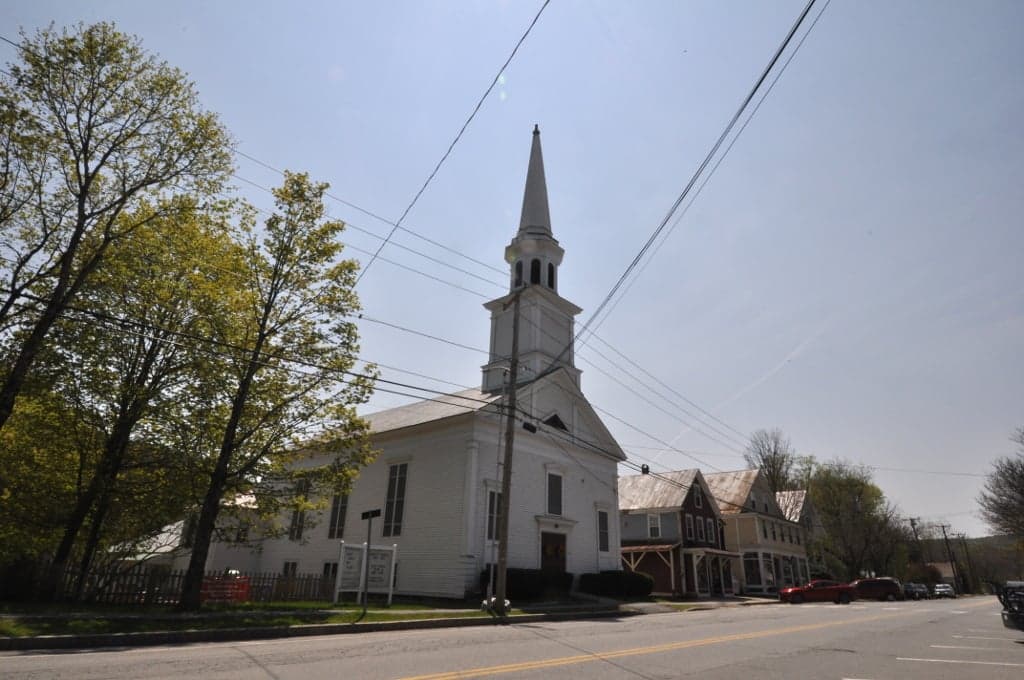
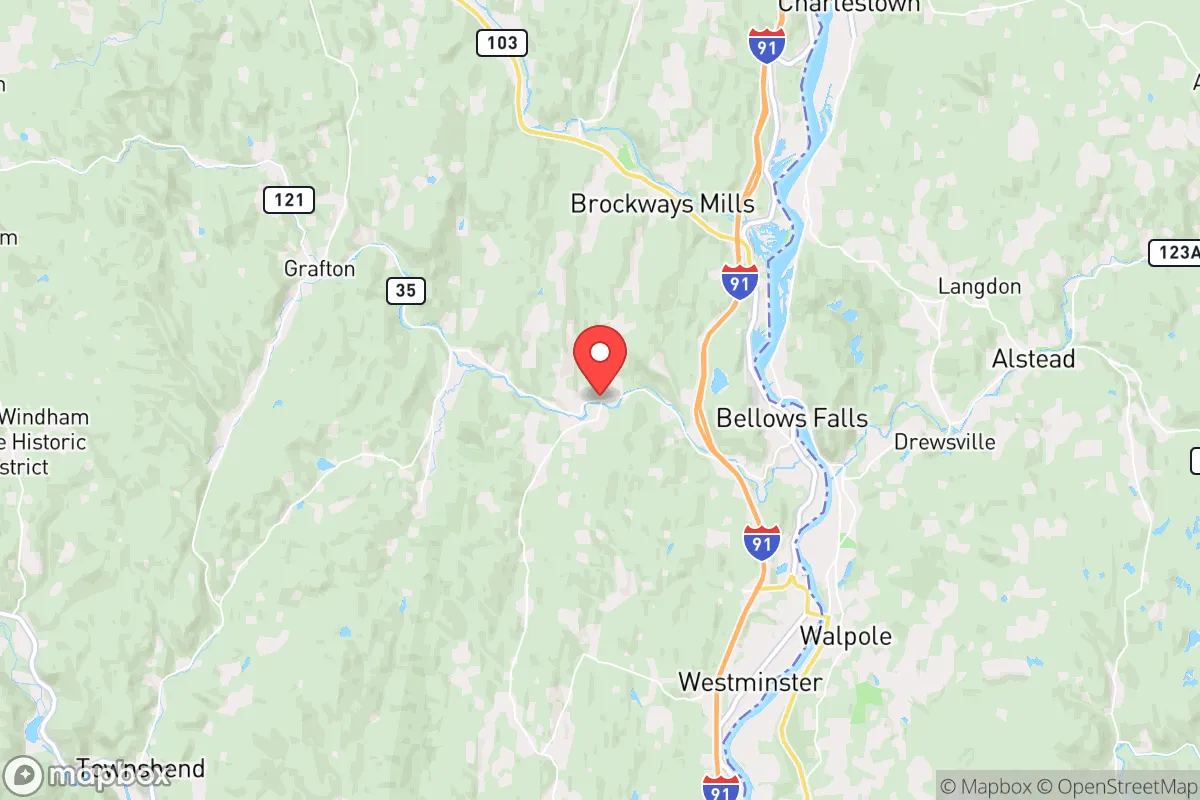
Photo: Wikipedia
Demographics of Saxtons River, VT
Affluence Level in Saxtons River, VT
A middle-class area roughly in line with national averages across income, home values, education, and employment.
People of Saxtons River, VT
Saxtons River, Vermont, is a small, tight-knit village of 519 residents that remains overwhelmingly white (90.2%) and highly educated (64.8% college-educated), with a character shaped by its historic role as a mill town and later a quiet residential enclave. The population is notably older and more stable than the national average, with a foreign-born share of just 3.1% and a modest but present East/Southeast Asian community (3.1%) and Hispanic population (2.7%). There is no Black or Indian subcontinent population recorded. The village feels more like a curated New England hamlet than a growing suburb, attracting those who value historic architecture, the nearby Vermont Academy campus, and a slower pace of life.
How the city was settled and grew
Saxtons River was first settled in the late 18th century by English and Scottish Protestant families moving north from Massachusetts and Connecticut, drawn by the waterpower of the Saxtons River itself. The village grew around a series of gristmills, sawmills, and later paper mills that clustered along the riverbank in what is now the Mill District (the area around Mill Street and the river crossing). By the mid-19th century, the arrival of the railroad spurred a second wave of Irish and French-Canadian laborers, who built homes in the Lower Village (the flats near the depot) and along Pleasant Street. The founding of Vermont Academy in 1876 brought a third wave: educators, administrators, and the families of boarding students, many of whom settled in the Academy Hill neighborhood surrounding the campus. These three historic districts—Mill District, Lower Village, and Academy Hill—still define the village's social geography today.
Modern era (post-1965)
After the last paper mill closed in the 1960s, Saxtons River lost its industrial base and much of its working-class population. The village did not experience the suburban boom seen in larger Vermont towns; instead, it slowly transformed into a bedroom community for professionals commuting to Bellows Falls, Keene (NH), and Brattleboro. The post-1965 immigration reforms had minimal impact here—the foreign-born share remains below 4%. The small East/Southeast Asian population (3.1%) is largely connected to Vermont Academy's international student program, with families settling temporarily in the Academy Hill and Westminster Road corridors. The Hispanic population (2.7%) is dispersed, with no single ethnic enclave. The most notable demographic shift has been the in-migration of retirees and second-home buyers from Massachusetts and New York, who have renovated historic homes in the Village Center Historic District (Main Street, Atkinson Street, and the Common). This has raised property values and contributed to the high college-education rate (64.8%), but has also reduced housing availability for younger families.
The future
Saxtons River's population is likely to continue shrinking slowly or plateau near 500, as it has for the past two decades. The village is homogenizing by income and education rather than diversifying ethnically: the white share (90.2%) is stable, and the small East/Southeast Asian and Hispanic populations are expected to remain tied to Vermont Academy's enrollment cycles rather than growing organically. No new immigrant communities are forming, and the lack of rental housing and jobs means young adults typically leave after high school. The next 10-20 years will likely see further aging of the population, with more homes converted to seasonal or retirement use. The Lower Village and Mill District may see modest infill development if zoning allows, but the village's historic district protections will prevent major change.
For someone moving in now, Saxtons River offers a stable, safe, and historically rich environment with excellent schools (Windham Northeast Supervisory Union) and low crime, but little demographic or economic dynamism. It is best suited for retirees, remote workers, or families who value a quiet, walkable village with strong community institutions—not for those seeking diversity, job growth, or a youthful population.

* Values derived from national, state, county, city and local statistics and may differ in a specific area. Last updated: 2026-04-30T06:11:38.000Z
Narrative content on this page is AI-generated and may contain mistakes. Verify any details that matter before acting on them.
ReloMaps may earn a commission from affiliate links at no extra cost to you.

