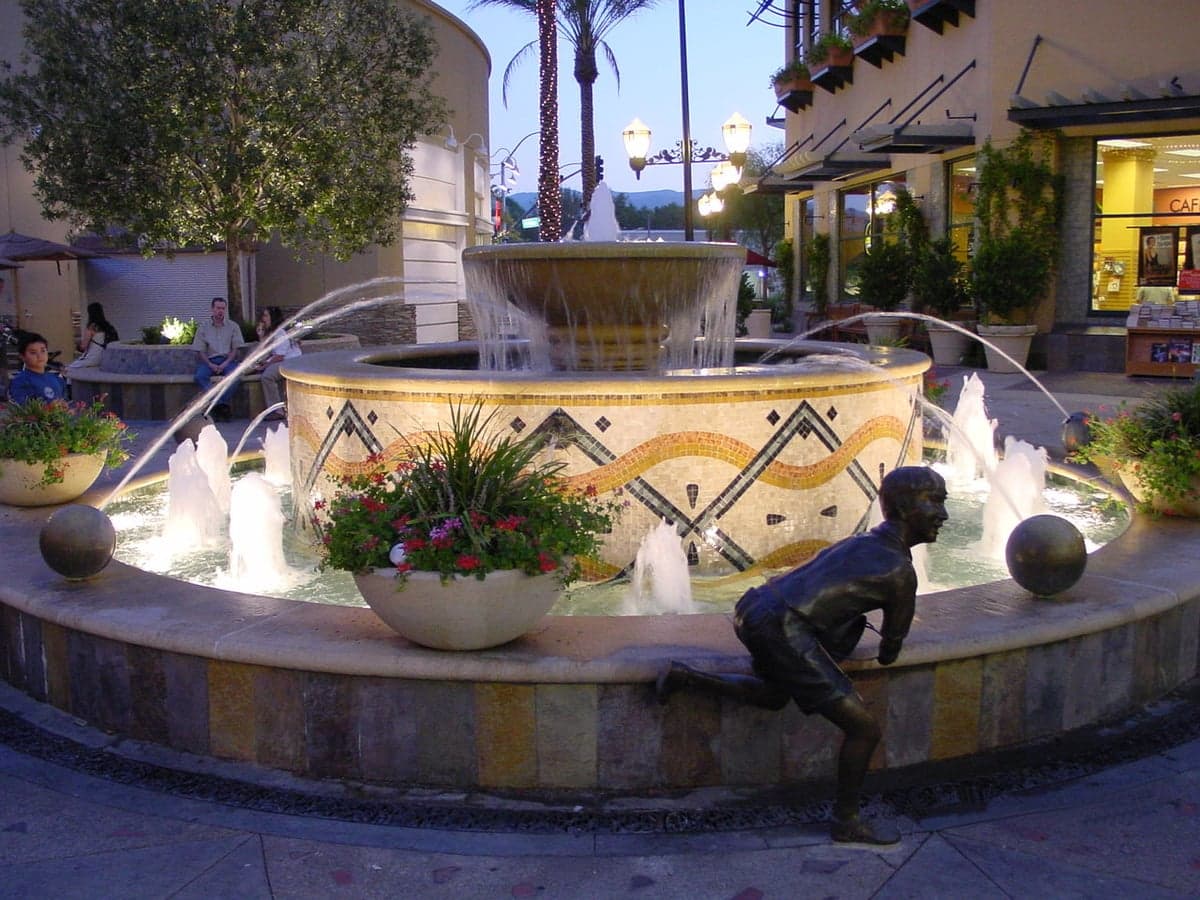
Photo: Wikipedia
Political ClimatePolitical Climate in Santa Clarita, CA
District shown is the primary district for this city’s centroid. Cities may span multiple districts.
Local Political AnalysisPolitical Analysis of Santa Clarita, CA
Santa Clarita has long been a conservative stronghold in Los Angeles County, but like much of California, it's slowly shifting. The area's Cook Partisan Voting Index (PVI) of D+3 might surprise folks who remember when this valley was reliably red, but it reflects a gradual drift toward the center-left, driven largely by an influx of new residents from the San Fernando Valley and younger families priced out of the city. Still, don't let that number fool you—local elections and community sentiment here still lean noticeably right of the county average, and many of us who've been around since the '90s remember when Santa Clarita was a place where conservative values weren't just tolerated, they were the norm.
How it compares
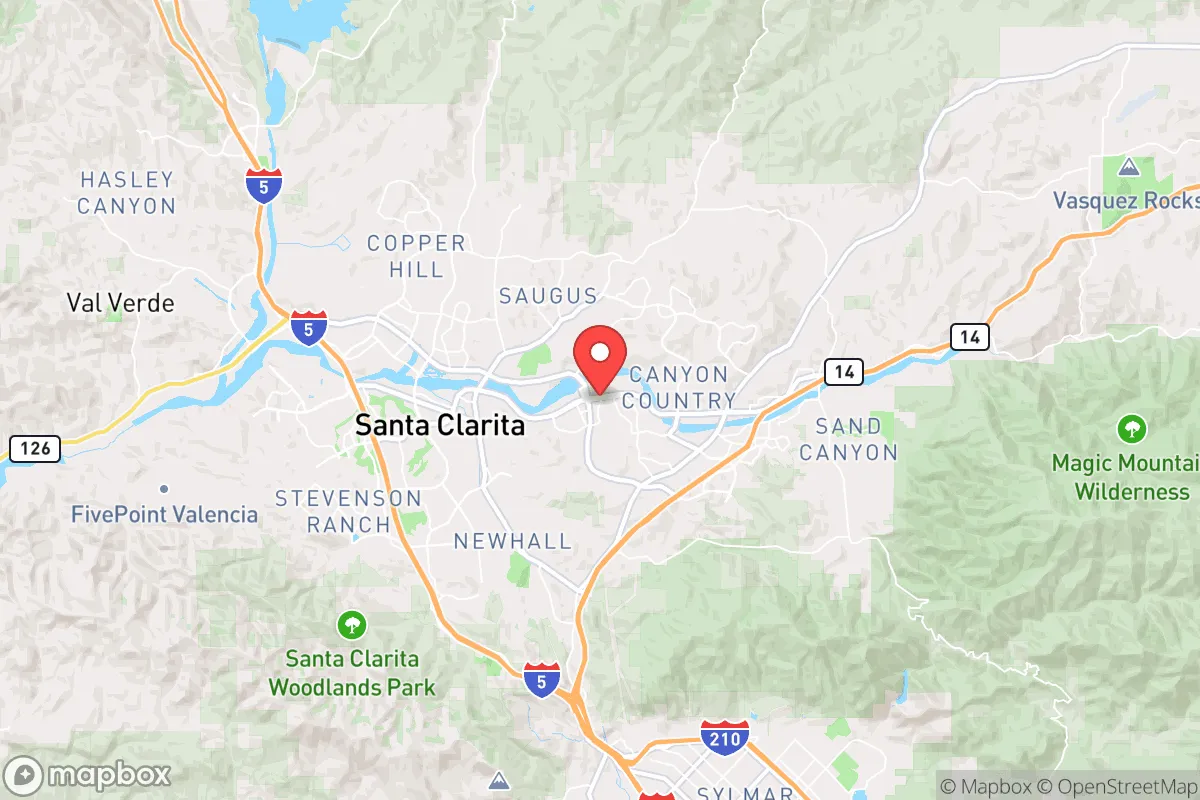
To understand Santa Clarita's political climate, you have to look at the map. Head south down the 5 and you hit the San Fernando Valley, which is deep blue—places like Northridge and Van Nuys vote overwhelmingly Democratic. But drive north toward the Antelope Valley, and you'll find Palmdale and Lancaster, which are more mixed but still lean conservative in local races. Santa Clarita sits right in the middle, acting as a kind of political buffer zone. In the 2024 presidential election, the city's precincts voted roughly 52% Republican, a stark contrast to Los Angeles County's overall 60% Democratic vote. That gap is widening, not narrowing, as more progressive policies from Sacramento and the county board get imposed on us. Nearby Simi Valley in Ventura County is even more conservative, but Santa Clarita still feels like the last bastion of common sense in this part of LA County.
What this means for residents
For those of us who value personal freedoms and limited government, the trend here is concerning. Santa Clarita's city council remains majority conservative, but the county Board of Supervisors—which controls land use, health mandates, and law enforcement funding—is solidly progressive. That disconnect means we often get hit with county-level policies we didn't vote for, like strict COVID-era business closures that hurt our local restaurants and gyms more than they helped. Property taxes are already high in California, but the real worry is the creeping overreach: new zoning rules that limit single-family homes, water use restrictions that feel arbitrary, and school board decisions that prioritize ideology over academics. If you're a gun owner, a small business owner, or just someone who wants to be left alone, you'll feel the squeeze more here than you would in, say, Texas or Arizona. The local sheriff's department is still pretty good about respecting Second Amendment rights, but that could change if the county keeps pushing.
One thing that hasn't changed much is the culture. Santa Clarita still has a strong sense of community, with neighborhood watch programs, active church groups, and a "mind your own business" attitude that's rare in LA County. You won't see the same kind of political activism you'd find in Santa Monica or West Hollywood—people here are more focused on their families, their jobs at companies like Princess Cruises or the local film studios, and keeping their kids safe. The biggest policy fights in recent years have been over development (too much, too fast) and school curriculum, not social issues. That might change as the population diversifies and more young families move in, but for now, Santa Clarita remains a place where you can still have a conversation with your neighbor without it turning into a political argument. Just don't expect that to last forever—the same forces that turned Orange County purple are already at work here.

State Political ClimatePolitical Climate in California
State Political AnalysisPolitical Environment in the State
California is a one-party Democratic state where registered Democrats outnumber Republicans by nearly 2-to-1, and the state has voted for the Democratic presidential candidate by double digits in every election since 2008. The dominant coalition is a mix of coastal progressives, union households, and a growing Latino electorate that leans left, while the Republican Party has been reduced to a rump in most statewide races. Over the last 20 years, the state has shifted from a competitive purple state—George W. Bush lost it by just 10 points in 2004—to a deep blue stronghold where Republicans haven’t won a statewide office since 2006. For a conservative considering relocation, this means your vote in state elections is effectively meaningless, and the policy direction is set by a legislature that has moved steadily leftward with no serious opposition.
Urban vs. rural divide
The political map of California is a tale of two states. The coastal metros—Los Angeles, San Francisco, San Diego, and San Jose—drive the Democratic supermajority, with San Francisco County delivering 85% of its vote to Biden in 2020 and Los Angeles County providing over 4 million Democratic votes. Inland, the Central Valley and far northern counties are reliably Republican: Bakersfield (Kern County) voted +16 for Trump in 2020, and Redding (Shasta County) went +30 for Trump. The real story is the suburbs: once-Republican strongholds like Orange County flipped blue in 2018 and haven’t looked back, while San Diego County suburbs like Escondido and Vista are now competitive. The rural-urban divide is stark—if you live in Fresno or Modesto, you’re in a purple island surrounded by red farmland, but your state representation is still drowned out by the coastal vote. The only places where a conservative can feel politically at home are the far north (Yreka, Alturas) and the Central Valley’s agricultural towns (Hanford, Tulare), but even there, state policy overrides local sentiment.
Policy environment
California’s policy environment is a laboratory for progressive governance, and it shows in every lever of state power. The state has the highest income tax rate in the nation (13.3% for top earners), a state sales tax that averages 8.8% with local add-ons, and some of the highest gas taxes in the country (57.9 cents per gallon). Regulatory posture is aggressively anti-business: the California Environmental Quality Act (CEQA) is weaponized to block housing and infrastructure, and the California Air Resources Board (CARB) sets emissions rules that effectively ban new gas-powered cars by 2035. Education policy is dominated by the California Teachers Association, the state’s most powerful union, which has blocked school choice and charter expansion for decades. Healthcare is moving toward single-payer: the state already runs its own Medicaid expansion (Medi-Cal) covering 15 million people, and a 2024 bill (SB 770) began planning for a unified financing system. Election laws are the most permissive in the country: universal mail-in ballots, same-day registration, and no voter ID requirement. For a conservative, this is a state where your tax dollars fund policies you oppose, and your ability to opt out—through school choice, private healthcare, or local zoning—is constantly under assault.
Trajectory & freedom
California is becoming less free by any measure of personal liberty, especially for conservatives. On gun rights, the state has the nation’s strictest laws: a 2023 law (SB 2) effectively banned concealed carry in most public places, and a 2024 law (AB 1598) required microstamping on all new handguns, making it nearly impossible to buy a legal firearm. On parental rights, a 2024 law (AB 1955) prohibits school districts from notifying parents if a child changes their gender identity, overriding local school board decisions. On speech, the state’s AB 587 (2022) forces social media platforms to report their content moderation policies, a move critics call a backdoor to censorship. Medical autonomy took a hit with the 2023 vaccine mandate for schoolchildren (SB 871), though it was later paused. Property rights are weak: rent control was expanded statewide in 2019 (AB 1482), and a 2024 law (AB 1033) allows local governments to seize vacant properties for affordable housing. The only area where freedom expanded was marijuana legalization (Prop 64, 2016), but even that is heavily taxed and regulated. The trajectory is clear: every legislative session brings new restrictions on guns, speech, and parental choice, while taxes and regulations tighten.
Civil unrest & political movements
California has been a flashpoint for civil unrest and political movements on both sides. The 2020 George Floyd protests in Los Angeles and Oakland were among the largest and most destructive in the nation, with looting and arson causing over $1 billion in damage. The state’s sanctuary policies—SB 54 (2017) limits local law enforcement cooperation with ICE—have made it a magnet for immigration politics, with border-related protests in San Diego and El Centro near the Calexico port of entry. On the right, the “State of Jefferson” movement in the far north (Siskiyou, Modoc, Lassen counties) has pushed for secession from California since the 1940s, and in 2024, the Shasta County Board of Supervisors declared itself a “Second Amendment Sanctuary” county. Election integrity controversies have been muted compared to other states, but the 2021 recall election of Governor Gavin Newsom—which failed 62-38—showed the limits of Republican organizing in a blue state. A new resident would notice the constant presence of political signage, homeless encampments in liberal cities, and a palpable tension between coastal progressives and inland conservatives that never resolves.
Projection
Over the next 5-10 years, California will likely become more progressive and more expensive, driving continued out-migration of conservatives and middle-class families. Demographic shifts favor the left: the state’s Latino population, which grew to 40% of the total by 2024, votes Democratic by a 2-to-1 margin, and Asian-American voters in the Bay Area and San Jose are trending blue. In-migration from other states is negative—California lost over 500,000 residents to domestic migration between 2020 and 2024, with many moving to Texas, Arizona, and Idaho. The state’s housing crisis, driven by CEQA and local zoning, will worsen, pushing more people into homelessness or out of state. Politically, the Democratic supermajority in the legislature is likely to expand, enabling even more aggressive policies: a single-payer healthcare system, a wealth tax (already proposed as Prop 19 in 2024), and further gun restrictions. The only wildcard is a potential economic downturn that could crack the progressive consensus, but given the state’s entrenched bureaucracy and union power, a conservative revival is unlikely. Someone moving in now should expect to live in a state where their values are increasingly marginalized, their taxes rise, and their ability to influence policy is nil.
For a conservative relocating to California, the bottom line is this: you are moving to a state where your political voice is drowned out, your tax burden is among the highest in the nation, and your personal freedoms—on guns, school choice, and parental rights—are under constant legislative attack. If you’re a single professional in tech or entertainment, you can carve out a comfortable life in a blue bubble like Irvine or Santa Monica, but you’ll pay for it. If you’re a parent, you’ll face a school system that prioritizes union contracts over your child’s education and a legal environment that undermines your authority. The best advice is to look at the inland counties—Placer County (Roseville) or San Luis Obispo County—where local politics are more balanced, but even there, state law overrides local preferences. California is a beautiful state with a strong economy, but for a conservative, it’s a place to visit, not to put down roots.
* Values derived from national, state, county, city and local statistics and may differ in a specific area. Last updated: 2026-04-24T12:44:37.000Z
Narrative content on this page is AI-generated and may contain mistakes. Verify any details that matter before acting on them.
ReloMaps may earn a commission from affiliate links at no extra cost to you.

