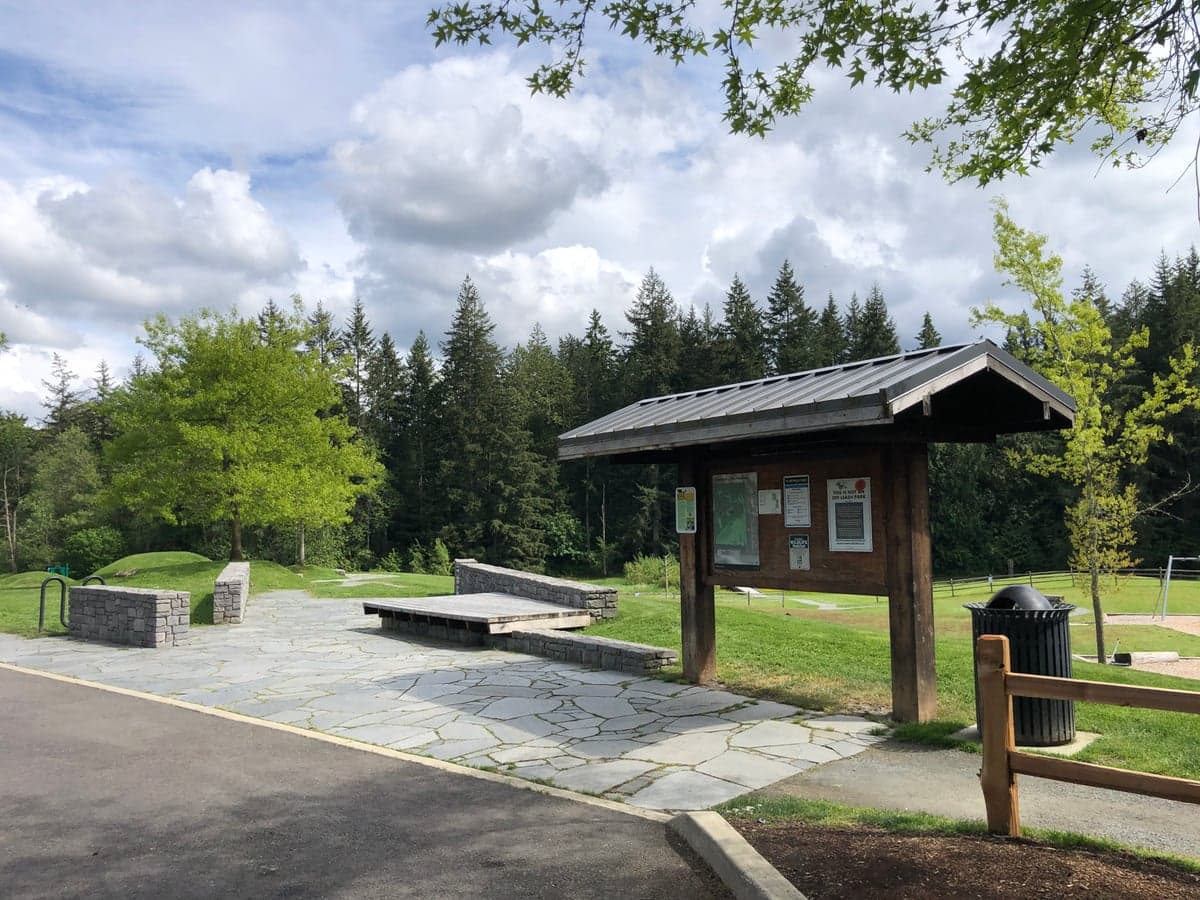
Photo: Wikipedia
Strategic Assessment of Sammamish, WA
Multiple tactical vulnerabilities. Population density, target proximity, or disaster risk are likely compounding. A retreat property and exit planning is required.
What does the Strategic Assessment tell us?
Our Strategic Assessment grades tactical survivability of an area. Major population centers, military targets, fallout zones, natural disasters, and border exposure all drive risk — lower exposure means a more defensible position in a crisis.
This is heavily inspired by Joel Skousen's Strategic Relocation book. Highly recommended you checkout the book ($)What does this tell us?
Our Strategic Assessment grades tactical survivability of an area. Major population centers, military targets, fallout zones, natural disasters, and border exposure all drive risk — lower exposure means a more defensible position in a crisis.
This is heavily inspired by Joel Skousen's Strategic Relocation book. Highly recommended you checkout the book ($)Strategic Pillars

Key Distances
Regional Safe Places
Below is our recommended "safe zones" in Washington and the surrounding area based on our strategic heuristics. For most people, it's unrealistic to live in a “safe zone” full-time due to work, family or other personal reasons. They tend to be more rural. However, many of these areas are perfect for second homes and retreat properties that double as a vacation home or even a short-term rental.
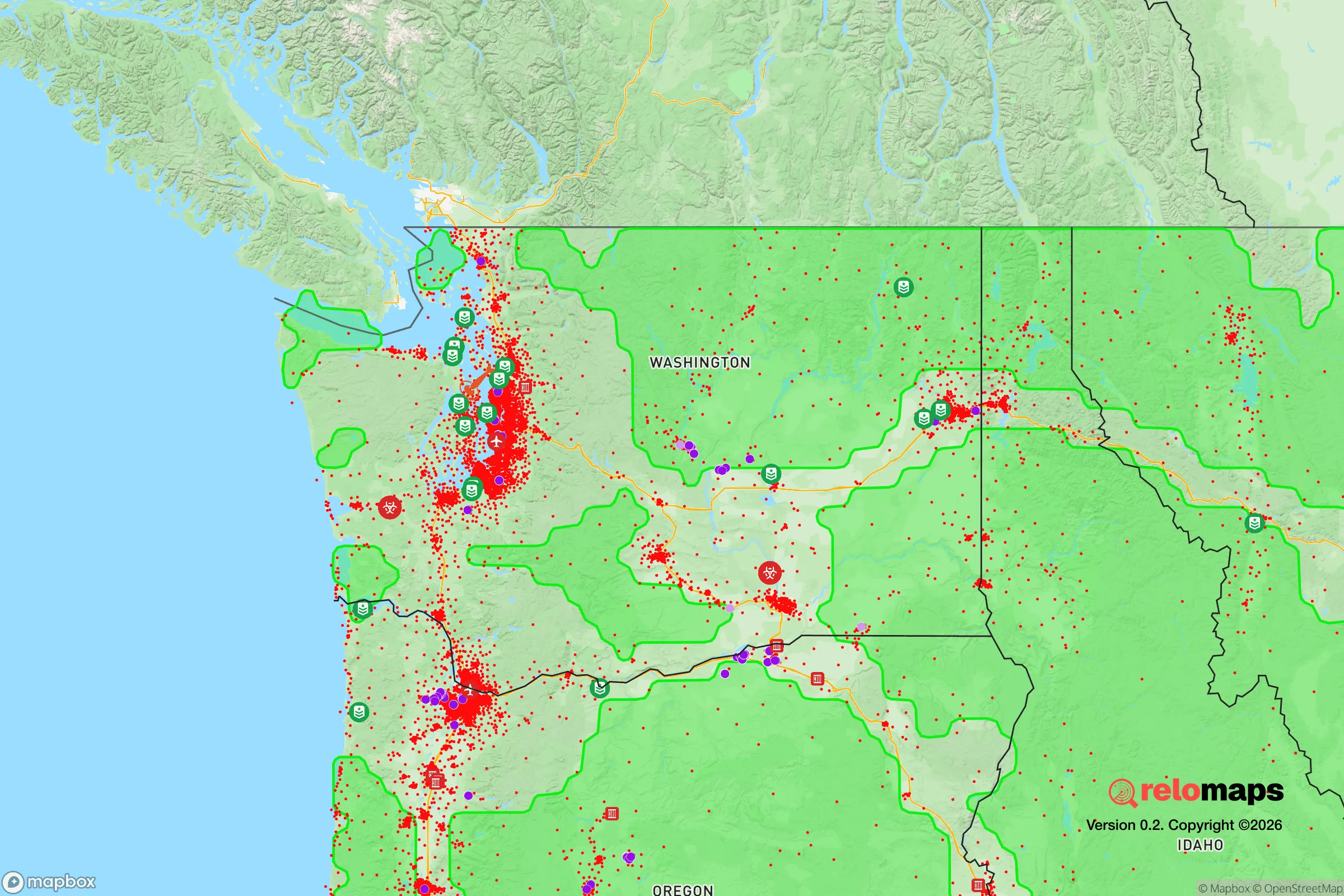
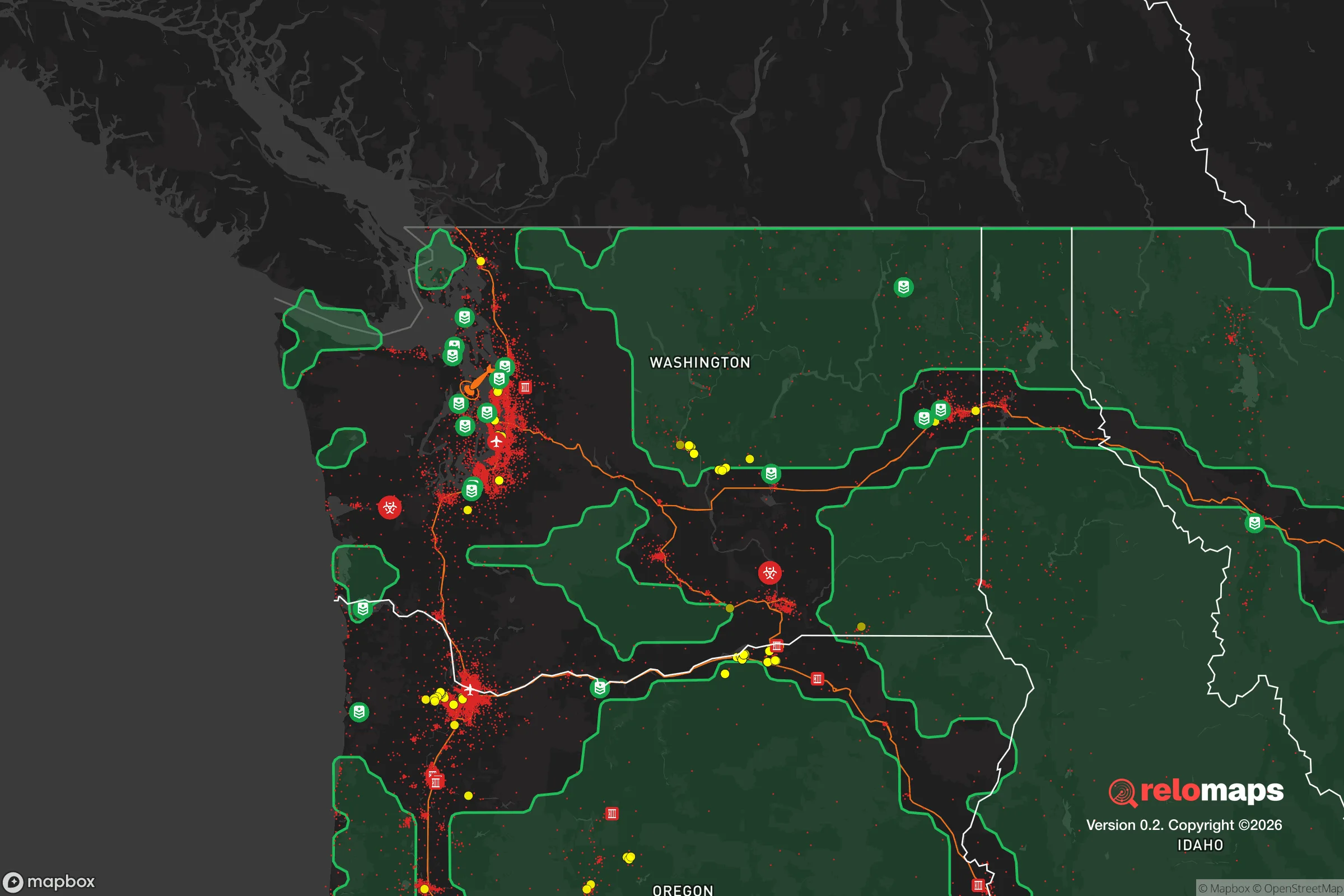


Important Note: For informational purposes only. This does not mean nothing bad ever happens in the green zones. Please use common sense. This is based on public data and modeled with AI. We tried to take a conservative approach but mistakes happen. We update this regularly as new information becomes available.
Solar Generator Recommendations
Backup power matters more here than in safer locations. We've picked three solar generators across budgets and capacity tiers — start with the budget unit if you only need a few essentials, or step up if you want to run a fridge and HVAC for days at a time.

Jackery Portable Power Station Explorer 300
Budget OptionPower on the Go: Weighing only 11 lbs, it's convenient to set up and store with book-sized foldable solar panels

BLUETTI Portable Power Station AC180
Designed for both indoor and outdoor scenarios, AC180 is highly capable as it has a robost capacity and continuous output power.

EF ECOFLOW DELTA Pro Ultra Power Station
Upgraded PickEcoFlow DELTA Pro Ultra is a whole-home energy system designed to grow with your family. Integrated with the Smart Home Panel 2, it scales to meet your evolving energy needs — keeping your home powered, intelligent, and secure through every stage of life.
We earn a commission, at no additional cost to you.
Strategic Assessment Analysis
Sammamish, Washington, presents a complex strategic picture for the conservative prepper or survivalist. On the surface, it offers a high quality of life, excellent schools, and a low crime rate, but its location within the greater Seattle metropolitan area introduces significant vulnerabilities that cannot be ignored. The city’s resilience is a double-edged sword: it benefits from natural buffers and a relatively affluent, stable population, yet it sits squarely within a region that could become a primary target or a zone of severe civil unrest during a national crisis. For the relocator prioritizing long-term security over suburban comfort, Sammamish demands a sober, risk-adjusted assessment.
Geographic position and natural advantages for a strategic relocation
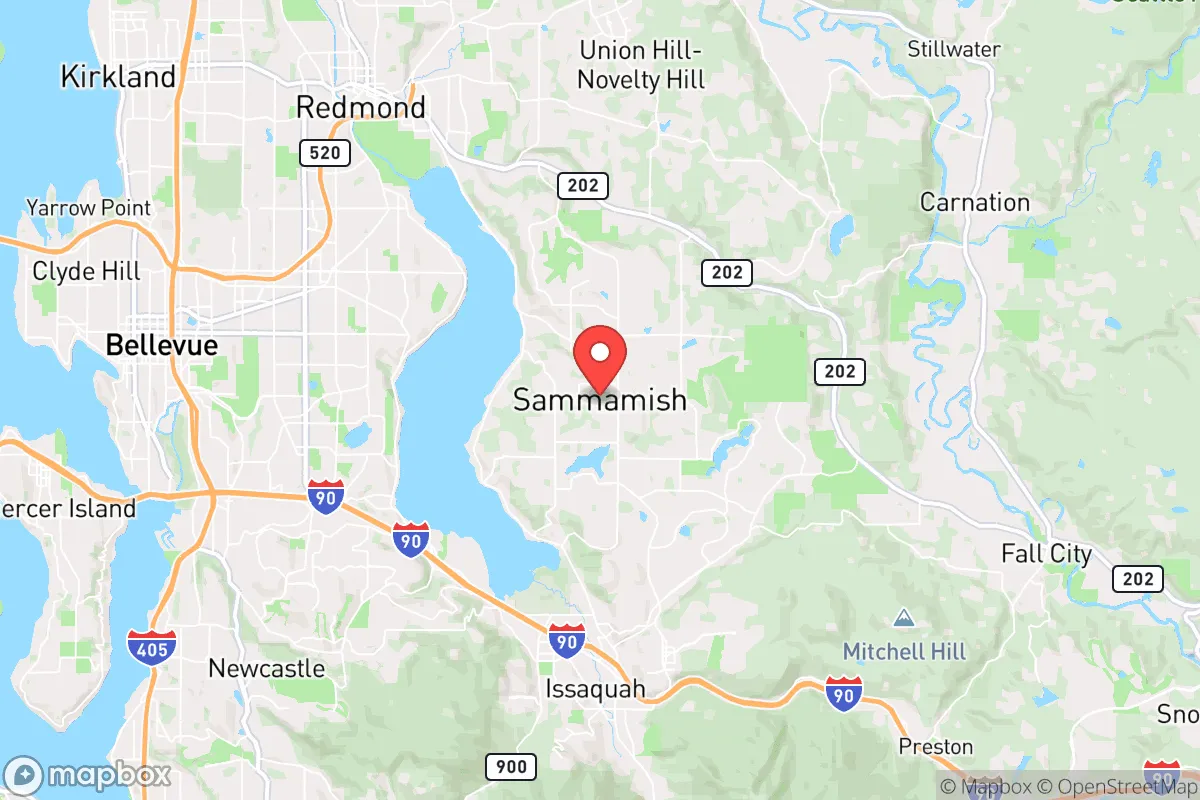
Sammamish occupies a strategic plateau on the eastern shore of Lake Sammamish, approximately 20 miles east of downtown Seattle. This elevated position provides a natural defensive advantage, with the lake and surrounding wetlands creating a partial moat effect that limits direct approaches from the west. The city is flanked by the Cascade foothills to the east, offering potential bug-out routes into more remote, forested terrain. The area’s temperate maritime climate means reliable rainfall, which supports year-round water availability from natural sources like Pine Lake and the many creeks that drain into the Sammamish River. The soil is generally fertile, and the region’s long growing season (roughly 150–180 frost-free days) makes subsistence gardening viable for those with the land and knowledge. The nearby Snoqualmie Valley and the Mount Baker-Snoqualmie National Forest provide vast, sparsely populated areas for retreat, though access is funneled through a few key highways (I-90 and SR 202) that could become chokepoints in a crisis.
Risks, exposures, and proximity to fallout-relevant landmarks
The most glaring strategic liability is Sammamish’s proximity to Seattle and the broader Puget Sound urban corridor. The city lies within a 30-minute drive of downtown Seattle, home to major corporate headquarters (Amazon, Microsoft, Starbucks), a major international airport (Sea-Tac), and a large naval base (Naval Base Kitsap, about 40 miles west). In a scenario involving civil unrest, mass casualty events, or a coordinated attack, these are high-value targets. Sammamish itself is not a primary target, but it would be directly in the path of any evacuation or refugee flow from the city. The region’s dependence on a few major highways (I-90, I-405, SR 520) means that any disruption—whether from a natural disaster, a terrorist incident, or a grid-down event—could trap residents or funnel desperate populations into the suburbs. Additionally, the area is in a seismically active zone; a major Cascadia Subduction Zone earthquake would not only cause direct damage but also likely trigger tsunamis along the coast and disrupt all transportation and utility corridors for weeks or months. The Hanford Nuclear Reservation, about 150 miles southeast, is a distant but non-zero fallout risk in a catastrophic event.
Practical resilience for a relocator: food, water, energy, and defensibility
For the individual or family looking to hunker down, Sammamish offers a mixed bag. Water is the strongest asset: the city’s municipal water comes from the Tolt River and Cedar River watersheds, but a grid-down scenario would require private well access or a plan to treat surface water from Lake Sammamish or local creeks. Many newer homes have private wells, but older subdivisions rely on city supply. Food resilience is moderate: the area has a strong local food movement, with farmers’ markets and CSAs, but most food is trucked in from the Central Valley of California or the Midwest. A long-term disruption would require significant personal stockpiling or a serious commitment to home gardening and small-scale livestock (chickens are common; goats and pigs are restricted in most neighborhoods). Energy is a vulnerability: the grid is reliable in normal times but is heavily dependent on hydroelectric power from the Columbia River system, which could be disrupted by a major earthquake or cyberattack. Solar potential is mediocre due to frequent cloud cover (about 150 sunny days per year), so a generator with a substantial fuel cache or a micro-hydro setup (if you have a creek) is a better bet. Defensibility is poor in the suburbs: typical Sammamish neighborhoods are low-density, with large lots and winding streets, but they are not designed for perimeter security. The city’s police force is professional but small (about 40 officers for 65,000 residents), and response times could stretch significantly during a widespread event. The best defensive strategy is to be part of a well-organized neighborhood watch or a mutual-aid group, as isolated homes are vulnerable to roving groups.
The overall strategic picture for Sammamish is one of calculated risk. It is not a remote survivalist redoubt, nor is it a high-risk urban core. It offers a comfortable, low-crime baseline with decent natural resources and a population that is generally educated and resourceful. However, its proximity to Seattle and the region’s critical infrastructure means that any major crisis—whether economic collapse, civil unrest, or a natural disaster—will likely spill over into the suburbs. For the conservative relocator who values community stability and has the means to invest in private resilience (well, solar, stockpiles, and a solid bug-out plan), Sammamish can work as a base. But for those seeking true strategic depth—far from population centers, with defensible terrain and self-sufficiency—the more remote areas of eastern Washington or the Idaho panhandle offer a better long-term bet. Sammamish is a good place to live, but it is not a fortress. Plan accordingly.

* Values derived from national, state, county, city and local statistics and may differ in a specific area. Last updated: 2026-04-21T11:18:54.000Z
Narrative content on this page is AI-generated and may contain mistakes. Verify any details that matter before acting on them.
ReloMaps may earn a commission from affiliate links at no extra cost to you.

