Photo: Wikipedia
Political ClimatePolitical Climate in Sammamish, WA
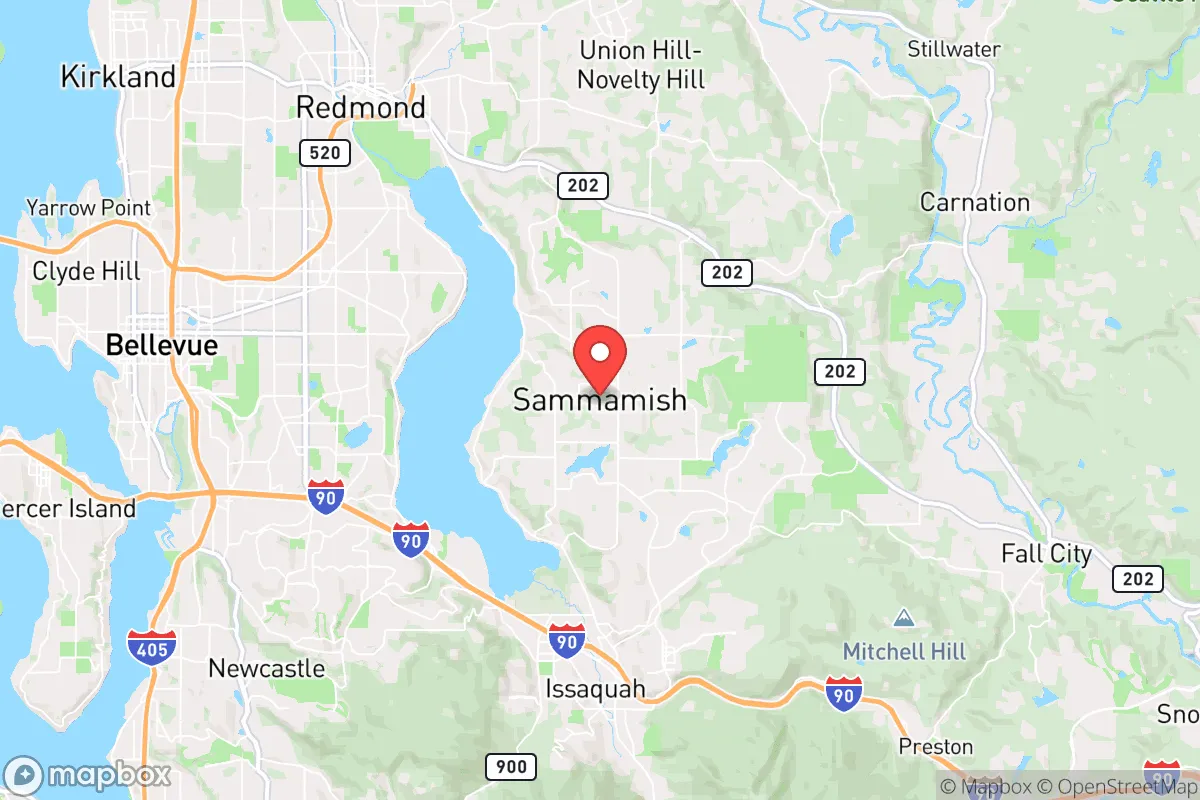
District shown is the primary district for this city’s centroid. Cities may span multiple districts.
Local Political AnalysisPolitical Analysis of Sammamish, WA
Sammamish, Washington, has shifted noticeably to the left over the past decade, and if you’ve lived here as long as I have, you’ve felt it. The Cook PVI rating of D+3 tells the story: this is a solidly Democratic-leaning suburb, but it wasn’t always that way. Back in the early 2000s, Sammamish was a reliably conservative stronghold, with most folks voting red and keeping local government focused on low taxes, property rights, and minimal interference. Today, the political energy here is increasingly progressive, and the trajectory points further left with each election cycle.
How it compares
To understand Sammamish’s shift, you have to look at the neighbors. Drive ten minutes east to Issaquah, and you’ll find a similar D+ lean, but with a more aggressive progressive push—think higher density zoning and more public spending on social programs. Head west to Redmond, and you’re in deep-blue territory, home to Microsoft’s corporate culture and a city council that rarely meets a tax increase it doesn’t like. Bellevue is a mixed bag—still some fiscal conservatism in the old guard, but the tech transplants are tilting it left. The real contrast is North Bend or Fall City, just a half-hour east: those areas vote reliably red, with a Cook PVI around R+8 to R+12. They’re the last bastions of common-sense governance in this corner of King County, where people still believe in limited government and personal responsibility. Sammamish used to feel like that. Now it feels like a suburb trying to copy Seattle’s homework.
What this means for residents
For those of us who value personal freedoms and local control, the trend is concerning. The city council has quietly pushed higher property taxes and more restrictive land-use regulations, often framed as “sustainability” or “equity.” What that really means is less freedom to build a fence, park your boat, or run a small home business without a stack of permits. The school board has also shifted, with curriculum changes that emphasize social-emotional learning over academic rigor—a move that worries parents who want their kids taught how to think, not what to think. If you’re a conservative or even a moderate libertarian, you’ll find yourself increasingly on the outside of local decisions. The annual city budget debates are a good example: spending on diversity consultants and climate action plans gets prioritized over road maintenance or police funding. It’s a slow creep, but it’s real.
Culturally, Sammamish still has its quiet, family-friendly character—good schools, safe streets, and plenty of parks. But the political undercurrent is unmistakable. You’ll see more “In This House We Believe” signs than “Don’t Tread on Me” flags these days. The local Facebook groups are dominated by progressive activists pushing for bike lanes, denser housing, and “inclusive” policies that often come with more government oversight. If you’re looking for a place where your vote actually pushes back against the Seattle-style agenda, you might want to look east toward Snoqualmie or even Duvall. Sammamish is still a great place to raise a family—if you’re willing to fight for your values at every city council meeting. Otherwise, you’ll just watch the pendulum swing.

State Political ClimatePolitical Climate in Washington
State Political AnalysisPolitical Environment in the State
Washington State has transformed from a swing state into a solidly Democratic stronghold over the past two decades, with the Democratic Party now holding every statewide office and both U.S. Senate seats. The state has voted blue in every presidential election since 1988, and the margin has widened from a 5-point win for John Kerry in 2004 to a 19-point win for Joe Biden in 2020. The dominant coalition is a fusion of King County’s tech-driven urban progressives, Puget Sound suburbanites, and a growing base of out-of-state transplants from California and Oregon, while the eastern half of the state and rural western counties have become increasingly Republican and alienated from the Seattle-centric political machine.
Urban vs. rural divide
The political map of Washington is a tale of two states. King County, home to Seattle and its sprawling suburbs, casts roughly one-third of all votes in the state and delivers margins of 70-80% for Democrats. That alone is enough to flip the entire state blue. The I-5 corridor from Olympia through Tacoma to Everett is similarly deep blue, with Pierce and Snohomish counties trending left as suburban sprawl from Seattle pushes outward. Meanwhile, the eastern half of the state — places like Spokane, Yakima, and the Tri-Cities (Kennewick, Pasco, Richland) — votes reliably Republican, but their populations are too small to counterbalance the Seattle metro. The most dramatic shift has been in Clark County (Vancouver), which flipped from reliably red to purple and then blue as Portland-area refugees crossed the Columbia River. In 2020, Clark County went for Biden by 6 points after voting for Trump by 3 points in 2016. The rural counties of Ferry, Stevens, Pend Oreille, and Garfield regularly vote 70-80% Republican, but they lack the population density to matter in statewide races. The result is a state where a resident of Spokane Valley feels like they live in a completely different country than someone in Capitol Hill, Seattle.
Policy environment
Washington’s policy environment is aggressively progressive and increasingly unfriendly to conservatives. The state has no personal income tax, which sounds good on paper, but the state sales tax is among the highest in the nation at 6.5% base (with local add-ons pushing it to 10%+ in some cities), and property taxes have risen sharply as home values have doubled since 2020. The state legislature passed a capital gains tax in 2021 (targeting gains over $250,000), which is currently being challenged in court but is likely to survive. On regulation, Washington has some of the strictest environmental and land-use laws in the country, making it nearly impossible to build new housing or expand businesses in many areas. The state’s education system is dominated by teachers’ unions, and the legislature passed a law in 2023 requiring all public schools to adopt “comprehensive sexual health education” that includes LGBTQ+ content starting in kindergarten — a major flashpoint for parents. Healthcare is heavily regulated, with a state-run insurance exchange and a public option law passed in 2021. Election laws are among the most liberal in the nation: Washington has universal vote-by-mail, automatic voter registration, same-day registration, and no voter ID requirement. Ballot harvesting is legal, and there is no signature verification requirement beyond a basic comparison. For a conservative moving here, the policy environment feels like a one-party state where the legislature routinely overrides local control on everything from zoning to policing to education.
Trajectory & freedom
Washington is becoming less free by nearly every measure, especially for conservatives. The state has some of the strictest gun laws in the country, including a 2023 ban on “assault weapons” (defined broadly to include many common semi-automatic rifles), a 10-round magazine capacity limit, and a requirement for a 10-day waiting period on all firearm purchases. A 2024 law requires a permit to purchase any firearm, effectively creating a de facto gun registry. On parental rights, the state passed a law in 2023 that allows minors as young as 13 to receive gender-affirming care without parental consent, and schools are prohibited from notifying parents if a child changes their name or pronouns. The state also passed a “shield law” in 2023 that protects providers of abortion and gender-affirming care from out-of-state legal actions, effectively making Washington a sanctuary for these procedures. On speech, the state has no hate speech law, but social media platforms operating in Washington are subject to content moderation requirements that some argue chill conservative speech. Property rights have been eroded by the state’s Growth Management Act, which heavily restricts development in rural areas and has driven up housing costs. The state’s tax burden has increased significantly, with the new capital gains tax and a 2024 law that capped property tax increases at 1% per year — a cap that local governments are already trying to circumvent. For a freedom-minded person, the trajectory is clearly toward more government control over daily life.
Civil unrest & political movements
Washington has a long history of political activism, but the last five years have seen an escalation. The 2020 protests in Seattle, including the Capitol Hill Autonomous Zone (CHAZ), were a national flashpoint, with the city council cutting the police budget by 50% and the mayor allowing the zone to operate for weeks. Since then, property crime has surged — Seattle’s auto theft rate is the highest in the nation, and shoplifting is essentially decriminalized for thefts under $950. On the right, the Washington State Republican Party has become more populist and Trump-aligned, but it remains a minority party in a state where Democrats hold supermajorities in both legislative chambers. The secession movement — proposals to create a separate “Liberty State” from eastern Washington — has gained traction in rural counties, with several county commissions passing resolutions in support of secession, though it remains a symbolic gesture. Immigration politics are a major flashpoint: Washington is a sanctuary state, and the legislature passed a law in 2023 prohibiting local law enforcement from cooperating with ICE. The state also has a “sanctuary city” network that includes Seattle, Tacoma, Olympia, and Spokane. Election integrity remains a concern for conservatives, with the 2020 election seeing widespread use of ballot drop boxes and no voter ID requirement, though no major fraud has been proven. The most visible flashpoint for a new resident is likely the homelessness crisis in Seattle and Portland, which has spilled into suburban areas like Kent and Federal Way, with tent encampments visible along highways and in parks.
Projection
Over the next 5-10 years, Washington is likely to become even more Democratic and progressive. The primary driver is demographic change: the state is growing fastest in the Seattle suburbs and Clark County, both of which are trending left, while rural counties are losing population. The tech industry continues to attract young, college-educated, left-leaning workers from across the country, and the state’s housing crisis is pushing those workers into formerly red suburbs like Puyallup, Marysville, and Camas, turning them purple or blue. The Republican Party is unlikely to win a statewide race in the foreseeable future, and the state legislature will likely pass even more progressive policies, including a state income tax (currently being debated), stricter gun laws, and expanded government healthcare. The secession movement will remain a fringe idea, but rural resentment will grow, leading to more “sanctuary county” resolutions and non-compliance with state mandates. For a conservative moving in now, expect to live in a state where your vote for president or Senate is effectively meaningless, where your children will be exposed to progressive ideology in public schools, and where your property rights and gun rights will continue to erode. The best bet for a conservative is to live in a red county like Spokane or Yakima, where local government is more aligned with your values, but even there, state preemption will limit what local officials can do.
Bottom line for a new resident: If you’re a conservative considering Washington, understand that you are moving into a one-party state where your political voice will be marginalized. The natural beauty, outdoor recreation, and strong economy are real draws, but they come with a price tag of high taxes, heavy regulation, and a cultural environment that is increasingly hostile to traditional values. If you can afford to live in a red enclave like Spokane Valley or Richland, you can carve out a decent life, but don’t expect to change the state’s trajectory. For most conservatives, the better move is to look at Idaho, Montana, or Texas, where your vote still matters and your freedoms are more secure.
* Values derived from national, state, county, city and local statistics and may differ in a specific area. Last updated: 2026-04-21T11:18:54.000Z
Narrative content on this page is AI-generated and may contain mistakes. Verify any details that matter before acting on them.
ReloMaps may earn a commission from affiliate links at no extra cost to you.

