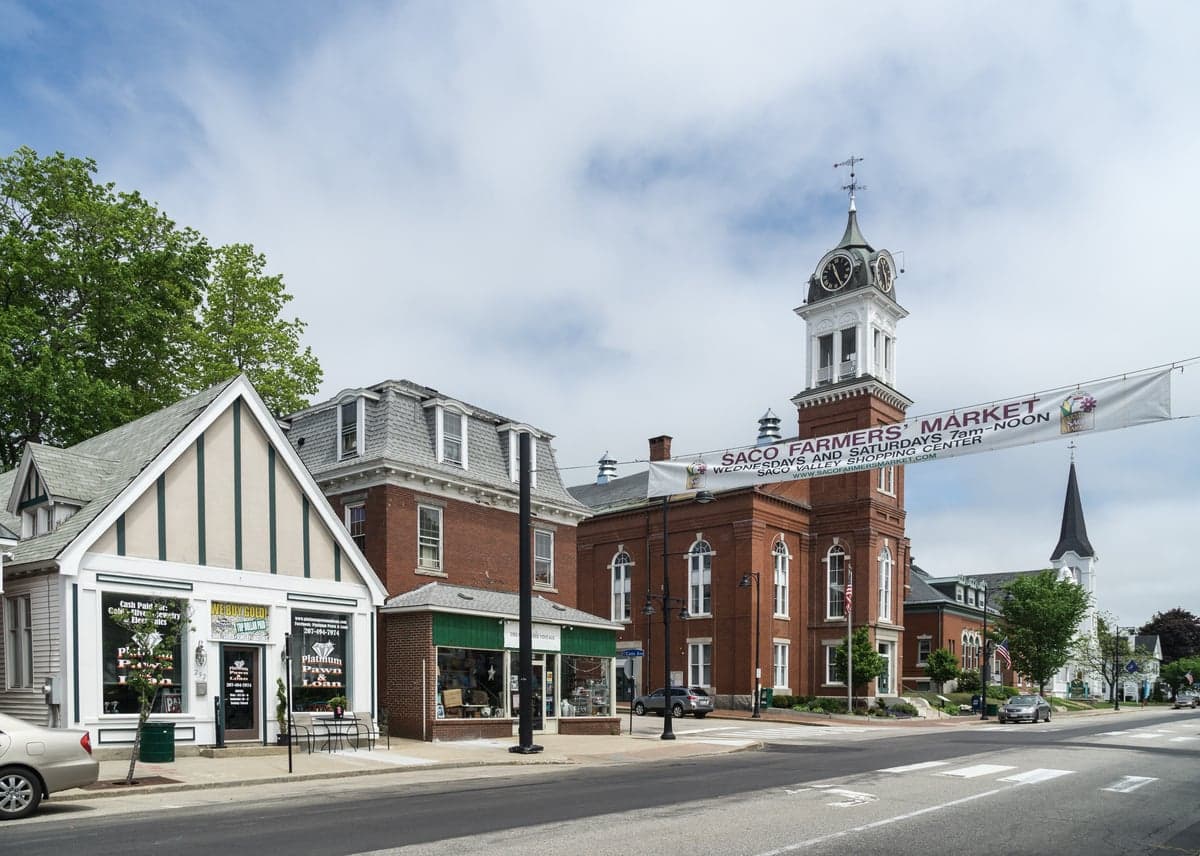
Photo: Wikipedia
Political ClimatePolitical Climate in Saco, ME
District shown is the primary district for this city’s centroid. Cities may span multiple districts.
Local Political AnalysisPolitical Analysis of Saco, ME
Saco, Maine, sits in a political landscape that has shifted noticeably leftward in recent years, with a Cook PVI of D+11 reflecting a solid Democratic lean that wasn't always this pronounced. If you've been around here long enough, you remember when this city was more of a purple patch—a place where common-sense independence and fiscal restraint held real sway. Today, the voting patterns tell a story of a community increasingly aligning with the progressive currents flowing out of Portland, and that's a trend worth watching closely for anyone who values personal freedoms and limited government overreach.
How it compares
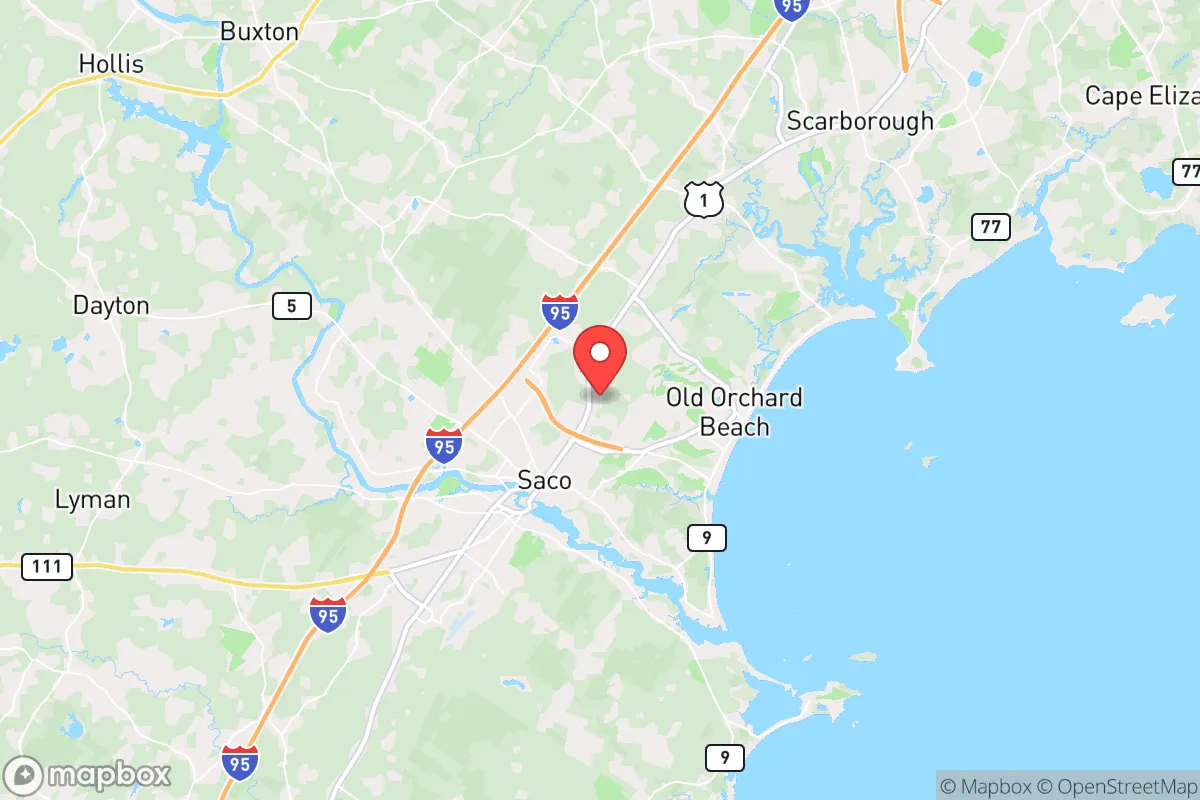
To understand Saco's political drift, you have to look at the towns just outside its borders. Head west to Buxton or Hollis, and you'll find a more traditional Maine sensibility—lower taxes, fewer regulations, and a general skepticism of government solutions. Even neighboring Biddeford, once a working-class counterbalance, has swung hard left alongside Saco, driven by an influx of younger residents and out-of-state transplants who bring big-city voting habits with them. The contrast is stark: drive ten minutes inland, and you're in communities where the Second Amendment is still a given and property rights aren't negotiable. In Saco, you're increasingly seeing zoning battles and local ordinances that feel like they're testing the limits of what government should control in your daily life.
What this means for residents
For the average Saco resident, this political tilt translates into real-world consequences that can feel invasive. School board decisions and city council votes have started leaning toward policies that prioritize equity mandates over academic basics, and there's a growing push for "sustainable" development rules that can tie up a simple home renovation in red tape. Property taxes, already a burden in Maine, have crept upward as the city funds new social programs and diversity initiatives—initiatives that sound good on paper but often mean less money in your pocket and more bureaucratic hoops to jump through. If you're a small business owner or a homeowner who just wants to be left alone, you might find yourself wondering why local government needs to have a hand in so many aspects of your life.
What sets Saco apart culturally
Culturally, Saco still holds onto some of its old character—you'll find folks who wave from their porches and neighbors who actually know each other's names—but the policy direction is increasingly at odds with that independent spirit. The city has embraced a "welcoming community" designation that, while framed as inclusive, often comes with implicit support for sanctuary policies that can strain local resources and create friction with state and federal law. Long-term, if the current trajectory holds, Saco risks becoming a smaller version of Portland: a place where progressive ideology drives the agenda, and traditional Maine values of self-reliance and personal liberty take a back seat. For those of us who remember when Saco was a place where you could live your life without a government checklist, it's a shift that feels less like progress and more like a slow erosion of what made this area worth calling home.

State Political ClimatePolitical Climate in Maine
State Political AnalysisPolitical Environment in the State
Maine has long been known as a politically independent state, but over the past 20 years, it has shifted from a moderate, live-and-let-live place to a state where progressive policies increasingly dominate the coastal and southern corridors. The state’s overall partisan lean is now reliably Democratic at the presidential level—voting for Joe Biden by 9 points in 2020—but its state legislature and governor’s office have seesawed between parties, with Governor Janet Mills (D) currently in office. The real story is the growing urban-rural split: the Portland metro area and college towns like Brunswick and Orono drive the blue vote, while vast stretches of northern and western Maine—places like Bangor, Presque Isle, and the Rangeley Lakes region—remain deeply red or independent. Over the last decade, the state has enacted several progressive policies that raise red flags for those who value limited government and personal freedom.
Urban vs. rural divide
The political map of Maine is a tale of two states. The southern coast, anchored by Portland and its suburbs like South Portland and Scarborough, is the engine of Democratic power. These areas are dense, affluent, and increasingly influenced by out-of-state transplants from Massachusetts and New York who bring progressive voting habits. In contrast, the vast interior and northern counties—Aroostook, Piscataquis, Somerset, and Washington—vote reliably Republican or independent. For example, in 2020, Aroostook County voted for Donald Trump by 18 points, while Cumberland County (Portland) went for Biden by 30 points. The mid-sized city of Bangor is a bellwether: it leans slightly left but is surrounded by conservative towns like Hermon and Hampden. Lewiston and Auburn, historically mill towns with large Franco-American and Somali populations, are swing areas that have trended blue in recent cycles. The rural-urban divide is stark and widening, with coastal and college towns pulling the state left while the interior holds firm.
Policy environment
Maine’s policy environment has become increasingly activist under Democratic control. The state has a progressive income tax structure with rates up to 7.15% for high earners, and property taxes are among the highest in the nation—a burden that hits rural landowners hard. In 2021, Governor Mills signed a law expanding Medicaid under the Affordable Care Act, which was already approved by voters in 2017 but delayed by her predecessor. Education policy is centralized: Maine has a statewide curriculum and mandates for LGBTQ+ inclusive materials in schools, which has sparked parental rights concerns. Election laws are relatively open: same-day voter registration is allowed, and no-excuse absentee voting was made permanent after the pandemic. The state also has a strict vaccine mandate for healthcare workers and schoolchildren, though religious exemptions exist. For conservatives, the regulatory posture is heavy—especially in environmental permitting and land use, which can frustrate property owners and small businesses.
Trajectory & freedom
Maine’s trajectory over the last five years has been concerning for those who prioritize personal liberty. In 2023, the legislature passed a strict gun control package that included a 72-hour waiting period for firearm purchases and expanded background checks for private sales—a direct response to the Lewiston mass shooting in October 2023. This was a significant expansion of government power over a constitutional right. On medical freedom, Maine was one of the first states to mandate COVID-19 vaccines for healthcare workers, and the mandate remains in place. Parental rights took a hit with the passage of LD 1735 in 2023, which prohibits schools from notifying parents if a child changes their gender identity or pronouns without the child’s consent—a law that many see as undermining family authority. On the positive side, Maine has no sales tax on groceries or clothing, and property tax relief programs exist for seniors, but the overall trend is toward more regulation and less individual autonomy.
Civil unrest & political movements
Maine has seen its share of political flashpoints. The Lewiston shooting in October 2023, which killed 18 people, led to massive protests for gun control and a subsequent legislative crackdown. The state has a small but vocal Second Amendment movement, with groups like the Maine Gun Owners Association actively fighting new restrictions. Immigration politics are less heated than in border states, but the influx of Somali and Congolese refugees into Lewiston and Portland has created cultural tensions and debates over resources. Portland is a self-declared sanctuary city, and state law limits cooperation with federal immigration enforcement. Election integrity has been a minor issue: Maine uses ranked-choice voting for federal races, which some conservatives argue dilutes voter intent. In 2020, the state’s election was widely seen as secure, but concerns about mail-in voting persist among some activists. The secessionist movement in northern Maine—the idea of forming a separate state called “Northern Maine”—has quieted but still simmers among those who feel ignored by Augusta.
Projection
Over the next 5-10 years, Maine is likely to continue its slow drift leftward, driven by in-migration from more liberal states and the concentration of population in the Portland area. The rural counties will remain red, but their political power is shrinking as their populations decline. The 2020 census cost Maine one of its two congressional districts in the future? Actually, Maine kept both seats, but the 1st District (coastal) is solidly blue, while the 2nd District (rural) is a toss-up that went for Trump in 2016 and 2020. Demographic trends suggest the 2nd District will become harder for Republicans to hold as retirees and remote workers move to coastal towns. Expect more gun control, more mandates on schools and businesses, and higher taxes to fund expanded social programs. The state’s aging population—Maine has the oldest median age in the nation—will strain budgets and may push for more government services. For someone moving in now, the political environment will feel increasingly restrictive in the south but remain relatively free in the north.
For a new resident, the bottom line is this: if you value low taxes, gun rights, and local control, you’ll want to settle in northern or western Maine—places like Bangor, Presque Isle, or the Rangeley region. If you’re moving to Portland or its suburbs, expect a policy environment that mirrors Massachusetts or Vermont, with high costs and expanding government reach. The state’s independent streak still exists, but it’s being steadily eroded by coastal urbanization and progressive legislation. Do your homework on local ordinances and school board politics—those are where the real battles over freedom are being fought.
* Values derived from national, state, county, city and local statistics and may differ in a specific area. Last updated: 2026-05-02T00:21:56.000Z
Narrative content on this page is AI-generated and may contain mistakes. Verify any details that matter before acting on them.
ReloMaps may earn a commission from affiliate links at no extra cost to you.

