Demographics of Ruidoso, NM
Affluence Level in Ruidoso, NM
A middle-class area roughly in line with national averages across income, home values, education, and employment.
People of Ruidoso, NM
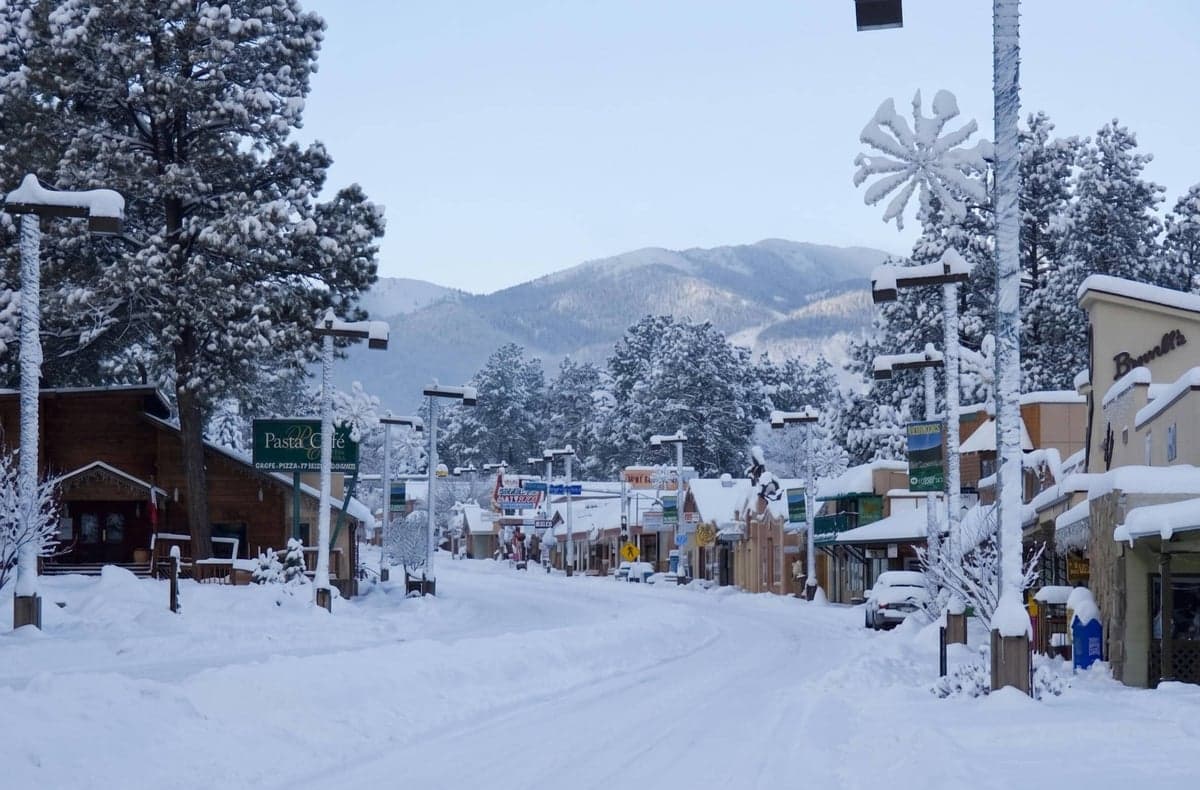
The people of Ruidoso, New Mexico today number 7,701, forming a community that is predominantly White (64.3%) with a substantial Hispanic minority (28.3%) and very small Black (1.3%), East/Southeast Asian (0.4%), and Indian subcontinent (0.6%) populations. The foreign-born share is just 2.0%, well below the national average, reflecting a population shaped overwhelmingly by domestic in-migration rather than international immigration. This is a mountain resort town with a distinctive identity: a mix of second-home owners, retirees, service-industry workers, and a growing number of remote professionals drawn by the cool climate and outdoor recreation, creating a politically mixed but culturally conservative-leaning atmosphere.
How the city was settled and grew
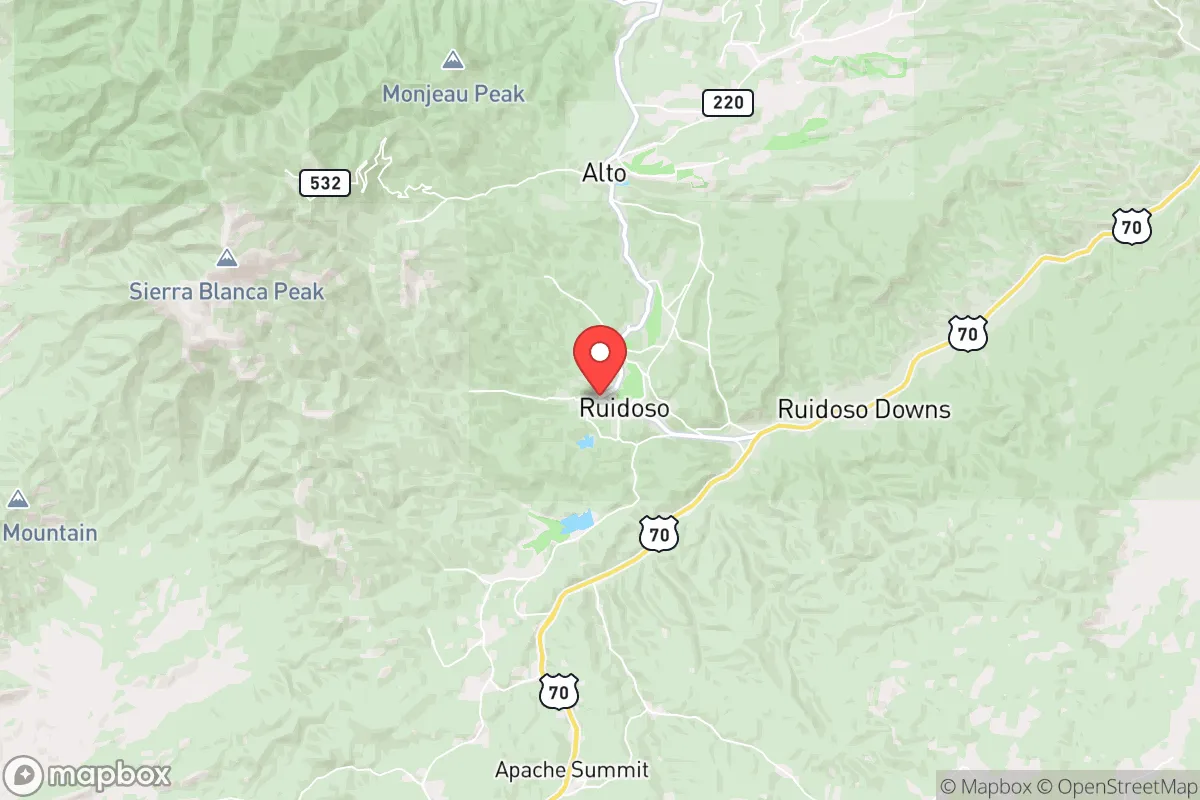
Ruidoso was not a Spanish colonial settlement or a land-grant community. Its founding is genuinely post-1900, beginning as a small summer retreat for ranchers and traders from the surrounding Tularosa Basin and Mescalero Apache Reservation. The first permanent structures appeared around 1900 along the Rio Ruidoso, with the town’s growth tied directly to the arrival of the railroad in nearby Capitan and the establishment of the Mescalero Apache Indian Reservation in the 1870s. The original population was a mix of Anglo ranchers and Hispanic families from the Rio Grande valley, who built small cabins and homesteads in what is now Upper Canyon, the oldest residential corridor along the river. The town’s first economic boom came in the 1930s with the construction of the Ruidoso Dam and the creation of Grindstone Reservoir, which drew workers and established the area as a recreation destination. By the 1940s, the village had a permanent population of a few hundred, with the Midtown district emerging as the commercial and social hub, centered on Sudderth Drive. The post-World War II era saw a second wave of Anglo retirees and veterans, who built modest homes in Alto, a higher-elevation area just north of town, drawn by the promise of cool summers and trout fishing.
Modern era (post-1965)
The 1965 Hart-Cellar Act had minimal direct effect on Ruidoso, as the town never attracted significant foreign-born populations. Instead, the modern era was defined by domestic in-migration, accelerating after the 1970s. The opening of the Ruidoso Downs Racetrack in 1947 and the development of Ski Apache in the 1960s transformed the economy from ranching to tourism, drawing a new wave of Anglo entrepreneurs, service workers, and second-home buyers. The Hispanic population, which had been present since the town’s founding, grew through natural increase and migration from nearby Lincoln County and the Mescalero Apache Reservation, concentrating in Downtown Ruidoso and the Glencoe area south of town, where older Hispanic families maintain deep roots. The 1980s and 1990s saw a surge in home construction in Upper Canyon and Alto, attracting affluent Anglo retirees and, later, remote workers from Texas and California. The Black population remains very small (1.3%), concentrated in service-industry roles and living primarily in the Midtown area. The East/Southeast Asian and Indian subcontinent populations are tiny (0.4% and 0.6% respectively), mostly professionals in healthcare and hospitality, with no distinct ethnic enclave. The college-educated share stands at 30.9%, reflecting the town’s draw for educated retirees and remote workers, though this is below the national average.
The future
Ruidoso’s population is likely to continue growing slowly, driven by domestic in-migration from Texas, California, and other Western states, as well as natural increase among the Hispanic population. The town is not tribalizing into distinct ethnic enclaves; rather, it is homogenizing as a predominantly White and Hispanic community with a shared resort-town identity. The Hispanic share is expected to rise gradually, approaching 30-35% over the next decade, as younger Hispanic families remain and Anglo retirees age in place. The foreign-born share will likely remain below 3%, as the town lacks the industrial or agricultural base that attracts international immigrants. The East/Southeast Asian and Indian subcontinent populations will probably remain negligible, as Ruidoso does not offer the professional job markets or ethnic infrastructure that draw these groups to larger cities. The biggest demographic shift will be the continued influx of remote workers and retirees, who are pushing up home prices and reshaping the housing stock toward higher-end properties in Alto and Upper Canyon, while the Midtown and Downtown areas remain more affordable and diverse.
For someone moving in now, Ruidoso is becoming a more expensive, more Anglo-dominated resort town with a stable Hispanic working class and very little ethnic diversity beyond that. The population is aging, with a growing share of retirees, but the remote-work trend is bringing in younger families. The community is culturally conservative and family-oriented, with a strong emphasis on outdoor recreation and local events. The lack of international immigration means the town will remain culturally homogeneous, which may appeal to those seeking a traditional small-town atmosphere but may feel insular to others.

* Values derived from national, state, county, city and local statistics and may differ in a specific area. Last updated: 2026-04-19T07:04:39.000Z
Narrative content on this page is AI-generated and may contain mistakes. Verify any details that matter before acting on them.
ReloMaps may earn a commission from affiliate links at no extra cost to you.

