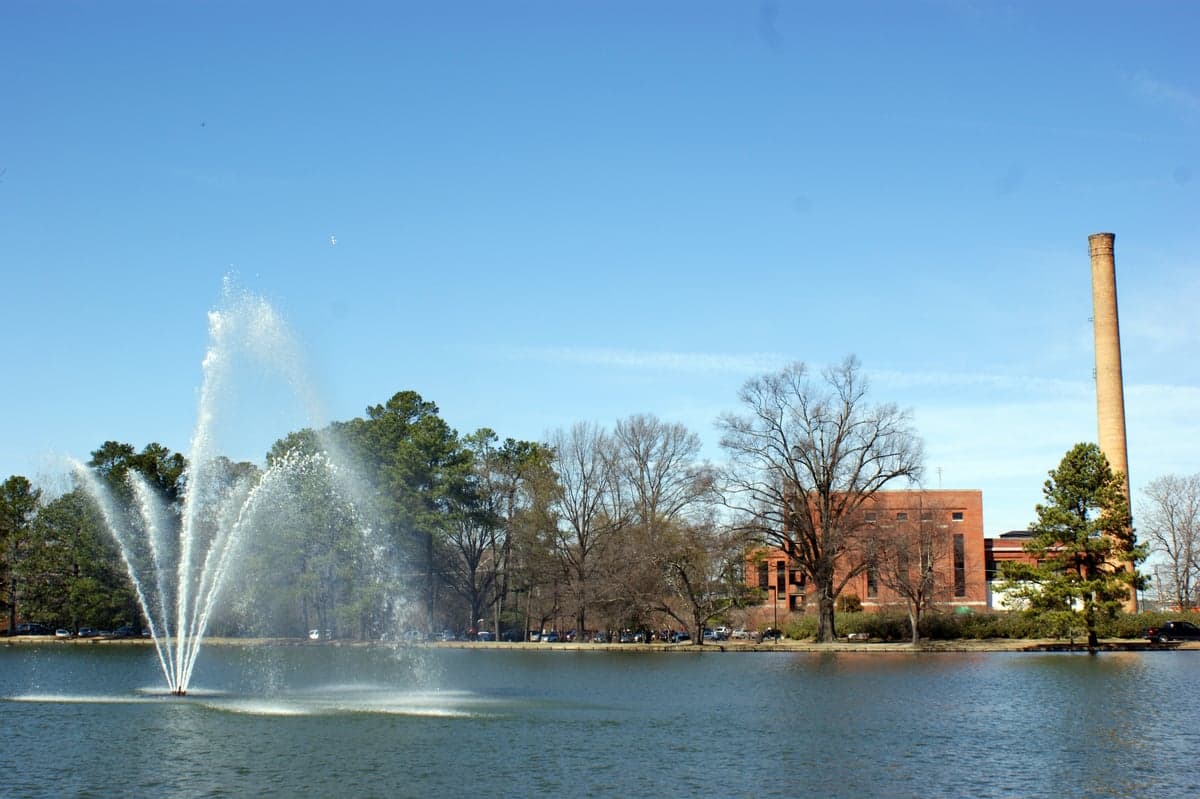
Photo: Wikipedia
Strategic Assessment of Rocky Mount, NC
Meaningful friction. Expect exposure to either population pressure, blast zones, or natural disaster risk. Consider buying a retreat property.
What does the Strategic Assessment tell us?
Our Strategic Assessment grades tactical survivability of an area. Major population centers, military targets, fallout zones, natural disasters, and border exposure all drive risk — lower exposure means a more defensible position in a crisis.
This is heavily inspired by Joel Skousen's Strategic Relocation book. Highly recommended you checkout the book ($)What does this tell us?
Our Strategic Assessment grades tactical survivability of an area. Major population centers, military targets, fallout zones, natural disasters, and border exposure all drive risk — lower exposure means a more defensible position in a crisis.
This is heavily inspired by Joel Skousen's Strategic Relocation book. Highly recommended you checkout the book ($)Strategic Pillars

Key Distances
Regional Safe Places
Below is our recommended "safe zones" in North Carolina and the surrounding area based on our strategic heuristics. For most people, it's unrealistic to live in a “safe zone” full-time due to work, family or other personal reasons. They tend to be more rural. However, many of these areas are perfect for second homes and retreat properties that double as a vacation home or even a short-term rental.

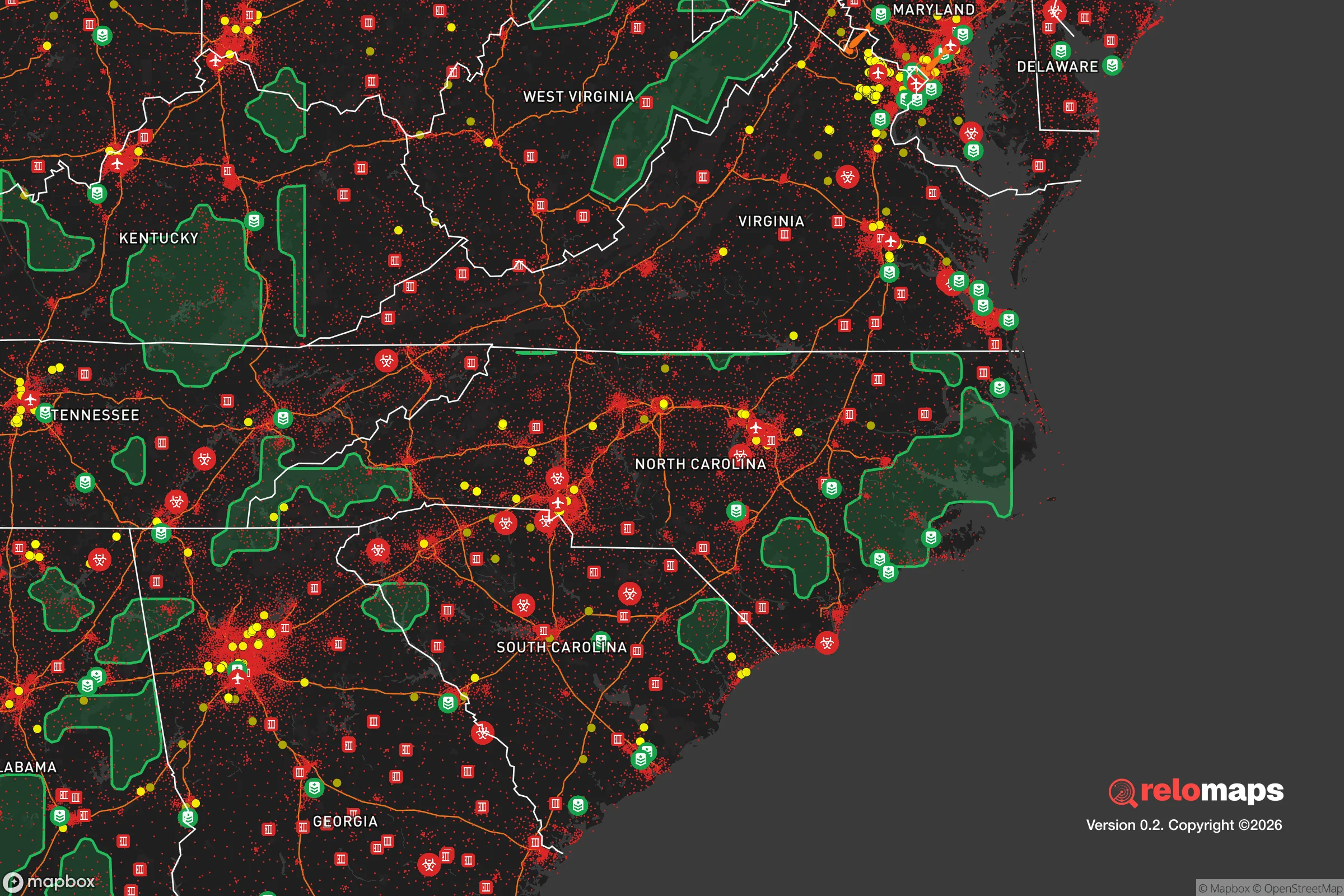


Important Note: For informational purposes only. This does not mean nothing bad ever happens in the green zones. Please use common sense. This is based on public data and modeled with AI. We tried to take a conservative approach but mistakes happen. We update this regularly as new information becomes available.
Solar Generator Recommendations
Backup power matters more here than in safer locations. We've picked three solar generators across budgets and capacity tiers — start with the budget unit if you only need a few essentials, or step up if you want to run a fridge and HVAC for days at a time.

Jackery Portable Power Station Explorer 300
Budget OptionPower on the Go: Weighing only 11 lbs, it's convenient to set up and store with book-sized foldable solar panels

BLUETTI Portable Power Station AC180
Designed for both indoor and outdoor scenarios, AC180 is highly capable as it has a robost capacity and continuous output power.

EF ECOFLOW DELTA Pro Ultra Power Station
Upgraded PickEcoFlow DELTA Pro Ultra is a whole-home energy system designed to grow with your family. Integrated with the Smart Home Panel 2, it scales to meet your evolving energy needs — keeping your home powered, intelligent, and secure through every stage of life.
We earn a commission, at no additional cost to you.
Strategic Assessment Analysis
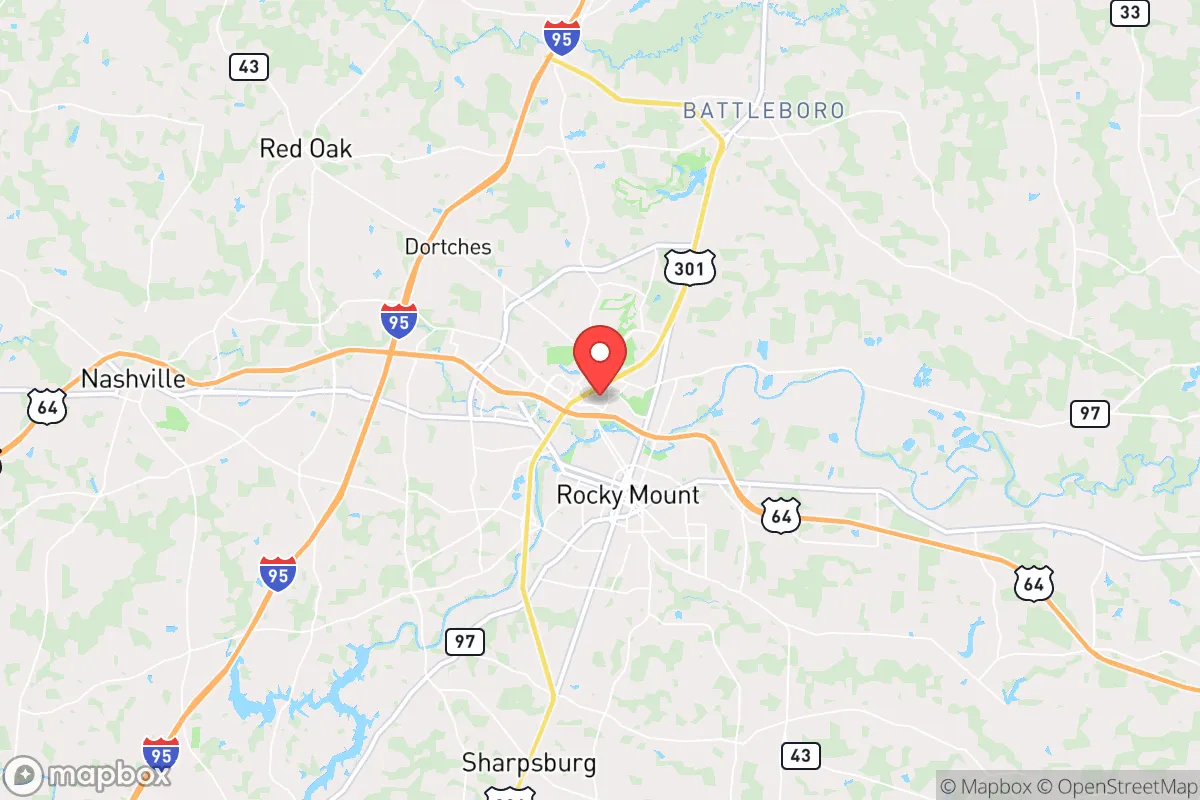
Rocky Mount, North Carolina, sits at a strategic crossroads that offers a compelling mix of resilience and risk for the conservative-minded relocator. Its position along the I-95 corridor and the Tar River places it within a two-hour drive of major population centers like Raleigh, Durham, and the Hampton Roads area, yet it remains distinctly rural and small-city in character. For someone evaluating a location through a survivalist lens, Rocky Mount provides a buffer zone—close enough to access resources and markets, but far enough from the immediate blast radius of a major urban collapse or mass casualty event. The city’s history of economic reinvention, from a tobacco and textile hub to a logistics and healthcare center, suggests a community that can adapt under pressure, though its vulnerabilities demand careful scrutiny.
Geographic position and natural advantages for a relocation buffer
Rocky Mount’s location in the Coastal Plain of eastern North Carolina gives it a distinct set of geographic advantages for preppers. The city sits on the fall line, where the Piedmont meets the coastal plain, providing relatively stable terrain that avoids the flood-prone zones of the Outer Banks while still offering access to the Atlantic seaboard. The Tar River runs through the city, offering a natural water source that can be tapped for filtration and irrigation, though it is not a major navigable waterway for large-scale evacuation. The surrounding landscape is a mix of farmland, pine forests, and wetlands, which provides natural cover and defensible positions for those willing to establish a rural homestead within a 15- to 30-minute drive of the city center. The region’s temperate climate means fewer extreme weather events than the Gulf Coast or the Midwest, though hurricanes and nor’easters are a recurring threat. For a relocator, the key advantage is the ability to live in a low-density area with good road access—US 64 and I-95 intersect here—allowing for quick movement to the mountains or the coast if needed, while staying out of the immediate shadow of a major metropolitan target.
Risks, exposures, and proximity to fallout-relevant landmarks
No strategic assessment of Rocky Mount is complete without acknowledging its proximity to high-value targets that could become fallout zones in a major conflict or terrorist event. The city is roughly 60 miles east of Raleigh, which houses state government infrastructure, major research universities, and a concentration of federal facilities. To the south, Fort Liberty (formerly Fort Bragg) is about 90 miles away—a massive military installation that would be a primary target in any conventional war scenario. The I-95 corridor itself is a double-edged sword: it provides mobility but also funnels refugees, looters, and military convoys during a crisis. Rocky Mount’s own industrial base includes a CSX rail yard and a major distribution hub for companies like Pfizer and Cummins, which could become secondary targets or choke points during civil unrest. The city’s location in the floodplain of the Tar River also exposes it to hurricane-induced flooding, as seen during Hurricane Matthew in 2016 and Hurricane Florence in 2018, when parts of the city were submerged. For the prepper, these risks mean that a relocation plan must include a bug-out route west toward the Piedmont or north toward Virginia, and a home site should be on high ground, away from the river and major rail lines. The presence of a large prison facility (the Nash Correctional Institution) nearby is another factor—during a breakdown of order, such institutions can become sources of danger or targets for liberation attempts.
Practical resilience for a relocator: food, water, energy, and defensibility
For the individual or family looking to establish a resilient foothold, Rocky Mount offers a mixed bag of practical resources. The surrounding agricultural land is some of the most productive in the state, with soybeans, corn, cotton, and tobacco as staple crops. This means that local food sourcing is viable, especially if you can establish relationships with farmers or purchase land for a garden. The city’s water supply comes from the Tar River and groundwater wells, but municipal treatment plants are vulnerable to power outages and contamination events. A prepper should plan for a private well with a hand pump or a rainwater catchment system, as the shallow water table in the coastal plain makes well drilling relatively affordable. Energy infrastructure is dominated by Duke Energy’s grid, which is prone to outages during storms and could be a target for cyberattacks. Solar panels with battery storage are a wise investment here, given the region’s moderate sun exposure. Defensibility is a challenge in the flat terrain—there are few natural chokepoints or high ground positions. A rural property with a long driveway, good sightlines, and a perimeter fence is essential. The local gun culture is strong, with several gun shops and ranges in the area, and North Carolina’s permitless carry law (effective 2023) means you can arm yourself without bureaucratic delays. The community itself is a mixed bag: there are established conservative networks through churches and agricultural associations, but also areas of concentrated poverty and crime, particularly in the downtown core. A relocator should prioritize a home in the outlying communities like Battleboro, Whitakers, or along the Nash County line, where neighbors are more likely to be self-reliant and watchful.
The overall strategic picture for Rocky Mount is one of calculated compromise. It is not a hardened bunker location like the Appalachian foothills, nor is it a remote off-grid paradise. What it offers is a realistic middle ground for the conservative relocator who wants to stay within striking distance of economic opportunity while maintaining a low profile and a buffer from the worst of urban collapse. The city’s resilience is tested regularly by hurricanes and economic downturns, and it has shown an ability to bounce back without the chaos seen in larger cities. For the prepper who is willing to invest in a well, solar power, and a rural property within a 20-minute drive of I-95, Rocky Mount provides a launchpad for both daily life and emergency scenarios. The key is to treat it as a base of operations, not a final redoubt—a place to build community, stock supplies, and keep your vehicle fueled for a westward retreat if the situation deteriorates beyond local control. In a world where the next crisis could be a cyberattack on the grid, a pandemic resurgence, or a mass casualty event in a nearby city, Rocky Mount offers a defensible, resource-rich, and strategically located option for those who want to be prepared without disappearing into the wilderness.

* Values derived from national, state, county, city and local statistics and may differ in a specific area. Last updated: 2026-05-03T20:28:24.000Z
Narrative content on this page is AI-generated and may contain mistakes. Verify any details that matter before acting on them.
ReloMaps may earn a commission from affiliate links at no extra cost to you.

