Photo: Wikipedia
Political ClimatePolitical Climate in Riverview, FL
District shown is the primary district for this city’s centroid. Cities may span multiple districts.
Local Political AnalysisPolitical Analysis of Riverview, FL
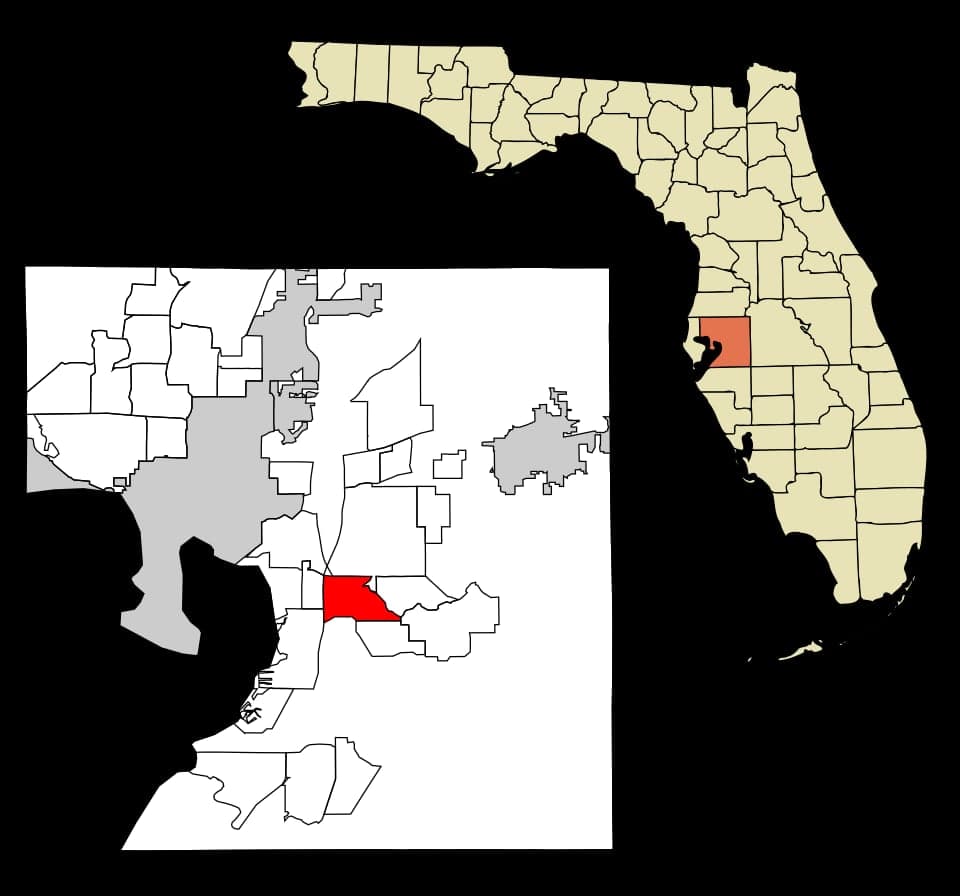
Riverview, Florida, has a political climate that leans Democratic, with a Cook Partisan Voting Index (PVI) of D+5, meaning it votes about 5 points more Democratic than the national average. This is a notable shift from even a decade ago, when the area was more of a swing district. The trajectory is clearly toward a deeper blue tint, driven by an influx of younger families and professionals from the Tampa Bay area and other parts of the country, who tend to bring more progressive voting habits with them. While the surrounding state of Florida as a whole is a famously purple battleground with no single PVI designation, Riverview's D+5 rating places it distinctly to the left of the state's overall lean, which has trended slightly red in recent cycles.
How it compares
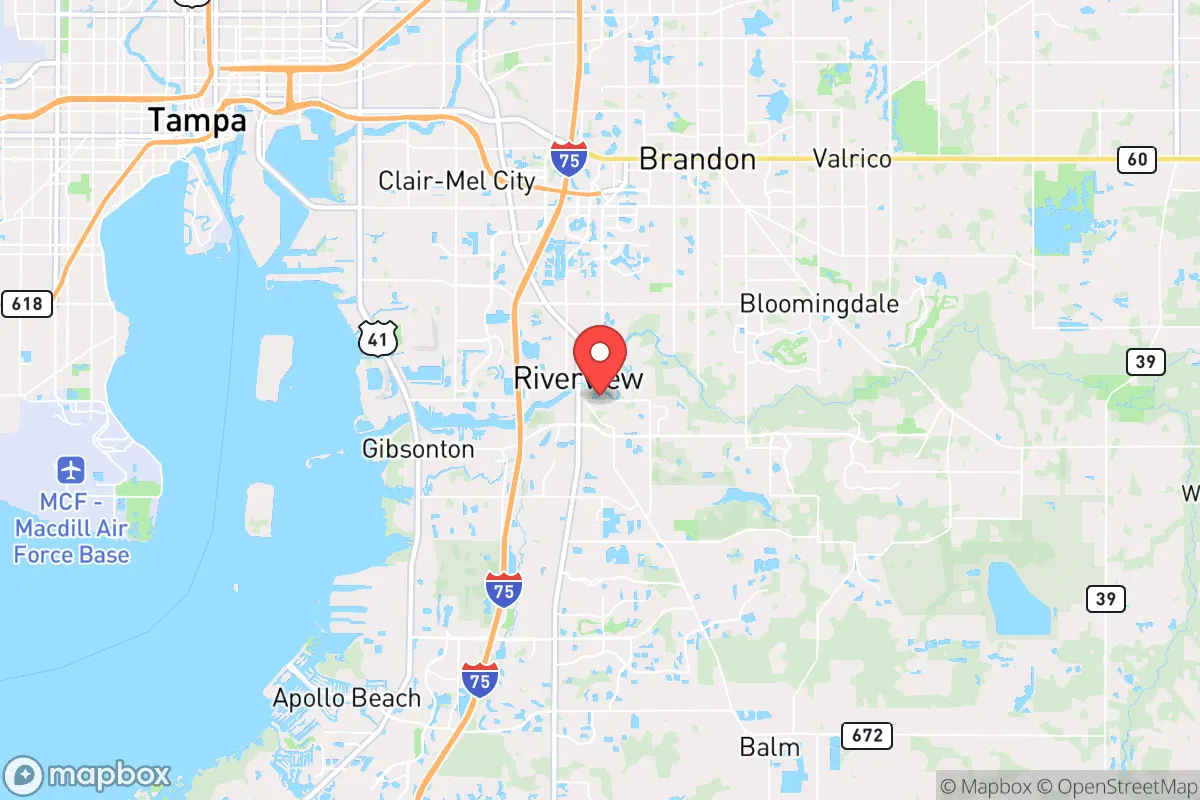
Compared to the broader state of Florida, Riverview is a Democratic stronghold. While Florida has swung back and forth in presidential elections—voting for Trump in 2016 and 2020, then shifting slightly in 2024—Riverview has consistently delivered Democratic margins. This puts it in stark contrast with nearby communities like Brandon (more moderate, often a bellwether) and Apollo Beach (which leans more conservative). Drive a few miles east to Lithia or FishHawk, and you'll find a much redder electorate, with many families drawn by lower taxes and a more rural feel. Riverview's politics are more aligned with urban Tampa (D+18) and St. Petersburg, though it's not as intensely blue as those core cities. The difference is that Riverview's Democratic lean is softer and more influenced by local economic concerns—like housing costs and school quality—than by the cultural flashpoints that dominate state-level politics.
What this means for residents
For conservative residents, living in a D+5 area means you're part of a clear minority, but not an isolated one. You'll find plenty of like-minded neighbors in the more rural pockets and newer subdivisions on the eastern edge of town. Local elections tend to be decided in Democratic primaries, so Republicans often have less influence on school board or county commission races. For liberal residents, the environment is generally comfortable, with local policies reflecting a more progressive tilt on issues like environmental protections for the Alafia River and support for public transit expansions. However, because the area is still purple-ish at the county level (Hillsborough County as a whole is a swing county), neither side gets everything they want. The practical effect is that Riverview feels less polarized than the national headlines suggest—most people are focused on traffic on U.S. 301 and the price of new construction homes, not on cable news talking points.
Culturally, Riverview's political lean shows up in subtle ways. You'll see more Harris-Walz yard signs than Trump-Pence ones in the older neighborhoods near the river, but the newer subdivisions east of I-75 are a mixed bag. The local school board has taken a moderate stance on book bans and curriculum debates, avoiding the culture-war intensity seen in more conservative counties like Polk or Pasco. One notable distinction: Riverview's Democratic lean has made it a more welcoming environment for LGBTQ+ families and younger professionals, while still retaining a strong sense of traditional Florida suburban life. The long-term trend suggests the area will continue to drift left as development accelerates, but it's unlikely to ever become as uniformly blue as St. Petersburg—there's just too much new construction attracting families from all over the political spectrum.

State Political ClimatePolitical Climate in Florida
State Political AnalysisPolitical Environment in the State
Florida has transformed from a quintessential swing state into a solidly Republican-leaning powerhouse over the past decade, driven by a massive influx of conservative-leaning transplants from the Northeast and Midwest. The state now consistently votes Republican in statewide elections, with Governor Ron DeSantis winning re-election by nearly 20 points in 2022, and the GOP holding supermajorities in both legislative chambers. This shift is a dramatic reversal from the 2000s and early 2010s, when Florida was the ultimate battleground, decided by margins of less than 1% in presidential races. Today, the state’s political center of gravity has moved decisively rightward, though deep blue pockets remain in the urban cores of Miami-Dade, Broward, and Orange counties.
Urban vs. rural divide
The political map of Florida is a study in stark contrasts. The major metropolitan areas of Miami-Dade County, Broward County (Fort Lauderdale), and Orange County (Orlando) are the state’s Democratic strongholds, powered by diverse coalitions of Hispanic voters, African American communities, and younger professionals. However, even Miami-Dade has been trending rightward — in 2020, Donald Trump improved his margin there by over 20 points compared to 2016, a shift driven largely by Cuban-American and Venezuelan-American voters who respond strongly to anti-socialist messaging. Meanwhile, the fast-growing suburban and exurban counties like St. Johns (St. Augustine), Collier (Naples), and Lee (Fort Myers) are deeply Republican, as are the vast rural stretches of the Panhandle and interior. The I-4 corridor, running from Tampa through Lakeland to Orlando, remains the state’s most competitive battleground, with Hillsborough County (Tampa) and Pinellas County (St. Petersburg) often flipping between parties. The Florida Panhandle, from Pensacola to Tallahassee, is among the most conservative regions in the entire country, with many counties routinely voting 70-80% Republican.
Policy environment
Florida’s policy environment is defined by a low-tax, low-regulation posture that has attracted both businesses and individual relocators. The state has no personal income tax, a corporate income tax rate of just 5.5%, and a sales tax cap of 7.5% (though local options can push it higher). Property taxes are moderate, with a $50,000 homestead exemption and a 3% annual cap on assessed value increases for primary residences. The regulatory climate is business-friendly, with a right-to-work law and minimal occupational licensing barriers compared to states like California or New York. On education, Florida was an early adopter of school choice, with the Family Empowerment Scholarship program and the Florida Tax Credit Scholarship serving over 400,000 students. The state’s healthcare approach is market-oriented, with no state-level individual mandate and a limited Medicaid expansion that covers only pregnant women, children, and the disabled. Election laws have been tightened in recent years, with strict voter ID requirements, limits on drop boxes, and a ban on ballot harvesting. The state also has a "Stand Your Ground" self-defense law and a constitutional right to hunt and fish.
Recent policy direction
The last five years have seen Florida enact a sweeping conservative agenda that touches nearly every area of life a relocator might care about. On gun and self-defense law, Florida passed permitless carry (constitutional carry) in 2023, allowing any law-abiding adult to carry a concealed firearm without a permit. On parental and education rights, the Parental Rights in Education Act (HB 1557, dubbed "Don't Say Gay" by critics) restricts classroom instruction on sexual orientation and gender identity through third grade, while the Stop WOKE Act (HB 7) limits how race-related concepts can be taught in schools and workplaces. On speech and privacy, the state has taken aggressive action against social media platforms, with a law (SB 7072) that prohibits platforms from deplatforming political candidates — though parts have been blocked by courts. On medical and bodily autonomy, Florida banned abortion after six weeks of pregnancy in 2023 (HB 5), with exceptions for rape, incest, and the life of the mother, and requires parental consent for minors. On property rights, the state has strong eminent domain protections and a robust property insurance market, though recent hurricanes have caused premiums to spike. On taxation, the state has no estate or inheritance tax, and in 2024, a permanent tax exemption was enacted for diapers and menstrual products. On voting and ballot access, SB 90 (2021) added new ID requirements for mail ballots, limited drop box locations, and banned the mass mailing of vote-by-mail applications.
Civil unrest & political movements
Florida has seen relatively low levels of civil unrest compared to states like Oregon or Minnesota, but political activism is intense and organized on both sides. The state was a flashpoint during the 2020 Black Lives Matter protests, with significant demonstrations in Miami, Tampa, and Jacksonville, though they were generally peaceful compared to other major cities. Immigration politics are particularly charged in South Florida, where the state has bused migrants to Democratic-led states like California and Massachusetts as a protest against federal border policy. The "Freedom Convoy" movement, inspired by Canadian trucker protests, had a modest presence in Florida in 2022. Election integrity remains a live issue, with the state creating a new Office of Election Crimes and Security in 2022, which has investigated and prosecuted a small number of cases of illegal voting. The most visible political flashpoint for newcomers is likely the culture war around education — school board meetings in Palm Beach County and Duval County (Jacksonville) have been contentious, with parents on both sides clashing over curriculum and library books. There is no serious secessionist or nullification movement in Florida, though some local governments have declared themselves "sanctuary counties" for immigrants, only to face state preemption and funding cuts.
Projection
Over the next 5-10 years, Florida is likely to become even more Republican, driven by the continued in-migration of conservative-leaning retirees and remote workers from high-tax states. The state is projected to add over 3 million residents by 2035, with most settling in the already-red suburbs of Tampa, Naples, and Pensacola. The Democratic strongholds in Miami-Dade and Broward are aging and losing population to other parts of the state, while the fastest-growing counties — Sumter (The Villages), St. Johns, and Collier — are among the most conservative in the nation. However, the state’s Hispanic population, now over 26% of residents, is not monolithic; while Cuban-Americans and Venezuelan-Americans lean heavily Republican, Puerto Ricans and Mexican-Americans in Central Florida tend to vote Democratic, creating a potential long-term counterbalance. The biggest wildcard is climate change — if sea-level rise and hurricane intensity begin to seriously affect property values and insurance costs in coastal areas, it could slow or reverse the in-migration that has powered the state’s rightward shift. For now, the trajectory is clear: Florida will remain a conservative-led state with a policy environment that favors low taxes, school choice, and individual liberty as defined by the right, while offering limited social services and a restrictive approach to abortion and transgender rights.
For a new resident, the bottom line is this: Florida is a state where conservative policies are the default and are likely to remain so for the foreseeable future. If you value low taxes, minimal regulation, strong gun rights, and parental control over education, you will find the political climate welcoming. If you prioritize robust social services, broad abortion access, or progressive education policies, you will face an uphill battle at the state level, though you will find like-minded communities in the urban cores of Miami, Orlando, and Tampa. The state’s political culture is assertive and unapologetic — what you see is what you get, and it’s not changing anytime soon.
* Values derived from national, state, county, city and local statistics and may differ in a specific area. Last updated: 2026-09-27T19:43:18.000Z
Narrative content on this page is AI-generated and may contain mistakes. Verify any details that matter before acting on them.
ReloMaps may earn a commission from affiliate links at no extra cost to you.

