Photo: Wikipedia
Demographics of Rentiesville, OK
Affluence Level in Rentiesville, OK
A middle-class area roughly in line with national averages across income, home values, education, and employment.
People of Rentiesville, OK
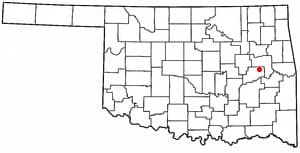
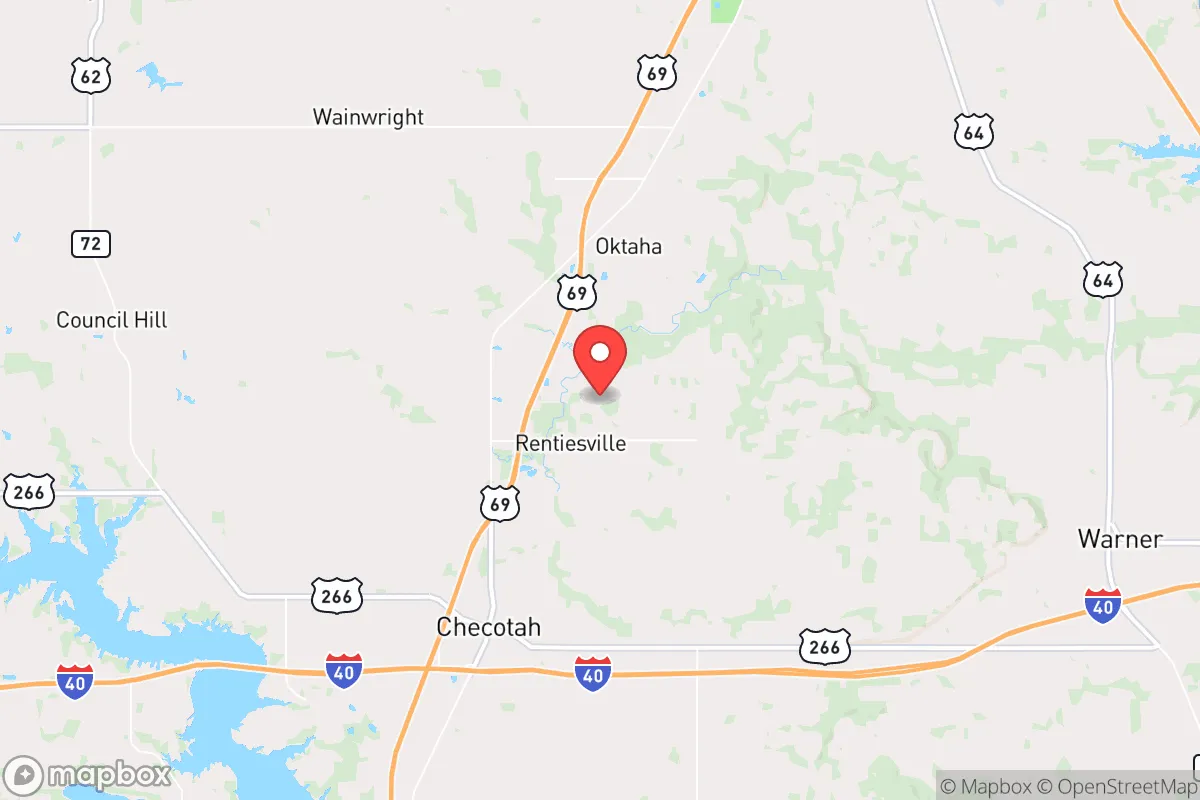
Today, Rentiesville, Oklahoma, is a small, predominantly African American community of 91 residents, with a population that is 64.8% Black and 19.8% White, and no recorded foreign-born, Hispanic, or Asian residents. The town is characterized by its deep historical roots as a post-Reconstruction all-Brown town, a legacy that continues to define its identity as a quiet, rural enclave in McIntosh County. With a low college attainment rate of 11.5%, the population is largely composed of older, long-term residents and a few families, giving the town a tight-knit, historically grounded character. For those considering a move, Rentiesville offers a unique slice of Oklahoma history, but its tiny size and limited economic base mean it is best suited for those seeking solitude or a connection to the past rather than modern amenities or diverse social opportunities.
How the city was settled and grew
Rentiesville was founded in 1903 by William Rentie, a formerly enslaved Black man and member of the Creek Nation, who purchased land and established the town as a safe haven for African Americans fleeing Jim Crow violence and seeking economic independence. The town was part of a network of all-Black towns in Indian Territory, where Black settlers—many of them former slaves of the Creek and Cherokee tribes—could own land, vote, and build self-sufficient communities. The original settlers were primarily Black farmers and laborers, drawn by the promise of land ownership through the Dawes Act allotments and the protection of tribal citizenship. The historic Rentiesville Townsite, centered around what is now Main Street, was the original settlement core, where families built homes, a school, and the Rentiesville Baptist Church, which remains a community anchor. A second wave of growth occurred in the 1910s and 1920s, when the town attracted Black professionals—teachers, preachers, and small business owners—who settled in the Northside District, an area of modest frame houses along unpaved roads. The town peaked at around 400 residents in the 1940s, supported by a local cotton gin, a general store, and a post office, but the decline of sharecropping and the Great Migration drew many younger residents to urban centers like Tulsa and Oklahoma City after World War II.
Modern era (post-1965)
After the 1965 Hart-Cellar Act and the broader Civil Rights movement, Rentiesville experienced a steady population decline as the remaining Black families left for better economic opportunities in larger cities, and no new immigrant groups arrived to replace them. The town’s population fell from roughly 200 in 1960 to just 91 by 2020, with the Southside Addition, a small subdivision platted in the 1970s, absorbing the few new residents—mostly White retirees and a handful of Black families returning from urban areas. The East End, once a cluster of homes near the old schoolhouse, became largely abandoned, with many lots reverting to prairie. The town’s demographic composition shifted slightly as the White share rose to 19.8%, but the Black majority remained dominant, and the foreign-born population stayed at zero. The Rentiesville Historic District, which includes the original townsite and the restored Rentie House, became a focal point for heritage tourism, but the lack of jobs, schools, and services meant that most working-age adults left, leaving a population that is disproportionately elderly and low-income. The town’s only notable modern addition is the Rentiesville Community Center, built in the 1990s, which serves as a gathering place for the few remaining families.
The future
The population of Rentiesville is likely to continue shrinking or stagnate over the next 10–20 years, with no signs of significant in-migration or diversification. The town’s zero percent foreign-born and Hispanic shares, combined with its remote location and lack of economic drivers, make it unattractive to younger or more diverse populations. The Old Town Core and Northside District are expected to see further depopulation, with homes either falling into disrepair or being purchased as weekend retreats by outsiders. The cultural identity of Rentiesville will remain strongly tied to its all-Black town heritage, but the community’s ability to sustain itself is uncertain. A small number of Black families have returned in recent years to restore historic homes, but this trend is too minor to reverse the decline. For a mover, Rentiesville offers a rare chance to live in a living museum of African American history, but it is not a place of growth or opportunity—it is a place of preservation and quiet, where the population is aging and the future is one of slow contraction.
In short, Rentiesville is becoming a smaller, older, and more historically focused community, where the population is static and the cultural identity is rooted in its all-Black founding. For someone moving in now, the town offers a deep connection to Oklahoma’s Black history and a peaceful rural life, but it requires self-sufficiency, as there are no schools, grocery stores, or major employers within the town limits. It is a place for those who value heritage over convenience and solitude over community growth.

* Values derived from national, state, county, city and local statistics and may differ in a specific area. Last updated: 2026-11-19T20:27:57.000Z
Narrative content on this page is AI-generated and may contain mistakes. Verify any details that matter before acting on them.
ReloMaps may earn a commission from affiliate links at no extra cost to you.

