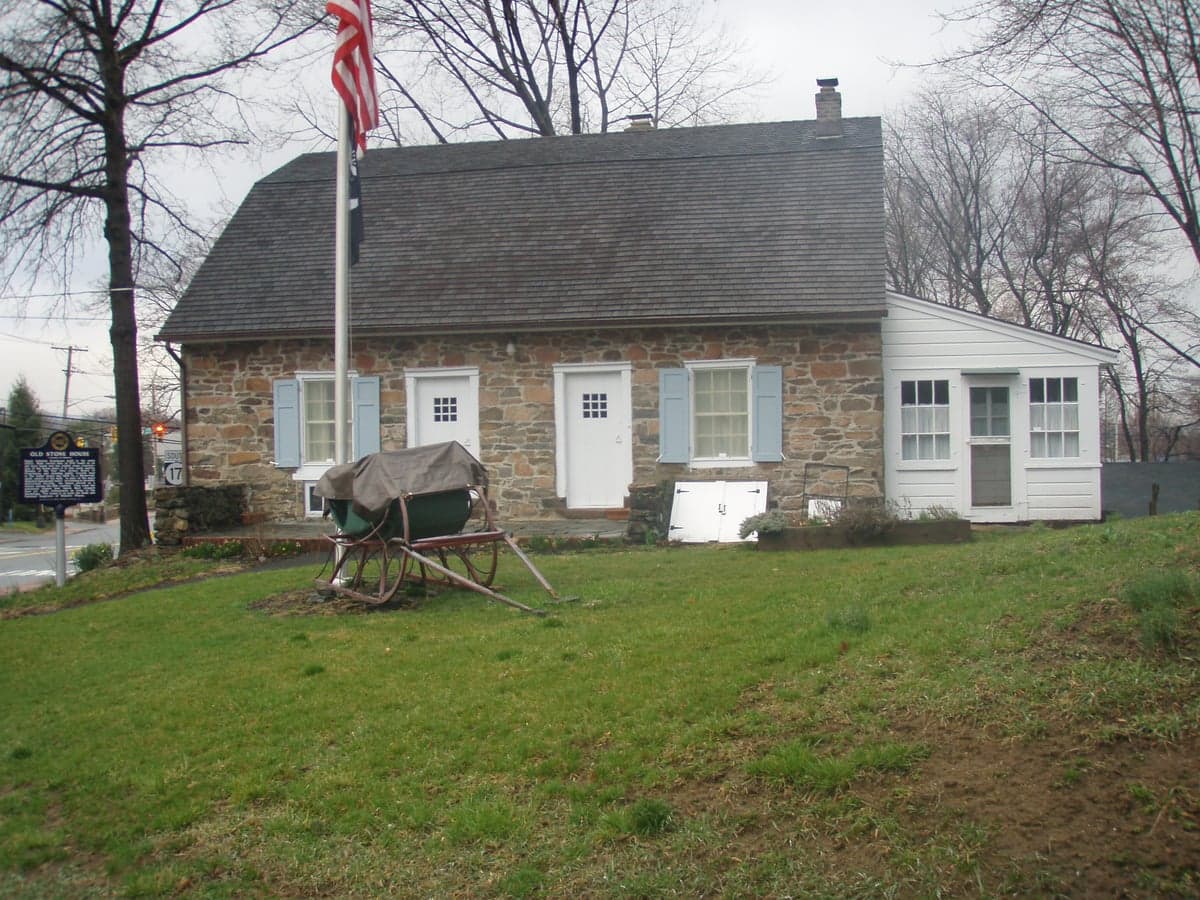
Photo: Wikipedia
Strategic Assessment of Ramsey, NJ
Multiple tactical vulnerabilities. Population density, target proximity, or disaster risk are likely compounding. A retreat property and exit planning is required.
What does the Strategic Assessment tell us?
Our Strategic Assessment grades tactical survivability of an area. Major population centers, military targets, fallout zones, natural disasters, and border exposure all drive risk — lower exposure means a more defensible position in a crisis.
This is heavily inspired by Joel Skousen's Strategic Relocation book. Highly recommended you checkout the book ($)What does this tell us?
Our Strategic Assessment grades tactical survivability of an area. Major population centers, military targets, fallout zones, natural disasters, and border exposure all drive risk — lower exposure means a more defensible position in a crisis.
This is heavily inspired by Joel Skousen's Strategic Relocation book. Highly recommended you checkout the book ($)Strategic Pillars
Key Distances
Regional Safe Places
Below is our recommended "safe zones" in New Jersey and the surrounding area based on our strategic heuristics. For most people, it's unrealistic to live in a “safe zone” full-time due to work, family or other personal reasons. They tend to be more rural. However, many of these areas are perfect for second homes and retreat properties that double as a vacation home or even a short-term rental.
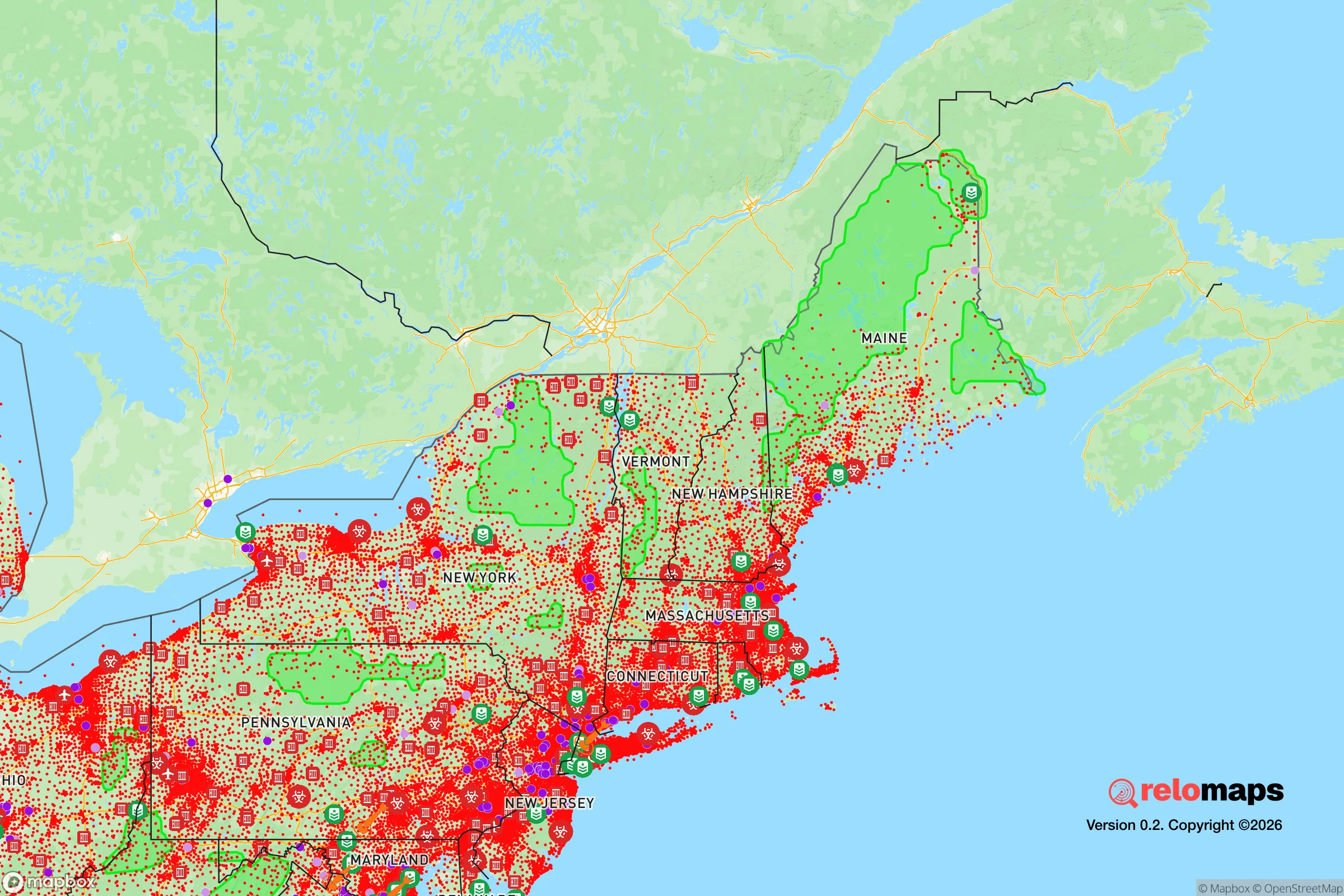
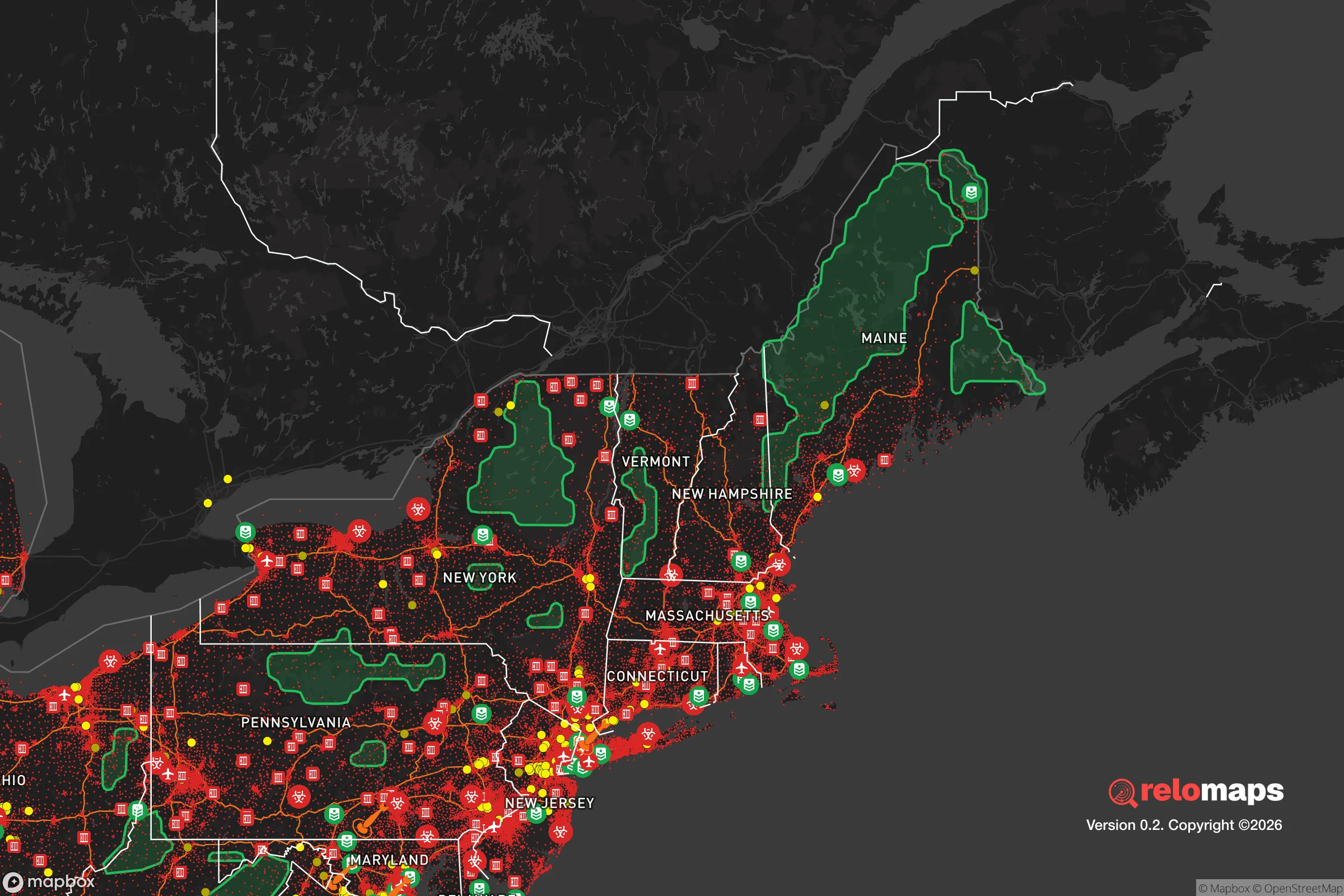


Important Note: For informational purposes only. This does not mean nothing bad ever happens in the green zones. Please use common sense. This is based on public data and modeled with AI. We tried to take a conservative approach but mistakes happen. We update this regularly as new information becomes available.
Solar Generator Recommendations
Backup power matters more here than in safer locations. We've picked three solar generators across budgets and capacity tiers — start with the budget unit if you only need a few essentials, or step up if you want to run a fridge and HVAC for days at a time.
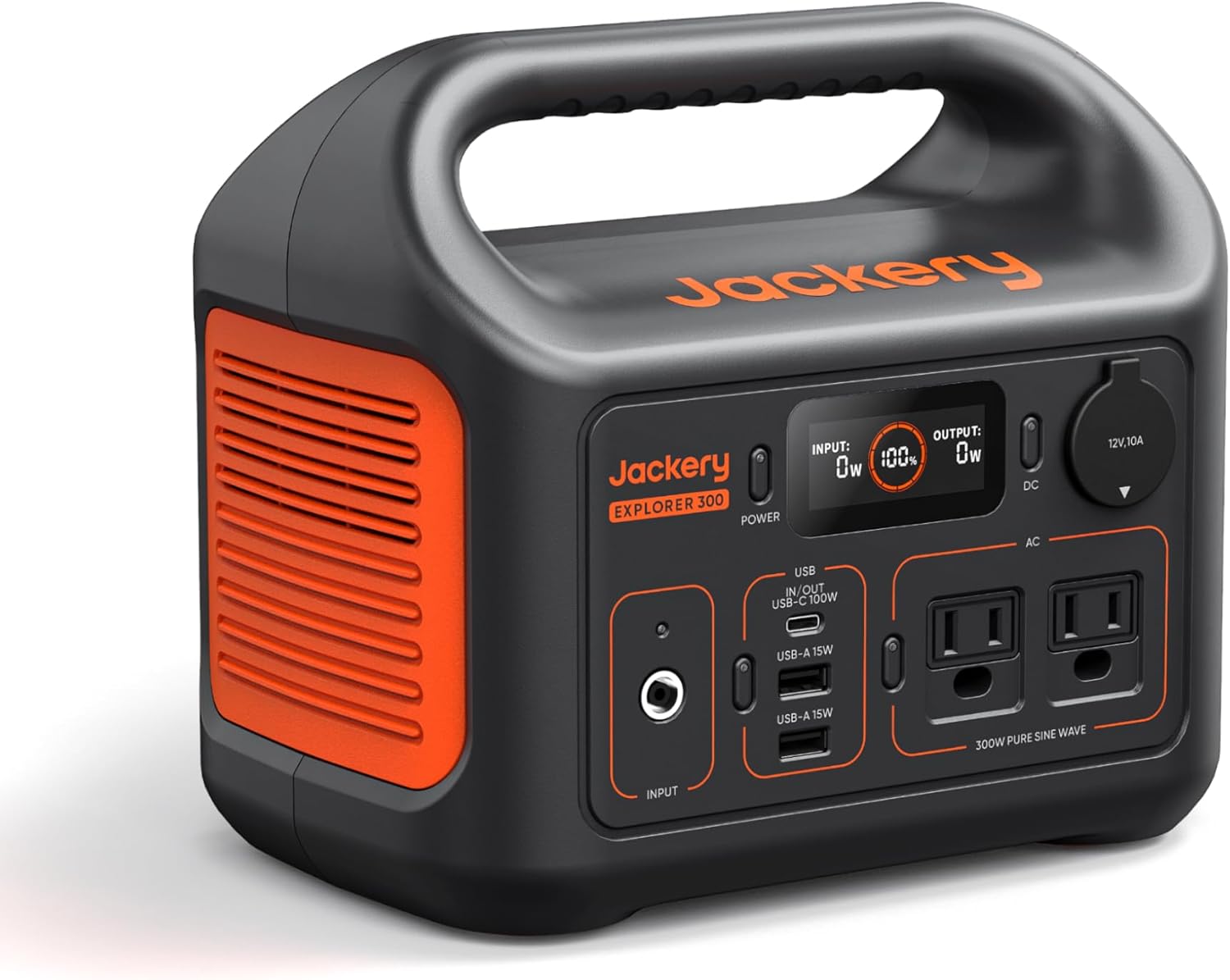
Jackery Portable Power Station Explorer 300
Budget OptionPower on the Go: Weighing only 11 lbs, it's convenient to set up and store with book-sized foldable solar panels

BLUETTI Portable Power Station AC180
Designed for both indoor and outdoor scenarios, AC180 is highly capable as it has a robost capacity and continuous output power.

EF ECOFLOW DELTA Pro Ultra Power Station
Upgraded PickEcoFlow DELTA Pro Ultra is a whole-home energy system designed to grow with your family. Integrated with the Smart Home Panel 2, it scales to meet your evolving energy needs — keeping your home powered, intelligent, and secure through every stage of life.
We earn a commission, at no additional cost to you.
Strategic Assessment Analysis
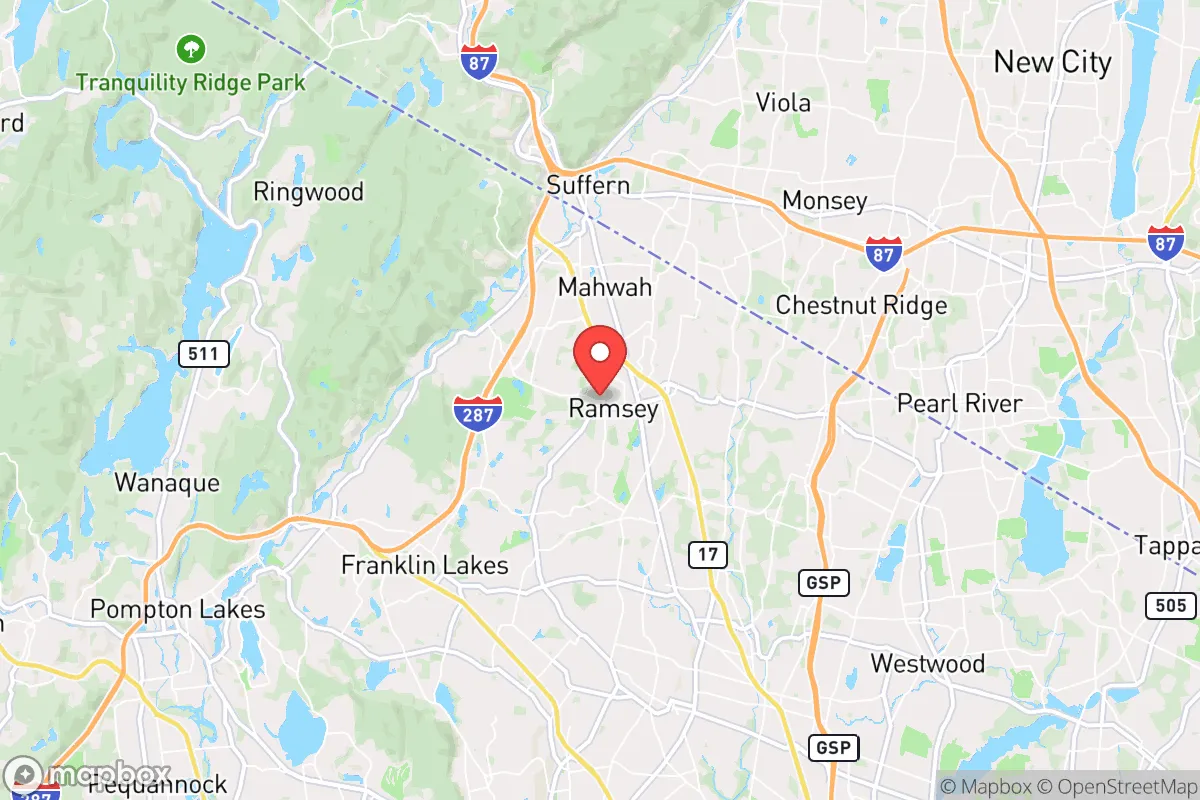
Ramsey, New Jersey, offers a strategic blend of suburban stability and geographic defensibility that appeals to the disaster-conscious relocator, but its proximity to major metropolitan targets introduces trade-offs that require careful consideration. Located in Bergen County roughly 25 miles northwest of Midtown Manhattan, Ramsey sits at the edge of the New York City metroplex, close enough to benefit from infrastructure and economic ties yet far enough to avoid the densest population and target zones. For a reader weighing self-sufficiency and resilience, Ramsey presents a mixed picture: solid local resources and a relatively low natural hazard profile, offset by its position within the fallout and disruption radius of one of the nation's highest-value target areas.
Geographic position and natural advantages for disaster readiness
Ramsey's location in the Ramapo River Valley, flanked by the Ramapo Mountains to the west and the Watchung Mountains to the east, provides natural terrain that can buffer against certain threats. The area sits on the Piedmont plateau, with elevations ranging from roughly 200 to 400 feet above sea level, which reduces flood risk compared to low-lying coastal communities. The Ramapo River itself is a modest water source, but the region's underlying geology—primarily sandstone and shale—offers decent groundwater recharge potential for private wells, though most homes in Ramsey rely on municipal water from the United Water New Jersey system. The town's tree canopy and suburban layout, with lot sizes averaging around 0.3 to 0.5 acres, provide some natural screening and defensible space, though not the isolation of a rural homestead. Winters bring occasional nor'easters and ice storms, but Ramsey is not in a hurricane-prone zone (storm surge risk is negligible at this inland elevation) and tornado activity is rare, with an average of one weak tornado per decade in Bergen County. The primary natural hazard is flooding along the Ramapo River and its tributaries, particularly in low-lying areas near the town center and along Island Road; FEMA flood maps show these zones as AE and A, meaning a 1% annual flood risk. For a relocator, the key takeaway is that Ramsey's natural hazard profile is moderate and manageable, with no wildfire risk (the area is classified as low), no seismic activity of concern, and minimal landslide potential outside steep slopes near the mountains.
Risks, exposures, and proximity to fallout-relevant landmarks
The most significant risk for a Ramsey relocator is man-made and geopolitical: the town lies within the plausible fallout and disruption zone of New York City, a Tier 1 target for any nuclear or large-scale conventional attack. Ramsey is roughly 25 miles from Manhattan, which places it within the moderate-to-heavy fallout pattern for a ground burst at the city center, depending on wind direction. The prevailing westerlies would carry fallout eastward over Long Island and the Atlantic, but a shift to easterly or southerly winds could deposit significant contamination across northern New Jersey, including Ramsey. Beyond nuclear scenarios, the town's proximity to critical infrastructure is a double-edged sword. Ramsey is bisected by the Main Line of the New Jersey Transit rail system (the Bergen County Line), with a station at the town center, and is adjacent to Interstate 287 and Route 17, both major evacuation and supply corridors that would become choke points during a crisis. The town is also within 10 miles of the West Point Military Reservation to the north and the Picatinny Arsenal (a major Army research and development facility) to the west, both of which could be secondary targets or sources of hazardous material releases. On the positive side, Ramsey has no nuclear power plants within 30 miles (the closest is Indian Point, now decommissioned, 35 miles south), and the area's industrial base is light—mostly office parks and retail—so the risk of industrial accidents or chemical spills is lower than in more industrialized parts of New Jersey. For a relocator, the core exposure is not natural disaster but proximity to a high-value target zone, which demands a realistic assessment of evacuation timelines and fallout shelter planning.
Practical resilience for a relocator: food, water, energy, and defensibility
Ramsey's practical resilience for a self-sufficient relocator is a mixed bag, with some strong local assets but significant dependencies on regional infrastructure. Water security is the weakest link: the municipal supply comes from the United Water New Jersey system, which draws from the Ramapo River and the Oradell Reservoir, both of which are vulnerable to contamination or disruption. A private well is possible on larger lots (some homes in the western part of town, near the mountains, have wells), but most residential properties are on municipal water. For a relocator, installing a well and a hand pump or a rainwater catchment system would be a high-priority investment, but zoning and permitting in Bergen County can be restrictive. Food security is moderate: Ramsey has two major supermarkets (ShopRite and Stop & Shop) within town limits, plus a farmers' market from June to November, but these are dependent on supply chains that could fail during a regional crisis. The town's agricultural land is minimal—only a few small farms remain, mostly in the western hills—so local food production is not a realistic option without significant effort. Community gardens exist but are small. For long-term food storage, a relocator would need to build a pantry and consider a root cellar or cold storage, as basements are common in older homes. Energy resilience is improving but not robust: Ramsey is served by PSE&G, which has a mixed reliability record during storms (the area experienced multi-day outages after Hurricane Sandy in 2012 and after the March 2018 nor'easter). Solar adoption is growing but still low—roughly 5% of homes have rooftop solar as of 2025—and net metering is available. A backup generator (natural gas or propane) is common in the area, and propane delivery services are available. For a relocator, a whole-house generator with a buried propane tank is a wise investment, as natural gas lines could be disrupted in an earthquake or major storm. Defensibility is moderate: Ramsey's suburban layout, with winding roads and cul-de-sacs in newer developments, provides some natural chokepoints, but the town is not designed for security. The police department has 30 sworn officers and a response time of under 5 minutes for emergencies, but during a widespread crisis, law enforcement would be stretched thin. The town's population of roughly 15,000 is spread over 5.5 square miles, giving a density of about 2,700 people per square mile—dense enough that a relocator cannot rely on isolation, but sparse enough that a well-prepared household with a defensible perimeter (fencing, reinforced doors, clear sightlines) could hold its own. The Ramapo Mountains to the west offer a potential bug-out location, with state forests and public lands, but access is limited and the terrain is rugged. For a relocator, the practical takeaway is that Ramsey is not a self-sufficient enclave but a suburb that can be made resilient with deliberate investment in water, power, and storage, while relying on the town's existing infrastructure for the first 72 hours of a crisis.
Overall, Ramsey presents a strategic picture of moderate resilience for the disaster-conscious relocator, with its strongest assets being a low natural hazard profile, solid local infrastructure, and proximity to wilderness escape routes, and its weakest points being dependence on regional water and power grids and its position within the target zone of New York City. For a single individual or family willing to invest in backup systems—a well, a generator, a fallout shelter, and a six-month food supply—Ramsey can be a defensible and livable base. But for those seeking true independence from metropolitan risks, the trade-offs are real: the town is not remote, not self-sufficient in food or water, and not insulated from the consequences of a major geopolitical event. The best advice for a relocator is to treat Ramsey as a "prepare in place" location rather than a bug-out destination, and to develop a clear plan for the first 72 hours to two weeks of any crisis, including a fallback position in the Ramapo Mountains or farther west in Sussex County. With that preparation, Ramsey offers a reasonable balance of suburban comfort and strategic readiness.

* Values derived from national, state, county, city and local statistics and may differ in a specific area. Last updated: 2026-11-09T06:01:16.000Z
Narrative content on this page is AI-generated and may contain mistakes. Verify any details that matter before acting on them.
ReloMaps may earn a commission from affiliate links at no extra cost to you.

