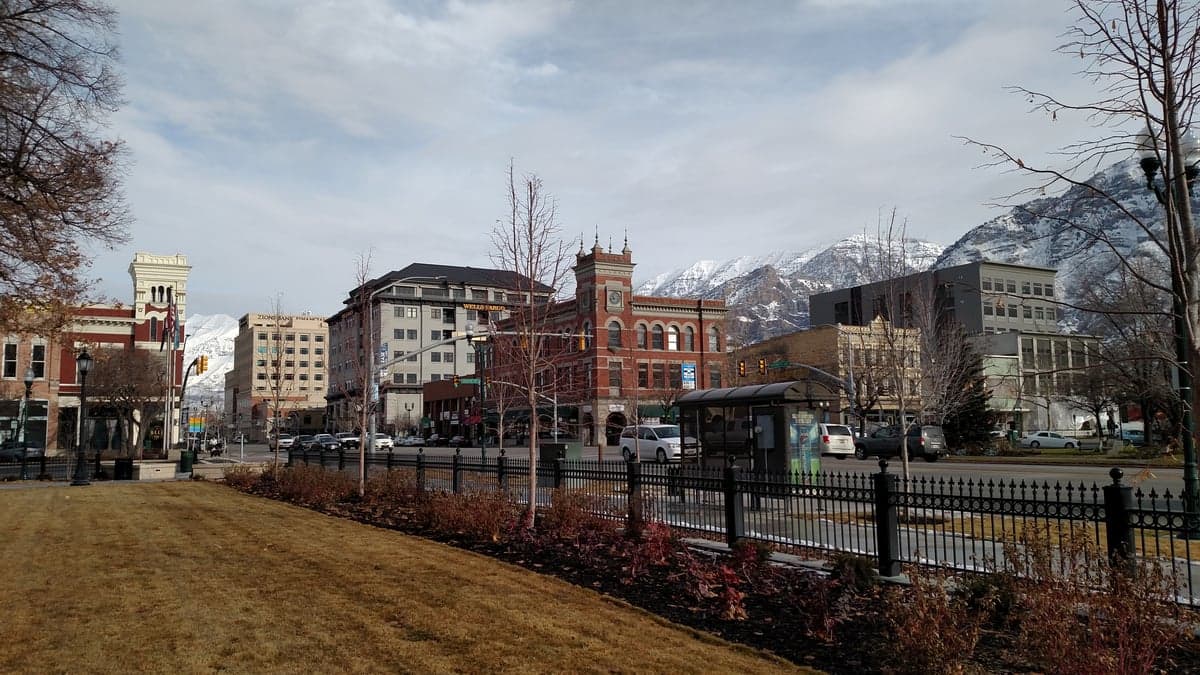
Photo: Wikipedia
Political ClimatePolitical Climate in Provo, UT
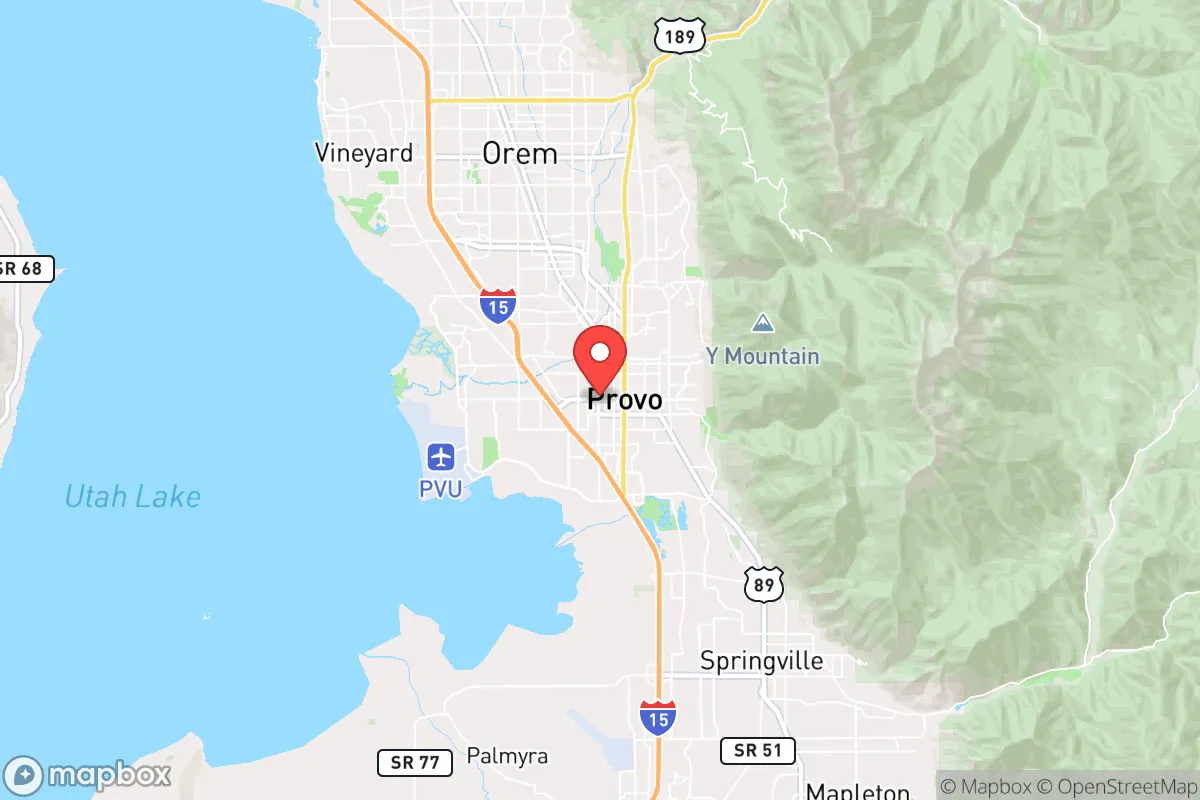
District shown is the primary district for this city’s centroid. Cities may span multiple districts.
Local Political AnalysisPolitical Analysis of Provo, UT
Provo, Utah, has long been a rock-ribbed conservative stronghold, and the numbers back that up with a Cook PVI of R+10, meaning it votes about ten points more Republican than the national average. But if you’ve lived here as long as I have, you’ve seen the political winds shift in subtle but real ways. The city itself is still deeply red, but the flavor of that conservatism is changing—moving from a quiet, family-first, limited-government ethos toward something that, frankly, feels a little more like a culture war battleground. The old Provo was about leaving folks alone to live their lives, raise their kids, and run their businesses without a lot of fuss. The new Provo? There’s a growing undercurrent of progressive activism, especially around the university and downtown, that has me watching closely. It’s not a blue wave yet, but it’s a shift that deserves a sober look.
How it compares
To understand Provo’s politics, you have to look at its neighbors. Drive ten minutes north to Orem, and you’ll find a similar conservative baseline, but with a more working-class, blue-collar vibe—less influenced by the academic chatter that bubbles up from Brigham Young University. Head south to Springville or Spanish Fork, and you’re in even deeper red territory, where the “leave us alone” sentiment is practically a religion. But the real contrast is with Salt Lake City, just 45 minutes north. Salt Lake is a blue island in a red state, with a mayor and city council that push progressive policies on everything from zoning to policing. Provo, for now, remains a bulwark against that, but the proximity means ideas seep in. You’ll see it in local city council races, where candidates who talk about “equity” and “sustainability” are gaining more traction than they did a decade ago. That’s a red flag for anyone who values personal freedom over government-engineered outcomes.
What this means for residents
For the average Provo resident, the political climate shapes daily life in concrete ways. Property taxes are low, and the city government generally stays out of your business—no overreaching mask mandates or business shutdowns like you saw in more progressive cities during the pandemic. But there are warning signs. The city’s push for “complete streets” and transit-oriented development sounds nice, but it often comes with more regulations on parking, housing, and land use that can feel like government overreach into your property rights. The school board, too, has seen heated debates over curriculum and library books, with some parents worried that progressive ideas are creeping into classrooms. If you value the freedom to raise your kids without the state telling you what’s appropriate, you’ll want to stay engaged. The long-term trajectory depends on who shows up to vote in local elections—turnout is low, and that’s how the quiet shift happens.
Culturally, Provo still feels like a place where conservative values are the default, but there’s a growing tension between the old-school, live-and-let-live conservatism and a newer, more activist brand that wants to use government to enforce a particular vision. The biggest policy distinction? Provo has resisted the kind of zoning overhauls that Salt Lake City has embraced, keeping single-family neighborhoods intact and protecting the character of the city. But the pressure is mounting from developers and progressive activists who want to “density” everything. If you’re looking for a place where your personal freedoms—to own a home, run a business, or just be left alone—are still respected, Provo is a good bet. Just keep your eyes open. The fight for the soul of this city is real, and it’s not over yet.

State Political ClimatePolitical Climate in Utah
State Political AnalysisPolitical Environment in the State
Utah is a deeply red state, with Republicans holding a supermajority in the state legislature and the governorship, but the picture is more nuanced than a simple partisan label. The state’s dominant political coalition is a blend of the Church of Jesus Christ of Latter-day Saints (LDS) cultural conservatism, a growing libertarian-leaning tech sector, and a strong rural populist streak. Over the last 20 years, the state has shifted from a reliably 60-40 Republican state to one where the GOP’s margin has tightened in the Wasatch Front suburbs, driven by in-migration from blue states and a rising independent vote. However, the rural and exurban counties have only grown redder, creating a widening urban-rural chasm that defines the state’s politics today.
Urban vs. rural divide
The political map of Utah is a story of two worlds. The Wasatch Front—Salt Lake City, Provo, and Ogden—is the engine of the state’s economy and its political diversity. Salt Lake County, home to over a million people, is the only county that regularly votes Democratic in presidential elections, though it’s still a swing county at the state level. Provo and Utah County, by contrast, are among the most conservative metro areas in the nation, driven by Brigham Young University and a dense LDS population. The rural counties—San Juan, Carbon, and Emery—vote Republican by margins of 70-80%, but their populations are small. The real political battleground is the suburban ring: Davis County and Weber County north of Salt Lake, and Tooele County to the west. These areas have seen an influx of out-of-state transplants, many from California and Washington, who are fiscally conservative but socially moderate, creating a quiet tension within the GOP primary electorate.
Policy environment
Utah’s policy environment is a mixed bag for conservatives. On taxes, the state is a standout: no state income tax on Social Security benefits, a flat 4.65% income tax rate, and a low 6.1% state sales tax. Property taxes are among the lowest in the West, capped by the state constitution. The regulatory posture is business-friendly, with a right-to-work law and minimal occupational licensing burdens. However, education policy is a flashpoint. The state passed a universal school choice voucher program in 2023, but it was immediately challenged by a lawsuit and remains in legal limbo. The legislature also passed a parental rights bill (HB 230) in 2024 that requires schools to notify parents of any curriculum changes involving sexuality or gender identity, a win for conservative families. On healthcare, Utah expanded Medicaid under the Affordable Care Act in 2019, a move that rankled many conservatives but was sold as a pragmatic compromise. Election laws are solid: voter ID is required, same-day registration is available, and the state uses a top-two primary system for non-presidential races, which has helped moderate Republicans survive primary challenges from the far right.
Trajectory & freedom
Utah is becoming more free in several key areas, but there are warning signs. On gun rights, the state passed constitutional carry in 2021, allowing permitless concealed carry for anyone 21 and older. The legislature also preempted local gun ordinances, preventing cities like Salt Lake City from enacting their own restrictions. On parental rights, the 2024 HB 230 law is a clear expansion of family autonomy. On medical autonomy, Utah banned gender-affirming surgeries for minors in 2023 (SB 16), a major win for those concerned about government overreach in medical decisions. However, the state’s liquor laws remain a relic of LDS influence: beer above 5% ABV can only be sold in state-run stores, and restaurants must have a “Zion curtain” to block the view of drink preparation. This is a persistent annoyance for libertarians. The biggest freedom concern is property rights: the state’s rapid growth has led to increased zoning restrictions in Park City and Summit County, where local governments have imposed short-term rental bans and density limits that infringe on private property use. The state legislature has pushed back with preemption bills, but the tension remains.
Civil unrest & political movements
Utah is not a hotbed of civil unrest, but there are visible flashpoints. The most organized activist movement on the right is the “Utah Parents United” network, which mobilized in 2021-2022 against mask mandates and critical race theory in schools. They successfully pressured several school boards in Davis County and Utah County to adopt conservative curriculum policies. On the left, the “Utah Rising” coalition has organized around affordable housing and environmental justice, but their influence is limited to Salt Lake City proper. Immigration politics are relatively quiet: Utah was one of the first states to pass a “sanctuary city” ban in 2011 (HB 497), and local law enforcement cooperates with ICE. There is no serious secession or nullification rhetoric, though some rural counties have floated the idea of forming a “State of Deseret” in response to federal land management policies. Election integrity controversies are minimal; the state’s vote-by-mail system, implemented in 2012, has broad bipartisan support. The most visible flashpoint for a new resident would be the annual “Utah Pride” parade in Salt Lake City, which draws both large crowds and counter-protesters, but it remains peaceful.
Projection
Over the next 5-10 years, Utah will likely become more politically competitive but not necessarily more liberal. The key demographic shift is in-migration: the state is adding about 50,000 new residents per year, mostly from California, Colorado, and Washington. These newcomers tend to be younger, more secular, and more libertarian than the native population. They vote Republican on taxes and guns but are socially moderate on issues like marijuana legalization and LGBTQ rights. This will push the GOP to the center on cultural issues while keeping fiscal conservatism strong. The rural counties will continue to lose population share, meaning the political center of gravity will shift toward the Wasatch Front suburbs. The biggest wildcard is the LDS Church’s influence: as the church’s membership share declines (from 70% in 2000 to about 55% today), its ability to dictate political outcomes will wane. Expect the state to legalize medical marijuana (already on the books) and possibly recreational use within a decade, and for the top-two primary system to produce more moderate general election candidates. The risk for conservatives is that the state’s growth could lead to California-style housing costs and zoning fights, which could erode the property rights that make Utah attractive.
For a new resident, the bottom line is this: Utah is still a safe bet for conservatives who value low taxes, gun rights, and parental autonomy, but you need to pick your location carefully. If you want a deep-red, family-oriented community with strong LDS influence, look at Provo or St. George. If you want a more libertarian, outdoorsy vibe with less government meddling, Ogden or Moab are better bets. Avoid Salt Lake City proper if you’re concerned about progressive local policies on housing and homelessness. The state is trending in the right direction on most freedom metrics, but the cultural battles are just beginning. Keep an eye on the 2026 gubernatorial race—it will tell you everything about where Utah is headed.
* Values derived from national, state, county, city and local statistics and may differ in a specific area. Last updated: 2026-04-15T23:40:26.000Z
Narrative content on this page is AI-generated and may contain mistakes. Verify any details that matter before acting on them.
ReloMaps may earn a commission from affiliate links at no extra cost to you.

