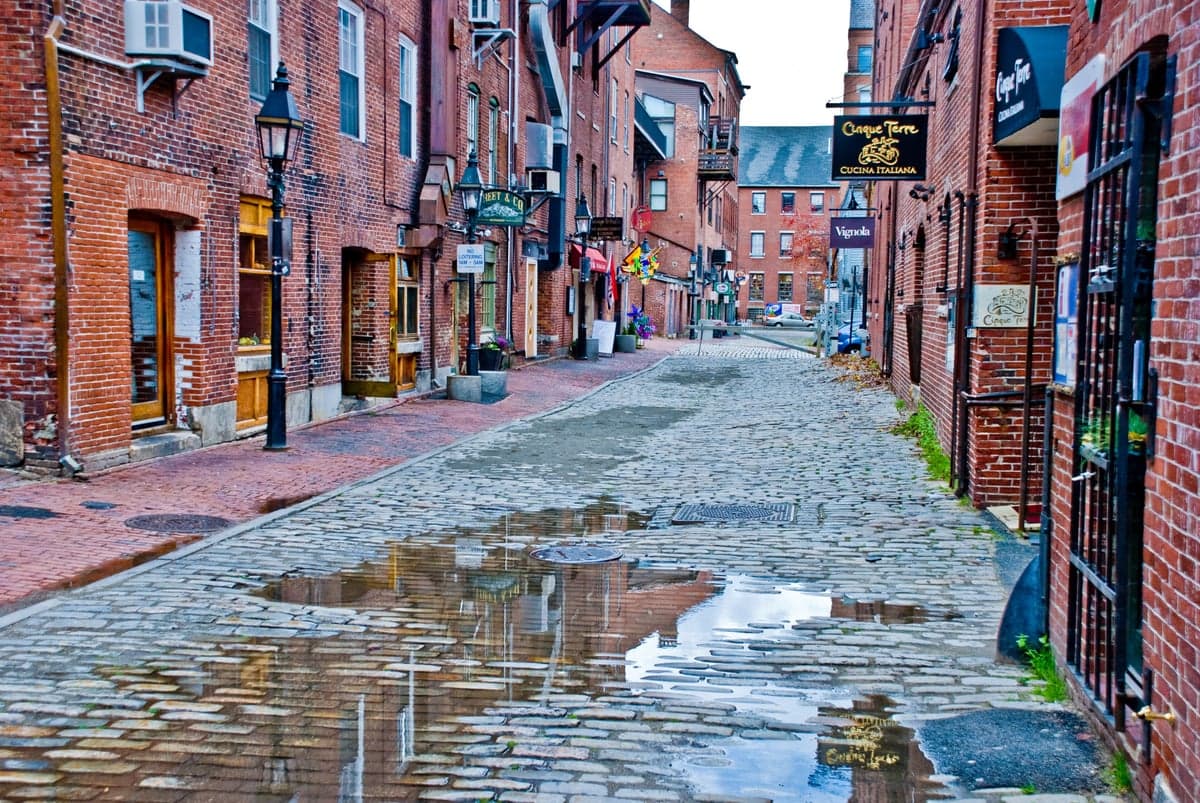
Photo: Wikipedia
Personal Sovereignty in Portland, ME
Viable for self-reliance. Generally workable, though some barriers may limit total independence.
What does Personal Sovereignty tell us?
Personal Sovereignty measures your capacity for self-reliance and independence with minimal government friction. Higher scores mean fewer barriers between you and the way you want to live... but it assumes you have the space you need and good neighbors.
What does this tell us?
Personal Sovereignty measures your capacity for self-reliance and independence with minimal government friction. Higher scores mean fewer barriers between you and the way you want to live... but it assumes you have the space you need and good neighbors.
State Policy
Energy independence: Importer (30% of energy produced in-state)
Personal Liberty
Homesteading

Personal Liberty Analysis
Portland, Maine, presents a complex picture for those prioritizing personal sovereignty. While the city itself leans heavily progressive, with policies that often expand government oversight into daily life, the broader state context offers some counterbalancing advantages, particularly in areas like property rights and a strong tradition of self-reliance. For a conservative-leaning individual or family evaluating Portland as a relocation option, the key is understanding that the city’s regulatory environment can feel restrictive, but the surrounding state and regional culture still provide meaningful pockets of autonomy—if you know where to look and are willing to navigate local ordinances.
Tax burden and regulatory posture: How much of your income and property stays yours
Maine’s overall tax burden is among the highest in the nation, and Portland is no exception. The state levies a progressive income tax with a top marginal rate of 7.15%, and property taxes in Portland are notably steep—averaging around $2,200 per $100,000 of assessed value, which is well above the national median. Sales tax is relatively moderate at 5.5%, but it applies to most goods and some services. For a prepper or survivalist, this means a significant portion of your earnings goes to state and local government before you can allocate it to your own preparedness goals. The regulatory posture in Portland is also interventionist: the city has strict zoning codes, a robust rental inspection program, and a recent push toward energy-efficiency mandates that can add costs to home renovations or off-grid modifications. However, Maine’s state-level property tax stabilization programs, like the Homestead Exemption (which reduces taxable value for primary residences), offer some relief for long-term homeowners. The takeaway: you’ll pay more in taxes here than in many other states, but the trade-off is a relatively stable, low-corruption government that does deliver basic services—if you can stomach the cost.
Self-defense and gun law specifics: What you can own and where you can carry
Maine has historically been a gun-friendly state, but Portland has introduced local restrictions that complicate matters. The state itself is a “shall-issue” jurisdiction for concealed carry permits, with no permit required for open carry. However, Portland passed a local ordinance in 202 cataracts that bans firearms in city-owned buildings, parks, and public spaces—including the popular Eastern Promenade and Back Cove trails. This means you cannot legally carry a firearm in many of the city’s most frequented outdoor areas, which is a significant limitation for those who view self-defense as a non-negotiable right. Additionally, Maine law prohibits the carrying of firearms in bars, restaurants that serve alcohol, and on public transportation. For a survivalist, this creates a patchwork of no-go zones that require constant awareness. On the positive side, Maine does not have a magazine capacity limit, and there is no state-level assault weapons ban, so you can own standard-capacity rifles and handguns. The state also has strong castle doctrine and stand-your-ground laws, meaning you have no duty to retreat in your home or vehicle. The bottom line: Portland’s local restrictions are a real hindrance, but the state framework still respects the right to keep and bear arms more than many New England counterparts.
Self-reliance and homesteading viability: Lot sizes, zoning, and off-grid feasibility
Within Portland’s city limits, self-reliance is a challenge. The typical residential lot is small—often less than a quarter-acre—and zoning codes are strict. Raising chickens is permitted in most residential zones, but with limits on the number of birds and a ban on roosters. Beekeeping is allowed with registration, but larger livestock like goats or pigs are prohibited in all but the most rural fringe areas. Off-grid living is essentially impossible within city limits: Portland requires connection to municipal water and sewer, and building codes mandate grid-tied electrical systems for new construction. However, the story changes dramatically just outside the city. In neighboring towns like Falmouth, Cumberland, or Gorham, you can find lots of one to five acres where zoning is more permissive, and some properties allow for private wells, septic systems, and even solar panels with battery storage. The state of Maine has a strong “right to farm” law that protects agricultural activities from nuisance lawsuits, which is a boon for homesteaders. For a prepper, the smart play is to live in Portland for work or access to services but own land in a nearby rural town for actual self-sufficiency. The commute is manageable—often 20-30 minutes—and you get the best of both worlds: city infrastructure and rural autonomy.
Personal liberties: Parental rights, medical autonomy, speech, and property
This is where Portland’s progressive tilt becomes most apparent and potentially concerning for conservative families. Parental rights are generally respected under state law, but Portland Public Schools have adopted policies that some parents view as overreaching, including gender-affirming care protocols that do not require parental notification for certain decisions. The city also has a strong “sanctuary” policy that limits cooperation with federal immigration enforcement, which may be a positive or negative depending on your perspective. Medical autonomy is mixed: Maine has legalized recreational marijuana, and Portland has numerous dispensaries, but the state also has strict vaccine mandates for school attendance and healthcare workers. During the COVID-19 pandemic, Portland was among the most aggressive in the state with mask and vaccine requirements, which raised concerns about future public health overreach. Free speech is protected under the First Amendment, but Portland has a “hate speech” ordinance that can be used to penalize certain types of expression, and public demonstrations have been met with police presence. Property rights are relatively strong at the state level, with Maine’s “right to farm” law and a constitutional provision against unreasonable searches, but Portland’s rent control and tenant protection ordinances can feel intrusive to landlords. The overall assessment: you have more personal liberty here than in Massachusetts or New York, but less than in New Hampshire or much of the South.
In the broader context of personal sovereignty, Portland, Maine, is a mixed bag. It offers a stable, low-crime environment with strong property rights and a gun-friendly state framework, but the city’s local government is interventionist on taxes, zoning, and public health. For a survivalist or prepper, the best strategy is to live just outside the city limits—where you can own land, carry a firearm without local restrictions, and avoid the worst of the regulatory burden—while still accessing Portland’s jobs, healthcare, and infrastructure. Compared to other New England cities like Boston or Providence, Portland is significantly more accommodating to personal autonomy. But compared to rural Maine or states like New Hampshire, it feels constrained. If you value independence and are willing to navigate a progressive local government, Portland can work—but only if you’re strategic about where you live and how you engage with the system.

* Values derived from national, state, county, city and local statistics and may differ in a specific area. Last updated: 2026-04-24T01:43:05.000Z
Narrative content on this page is AI-generated and may contain mistakes. Verify any details that matter before acting on them.
ReloMaps may earn a commission from affiliate links at no extra cost to you.

