Photo: Wikipedia
Demographics of Poolesville, MD
Affluence Level in Poolesville, MD
An upper-middle-class area. Household wealth, education levels, and homeownership run ahead of national benchmarks.
People of Poolesville, MD
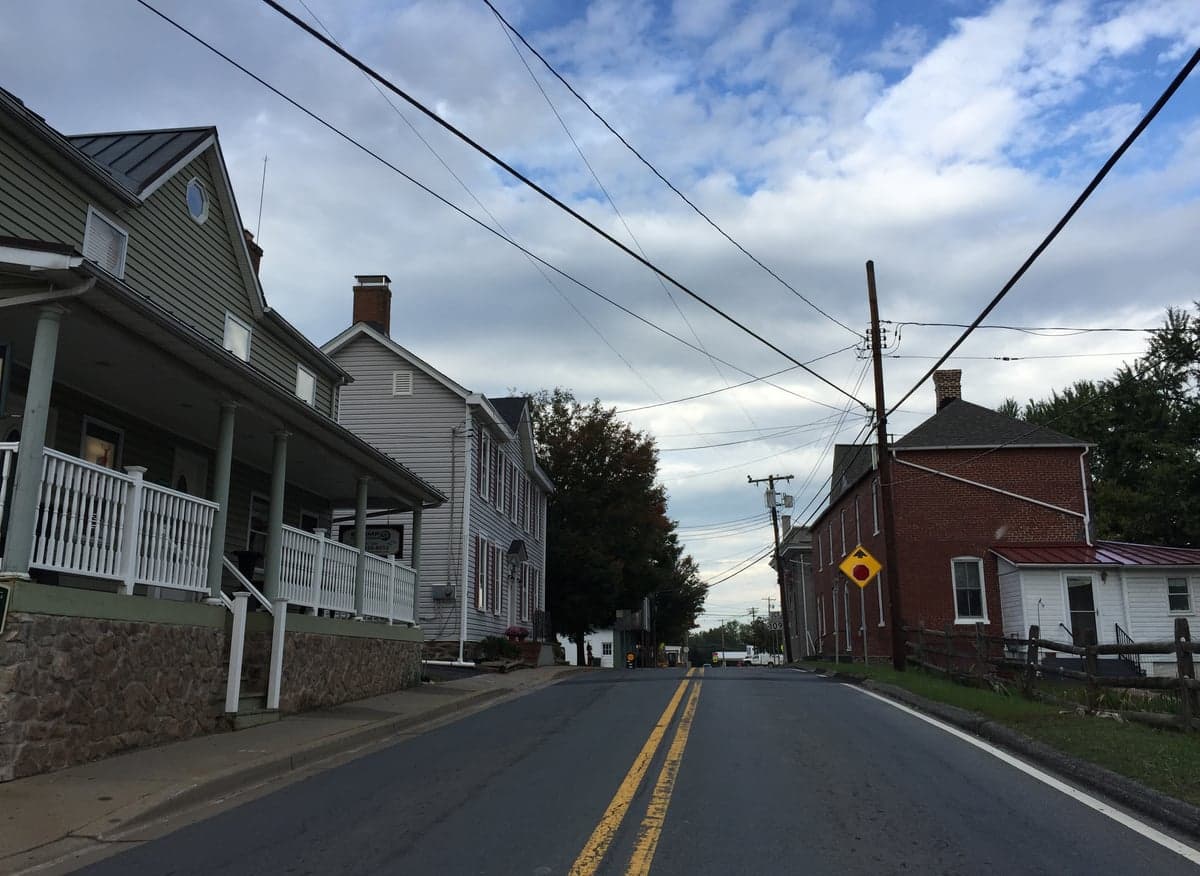
Today, Poolesville, Maryland, is a small, tight-knit community of 5,704 residents that blends a historic agricultural past with a modern, highly educated population. The town is notably 73.3% White and 67.8% college-educated, with a distinctive character shaped by its rural zoning and strong sense of local identity. It is a place where generational farming families live alongside newer arrivals seeking space and community, creating a population that is both stable and quietly diversifying.
How the city was settled and grew
Poolesville’s original population was drawn by agriculture and the Potomac River trade. Founded in the late 18th century as a mill town and trading post, the area was settled primarily by English and German farmers who received land grants in the surrounding countryside. The town’s historic core, Whites Ferry Road and the area around Fisher Avenue, became the commercial and social hub for these early families. The construction of the C&O Canal in the 1830s brought a modest wave of Irish laborers, some of whom settled in the Johnsons Lane area, though the town remained overwhelmingly rural and Anglo-American through the 19th and early 20th centuries. The population grew slowly, tied to tobacco and grain farming, and remained small—barely 500 residents—until after World War II.
Modern era (post-1965)
The post-1965 era saw Poolesville begin to change from a purely agricultural hamlet into a bedroom community for Washington, D.C., professionals. The 1968 creation of the Agricultural Reserve—a 93,000-acre zone of preserved farmland—was a turning point. It limited suburban sprawl but also attracted a new wave of residents who valued open space and were willing to commute. These newcomers, predominantly White and college-educated, settled in newer subdivisions like Westerly and Hunting Quarter, built from the 1980s onward. The town’s foreign-born population remains modest at 7.0%, but it has grown. The largest non-White group is East/Southeast Asian (8.4%), with many families drawn by the highly ranked Poolesville High School and settling in the Westerly and River View neighborhoods. The Hispanic (9.5%) population is concentrated in the older, more affordable housing stock along Elgin Station Road and the Poolesville Park area, often working in landscaping, construction, and local agriculture. The Indian-subcontinent population (1.6%) and Black population (1.8%) are small but present, typically in the newer subdivisions. Notably, the town has not experienced the rapid racial turnover seen in some nearby suburbs; instead, it has seen a gradual, steady diversification driven by professionals seeking a rural lifestyle.
The future
Demographic projections suggest Poolesville will continue to homogenize in terms of income and education while slowly diversifying ethnically. The Agricultural Reserve’s strict zoning ensures that large-scale development is impossible, capping population growth and preventing the kind of high-density, immigrant-heavy corridors seen in Gaithersburg or Germantown. The East/Southeast Asian and Hispanic populations are likely to grow incrementally, driven by school reputation and housing demand, but they will remain minority groups. The White population share, while still dominant, will likely edge downward as younger, more diverse families move in and older residents age in place. The town is not tribalizing into distinct ethnic enclaves; instead, the small population size and shared rural identity encourage integration. The biggest demographic pressure point is housing affordability—newer subdivisions like Westerly are expensive, limiting who can move in, while older areas like Elgin Station Road remain more accessible.
For someone moving in now, Poolesville offers a stable, community-oriented environment with a clear identity: rural, educated, and gradually diversifying. It is not a place of rapid change or ethnic clustering, but rather a slow-burn evolution where newcomers—whether White, Asian, or Hispanic—tend to assimilate into the existing fabric. The bottom line: Poolesville is becoming a slightly more diverse version of its historic self, and that stability is its primary draw for those seeking a deliberate, small-town life within commuting distance of a major metro area.

* Values derived from national, state, county, city and local statistics and may differ in a specific area. Last updated: 2026-04-22T01:23:42.000Z
Narrative content on this page is AI-generated and may contain mistakes. Verify any details that matter before acting on them.
ReloMaps may earn a commission from affiliate links at no extra cost to you.

