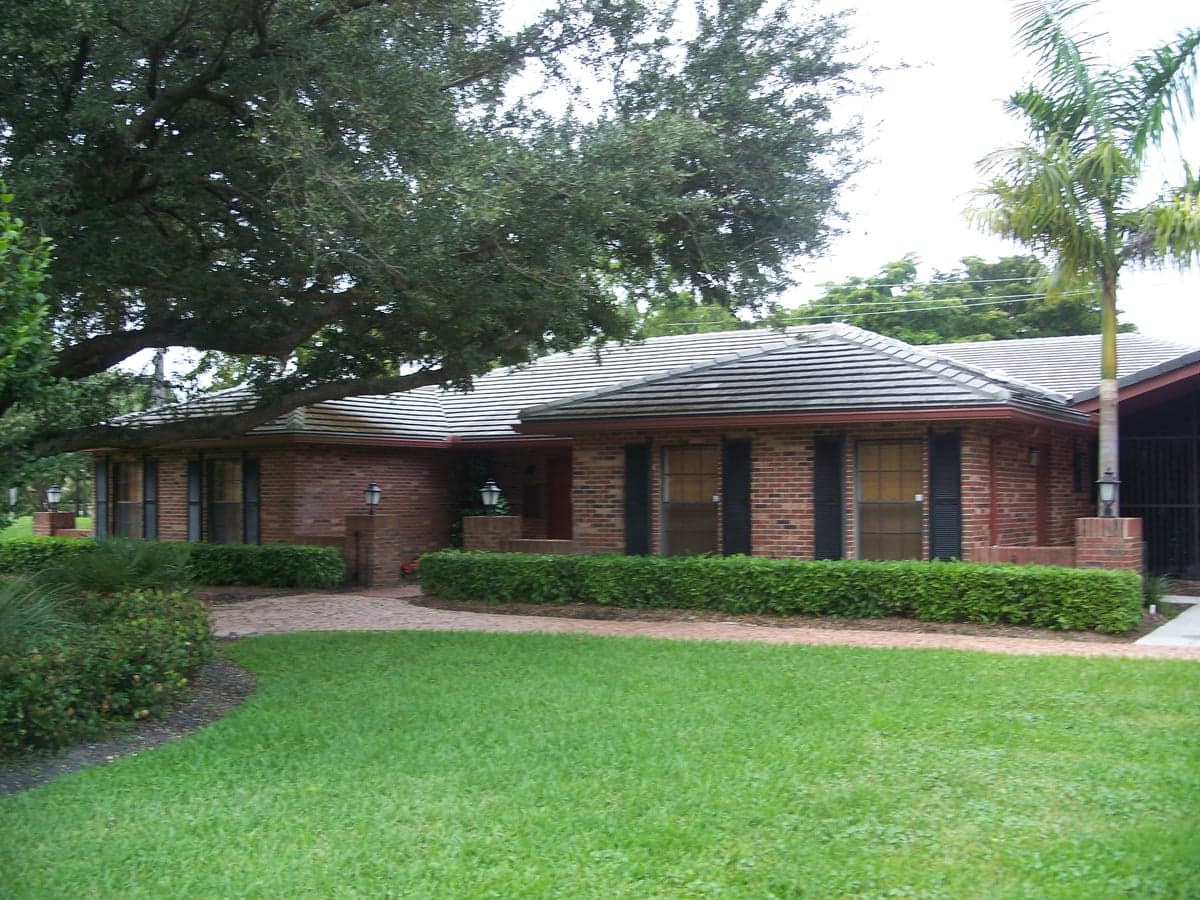
Photo: Wikipedia
Demographics of Plantation, FL
Affluence Level in Plantation, FL
A middle-class area roughly in line with national averages across income, home values, education, and employment.
People of Plantation, FL
Plantation, Florida, is a city of 94,002 residents defined by its planned suburban character, high educational attainment (44.8% college-educated), and a tri-ethnic balance of White (36.4%), Hispanic (30.2%), and Black (23.9%) populations. Its identity is shaped by a relatively low foreign-born share (11.4%) compared to neighboring cities, reflecting a population that is largely native-born and multi-generational. The city’s distinctive character is one of established, middle-to-upper-middle-class stability, with distinct neighborhoods that trace their origins to specific waves of settlement.
How the city was settled and grew
Plantation was not a pre-1900 settlement but a mid-20th-century planned community, incorporated in 1953. Its founding was driven by the post-World War II housing boom and the expansion of the Florida East Coast Railway, which made the area accessible from Fort Lauderdale and Miami. The original population was overwhelmingly White, drawn by affordable land and the promise of suburban living. The first major wave of residents settled in the Plantation Acres neighborhood, a large-lot equestrian area that attracted families seeking space and a rural-suburban hybrid. Simultaneously, the Central Plantation district, centered around Broward Boulevard and University Drive, filled with ranch-style homes built for middle-class professionals working in the growing defense and aviation industries of South Florida. These early residents were predominantly native-born Protestants and Catholics from the Northeast and Midwest, establishing the city’s conservative, family-oriented foundation.
Modern era (post-1965)
The 1965 Hart-Cellar Act and subsequent immigration waves reshaped Plantation’s demographics, though less dramatically than in coastal Broward cities. The city’s Black population grew steadily from the 1980s onward, with many families moving from Fort Lauderdale and Miami into neighborhoods like Jacaranda and Sunflower, drawn by better schools and newer housing stock. Today, Black residents make up 23.9% of the population, concentrated in the eastern and central parts of the city. Hispanic residents, now 30.2% of the population, arrived in two distinct waves: first, Cuban exiles in the 1970s and 1980s, settling in the Plantation Park area near Sunrise Boulevard; and later, Puerto Ricans and Central Americans in the 1990s and 2000s, who moved into West Plantation and the newer developments west of Pine Island Road. The East/Southeast Asian community (1.9%) is small but visible in the Fashion Row district near the Broward Mall, where Vietnamese and Korean-owned businesses serve a regional clientele. The Indian subcontinent community (2.7%) is concentrated in the Plantation Preserve area, with many families employed in healthcare and technology. Notably, the White population has declined from a majority in the 1970s to 36.4% today, with many older White residents aging in place in Plantation Acres and Central Plantation, while younger White families have moved to newer suburbs further west.
The future
Plantation’s population is likely to continue its trend toward greater ethnic diversity, but at a slower pace than neighboring cities. The Hispanic share is projected to grow modestly, driven by natural increase and continued in-migration from other parts of Broward County, while the Black population is expected to stabilize or decline slightly as younger families move to more affordable areas in western Broward and Palm Beach County. The White population will continue to age, with younger White residents increasingly choosing denser, walkable urban centers over suburban single-family homes. The East/Southeast Asian and Indian communities are likely to grow slowly, as Plantation lacks the ethnic enclave infrastructure of cities like Sunrise or Davie. The city is not homogenizing into a single identity but rather tribalizing into distinct enclaves: Plantation Acres remains a bastion of older, affluent White residents; Jacaranda and Sunflower are solidly Black and middle-class; Plantation Park is heavily Hispanic; and Plantation Preserve is a multi-ethnic, professional-class area with a significant Indian presence. The next 10-20 years will likely see these enclaves persist, with limited integration across neighborhood lines.
For someone moving to Plantation now, the city offers a stable, safe, and well-educated environment with strong schools and a conservative-leaning political culture. The trade-off is a lack of demographic dynamism and a housing stock that is aging relative to newer suburbs. The city is becoming a comfortable, established suburb for families who value predictability and community over rapid change or urban amenities.

* Values derived from national, state, county, city and local statistics and may differ in a specific area. Last updated: 2026-09-21T19:02:07.000Z
Narrative content on this page is AI-generated and may contain mistakes. Verify any details that matter before acting on them.
ReloMaps may earn a commission from affiliate links at no extra cost to you.

