Photo: Wikipedia
Demographics of Plainview, TX
Affluence Level in Plainview, TX
A low-income area with significant economic hardship. Household wealth and educational attainment are well below national averages.
People of Plainview, TX
The people of Plainview, Texas, today form a predominantly Hispanic (65.5%) and working-class community of roughly 19,893 residents, shaped by deep agricultural roots and a recent demographic shift from a white-majority past. The city’s identity is anchored in its role as a regional trade and education hub for the South Plains, with a notably low college attainment rate (15.7%) and a small but established foreign-born population (6.7%). Distinctive markers include a strong sense of local pride tied to Wayland Baptist University and a cultural blend of Tejano and Southern Plains traditions, visible in its annual festivals and local cuisine. This is a community where generational ties to the land remain strong, even as younger residents increasingly look beyond the county line for opportunity.
How the city was settled and grew
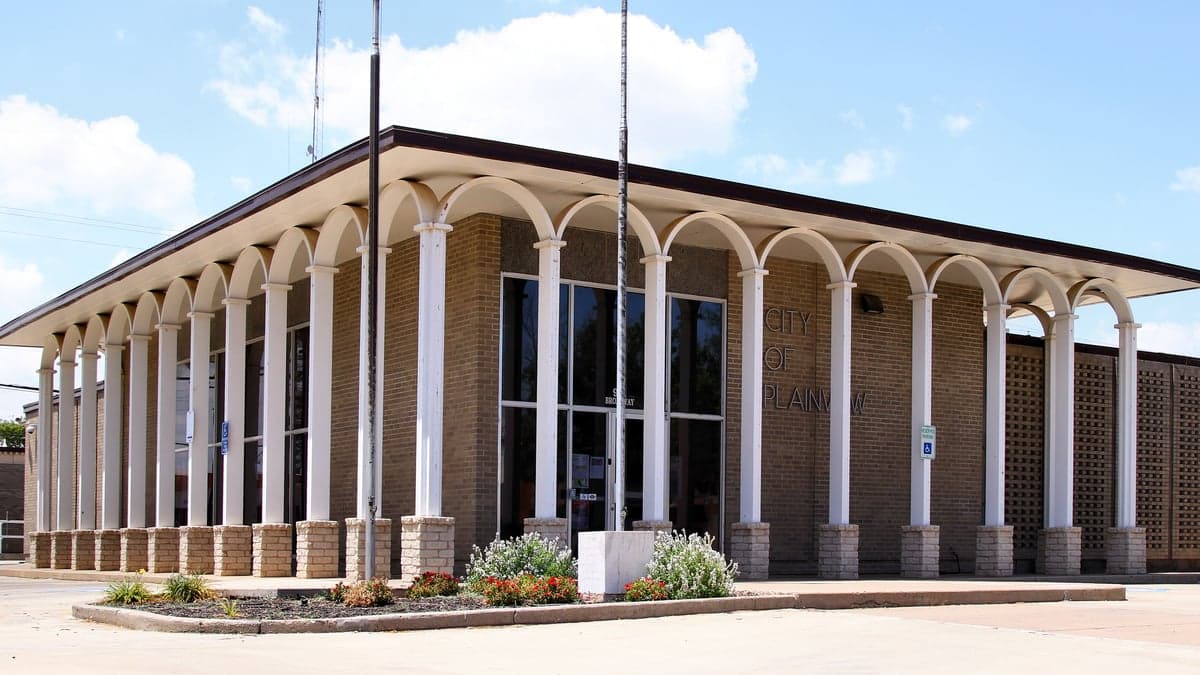
Plainview was founded in 1887 as a railroad town on the High Plains, its original population drawn by the promise of fertile soil and the arrival of the Santa Fe Railroad. The earliest settlers were Anglo-American homesteaders from the Midwest and Upper South, who established cotton farming as the economic backbone. These families built the first neighborhoods around the original townsite, including Downtown Plainview along Broadway Street, where brick storefronts and the Hale County Courthouse still anchor the historic core. By the 1910s, a wave of German and Czech immigrants arrived, settling in the North Park area near the railroad tracks, where they established small farms and churches. The post-World War II boom brought another influx of Anglo families, many employed by the expanding cotton gins and the newly established Wayland Baptist College (1949). These families filled the Southwest Heights neighborhood, a post-war subdivision of modest ranch-style homes that remains a predominantly white, older enclave today. The city’s population peaked at around 23,000 in the 1960s, reflecting the height of the cotton economy.
Modern era (post-1965)
The most significant demographic transformation began after the 1965 Immigration and Nationality Act, which opened the door for a sustained wave of Mexican-American and immigrant labor drawn to the region’s agricultural and meatpacking industries. By the 1980s, Plainview’s Hispanic population had grown from a small minority to a substantial plurality, settling heavily in the East Side neighborhoods east of Interstate 27, where older housing stock and proximity to the Cargill meatpacking plant (opened 1973) provided affordable entry points. This area, sometimes called La Colonia by residents, became the heart of the city’s Hispanic community, with Spanish-language signage, panaderías, and Catholic parishes like Our Lady of Guadalupe. Meanwhile, the Hillcrest neighborhood, developed in the 1970s and 1980s on the city’s western edge, attracted a mix of upwardly mobile Hispanic and white families seeking newer, larger homes. The Black population, at 3.3%, has remained small and largely concentrated in the Southside area near the old segregated school sites, though integration has been gradual. The East/Southeast Asian community (0.6%) and Indian subcontinent community (0.3%) are tiny and dispersed, with no single ethnic enclave, often tied to professional roles at Wayland Baptist University or the local hospital.
The future
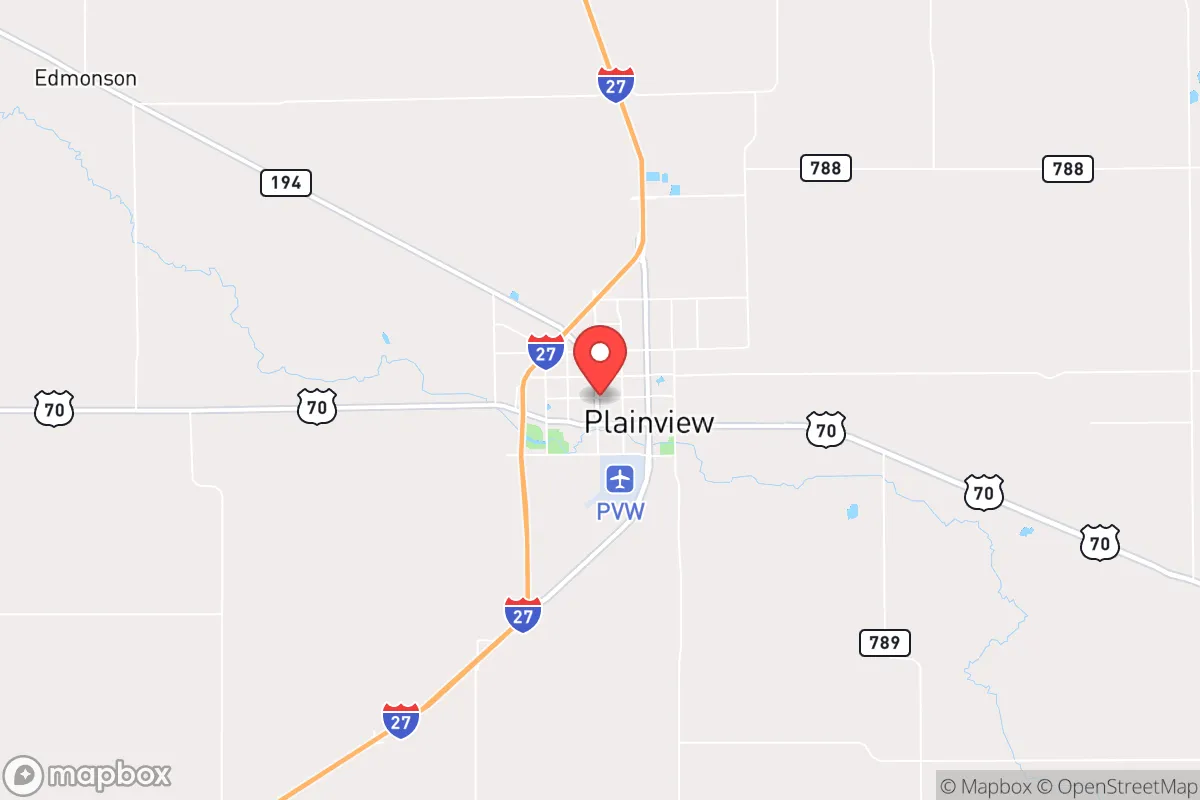
Plainview’s population is projected to continue its gradual decline from the 2010 peak of about 22,000, driven by outmigration of younger adults seeking better job markets in Lubbock (40 miles south) and the Dallas-Fort Worth metroplex. The Hispanic share is expected to grow further, potentially reaching 75-80% by 2040, as the white population ages and younger Hispanic families have higher birth rates. New residential development is concentrated in the West Plainview area, near the new high school and along US Highway 70, where a few subdivisions of $200,000-$300,000 homes are attracting middle-class Hispanic and some Anglo families. The city’s cultural identity is evolving from a historically Anglo-dominated farm town to a bilingual, bicultural community, with Spanish increasingly heard in public spaces and local government accommodating this shift. The challenge ahead is economic: without a major new employer to replace the shrinking agricultural and meatpacking sectors, the population may continue to shrink, making Plainview a quieter, more affordable, and more Hispanic version of its former self.
For someone moving in now, Plainview offers a low-cost, tight-knit community where the dominant culture is increasingly Hispanic and working-class, with a slower pace of life and strong local institutions like Wayland Baptist University. The city is becoming more diverse in the sense of Hispanic growth, but less diverse in terms of attracting other ethnic groups or college-educated newcomers. It is a place for those who value affordability, community ties, and a simpler lifestyle over urban amenities or rapid career advancement.

* Values derived from national, state, county, city and local statistics and may differ in a specific area. Last updated: 2026-08-25T23:24:49.000Z
Narrative content on this page is AI-generated and may contain mistakes. Verify any details that matter before acting on them.
ReloMaps may earn a commission from affiliate links at no extra cost to you.

