Photo: Wikipedia
Demographics of Phoenixville, PA
Affluence Level in Phoenixville, PA
A middle-class area roughly in line with national averages across income, home values, education, and employment.
People of Phoenixville, PA
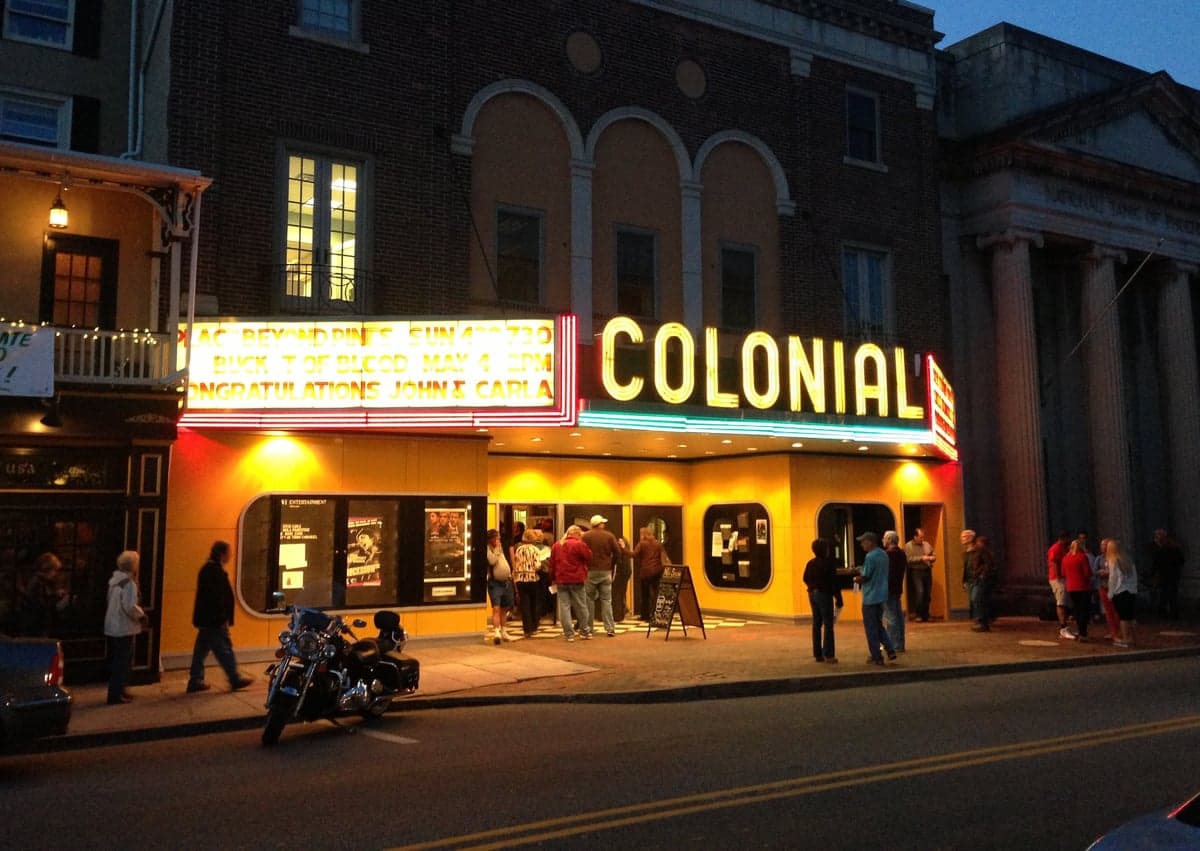
Phoenixville, Pennsylvania, is a borough of 19,062 residents that has transformed from a gritty industrial mill town into a dense, walkable suburb with a distinctive creative-class identity. The population is predominantly white (79.7%) and highly educated (53.3% hold a bachelor's degree or higher), with a modest but growing foreign-born share of 4.4%. The borough's character today is defined by its compact historic core, a thriving arts and dining scene along Bridge Street, and a demographic mix that is whiter and more affluent than the surrounding Chester County average, yet increasingly diverse along its edges.
How the city was settled and grew
Phoenixville's original population was drawn by the Schuylkill River's industrial potential. The 19th-century iron and steel boom, anchored by the Phoenix Iron Company (founded 1783), attracted a wave of skilled Welsh, English, and German immigrants who built the sturdy row homes and worker cottages that still define the Historic Downtown and the Franklin Commons area. By the 1880s, Irish laborers arrived to dig the Schuylkill Canal and work the foundries, settling in the East End near the river. A smaller wave of Italian immigrants followed around 1900, clustering in the West End near the current-day Reeves Park. These groups remained largely homogeneous through the mid-20th century, with Phoenixville's population peaking at roughly 14,000 in the 1950s as the steel mills still employed a majority of working-age men.
Modern era (post-1965)
The post-1965 era brought two major shifts. First, the collapse of heavy industry after the Phoenix Steel plant closed in 1987 triggered a population decline to about 12,000 by 1990, followed by a dramatic rebound as Philadelphia-area professionals discovered the borough's affordable Victorian housing stock. This in-migration of white-collar workers—many from the nearby King of Prussia tech corridor—concentrated in the North Side and Hibernia Avenue neighborhoods, driving the college-educated share from roughly 20% in 1990 to 53.3% today. Second, the Hart-Cellar Act opened doors for new immigrant groups. The borough's East/Southeast Asian population (3.0%) is largely concentrated in the Nutt Road corridor near the Phoenixville Hospital, with Vietnamese and Korean families drawn by the area's affordable duplexes and proximity to Asian grocery networks in King of Prussia. The Indian-subcontinent population (0.9%) is smaller and more dispersed, with families settling in the newer Valley Forge Estates subdivision on the borough's western edge. The Hispanic population (6.1%) is the fastest-growing segment, with Puerto Rican and Mexican families establishing a visible presence in the East End around Church Street, where older mill housing remains relatively affordable. The Black population (4.8%) is a long-standing community centered near the St. Peter's Episcopal Church area, with roots dating to the Great Migration but now aging and slowly declining in share.
The future
Phoenixville's population is heading toward continued gentrification and modest diversification. The borough is not homogenizing into a single enclave; rather, it is tribalizing along income and education lines. The historic core (Bridge Street, Franklin Commons) is becoming a high-rent district for young professionals and empty-nesters, while the East End and Nutt Road corridor are absorbing most new immigrant and lower-income households. The Hispanic share is likely to grow from 6.1% toward 10-12% over the next decade, driven by continued migration from Puerto Rico and Mexico and by higher birth rates. The East/Southeast Asian community is plateauing, as younger families tend to move to larger suburban lots in neighboring Tredyffrin and East Whiteland townships. The Indian population remains small and stable, with most new arrivals choosing the more established ethnic infrastructure of Upper Merion or Edison, New Jersey. The white population share (79.7%) is declining slowly—by roughly 1-2% per census cycle—as the borough's housing costs push out lower-income white families while attracting higher-income white newcomers.
For someone moving in now, Phoenixville is becoming a denser, more expensive, and slightly more diverse borough—a place where the creative-class majority sets the cultural tone, but where distinct ethnic and economic pockets persist in the older neighborhoods. The bottom line: this is a town that has successfully reinvented itself as a walkable suburb for educated professionals, but its future demographic trajectory depends on whether it can maintain enough affordable housing to keep its immigrant and working-class communities from being priced out entirely.

* Values derived from national, state, county, city and local statistics and may differ in a specific area. Last updated: 2026-04-19T10:44:06.000Z
Narrative content on this page is AI-generated and may contain mistakes. Verify any details that matter before acting on them.
ReloMaps may earn a commission from affiliate links at no extra cost to you.

