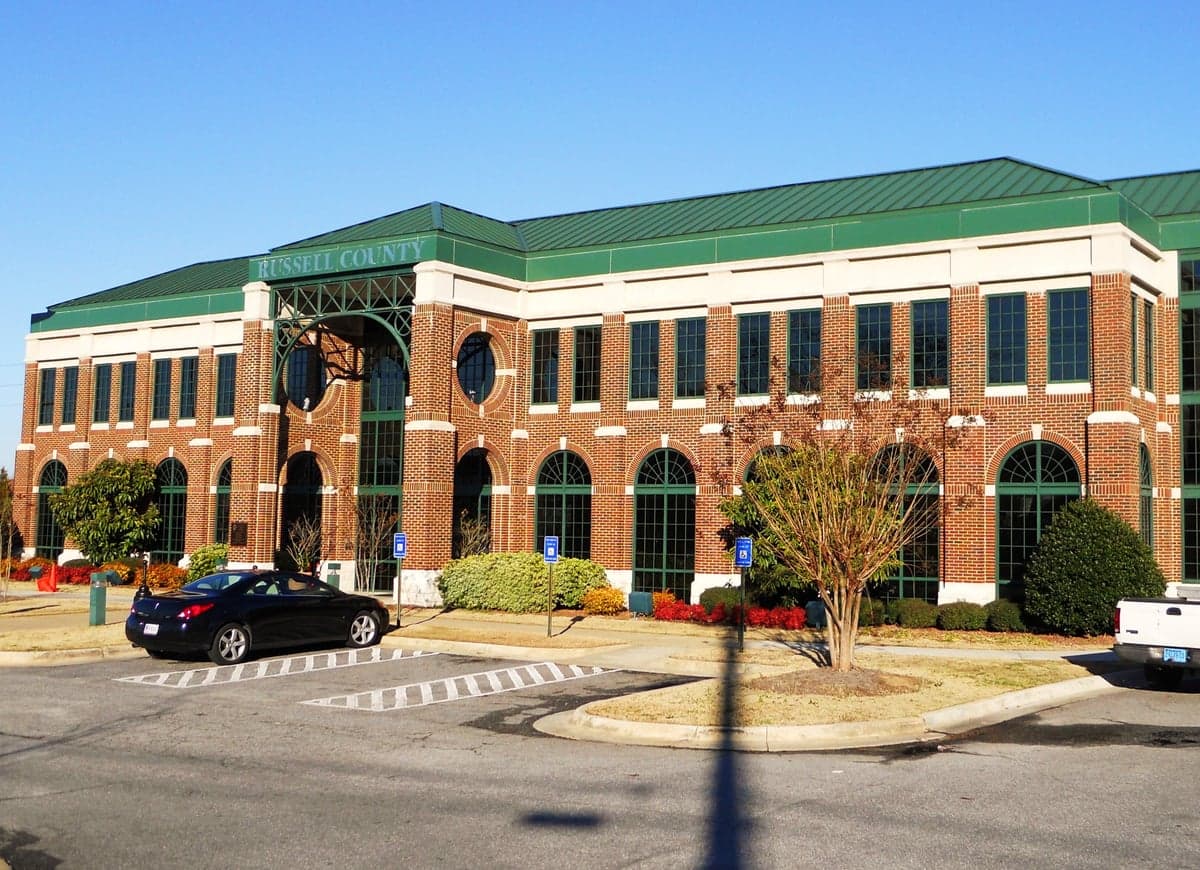
Photo: Wikipedia
Strategic Assessment of Phenix City, AL
Workable tactical position. Some exposure to population density or targets, but generally defensible in a crisis.
What does the Strategic Assessment tell us?
Our Strategic Assessment grades tactical survivability of an area. Major population centers, military targets, fallout zones, natural disasters, and border exposure all drive risk — lower exposure means a more defensible position in a crisis.
This is heavily inspired by Joel Skousen's Strategic Relocation book. Highly recommended you checkout the book ($)What does this tell us?
Our Strategic Assessment grades tactical survivability of an area. Major population centers, military targets, fallout zones, natural disasters, and border exposure all drive risk — lower exposure means a more defensible position in a crisis.
This is heavily inspired by Joel Skousen's Strategic Relocation book. Highly recommended you checkout the book ($)Strategic Pillars

Key Distances
Regional Safe Places
Below is our recommended "safe zones" in Alabama and the surrounding area based on our strategic heuristics. For most people, it's unrealistic to live in a “safe zone” full-time due to work, family or other personal reasons. They tend to be more rural. However, many of these areas are perfect for second homes and retreat properties that double as a vacation home or even a short-term rental.
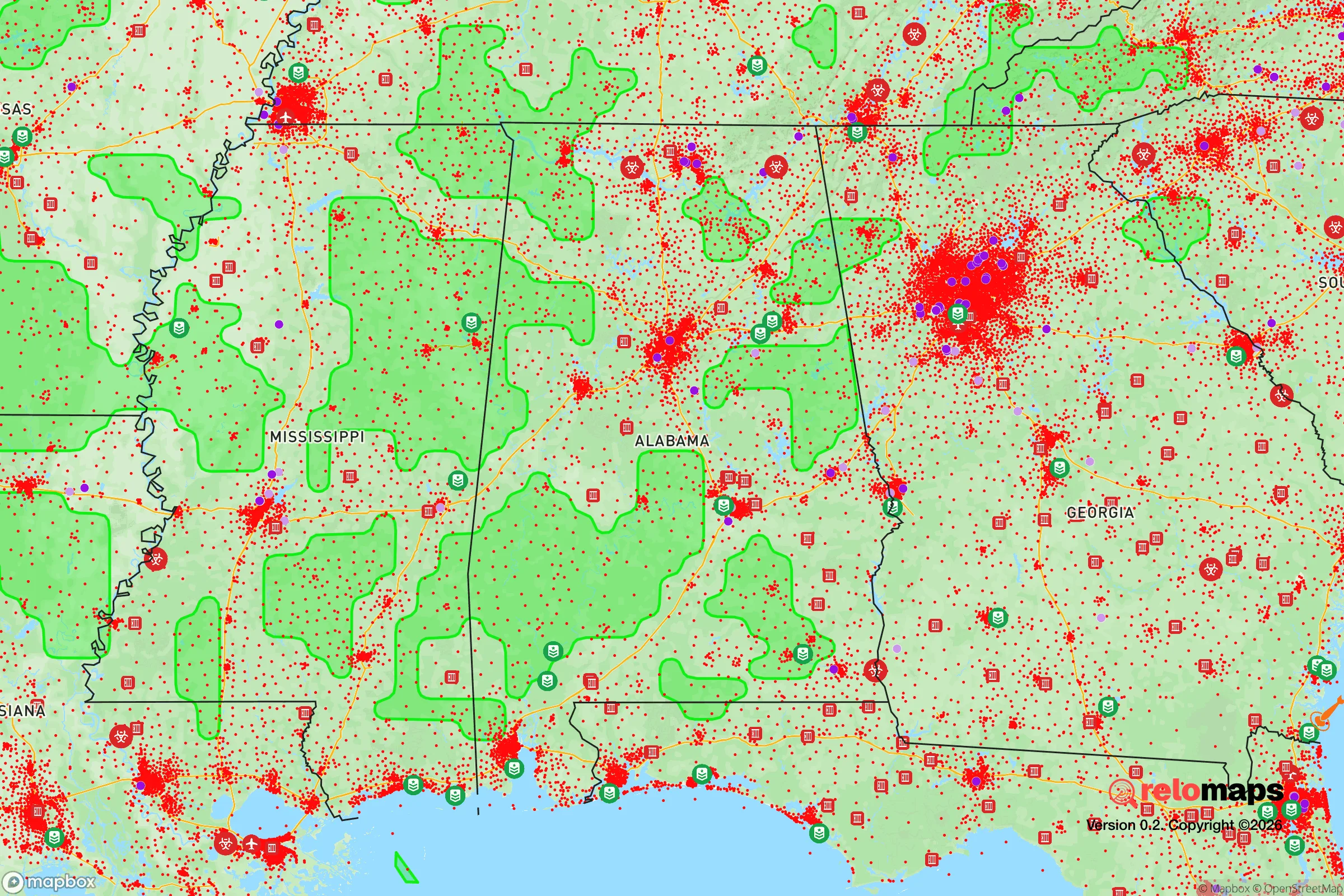
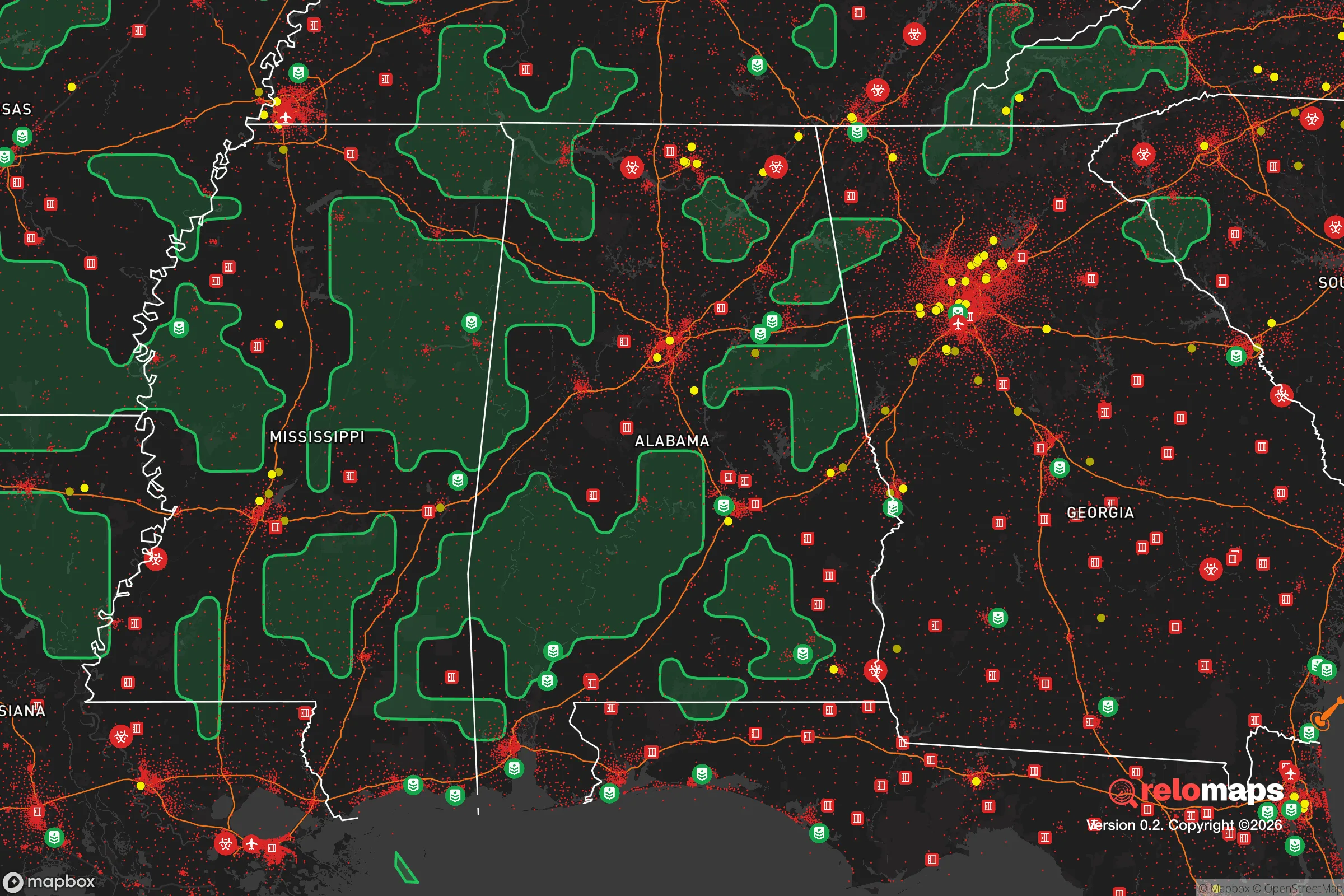


Important Note: For informational purposes only. This does not mean nothing bad ever happens in the green zones. Please use common sense. This is based on public data and modeled with AI. We tried to take a conservative approach but mistakes happen. We update this regularly as new information becomes available.
Solar Generator Recommendations
Backup power matters more here than in safer locations. We've picked three solar generators across budgets and capacity tiers — start with the budget unit if you only need a few essentials, or step up if you want to run a fridge and HVAC for days at a time.

Jackery Portable Power Station Explorer 300
Budget OptionPower on the Go: Weighing only 11 lbs, it's convenient to set up and store with book-sized foldable solar panels

BLUETTI Portable Power Station AC180
Designed for both indoor and outdoor scenarios, AC180 is highly capable as it has a robost capacity and continuous output power.

EF ECOFLOW DELTA Pro Ultra Power Station
Upgraded PickEcoFlow DELTA Pro Ultra is a whole-home energy system designed to grow with your family. Integrated with the Smart Home Panel 2, it scales to meet your evolving energy needs — keeping your home powered, intelligent, and secure through every stage of life.
We earn a commission, at no additional cost to you.
Strategic Assessment Analysis
Phenix City, Alabama, sits in a strategic sweet spot that resilience-minded relocators should study closely: it offers the economic and logistical benefits of proximity to a major military installation (Fort Moore, formerly Fort Benning) and the Columbus, GA metro area, while retaining the lower population density, lower tax burden, and more conservative governance of rural Alabama. Its position on the Chattahoochee River provides a natural water source and a defensible eastern boundary, and the surrounding Russell County remains overwhelmingly Republican, with a political culture that aligns with self-reliance and limited government. For someone weighing long-term stability against exposure to urban collapse, Phenix City presents a nuanced case — not a bunker, but a viable base of operations with real advantages and real trade-offs.
Geographic position and natural advantages for long-term stability
Phenix City’s location at the intersection of Alabama, Georgia, and the Chattahoochee River gives it a rare combination of resources and escape routes. The river itself is a reliable water source for filtration and small-scale agriculture, and the surrounding terrain is a mix of rolling hills and hardwood forests — not mountainous, but offering enough cover and natural barriers to slow movement from the Columbus urban core. The area sits well inland from hurricane-prone Gulf Coast zones (roughly 150 miles from the Gulf), and tornado risk, while present, is no worse than most of the Deep South. The climate supports year-round growing seasons for food production, and the local soil in outlying rural tracts is suitable for gardening and small livestock. For a relocator, the key advantage is the ability to live within 15–20 minutes of a major city’s hospitals and supply chains while being able to retreat into sparsely populated countryside within the same drive. The presence of Fort Moore also means a steady influx of military families and veterans — a demographic that tends to be armed, trained, and community-oriented in a crisis.
Risks, exposures, and proximity to fallout-relevant landmarks
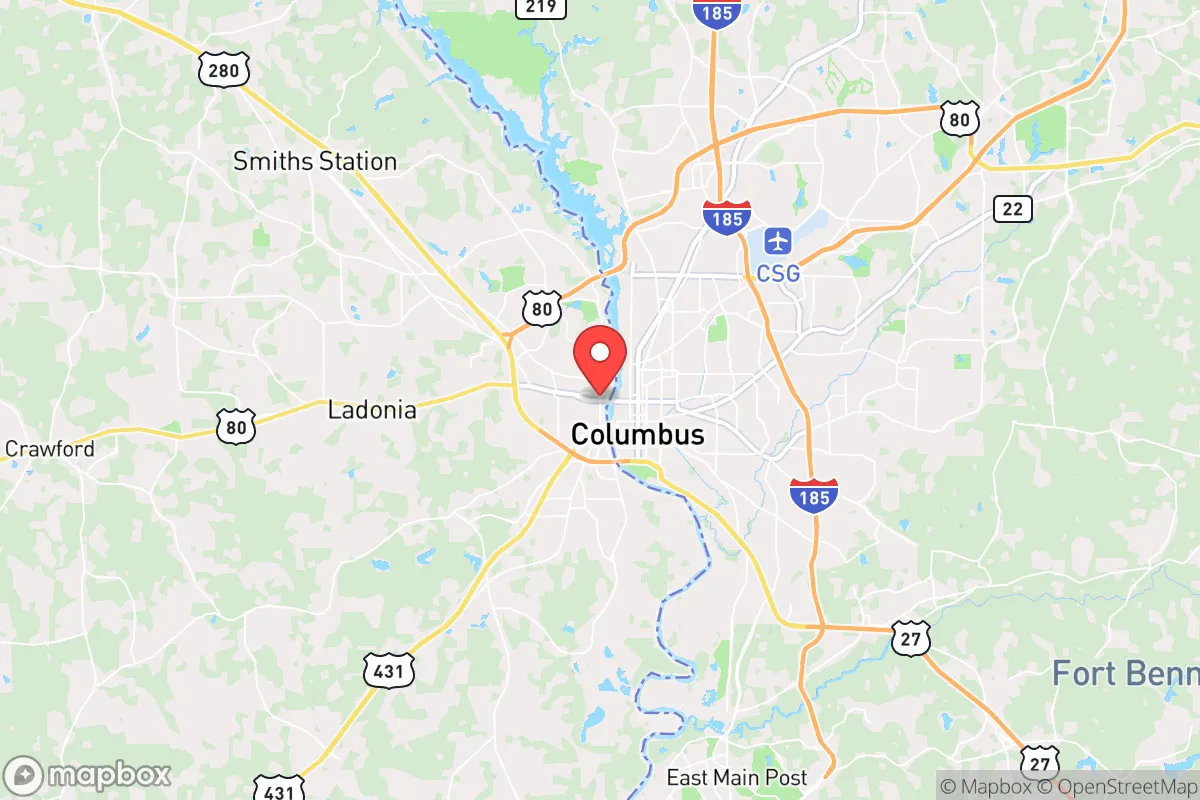
The most significant vulnerability for Phenix City is its adjacency to Columbus, GA (population ~200,000 metro), which itself sits near Fort Moore — a major Army base that trains infantry and armor. In a mass casualty event, civil unrest, or grid-down scenario, Columbus could become a funnel for displaced populations heading south and west into Alabama, with Phenix City as the first choke point. The base itself is a potential target for sabotage or protest activity, and the I-185/I-85 corridor that feeds into the area is a known evacuation route. Additionally, the nearby Kia Motors Manufacturing plant in West Point, GA (about 20 miles north) and the MeadWestvaco paper mill in Cottonton, AL represent industrial hazards — chemical spills, fires, or supply chain disruptions that could ripple into the local economy. On the positive side, Phenix City is far from any nuclear power plant (the nearest is Plant Farley in Dothan, ~90 miles south) and well outside the blast radius of any major metropolitan target. The risk profile is moderate: the area is not a primary target, but it sits in the shadow of a military hub that could attract secondary effects.
Practical resilience for a relocator: food, water, energy, and defensibility
For someone serious about self-sufficiency, Phenix City offers a mixed bag. The Chattahoochee River is a year-round water source, but it’s also heavily used by industry and municipalities upstream; any serious filtration plan would need to account for agricultural runoff and potential chemical contamination from the Columbus water treatment plants. Groundwater wells are feasible in the surrounding rural areas, with typical depths of 100–200 feet in Russell County, but city lots are on municipal water. Food production is realistic: the growing season runs from March through October, and local farmers’ markets (like the Phenix City Farmers Market) indicate a culture of small-scale agriculture. For energy, the area is served by Alabama Power (a subsidiary of Southern Company), which relies on a mix of coal, natural gas, and nuclear — meaning grid dependency is high. Solar is viable, with average sun hours comparable to the rest of the Southeast, but tree cover in many residential lots limits rooftop efficiency. Defensibility is the weakest point: Phenix City is flat and sprawling, with no natural high ground or chokepoints within the city limits. A relocator would need to choose a property on the outskirts — preferably east of Highway 431 or north toward Seale, AL — to gain any tactical advantage. The local gun culture is strong, with multiple gun shops and ranges in the area, and Alabama’s constitutional carry law (no permit required for concealed carry) is a clear plus for preparedness-minded individuals.
The overall strategic picture for Phenix City is one of calculated compromise. It is not a remote survival retreat — it is a working-class border town with real exposure to urban spillover and industrial risk. But for a relocator who wants to stay within striking distance of medical infrastructure, supply chains, and a military-affiliated community while keeping a foot in rural Alabama’s lower cost of living and conservative governance, it offers a viable middle ground. The key is to choose a property that maximizes distance from Columbus and the base, secure independent water and power, and build ties with the local veteran and farming networks before any crisis materializes. Phenix City won’t save you from a national collapse, but it could serve as a functional base for riding one out — provided you treat it as a staging ground, not a final redoubt.

* Values derived from national, state, county, city and local statistics and may differ in a specific area. Last updated: 2026-04-19T19:05:55.000Z
Narrative content on this page is AI-generated and may contain mistakes. Verify any details that matter before acting on them.
ReloMaps may earn a commission from affiliate links at no extra cost to you.

