Photo: Wikipedia
Political ClimatePolitical Climate in Peralta, NM
District shown is the primary district for this city’s centroid. Cities may span multiple districts.
Local Political AnalysisPolitical Analysis of Peralta, NM
Peralta, New Mexico, sits in a tricky spot politically. The Cook PVI of D+7 tells you the official lean is Democratic, but if you’ve lived here a while, you know that number doesn’t tell the whole story. This area used to be a lot more balanced—folks here valued hard work, personal responsibility, and keeping the government out of your business. Over the last decade or so, you’ve seen a slow shift as more people move in from Albuquerque and Santa Fe, bringing that progressive mindset with them. The local elections are getting tighter, but the county-level registration still leans left, and that’s where the real pressure comes from on things like zoning, taxes, and how much say you have over your own property.
How it compares
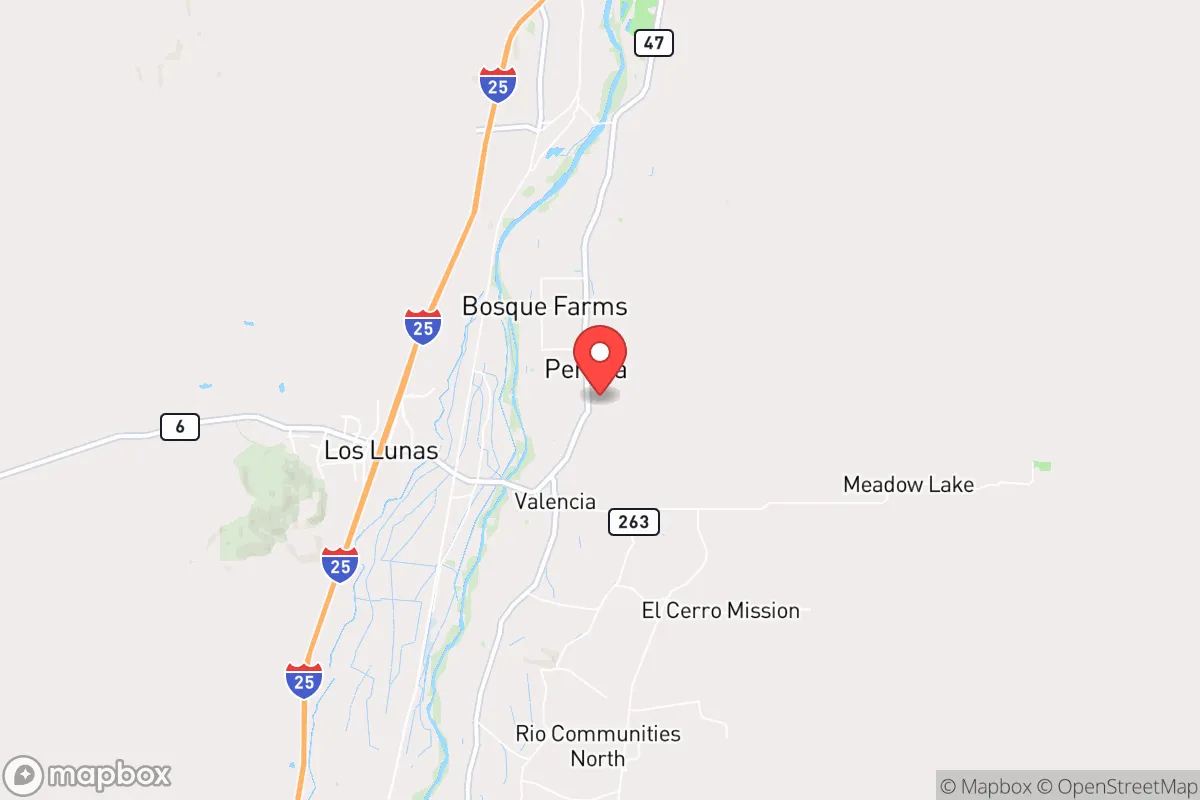
Drive ten miles north to Los Lunas, and you’ll feel a different vibe—it’s more conservative, with a strong ranching and farming base that pushes back on the bigger government ideas. Head east toward the Manzano Mountains, and towns like Mountainair are even more libertarian-leaning, where folks just want to be left alone. But Peralta itself is caught in the middle. It’s close enough to Albuquerque that you get the urban influence—more regulations, higher fees, and a school board that’s been pushing progressive curriculum changes that a lot of parents here aren’t happy about. The contrast is stark: while Valencia County as a whole is a bit more purple, Peralta’s precincts have been trending bluer, especially since the 2020 redistricting. That D+7 rating feels like it’s getting harder to overcome with each election cycle.
What this means for residents
For the average person living here, the biggest concern is how much say you actually have in your own life. Property rights are a hot-button issue—there’s been talk of county-wide land-use ordinances that would tell you what you can build or how you can use your acreage, which is a direct hit on the rural lifestyle people moved here for. Taxes are another sore spot: the local government has been eyeing mill levy increases to fund programs that a lot of residents see as wasteful or ideologically driven. If you’re a gun owner, you’ve probably noticed the state legislature in Santa Fe pushing stricter laws, and Peralta’s local reps haven’t always fought back as hard as they should. The school system is where it really hits home—parents are seeing more emphasis on social-emotional learning and diversity initiatives over core academics, and the school board meetings have gotten tense. It’s not the same community it was twenty years ago, and that’s worrying for folks who want to raise their kids with traditional values.
Culturally, Peralta still holds onto some of its old New Mexico charm—the annual fiestas, the acequia associations, the neighbor-helping-neighbor attitude. But there’s a growing divide between the longtime families and the newcomers who want to change things. The local government has been pushing for more “affordable housing” mandates and public transit expansions, which sound good on paper but often mean more bureaucracy and less freedom for property owners. If the trend continues, Peralta could end up looking more like a suburb of Albuquerque than the independent, rural community it’s always been. For now, the best advice is to stay involved in local elections and keep an eye on the school board—that’s where the real battles are being fought over the future of this place.

State Political ClimatePolitical Climate in New Mexico
State Political AnalysisPolitical Environment in the State
New Mexico has long been a reliably blue state in presidential elections, last voting Republican in 2004, but the picture is more complicated than a simple partisan label. The state’s political climate is a tug-of-war between a heavily Democratic, union-heavy Albuquerque metro and a vast, rural, and often conservative expanse, with the balance of power tilting leftward over the past two decades due to rapid growth in Santa Fe and Las Cruces. For a conservative considering a move, the state offers a mixed bag: low property taxes and a hands-off attitude in many rural counties, but a state government in Santa Fe that has increasingly pushed progressive policies on energy, education, and social issues.
Urban vs. rural divide
The political map of New Mexico is a study in contrasts. Bernalillo County, home to Albuquerque and its sprawling suburbs like Rio Rancho and Corrales, casts about a third of the state’s vote and leans reliably Democratic, driven by government workers, University of New Mexico faculty, and a strong union presence. Santa Fe County is even more liberal, with a deep-blue core that often sets the tone for statewide legislation. Las Cruces in Doña Ana County is a growing Democratic stronghold, fueled by New Mexico State University and a large Hispanic population that leans left on immigration and social services. In contrast, the eastern plains—counties like Roosevelt (Portales), Curry (Clovis), and Lea (Hobbs)—are deeply conservative, often voting 70-80% Republican. The northwest corner, including San Juan County (Farmington), is another GOP bastion, tied to the oil and gas industry. The rural Hispanic counties in the north, like Mora and Taos, are ancestrally Democratic but culturally conservative on some issues, though they reliably vote blue. The key battleground is the fast-growing southern tier, particularly Doña Ana and Otero counties, where in-migration from Texas and military families at Holloman Air Force Base and White Sands Missile Range are slowly shifting the balance.
Policy environment
New Mexico’s policy environment is a study in contradictions that a conservative would need to navigate carefully. On the plus side, the state has no inheritance tax and a relatively low property tax rate, capped by the state constitution, which is a major draw for retirees and landowners. However, the state income tax is progressive, with a top rate of 5.9% on income over $210,000, and the gross receipts tax (essentially a sales tax on services) is high, often exceeding 8% in larger cities. The regulatory posture is mixed: the oil and gas industry in the Permian Basin (Lea and Eddy counties) is a massive economic driver, and the state has historically been friendly to extraction, but the current administration under Governor Michelle Lujan Grisham has pushed for a transition to renewable energy, including a 2019 law requiring 100% carbon-free electricity by 2045. Education policy is a flashpoint: the state has one of the highest per-pupil spending levels in the nation but consistently ranks near the bottom in outcomes, and the 2023 passage of a constitutional amendment allowing the state to tap the Land Grant Permanent Fund for early childhood education has raised concerns about long-term fiscal sustainability. Healthcare is heavily regulated, with a state-run insurance exchange and Medicaid expansion under the Affordable Care Act, which covers nearly half the population. Election laws are relatively lax: same-day voter registration, no-excuse absentee voting, and automatic voter registration at the DMV are all in place, which conservatives often view as a vulnerability to fraud.
Trajectory & freedom
Over the past five years, New Mexico has moved decisively toward a more progressive, top-down governance model, which is concerning for those who value personal liberty. The 2021 Energy Transition Act effectively phases out coal-fired power plants, a move that hit the Four Corners region hard and raised electricity prices. On gun rights, the state has gone from a relative haven to a restrictive one: in 2023, the governor signed a ban on carrying firearms in public buildings and parks, and a 2024 law raised the purchasing age for semi-automatic rifles to 21 and imposed a 14-day waiting period. Parental rights took a hit with the 2023 passage of a law that allows minors to receive certain medical procedures without parental consent, a major red flag for conservative families. On the economic freedom front, the state’s minimum wage is $12.00 an hour and indexed to inflation, and a 2024 law mandates paid sick leave for all workers. Property rights are generally respected, but the state’s water rights system is complex and increasingly contested as the Rio Grande and Colorado River basins face drought. The 2023 repeal of the state’s 1969 abortion ban and the codification of abortion access into law further cemented the state’s progressive trajectory. For a conservative, the trend is clear: Santa Fe is actively reducing individual autonomy in favor of government mandates.
Civil unrest & political movements
New Mexico has seen its share of political flashpoints, though large-scale civil unrest is rare. The most visible movement in recent years has been the push for a “People’s Water Rights” campaign in the rural north, where acequia associations have fought state and federal water management. Immigration politics are a constant undercurrent: New Mexico is a sanctuary state, with a 2019 law prohibiting state and local law enforcement from asking about immigration status, and the border town of Sunland Park has been a staging ground for migrant caravans. In 2020, the state saw protests in Albuquerque over the killing of George Floyd, which turned violent in some instances, with property damage and clashes with police. On the right, the “New Mexico Patriots” and other Second Amendment groups have held rallies at the state capitol, particularly after the 2023 gun ban. Election integrity has been a persistent concern: in 2020, a Republican candidate for the state House in a rural district alleged irregularities, and the 2022 election saw a high-profile case of a county commissioner in Otero County refusing to certify primary results, citing distrust of Dominion voting machines. The state’s high crime rate, particularly in Albuquerque, has also fueled a “law and order” backlash, with some rural sheriffs openly refusing to enforce certain state gun laws.
Projection
Looking ahead five to ten years, New Mexico’s political trajectory is likely to continue leftward, driven by demographic shifts and in-migration patterns. The Albuquerque metro is growing slowly but steadily, while rural counties are losing population, which will further concentrate political power in urban centers. The influx of remote workers from California and Colorado, particularly to Santa Fe and Taos, is accelerating the state’s progressive tilt. The oil and gas industry, while still a major employer, faces long-term headwinds from the state’s renewable energy mandates and federal policies, which could weaken the conservative stronghold in the southeast. The growing Hispanic population, while culturally diverse, tends to vote Democratic in statewide races, particularly on issues like healthcare and immigration. For a conservative moving in now, the expectation should be that the state government will become more interventionist on social issues, more restrictive on gun rights, and more aggressive in taxing and regulating businesses. The rural areas will remain conservative bastions, but their political influence will wane. The best bet for a conservative is to target the eastern plains or the oil patch counties, where local governance is still friendly, but be prepared for a state-level environment that is increasingly at odds with their values.
For a conservative individual or family considering New Mexico, the bottom line is this: you can find a community that shares your values in places like Hobbs, Clovis, or Farmington, but you will be living under a state government that is actively working against many of those values. The low property taxes and pro-business attitude in the oil patch are real benefits, but they come with the cost of high crime rates in the cities, a struggling education system, and a state that is increasingly willing to override local control. If you value personal freedom, particularly on gun rights and parental authority, you will need to be vigilant and politically engaged. New Mexico is not a lost cause, but it is a state where the battle for liberty is being fought every legislative session in Santa Fe.
* Values derived from national, state, county, city and local statistics and may differ in a specific area. Last updated: 2026-05-01T04:03:06.000Z
Narrative content on this page is AI-generated and may contain mistakes. Verify any details that matter before acting on them.
ReloMaps may earn a commission from affiliate links at no extra cost to you.

