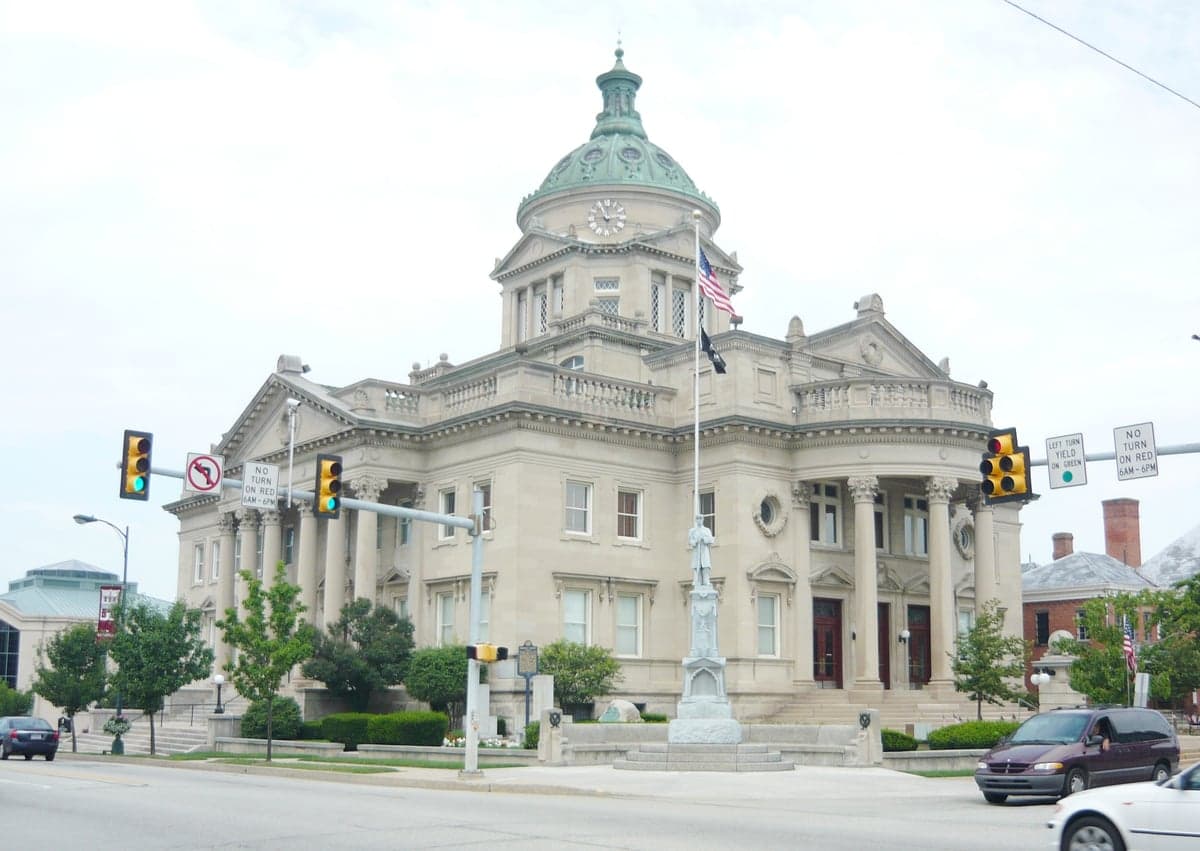
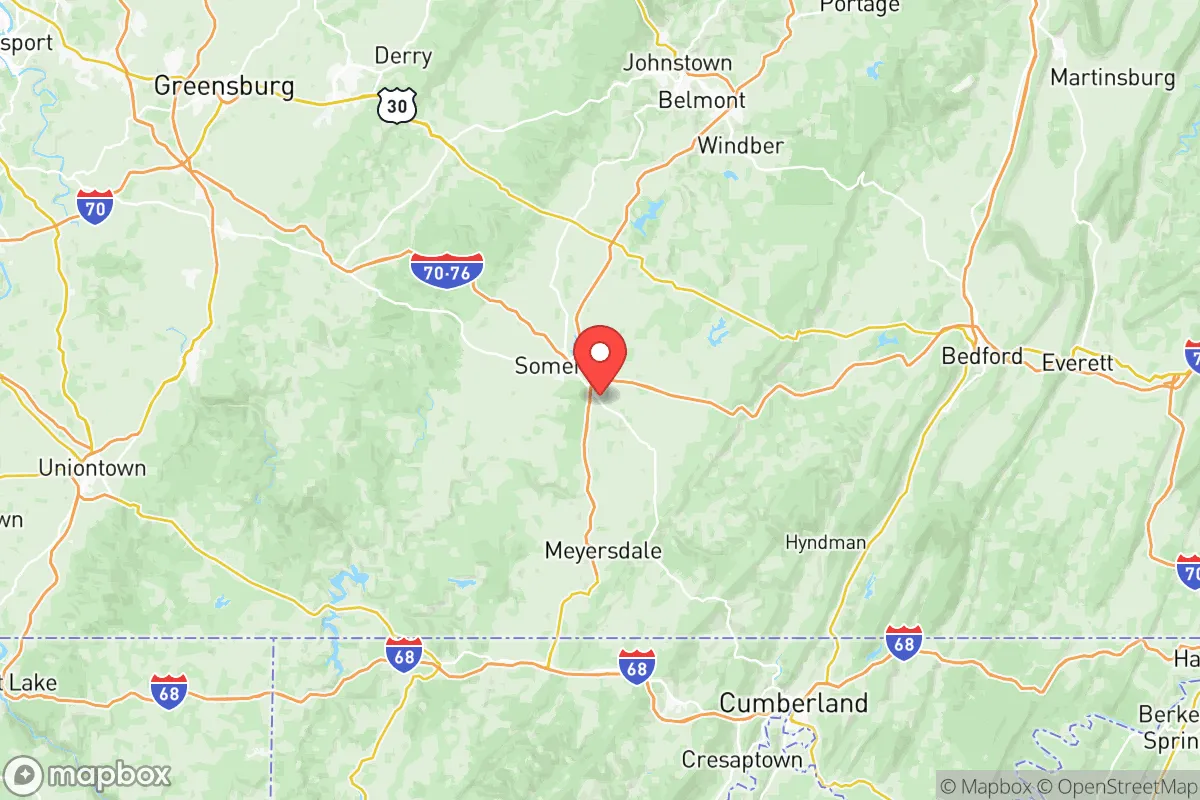
Photo: Wikipedia
Demographics of Somerset County
Affluence Level in Somerset County
A below-average socioeconomic profile. Incomes, home values, and educational attainment trail the U.S., with higher poverty and unemployment.
People of Somerset County
Somerset County, Pennsylvania, is a predominantly white, rural community of 73,255 residents where 93.8% of the population identifies as white and only 0.4% are foreign-born. Its people are characterized by deep-rooted family ties, a strong work ethic tied to coal mining and agriculture, and a notably low college attainment rate of 17.3%. The county’s identity is shaped by its Pennsylvania Dutch heritage, its position as a crossroads of the Appalachian and Mid-Atlantic cultures, and a population that is both aging and slowly shrinking.
Settlement & growth (pre-1960)
Before European settlement, the area now known as Somerset County was part of the hunting grounds of the Iroquois Confederacy, particularly the Seneca and Susquehannock nations. The region was sparsely populated by Native peoples, who used it for seasonal hunting rather than permanent villages. The first European incursion came via British colonial traders and surveyors in the mid-1700s, but permanent settlement did not begin in earnest until after the American Revolution.
The first major wave of settlers were Scots-Irish and German pioneers who arrived between 1770 and 1800, pushing west from Philadelphia and Lancaster. They were drawn by the promise of cheap, fertile land in the Allegheny Mountains. These early settlers founded the county’s oldest towns: Berlin (chartered 1761), Somerset (the county seat, laid out in 1787), and Meyersdale (settled in the 1790s). The Germans, many of them Mennonite and Amish, established a strong agricultural base, while the Scots-Irish tended to dominate the political and legal structures.
A second, smaller wave of settlement came with the construction of the Pennsylvania Turnpike and the Baltimore & Ohio Railroad in the mid-19th century. Irish immigrants, fleeing the Great Famine of the 1840s, provided much of the labor for these projects. Many stayed, settling in railroad towns like Rockwood and Confluence, where they worked as track layers, station agents, and in the nascent coal industry. By 1860, the county’s population had reached roughly 26,000, almost entirely native-born white.
The third and most transformative wave came with the coal boom of the late 19th and early 20th centuries. The discovery of high-grade bituminous coal in the county’s northern and eastern townships drew a diverse influx of immigrants. Between 1880 and 1920, thousands of Eastern European immigrants — primarily Poles, Slovaks, and Hungarians — arrived to work the mines. They established tight-knit ethnic enclaves in mining patches and towns like Windber (founded 1897 by the Berwind-White Coal Mining Company), Boswell, and Central City. These communities built their own Catholic churches, fraternal societies, and saloons, creating a distinct working-class culture that persisted for generations. A smaller number of Italian immigrants also settled in these mining towns, though they were less numerous than the Eastern Europeans.
By 1930, the county’s population peaked at around 80,000, driven by the coal industry. However, the Great Depression and the subsequent mechanization of mining led to a steady decline. The post-World War II era saw little new immigration; the county’s population remained overwhelmingly white and native-born, with the foreign-born share falling below 1% by 1960.
Modern era (post-1965)
The 1965 Hart-Cellar Act had virtually no impact on Somerset County. Unlike urban centers or Sun Belt suburbs, the county did not attract new immigrant groups. The foreign-born population today stands at just 0.4%, one of the lowest rates in Pennsylvania. The county’s demographic story since 1965 is not one of immigration, but of domestic out-migration and aging.
The collapse of the deep-coal mining industry in the 1970s and 1980s triggered a steady exodus of working-age families. Young adults left for manufacturing jobs in Pittsburgh (about 70 miles northwest) or for the growing service economies of the Mid-Atlantic. This out-migration has left Somerset County with an older population: the median age is 46.5, well above the national average of 38.8. The county’s population has declined from a post-war peak of 81,243 in 1950 to 73,255 in 2024.
Racial and ethnic diversity has increased only marginally. The Hispanic population, at 1.5%, is the fastest-growing minority group, but it remains small and dispersed. Most Hispanic residents are of Mexican or Puerto Rican descent, working in agriculture (particularly dairy and maple syrup production) and in service jobs in Somerset and Meyersdale. The Black population, at 1.9%, is concentrated in the county seat and in Windber, largely descendants of families who moved into the region during the coal era. The East/Southeast Asian population (0.4%) and Indian subcontinent population (0.1%) are negligible, with a handful of professionals working at the county’s largest employer, the Somerset Hospital, or at the nearby U.S. Army’s Letterkenny Army Depot in neighboring Franklin County.
Suburbanization has been minimal. The county has no major suburbs; instead, the population remains scattered among small boroughs and townships. The only notable growth area is along the Route 219 corridor near Somerset, where a few new housing developments have attracted retirees and commuters willing to drive to Johnstown or Pittsburgh.
The future
Somerset County’s population is projected to continue its slow decline, falling to roughly 70,000 by 2040. The county is becoming slightly more diverse, but at a glacial pace. The Hispanic share may rise to 2-3% as agricultural labor demands persist, and a small number of remote workers may relocate to the area for its low cost of living and natural beauty (the Laurel Highlands). However, the county will remain overwhelmingly white and native-born for the foreseeable future.
The cultural identity of the county is evolving from a coal-and-farming community to a more recreation- and tourism-based economy, centered on the Flight 93 National Memorial near Shanksville and the outdoor attractions of the Laurel Highlands. This shift is attracting some new residents — often retirees or second-home owners — but not enough to reverse population decline. The Amish and Mennonite populations, concentrated around Berlin and Meyersdale, are growing modestly, adding a conservative, agrarian element to the county’s cultural fabric.
For someone moving in now, Somerset County offers a quiet, affordable, and safe environment with strong community ties, but limited economic opportunity and little ethnic diversity. It is a place where the past — in the form of family histories, church affiliations, and local traditions — still weighs heavily on the present. Newcomers will find a welcoming but insular population, and will need to be comfortable with a pace of life that is slower and more homogeneous than most of the country.

* Values derived from national, state, county, city and local statistics and may differ in a specific area. Last updated: 2026-11-21T22:40:05.000Z
Narrative content on this page is AI-generated and may contain mistakes. Verify any details that matter before acting on them.
ReloMaps may earn a commission from affiliate links at no extra cost to you.

