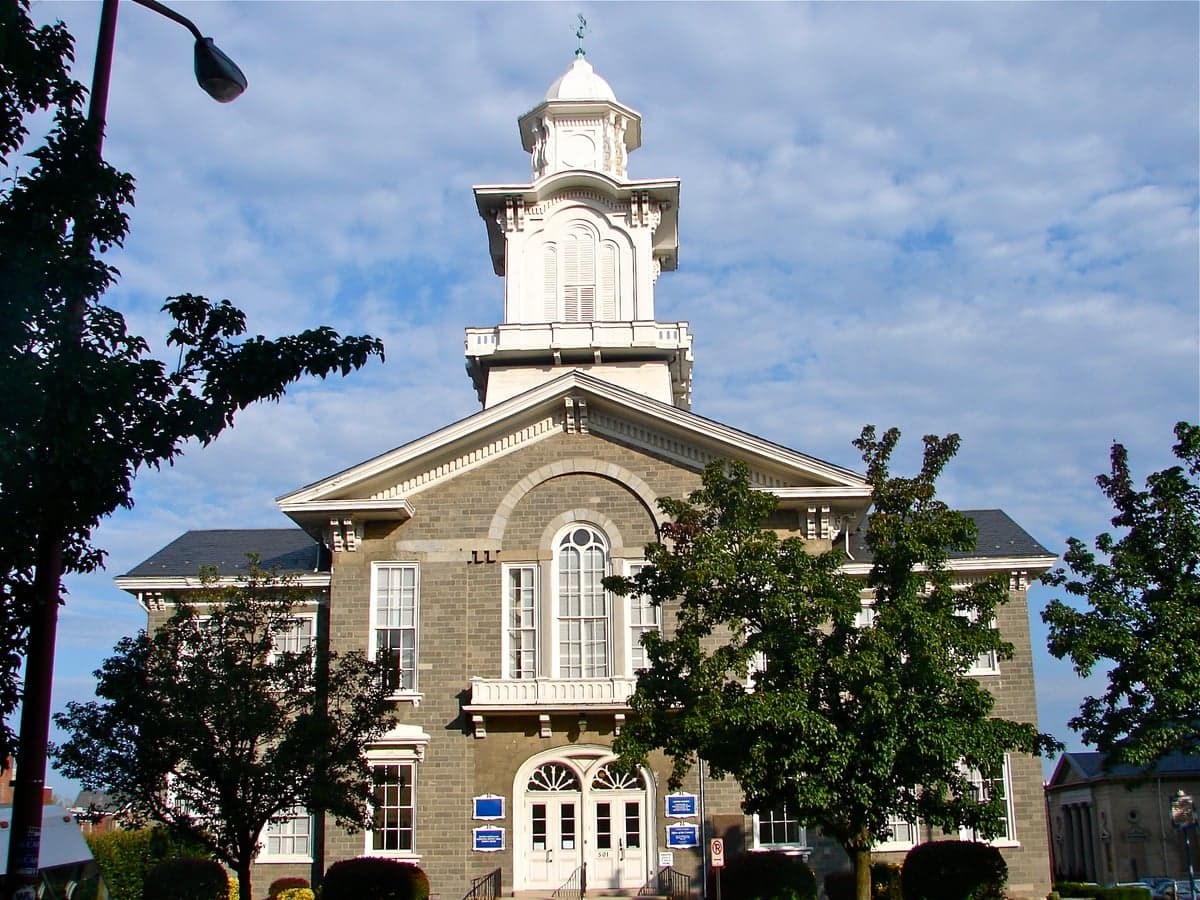
Photo: Wikipedia
Personal Sovereignty in Lehigh County
Strong independent fundamentals that actively favor personal liberty and low regulation.
What does Personal Sovereignty tell us?
Personal Sovereignty measures your capacity for self-reliance and independence with minimal government friction. Higher scores mean fewer barriers between you and the way you want to live... but it assumes you have the space you need and good neighbors.
What does this tell us?
Personal Sovereignty measures your capacity for self-reliance and independence with minimal government friction. Higher scores mean fewer barriers between you and the way you want to live... but it assumes you have the space you need and good neighbors.
State Policy
Energy independence: Net exporter (150% of energy produced in-state)
Personal Liberty
Homesteading

Personal Liberty Analysis
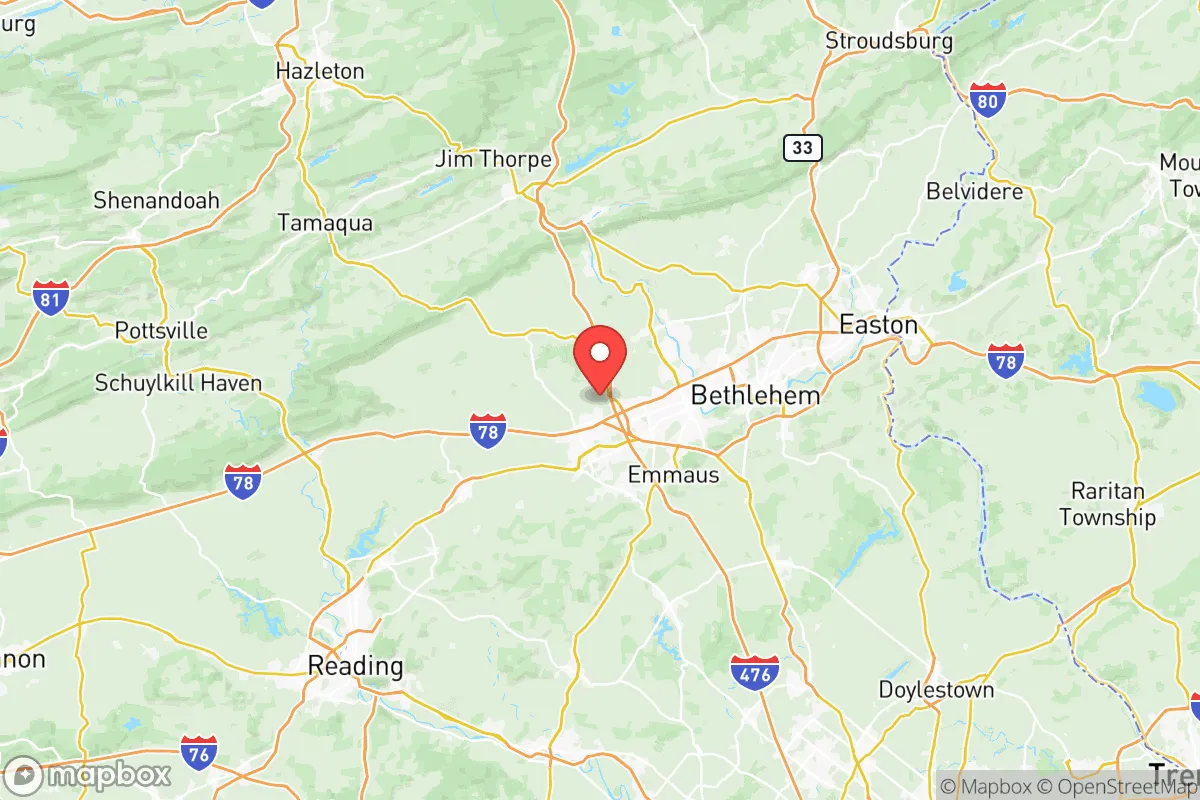
Lehigh County, Pennsylvania offers a mixed autonomy environment where state-level protections provide a solid floor for personal freedom, but local implementation varies significantly between urban centers and rural townships. The county's legal framework benefits from Pennsylvania's shall-issue gun laws, flat 3.07% income tax, and preemption statutes that limit local overreach, yet distinct regulatory climates emerge when comparing Allentown’s municipal code with the looser zoning in Slatington or Heidelberg Township. For relocation-minded individuals and families who prioritize personal sovereignty, the choice often comes down to how much local regulation they are willing to accept in exchange for urban convenience.
Tax burden and regulatory climate across Lehigh County towns and townships
Pennsylvania’s flat state income tax of 3.07% and sales tax of 6% (with no additional county levy in Lehigh) provide a predictable baseline that avoids the progressive rates found in nearby New Jersey. However, property taxes remain the primary variable: the Allentown School District imposes roughly 20 mills, while more rural districts like Northwestern Lehigh sit near 16 mills, a difference that can amount to hundreds of dollars annually on a $250,000 home. On the regulatory side, Allentown maintains a business privilege tax and requires rental property registration, whereas townships like Washington and Lowhill have far fewer administrative hoops for home-based businesses or small-scale farming. Slatington, a borough of about 4,200 residents, operates with a lighter touch—no local income tax and minimal zoning friction for accessory structures like workshops or greenhouses. In contrast, the suburban township of Lower Macungie enforces strict subdivision regulations and HOAs that can gatekeep exterior modifications, making it less attractive for those who value unpermitted autonomy.
Self-defense rights and Pennsylvania gun law specifics in Lehigh County
Lehigh County operates under Pennsylvania’s uniform firearm statutes, which include shall-issue concealed carry permits and preemption that prevents municipalities from enacting their own gun bans. Allentown and Bethlehem, the county’s two largest cities, have attempted local ordinances (e.g., lost or stolen firearm reporting requirements) but have been repeatedly overruled by state courts. In practice, rural townships like Heidelberg and Coopersburg see a high density of gun ownership and lack any local discharge restrictions beyond general safety codes. Shooting ranges and firearms dealers are concentrated outside the urban core—Coopersburg is home to a well-regarded indoor range, and Slatington has a long-established gun shop catering to hunters and sport shooters. For self-defense law, Pennsylvania is a Stand Your Ground state with no duty to retreat in one’s home or vehicle, and Castle Doctrine protections are robust. Lehigh County’s district attorney’s office has historically been pragmatic on use-of-force cases, unlike Philadelphia, which takes a more restrictive approach.
Self-reliance and homesteading viability: lot sizes, zoning, and off-grid potential
Northern Lehigh County offers the best prospects for self-reliant living. Townships such as Washington and Heidelberg have minimum lot sizes of two acres for residential construction, and agricultural zoning permits livestock, beekeeping, and farm stands without onerous permitting. In Slatington and the surrounding unincorporated areas, many properties sit on one to five acres, and county soil maps indicate viable gardening. Off-grid feasibility is moderate: Pennsylvania allows rainwater harvesting for outdoor use without a permit, and net metering for solar panels is standardized statewide, though local building codes in Allentown and Emmaus require grid interconnection for new construction. HOAs in planned communities like those in Upper Macungie generally forbid front-yard gardens, clotheslines, and outdoor workshops; by contrast, in Lowhill Township or the rural portions of Macungie, such restrictions are absent. Composting toilets and graywater systems require approval from the county health department, but enforcement tends to be lenient in less densely populated areas.
Personal liberties: parental rights, medical autonomy, and property protections
Pennsylvania provides a favorable environment for parental rights, including broad access to charter schools and cyber charter programs—the Lehigh Valley has several with waiting lists, such as the Lehigh Valley Academy Regional Charter School in Bethlehem. Medical autonomy is generally respected: the state never mandated COVID-19 vaccines for adults, and local school boards in Lehigh County (including Parkland and Northwestern Lehigh) did not impose universal mask mandates after the 2021-22 school year. Property rights are strong under state law, but eminent domain has been a flashpoint in Allentown, where the city’s Neighborhood Improvement Zone has been used to acquire private parcels for redevelopment. In contrast, townships like Coopersburg and Heidelberg have not exercised such powers. Free speech is largely unencumbered; there are no local hate speech ordinances, and public meeting comment periods are standard across all municipalities. Allentown does enforce noise ordinances that can restrict amplified speech in certain zones, but rural areas have no equivalent limitations.
Overall, Lehigh County ranks favorably for personal sovereignty compared to the mid-Atlantic region, particularly against New Jersey or New York, where tax rates are higher and firearm access is more restricted. The strongest pockets of autonomy are in the northern and western townships—Slatington, Heidelberg, Washington, and Lowhill—where lower population density translates into fewer regulations and a more hands-off local government. For those who prioritize economic and personal self-direction while staying within commuting distance of Philadelphia or New York, Lehigh County presents a pragmatic middle ground, with the urban core of Allentown acting as a counterbalance that is best avoided by liberty-minded relocators.

* Values derived from national, state, county, city and local statistics and may differ in a specific area. Last updated: 2026-06-24T19:06:48.000Z
Narrative content on this page is AI-generated and may contain mistakes. Verify any details that matter before acting on them.
ReloMaps may earn a commission from affiliate links at no extra cost to you.

