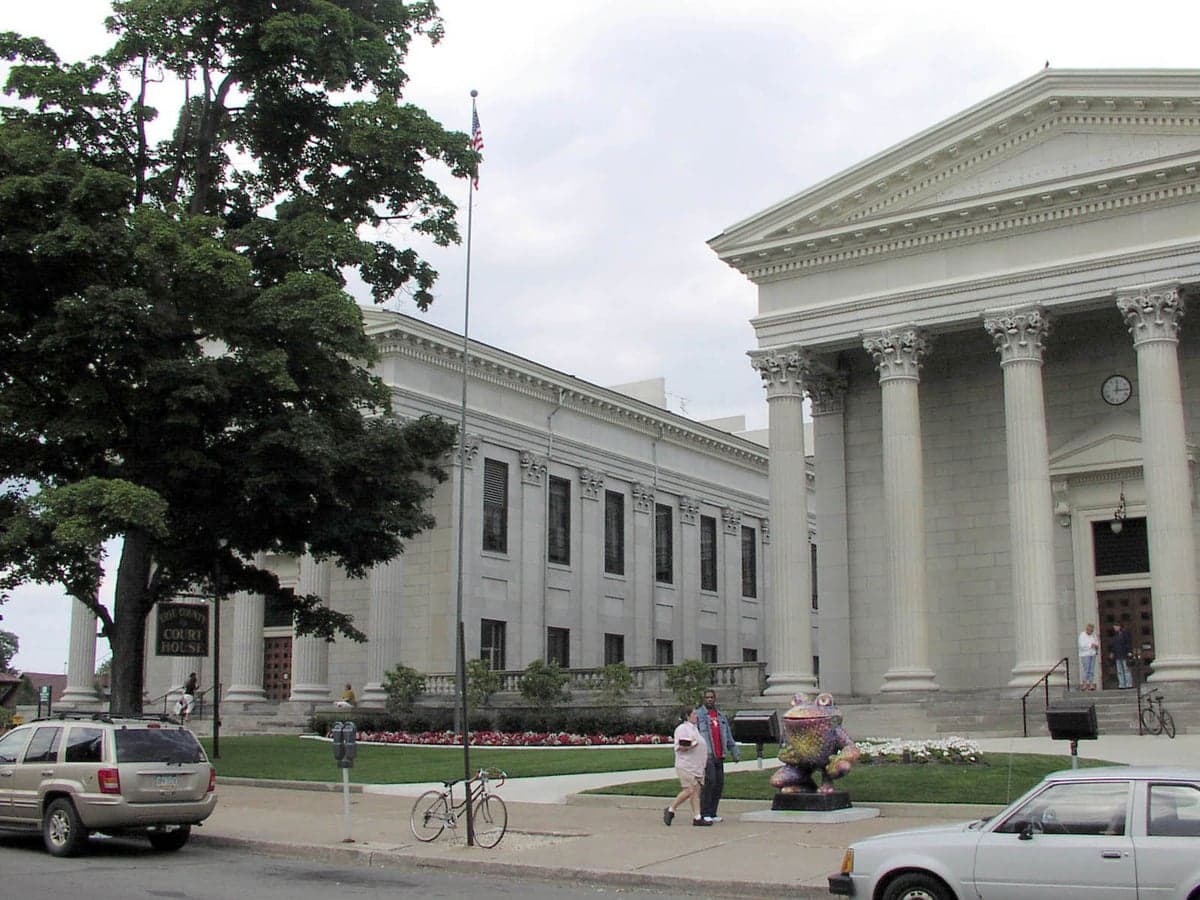
Photo: Wikipedia
Political ClimatePolitical Climate in Erie County
Showing district-level results — no local-only data available.
Local Political AnalysisPolitical Analysis of Erie County
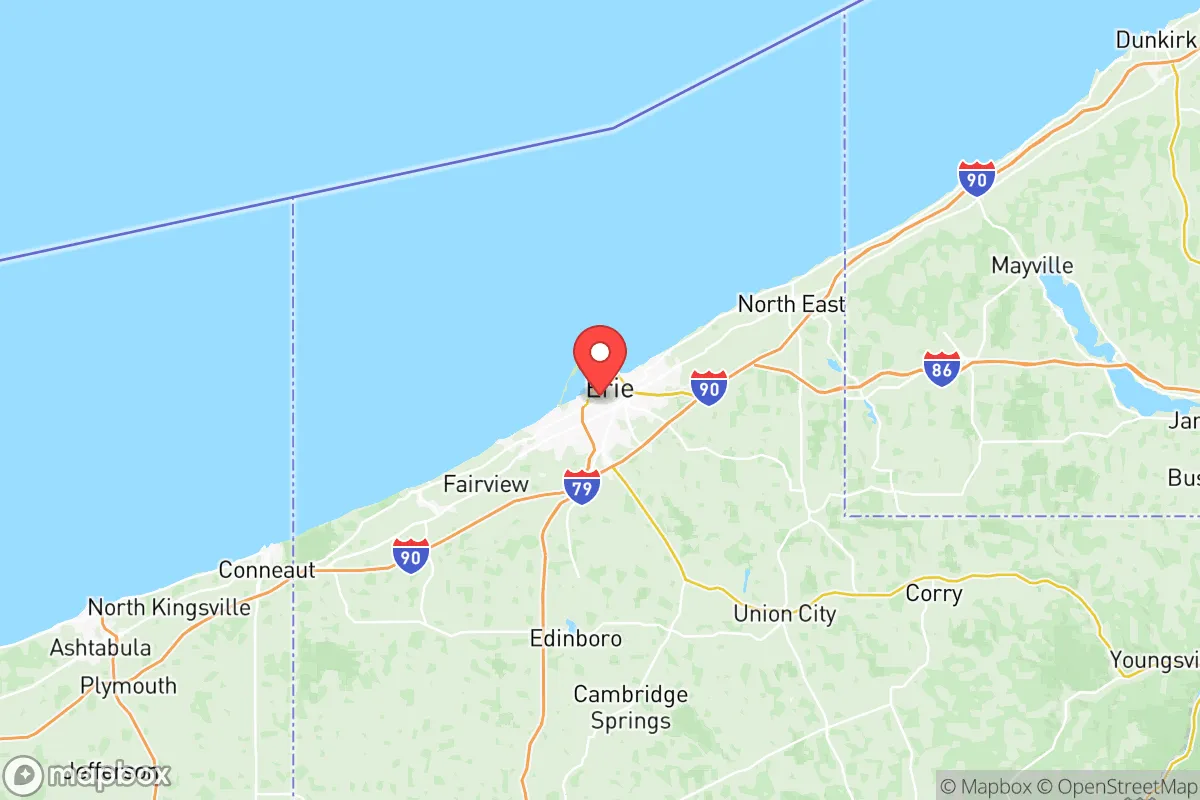
Erie County, Pennsylvania, is a classic blue-collar swing county that has been drifting rightward in recent cycles, carrying a Cook Partisan Voting Index of R+11. That means the county leans about 11 points more Republican than the nation as a whole, a stark contrast to Pennsylvania’s statewide PVI of EVEN. The shift is real: in 2020, Donald Trump won Erie County by roughly 2 points after Barack Obama carried it twice, and the trend has only accelerated since. The county’s political soul is split between the reliably blue city of Erie itself and the increasingly red rural and suburban townships that surround it.
How it compares
Pennsylvania as a whole is a pure toss-up state, with its EVEN PVI reflecting razor-thin margins in presidential races. Erie County’s R+11 rating places it firmly in the Republican-leaning column, more akin to neighboring Crawford or Venango counties than to the Philadelphia suburbs or Pittsburgh. The gap is driven by the county’s geography: the city of Erie, with its union-heavy manufacturing base and growing Puerto Rican and African American populations, votes Democratic by margins of 30-40 points. But the surrounding townships—Millcreek Township, Harborcreek Township, and Fairview Township—have shifted hard to the right, with Millcreek alone delivering thousands of Republican votes that swamp the city’s Democratic edge. In 2024, Trump improved his margins in these suburban townships by 5-10 points compared to 2020, while Democratic turnout in the city slipped. The county’s swing precincts are now in places like Lawrence Park and Wesleyville, older blue-collar boroughs where working-class voters have abandoned the Democratic Party in droves.
What this means for residents
For conservative residents, the county’s rightward tilt means local offices—county council, row officers, and the district attorney’s seat—are increasingly Republican-held, and policy reflects that. Tax rates have been held steady, and the county has taken a hard line on immigration enforcement, with the sheriff’s office publicly cooperating with ICE. For liberal residents, the reality is more defensive: the city of Erie remains a Democratic stronghold, but its influence is waning at the county level. Progressive policies like a local minimum wage increase or sanctuary city status have been blocked by the Republican majority on county council. The school board in the Erie City School District is still Democratic, but surrounding districts like Millcreek Township School District and Harborcreek School District have seen conservative slates win seats in recent elections. The cultural divide is palpable: Erie city residents tend to support gun control and abortion rights, while rural and suburban voters prioritize Second Amendment protections and pro-life policies.
The county’s political trajectory is a microcosm of the broader Rust Belt realignment. Erie County was once a Democratic stronghold—it voted for Bill Clinton, Al Gore, and John Kerry—but the collapse of manufacturing and the rise of cultural issues have flipped it. The long-term trend points toward continued Republican gains, especially as the city’s population declines and the suburbs grow. But the margin is still close enough that a strong Democratic candidate—like Josh Shapiro in 2022, who lost Erie County by only 1 point—can keep it competitive. For residents, the practical effect is a county government that is conservative on fiscal and cultural issues, but still pragmatic enough to fund the local port authority and support the region’s struggling industrial base. The political climate here is not angry or extreme; it’s the steady, grinding shift of a place that used to be reliably blue and is now reliably red, with the city of Erie holding out as a blue island in a rising red sea.

State Political ClimatePolitical Climate in Pennsylvania
State Political AnalysisPolitical Environment in the State
Pennsylvania is the ultimate swing state, holding a Cook PVI of EVEN and flipping from Obama to Trump to Biden by razor-thin margins. Over the past 20 years, the state has shifted from a reliably blue firewall in presidential elections to a true battleground, driven by the collapse of union Democrat strongholds in the west and the explosive growth of the Philadelphia suburbs. For a conservative-leaning relocator, the reality is that your vote matters here more than almost anywhere else, but the state government in Harrisburg has been a mixed bag — split control has produced gridlock on the big-ticket items, while local control varies wildly from deep-red rural counties to deep-blue city wards.
Urban vs. rural divide
The political map of Pennsylvania is a tale of two states. The southeastern corner, anchored by Philadelphia and its inner-ring suburbs like Montgomery County and Delaware County, is the engine of the Democratic vote — these areas have shifted hard left over the last decade, with college-educated suburbanites driving the trend. In contrast, the vast rural expanse from the Poconos west through Centre County and into the Allegheny Mountains is deeply red, with counties like Bedford and Franklin routinely voting 70%+ Republican. The critical battleground is the southwest, anchored by Pittsburgh and its surrounding Allegheny County — Pittsburgh itself is blue, but the old coal and steel towns in Washington County and Westmoreland County have swung hard to the right, creating a patchwork where a 10-minute drive can take you from a progressive coffee shop to a Trump flag. The Lehigh Valley (Allentown, Bethlehem, Easton) is the newest swing region, with fast-growing Latino and commuter populations making it a bellwether for the entire state.
Policy environment
Pennsylvania's state-level policy is a study in divided government. The state income tax is a flat 3.07%, one of the lowest in the Northeast, and the sales tax is 6% (no tax on clothing or groceries). Property taxes are high, especially in the Philadelphia suburbs and Pittsburgh, and are the primary funding mechanism for schools — this creates a constant tension between rural districts that want relief and urban districts that want more spending. The regulatory posture is moderate: Pennsylvania is not Texas, but it is not California either. The state has a right-to-work law? No — it does not, which keeps union power alive in construction and public sectors, though private-sector union membership has declined sharply. On education, the state has a robust charter school law and a growing school choice movement, but the teacher's unions remain powerful in Harrisburg. Election laws are a flashpoint: Pennsylvania has no-excuse mail-in voting (passed bipartisan in 2019), voter ID is required for first-time voters but not for repeat voters, and the state has been the center of post-2020 election integrity debates. For a conservative, the flat income tax and lack of a state-level estate tax are pluses, but the property tax burden and union influence in the legislature are ongoing frustrations.
Recent policy direction
The last five years have seen Pennsylvania lurch in both directions depending on which party controls the governor's mansion. Under Democratic Governor Josh Shapiro (elected 2022), the state has moved left on some fronts: gun laws saw the passage of universal background checks for long guns (2023) and a "red flag" law allowing temporary firearm seizure, though the state's preemption law still prevents local municipalities from enacting their own gun ordinances. On education and parental rights, the state has been a battleground — Shapiro signed an executive order protecting gender-affirming care for minors, while the Republican legislature passed a Parents' Bill of Rights that Shapiro vetoed. On taxation, the trend has been toward modest relief: the 2024 budget cut the corporate net income tax from 9.99% to 8.49% (headed to 4.99% by 2031) and expanded the property tax rent rebate for seniors. On voting and ballot access, the state has expanded mail-in voting but also faced lawsuits over ballot dating requirements and drop box availability — expect this to remain unsettled. On energy and property rights, Pennsylvania is the second-largest natural gas producer in the US, and the state has resisted a carbon tax, though Shapiro has proposed a cap-and-trade program that is stalled in the legislature. For a relocator weighing liberties, the picture is mixed: the state protects gun rights in the constitution but has added new restrictions, protects property rights in rural areas but allows aggressive eminent domain for pipelines, and has no state-level abortion ban (abortion is legal up to 24 weeks) but also no explicit constitutional protection.
Civil unrest & political movements
Pennsylvania has been a flashpoint for political activism on both sides. The 2020 election integrity controversy was centered here, with the "Stop the Steal" movement holding large rallies in Harrisburg and Philadelphia, and the state becoming a national test case for mail-in ballot rules. On the left, the Black Lives Matter protests in Philadelphia in 2020 were among the largest in the country, and the city has seen ongoing activism around police reform and defunding. The fracking debate is a persistent source of tension: environmental activists in Pittsburgh and Philadelphia push for a ban, while rural communities in the Marcellus Shale region (northeast and southwest) defend the industry as an economic lifeline. Immigration politics are less visible than in border states, but Philadelphia and Pittsburgh are both sanctuary cities, and the state has seen a modest influx of migrants via busing from Texas, creating localized tensions in smaller cities like Scranton and Reading. The Second Amendment sanctuary movement has been strong in rural counties, with over 30 counties passing resolutions declaring themselves sanctuaries from state-level gun laws they deem unconstitutional — a practical reality that means enforcement of new gun laws varies dramatically by where you live.
Projection
Over the next 5-10 years, Pennsylvania is likely to remain a swing state, but the demographic trends favor a slow shift toward the center-right in the long run. The key driver is in-migration from New York and New Jersey into the Lehigh Valley and the Poconos — these are often fiscally conservative, socially moderate families who are fleeing high taxes and crime but bring their own cultural values. The Philadelphia suburbs are becoming more Democratic as college-educated voters continue to trend left, but the rural areas are becoming more Republican as the old union Democrat base dies off. The wild card is the Latino vote, concentrated in Allentown, Reading, and Lancaster — this population is growing fast and is not reliably Democratic, with many Puerto Rican and Dominican voters holding socially conservative views on abortion and family. If Republicans can make inroads here, the state could become lean-Republican by 2032. If Democrats hold the suburbs and turn out Philadelphia, it stays a toss-up. For a new resident, the practical implication is that the state will continue to have divided government, meaning no dramatic swings in either direction — expect incremental changes on taxes, energy, and education, but no revolution.
For a conservative-leaning relocator, Pennsylvania offers a unique balance: a low flat income tax, a strong energy economy, and a political system where your vote actually counts. The trade-offs are high property taxes, a powerful public-sector union presence, and a state government that will remain gridlocked on cultural issues. If you move to a rural county like Bedford or Franklin, you will live in a deep-red bubble with local control over schools and guns. If you move to the Lehigh Valley or York, you will be in the swing zone where every election is a fight. The bottom line: Pennsylvania is not a safe red state, but it is a state where conservatives can win — and where living here means being part of that fight every two years.
* Values derived from national, state, county, city and local statistics and may differ in a specific area. Last updated: 2026-07-10T21:28:26.000Z
Narrative content on this page is AI-generated and may contain mistakes. Verify any details that matter before acting on them.
ReloMaps may earn a commission from affiliate links at no extra cost to you.

