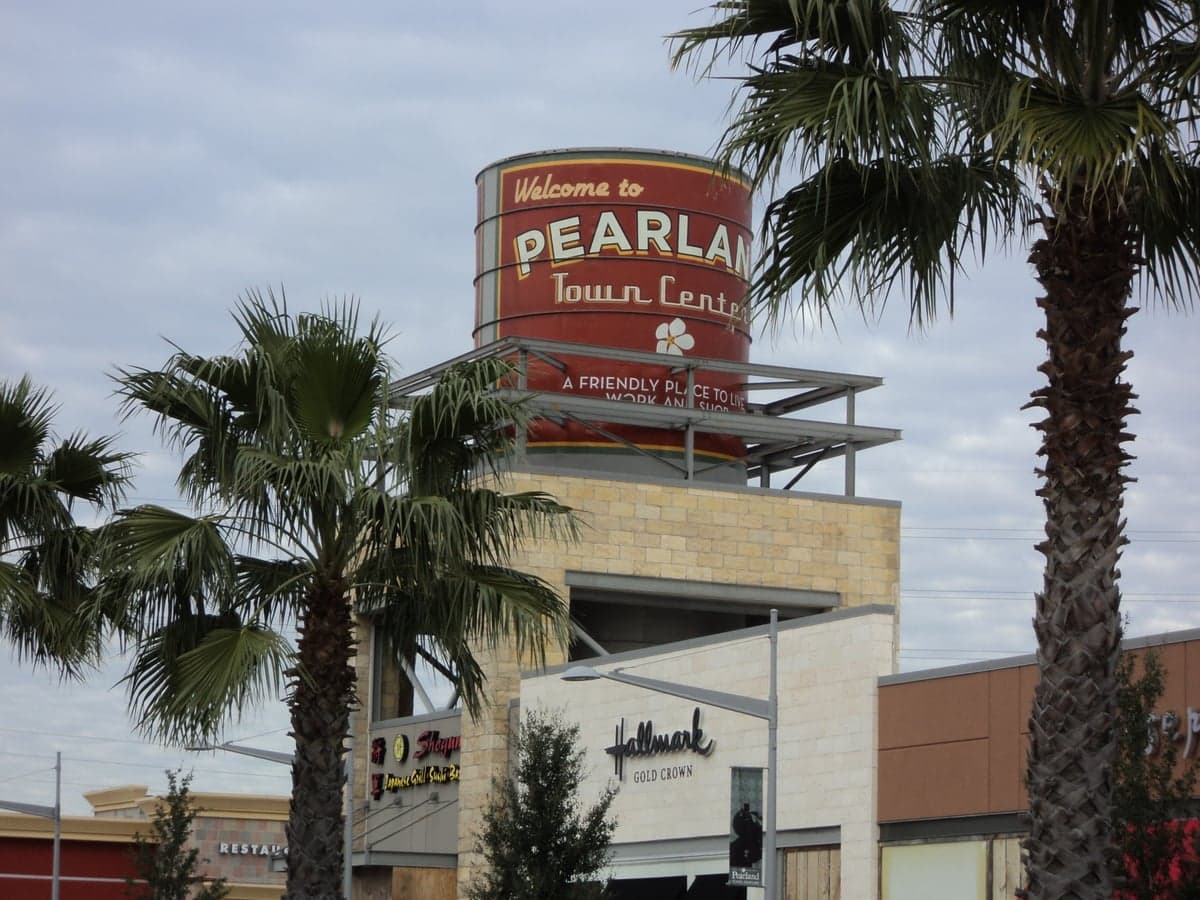
Photo: Wikipedia
Strategic Assessment of Pearland, TX
Multiple tactical vulnerabilities. Population density, target proximity, or disaster risk are likely compounding. A retreat property and exit planning is required.
What does the Strategic Assessment tell us?
Our Strategic Assessment grades tactical survivability of an area. Major population centers, military targets, fallout zones, natural disasters, and border exposure all drive risk — lower exposure means a more defensible position in a crisis.
This is heavily inspired by Joel Skousen's Strategic Relocation book. Highly recommended you checkout the book ($)What does this tell us?
Our Strategic Assessment grades tactical survivability of an area. Major population centers, military targets, fallout zones, natural disasters, and border exposure all drive risk — lower exposure means a more defensible position in a crisis.
This is heavily inspired by Joel Skousen's Strategic Relocation book. Highly recommended you checkout the book ($)Strategic Pillars

Key Distances
Regional Safe Places
Below is our recommended "safe zones" in Texas and the surrounding area based on our strategic heuristics. For most people, it's unrealistic to live in a “safe zone” full-time due to work, family or other personal reasons. They tend to be more rural. However, many of these areas are perfect for second homes and retreat properties that double as a vacation home or even a short-term rental.

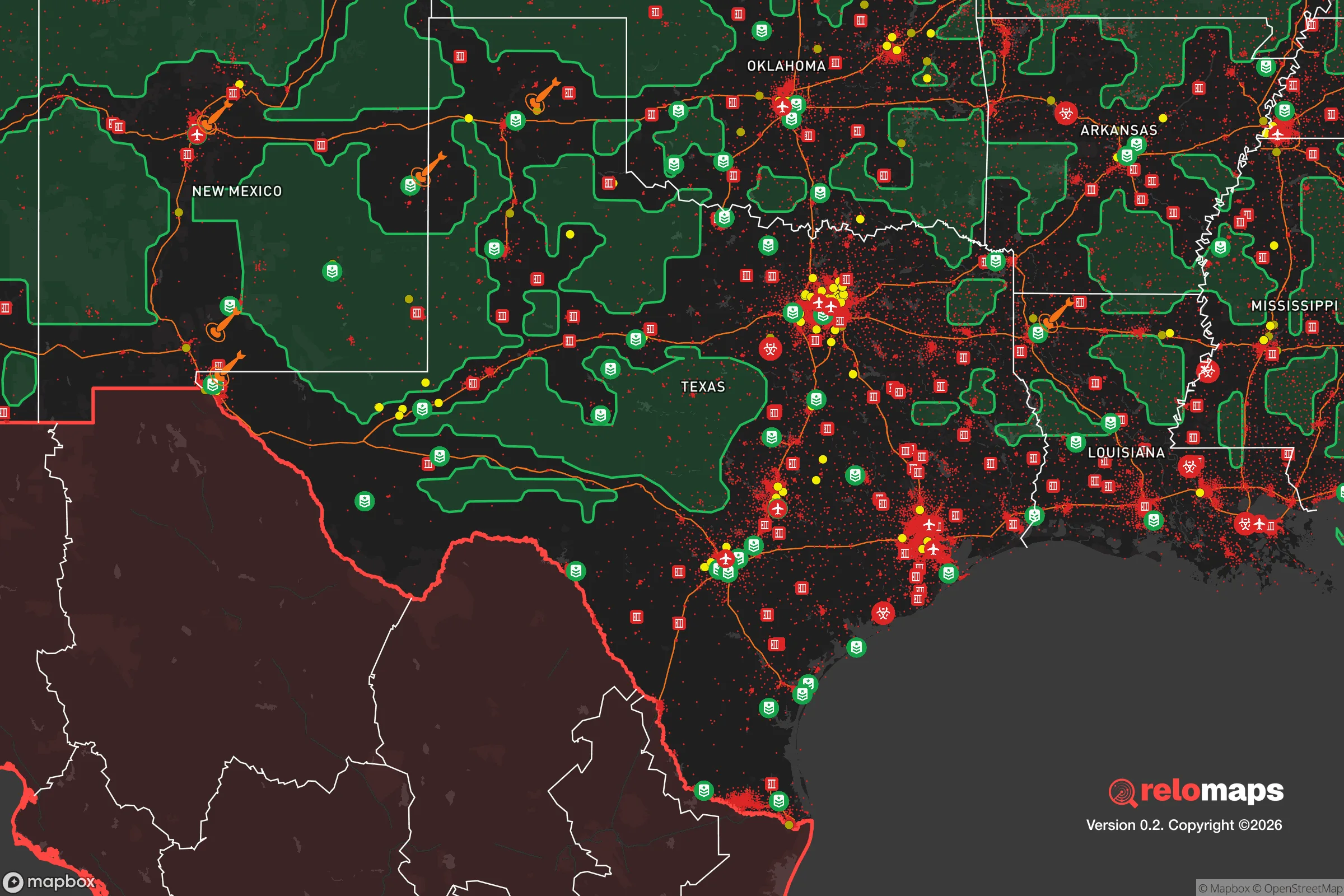


Important Note: For informational purposes only. This does not mean nothing bad ever happens in the green zones. Please use common sense. This is based on public data and modeled with AI. We tried to take a conservative approach but mistakes happen. We update this regularly as new information becomes available.
Solar Generator Recommendations
Backup power matters more here than in safer locations. We've picked three solar generators across budgets and capacity tiers — start with the budget unit if you only need a few essentials, or step up if you want to run a fridge and HVAC for days at a time.

Jackery Portable Power Station Explorer 300
Budget OptionPower on the Go: Weighing only 11 lbs, it's convenient to set up and store with book-sized foldable solar panels

BLUETTI Portable Power Station AC180
Designed for both indoor and outdoor scenarios, AC180 is highly capable as it has a robost capacity and continuous output power.

EF ECOFLOW DELTA Pro Ultra Power Station
Upgraded PickEcoFlow DELTA Pro Ultra is a whole-home energy system designed to grow with your family. Integrated with the Smart Home Panel 2, it scales to meet your evolving energy needs — keeping your home powered, intelligent, and secure through every stage of life.
We earn a commission, at no additional cost to you.
Strategic Assessment Analysis
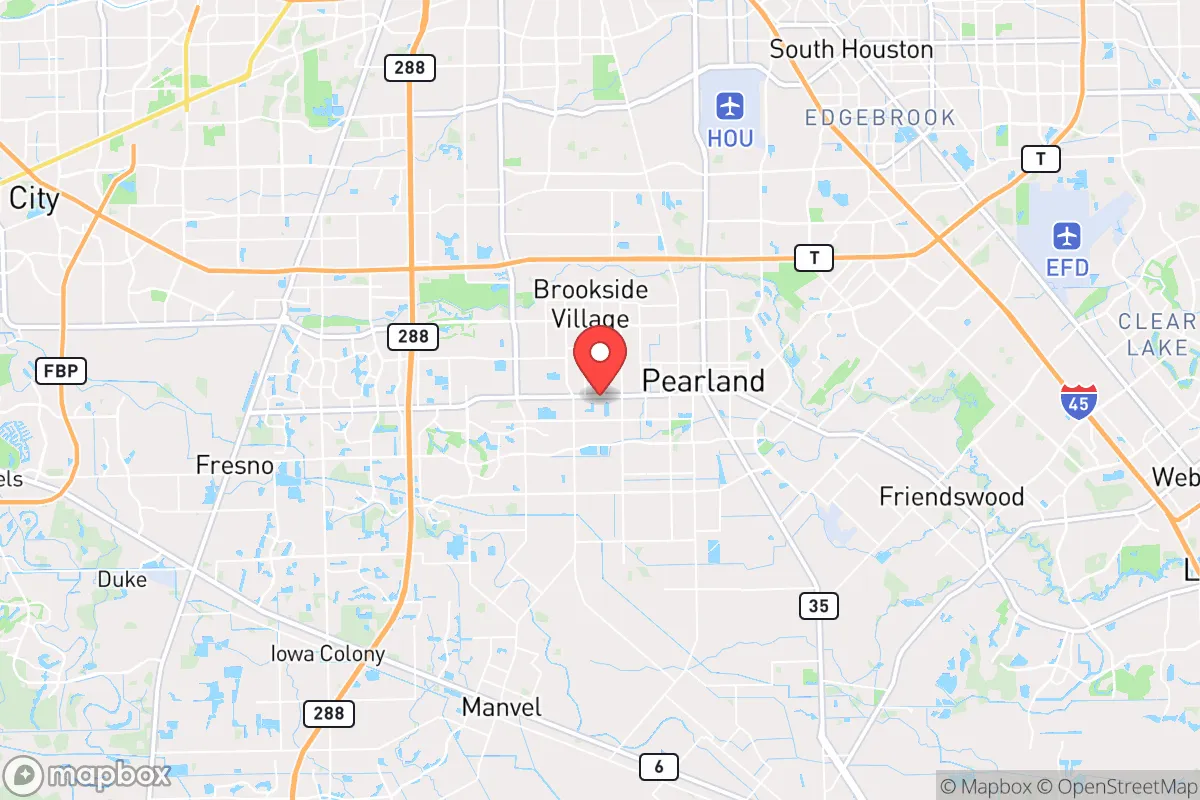
Pearland, Texas, sits in a precarious but potentially workable position for those prioritizing resilience and strategic relocation. Its proximity to Houston—roughly 15 miles from downtown—offers immediate access to massive resources, but that same closeness introduces significant vulnerabilities in a serious crisis. For a conservative-leaning prepper or survivalist, Pearland is not a bug-out location but a staging ground: close enough to leverage urban infrastructure, far enough to avoid the worst of a sudden collapse, provided you have a plan to move deeper inland when the situation demands it. The area’s flat coastal plain, robust local economy, and growing population create a mixed picture that requires careful, unsentimental assessment.
Geographic position and natural advantages for long-term survival
Pearland’s geography is a double-edged sword. Located in Brazoria County, it sits on the Gulf Coastal Plain, roughly 30 miles from the Gulf of Mexico. The land is flat, with elevations rarely exceeding 50 feet, which means natural defensibility is essentially nonexistent—there are no hills, ridges, or chokepoints to control movement. However, the area benefits from a subtropical climate with a long growing season (roughly 300 frost-free days per year), making small-scale agriculture viable for those with land. The San Jacinto River and Clear Creek provide surface water sources, though both are heavily influenced by tidal flows and industrial runoff. The region’s natural advantage is its sheer productivity: fertile soils, abundant rainfall (averaging 50 inches annually), and proximity to the Gulf’s marine resources. For a relocator willing to invest in rainwater catchment and raised-bed gardening, Pearland offers a solid baseline for subsistence. But the flat, open terrain means any organized group moving through the area would have little trouble sweeping across it—defensible positions are man-made, not natural.
Risks, exposures, and proximity to fallout-relevant landmarks
The most glaring risk is Pearland’s location within the Houston metropolitan area’s blast and fallout radius. The Texas Medical Center, the Port of Houston, and the Houston Ship Channel—all high-value targets in a conflict or terrorist scenario—are within 20 miles. The ship channel alone handles over 200 million tons of cargo annually, including petrochemicals, and is ringed by refineries and chemical plants. A major incident at any of these facilities could produce toxic plumes that drift southward over Pearland, depending on prevailing winds. Additionally, the area is crisscrossed by major highways (I-45, SH 288, Beltway 8) that would become instant chokepoints during an evacuation—the 2005 Hurricane Rita evacuation remains a cautionary tale, with gridlock lasting over 24 hours. Flooding is a chronic, non-negotiable hazard: Pearland sits in a 100-year floodplain, and Hurricane Harvey (2017) dumped over 50 inches of rain, inundating thousands of homes. For a prepper, the calculus is clear: Pearland is within the danger zone for both man-made and natural disasters, and any serious plan must account for rapid, self-sufficient egress. The presence of NASA’s Johnson Space Center in nearby Clear Lake adds another layer of symbolic and strategic risk—it’s a potential target that could draw secondary effects into the area.
Practical resilience for a relocator: food, water, energy, and defensibility
For a single individual or family looking to establish a resilient foothold, Pearland offers a mixed bag. Water is the primary concern—municipal supply comes from surface water (primarily the Brazos River and Lake Houston), which is vulnerable to contamination from upstream industrial activity or a coordinated attack. A well is possible in some outlying areas, but groundwater in Brazoria County is brackish in many spots and requires treatment. Rainwater catchment is the most reliable backup, with average annual rainfall supporting a 1,000-gallon tank system for a family of four for several months. Food production is feasible but land-intensive—typical suburban lots (0.25–0.5 acres) can support a substantial vegetable garden and a few chickens, but larger livestock like goats or pigs require acreage that pushes you into the more rural fringes of the county. Local farmers’ markets and co-ops exist, but they’d be among the first to collapse in a prolonged crisis. Energy resilience is improving—Texas’s deregulated grid means solar installation is straightforward, and net metering policies allow for battery storage. However, the grid itself is notoriously fragile (winter storm Uri in 2021 left millions without power for days), so a generator or off-grid solar setup is non-negotiable. Defensibility is the weakest link—Pearland’s suburban layout with cul-de-sacs and open yards offers little natural cover. A determined group could easily approach any single-family home. The best strategy is to be part of a neighborhood watch or mutual-aid network, but that requires trust and vetting, which takes time. For a relocator, the practical takeaway is that Pearland works as a pre-positioning site—stockpile supplies, harden your home, and have a vehicle ready to move north or west toward Austin or the Hill Country within 24 hours of a major event.
The overall strategic picture for a conservative relocator
Pearland is not a survivalist’s paradise, nor is it a death trap. It’s a suburban compromise that offers economic opportunity and community stability in peacetime, but demands serious contingency planning for the worst-case scenarios. The conservative prepper will find a like-minded community—the area leans reliably red, with Brazoria County voting +15 points Republican in recent elections—and local gun culture is strong, with multiple ranges and gun shops. But the proximity to Houston’s vulnerabilities means you cannot afford complacency. The smart play is to treat Pearland as a base of operations, not a final redoubt. Build your supplies, establish relationships with neighbors who share your mindset, and have a clear bug-out route to the west (SH 288 to TX 36 toward Brenham or La Grange) or north (I-45 to Huntsville). The area’s flat terrain and flood risk mean you’re trading natural defensibility for economic access—a trade that makes sense only if you’re actively preparing for the day it doesn’t. For a single individual or family willing to put in the work, Pearland can be a viable staging ground. But it’s not a place to hunker down and wait out the storm—it’s a place to watch the horizon and know when to move.

* Values derived from national, state, county, city and local statistics and may differ in a specific area. Last updated: 2026-05-03T04:59:12.000Z
Narrative content on this page is AI-generated and may contain mistakes. Verify any details that matter before acting on them.
ReloMaps may earn a commission from affiliate links at no extra cost to you.

