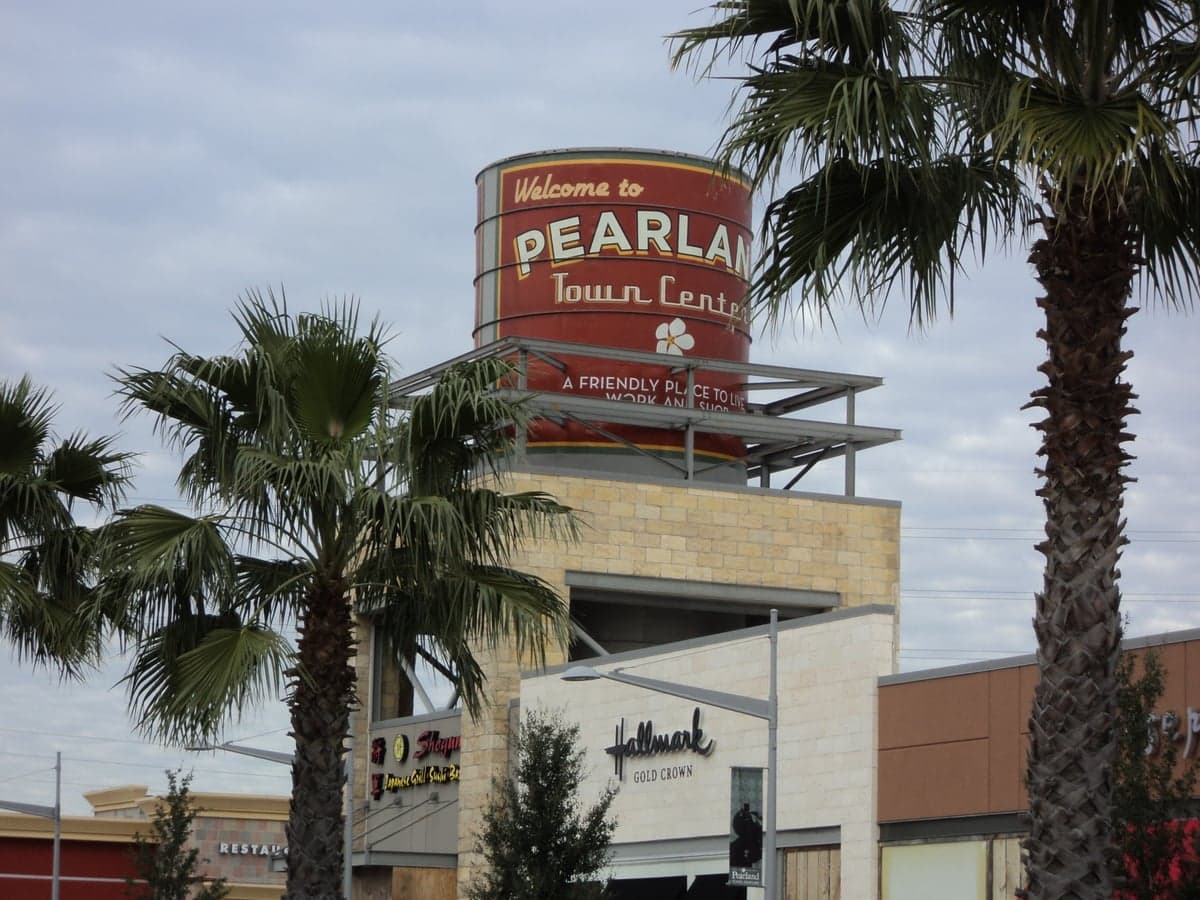
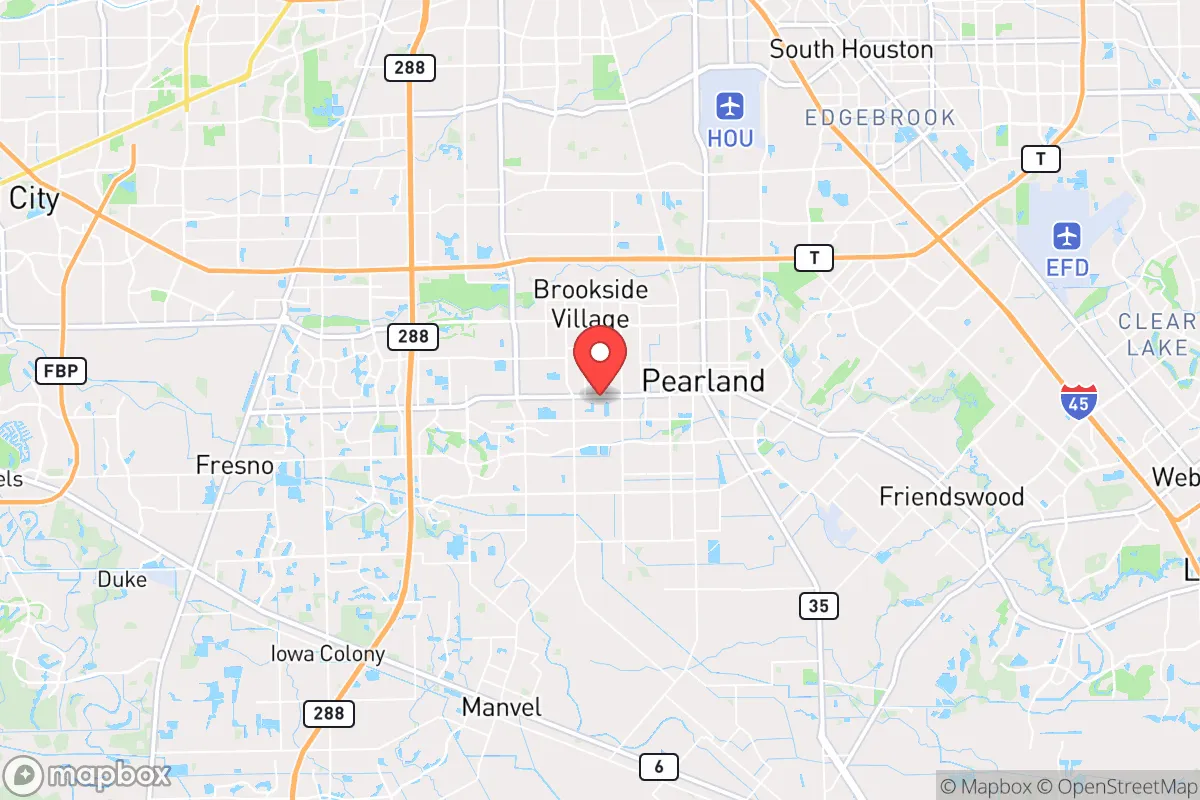
Photo: Wikipedia
Demographics of Pearland, TX
Affluence Level in Pearland, TX
A middle-class area roughly in line with national averages across income, home values, education, and employment.
People of Pearland, TX
Pearland, Texas, is a rapidly diversifying outer-ring suburb of Houston where no single racial or ethnic group holds a majority. With a population of 125,983, the city is 36.8% White, 25.4% Hispanic, 17.9% Black, 10.9% East and Southeast Asian, and 6.0% Indian, creating a mosaic of communities that arrived in distinct waves. Nearly half of residents (47.4%) hold a college degree, and the foreign-born share sits at 7.4%, reflecting a population shaped by both domestic migration from other parts of Texas and the U.S., and targeted immigration tied to Houston’s energy and medical sectors.
How the city was settled and grew
Pearland’s human history begins not with a founding family but with a railroad land scheme. The town was platted in 1882 along the Gulf, Colorado and Santa Fe Railway, with the original settlers being Anglo-American farmers drawn by cheap land for cotton and rice cultivation. These early residents clustered around the original townsite near what is now Old Pearland, a historic district centered on Main Street and Broadway. The population remained small and overwhelmingly White through the early 20th century, reaching only a few hundred by 1950. A second wave arrived during the post-World War II oil boom, when Houston’s expansion pushed middle-class White families south along State Highway 288. These families settled in the Green Tee Terrace and Silverlake subdivisions, which were developed in the 1960s and 1970s as master-planned communities offering larger lots and new schools. Pearland remained a predominantly White, middle-class bedroom community through the 1980s.
Modern era (post-1965)
The 1965 Hart-Cellar Act and Houston’s surging economy began reshaping Pearland’s demographics after 1990. The city’s Black population grew sharply as African American families moved south from Houston’s Third Ward and other inner-city neighborhoods, seeking newer housing and better schools. They concentrated in the Shadow Creek Ranch area, a massive master-planned development that opened in the 2000s and became a magnet for middle-class Black and Hispanic homebuyers. Hispanic growth accelerated in the same period, driven by both domestic migration from South Texas and immigration from Mexico and Central America. Hispanic residents settled throughout the city but formed a notable cluster in the Southern Trails and Pomona subdivisions, where affordable starter homes attracted young families. The East and Southeast Asian community—primarily Vietnamese, Chinese, and Filipino—grew as professionals in Houston’s Texas Medical Center and energy sector sought suburban homes. They established a visible presence in Shadow Creek Ranch and the newer sections of Silverlake, often drawn by the highly rated Pearland Independent School District. The Indian community, at 6.0% of the population, is a distinct and fast-growing group, with many families arriving directly from India for tech and medical jobs. They have concentrated in Shadow Creek Ranch and the Creekside neighborhood, where Indian-owned businesses and cultural organizations have taken root. By 2020, Pearland had become one of the most ethnically diverse cities in the Houston region, with no single group holding a majority.
The future
Pearland’s population is trending toward further diversification, but the pattern is one of distinct enclaves rather than wholesale blending. The White share is declining gradually as older residents age in place and younger families of color move in. Hispanic and Indian communities are growing the fastest, driven by both natural increase and continued immigration. The East and Southeast Asian population appears to be plateauing, as many second-generation families move farther out to newer suburbs like Sienna or Richmond. The Black population is stable but not expanding rapidly, as affordable housing options in Pearland become scarcer. The city is not homogenizing; instead, it is tribalizing into neighborhoods with strong ethnic identities—Shadow Creek Ranch as a Black and Indian hub, Silverlake as a White and Asian stronghold, and Southern Trails as a Hispanic center. Over the next 10–20 years, Pearland will likely become even more diverse, with the Hispanic and Indian shares rising toward 30% and 10% respectively, while the White share falls below 30%. The foreign-born share may rise modestly but will remain below Houston’s citywide average, as Pearland’s high housing costs filter for more established immigrants and second-generation families.
For a conservative-leaning individual or family moving to Pearland now, the city offers a stable, family-oriented environment with strong schools and low crime, but it is not a culturally homogeneous community. The population is increasingly defined by its diversity, with distinct ethnic neighborhoods that maintain their own institutions and social networks. New arrivals should expect a place where neighborly interaction often crosses ethnic lines in public spaces like parks and schools, but where private social life remains somewhat segmented by background. Pearland is becoming a successful multiethnic suburb—not a melting pot, but a mosaic of communities living side by side.

* Values derived from national, state, county, city and local statistics and may differ in a specific area. Last updated: 2026-05-03T04:59:12.000Z
Narrative content on this page is AI-generated and may contain mistakes. Verify any details that matter before acting on them.
ReloMaps may earn a commission from affiliate links at no extra cost to you.

