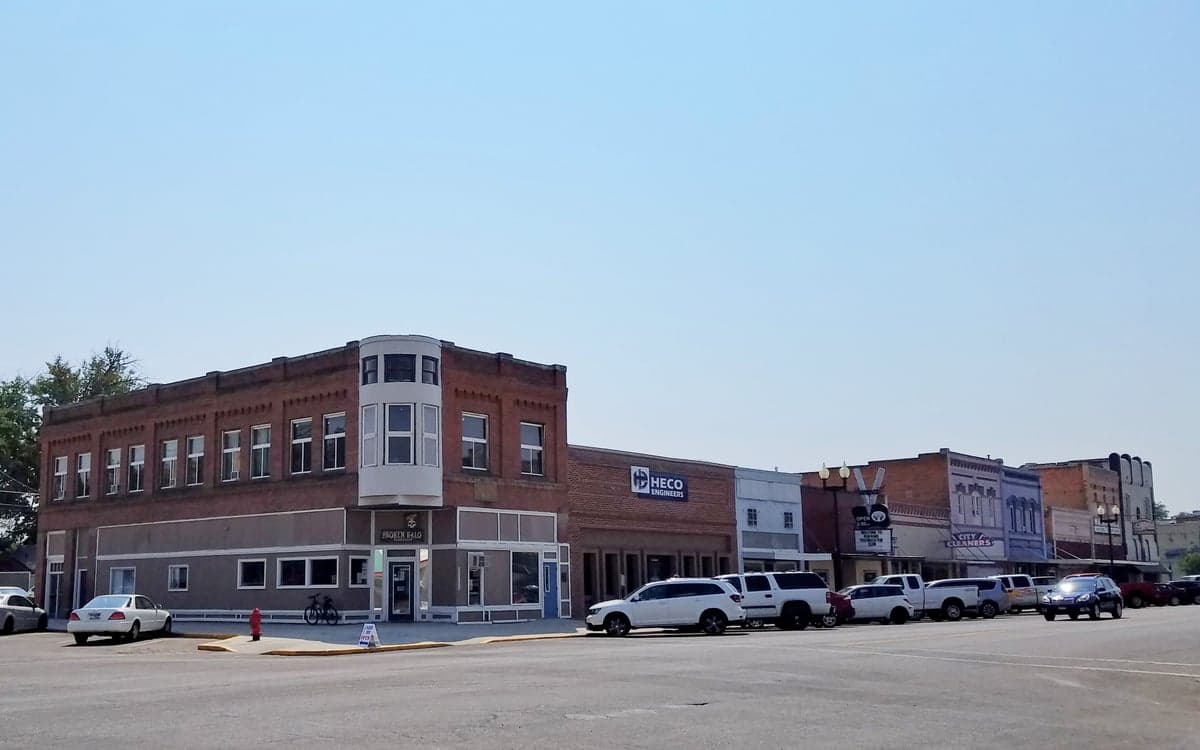
Photo: Wikipedia
Political ClimatePolitical Climate in Payette, ID
District shown is the primary district for this city’s centroid. Cities may span multiple districts.
Local Political AnalysisPolitical Analysis of Payette, ID
Payette, Idaho, is about as solidly conservative as it gets, with a Cook PVI of R+22 that puts it deep in the red column. That means in a typical election, Republicans win by a margin of 22 points more than the national average—and in Payette, that’s not just a statistic, it’s the way of life. The town has long leaned Republican, and if anything, the trajectory has been toward even deeper red in recent years, as folks here have watched neighboring states like Oregon and Washington drift left and decided they want no part of that. The local sentiment is that Payette is a place where personal freedoms—like the right to keep and bear arms, run a business without endless red tape, and raise a family without government interference—are still respected, and that’s not changing anytime soon.
How it compares
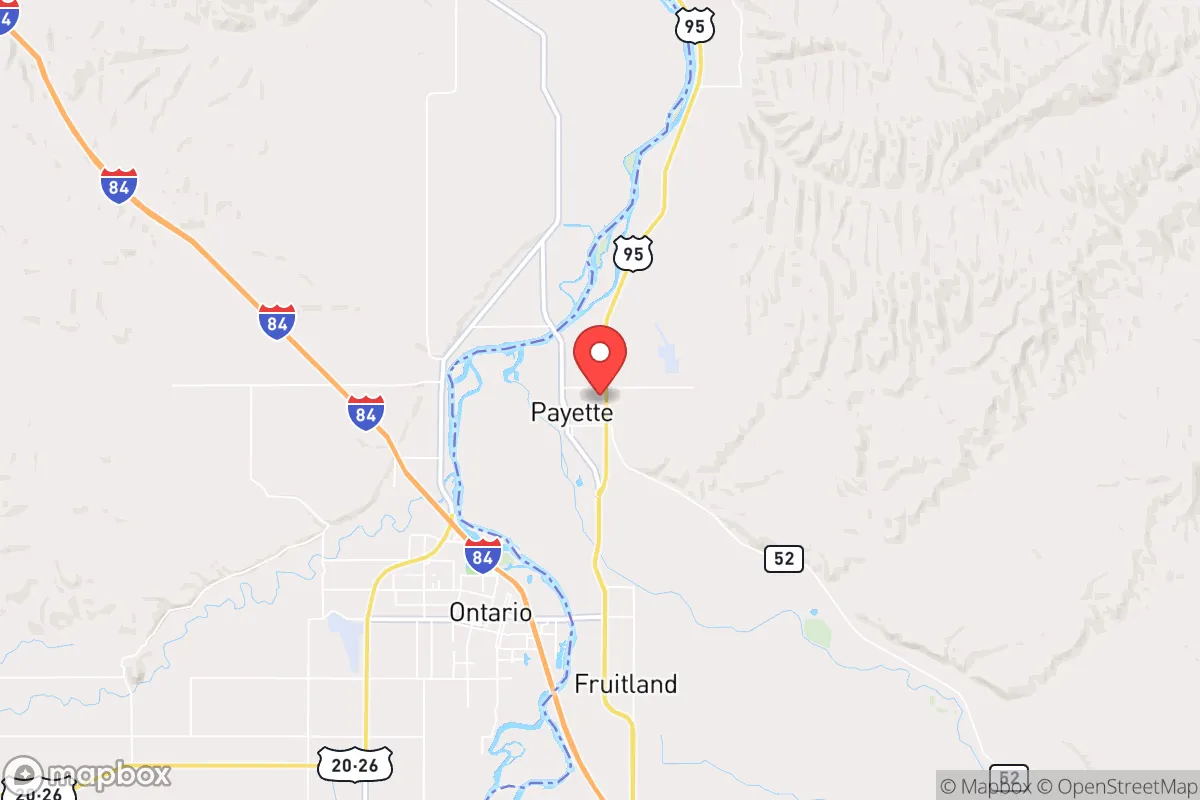
Payette sits in Payette County, which is reliably conservative, but it’s worth noting how it stacks up against nearby towns. Just a few miles west, Ontario, Oregon, is a different world—more politically mixed, with a noticeable progressive tilt that’s crept in over the last decade. You’ll see more Harris-Walz signs in Ontario yards, while Payette yards are almost exclusively Trump and local GOP candidates. To the east, Fruitland is similar to Payette but a bit more moderate, with a growing number of younger families who lean right but aren’t as vocal. The real contrast, though, is with Boise, about an hour east, which has become a blue island in a red state—especially in the city core, where progressive policies on zoning, taxes, and public spending have taken hold. Payette residents see that as a cautionary tale: government overreach starts small, and they’re determined to keep it out.
What this means for residents
For the people living here, the political climate means a lot of practical things. First, taxes stay low—there’s no appetite for the kind of property tax hikes or new fees that fund big government programs in blue areas. Second, the Second Amendment is a given; you won’t find the kind of gun control debates that dominate coastal news. Third, local schools and city councils are run by folks who prioritize fiscal responsibility and local control, not state or federal mandates. That said, there’s a growing concern among long-time residents about outside influence—people moving in from California, Oregon, and Washington who bring different ideas about land use, environmental regulations, and even mask mandates. The worry is that if enough of those newcomers settle in, they could shift the balance over the next decade. For now, though, Payette remains a place where you can live your life without the government breathing down your neck, and that’s exactly how most folks want it.
One cultural distinction that stands out is the strong sense of self-reliance here. You don’t see a lot of hand-wringing about national politics because most people feel like their local leaders have their backs. The county commission and city council are stacked with conservatives who believe in limited government, and that shows in everything from zoning laws (minimal) to business regulations (friendly). There’s also a noticeable absence of the kind of progressive social movements you’d see in larger Idaho cities like Moscow or Sandpoint—no big pushes for diversity equity and inclusion programs or climate action plans. Instead, the focus is on keeping the community safe, the roads paved, and the taxes low. If you’re looking for a place where personal freedom is still the priority and government overreach is kept in check, Payette is about as good as it gets in the Pacific Northwest.

State Political ClimatePolitical Climate in Idaho
State Political AnalysisPolitical Environment in the State
Idaho has long been one of the most reliably conservative states in the nation, with a Republican trifecta in state government that has only deepened over the past two decades. The state’s political DNA is rooted in a Western libertarian streak—skeptical of federal overreach, protective of gun rights, and fiercely independent—but the last 10-15 years have seen a pronounced shift toward a more culturally and legislatively assertive conservatism. In 2024, Donald Trump carried Idaho by over 30 points, and the state legislature has become a national laboratory for conservative policy, from near-total abortion bans to school choice expansion and election integrity measures. The in-migration wave, particularly from California and the Pacific Northwest, has actually reinforced this trend, as many newcomers are fleeing progressive governance and seeking the very freedoms Idaho still protects.
Urban vs. rural divide
The political map of Idaho is a study in contrasts, but the conservative majority is so overwhelming that the urban-rural split is more about intensity than outcome. The Treasure Valley—anchored by Boise, Meridian, and Nampa—is the state’s population center and its most politically competitive region. Boise itself has a noticeable progressive tilt, especially in its downtown core and near Boise State University, but the surrounding suburbs like Meridian and Eagle are reliably conservative. Ada County as a whole has been trending slightly more purple, but it still voted for Trump by a comfortable margin in 2024. The real engine of Idaho’s conservatism is the vast rural expanse: Idaho Falls, Twin Falls, Coeur d’Alene, and Moscow (despite the university) all lean heavily red. Kootenai County, home to Coeur d’Alene, has become a magnet for conservative transplants from Washington and Oregon, and it now votes +40 points Republican. The only notable blue dot is Blaine County, home to Sun Valley, where wealthy second-home owners and a resort economy produce a reliably Democratic vote—but it’s an island in a sea of red.
Policy environment
Idaho’s policy environment is defined by a consistent, low-tax, limited-government approach that has only intensified in recent years. The state has a flat income tax rate of 5.8% (down from 6.5% in 2022, with further cuts planned), no corporate income tax on pass-through entities, and property taxes that are among the lowest in the West. The legislature passed a $600 million tax cut package in 2023, and another round of reductions is expected in 2025. Education policy has been a flashpoint: the state enacted a robust school choice program in 2024 via the Idaho Parental Choice Tax Credit, allowing families to use state funds for private school tuition or homeschooling expenses. The state also passed a law requiring schools to notify parents of any curriculum changes involving sexuality or gender identity—a direct response to the kind of overreach seen in blue states. On healthcare, Idaho is one of the few states that has not expanded Medicaid under the original ACA framework (though it did adopt a limited expansion via ballot initiative in 2018), and the legislature has repeatedly rejected efforts to create a state-based insurance exchange. Election laws are strict: voter ID is required, same-day registration is not allowed, and the state has a closed primary system that keeps partisan crossovers to a minimum. The 2024 session also saw a bill banning ranked-choice voting, which had been pushed by out-of-state progressive groups.
Trajectory & freedom
Idaho is unequivocally becoming more free, at least by the metrics that matter to conservatives. The state has been on a multi-year run of expanding personal liberty in areas where the federal government and many other states are pulling in the opposite direction. In 2023, the legislature passed the Second Amendment Preservation Act, which prohibits state and local law enforcement from enforcing any federal gun control measures that don’t exist in Idaho law—a direct challenge to federal overreach. The same session saw the Parental Rights in Education Act, which codifies that parents have the fundamental right to direct their child’s upbringing, including medical decisions and educational content. On medical autonomy, Idaho passed a law in 2024 banning the enforcement of any federal vaccine mandate within the state, and it has one of the strongest medical freedom laws in the country, allowing any licensed practitioner to prescribe off-label treatments without fear of state discipline. Property rights were strengthened with the Private Property Protection Act, which limits eminent domain abuse and requires full market-value compensation for any regulatory taking. The only area where freedom has arguably contracted is in the realm of abortion: the state’s near-total ban (with exceptions for rape, incest, and life of the mother) is among the strictest in the nation, and while that’s a freedom issue for some, it’s a moral and legal priority for the conservative majority that passed it.
Civil unrest & political movements
Idaho has seen remarkably little civil unrest compared to states like Oregon or Washington, but the political movements that do exist are organized and vocal. The most visible flashpoint in recent years has been the Boise State University campus, where protests over the Israel-Hamas war in 2024 drew hundreds of students and counter-protesters, but were quickly contained by local law enforcement. The state has a small but active progressive activist network centered in Boise and Moscow, but it has struggled to gain traction outside of those enclaves. On the right, the Idaho Freedom Foundation and the Idaho Second Amendment Alliance are powerful lobbying forces that have successfully pushed the legislature further right on fiscal and gun issues. Immigration politics are a growing concern: the state passed a law in 2024 requiring all state and local agencies to verify immigration status for any public benefit, and there have been calls for a state-level border security task force. The Constitutional Sheriffs and Peace Officers Association has a strong presence in rural counties like Boundary and Lemhi, where sheriffs have publicly stated they will not enforce federal gun or vaccine mandates. Election integrity controversies have been minimal—Idaho’s system is widely trusted—but the 2024 session did see a bill requiring hand-count audits of all ballots in counties with fewer than 10,000 residents, a response to concerns about machine reliability.
Projection
Over the next 5-10 years, Idaho is likely to become even more conservative, not less. The in-migration wave shows no signs of slowing: the state grew by over 18% between 2010 and 2020, and the pace has accelerated since then. The newcomers are overwhelmingly conservative-leaning—many are fleeing California, Oregon, and Washington specifically because of progressive policies on taxes, crime, and education. The demographic shift is reinforcing the existing political culture rather than diluting it. The biggest wildcard is the Treasure Valley’s growth: as Boise and its suburbs become more densely populated, there will be pressure to expand infrastructure and services, which could lead to higher taxes or more government involvement. But the state legislature is dominated by rural and suburban conservatives who are deeply skeptical of any expansion of government power. Expect more school choice expansion, further income tax cuts (possibly to a flat 4.5% by 2030), and continued resistance to federal mandates on everything from environmental regulations to healthcare. The only real threat to this trajectory is if the in-migration pattern shifts toward more moderate or left-leaning transplants—but so far, the data shows the opposite.
Bottom line for a new resident: If you’re moving to Idaho for freedom, you’re arriving at a moment when the state is actively expanding that freedom, not just preserving it. You’ll find a low-tax, high-liberty environment where your rights as a parent, a gun owner, and a taxpayer are respected and protected by law. The trade-off is that you’ll be living in a state that is culturally and politically homogeneous—if you’re looking for ideological diversity, you’ll find it only in small pockets. But for those who value personal autonomy and limited government, Idaho is one of the last places in the country where that vision is still being built, not just defended.
* Values derived from national, state, county, city and local statistics and may differ in a specific area. Last updated: 2026-04-21T09:53:04.000Z
Narrative content on this page is AI-generated and may contain mistakes. Verify any details that matter before acting on them.
ReloMaps may earn a commission from affiliate links at no extra cost to you.

