
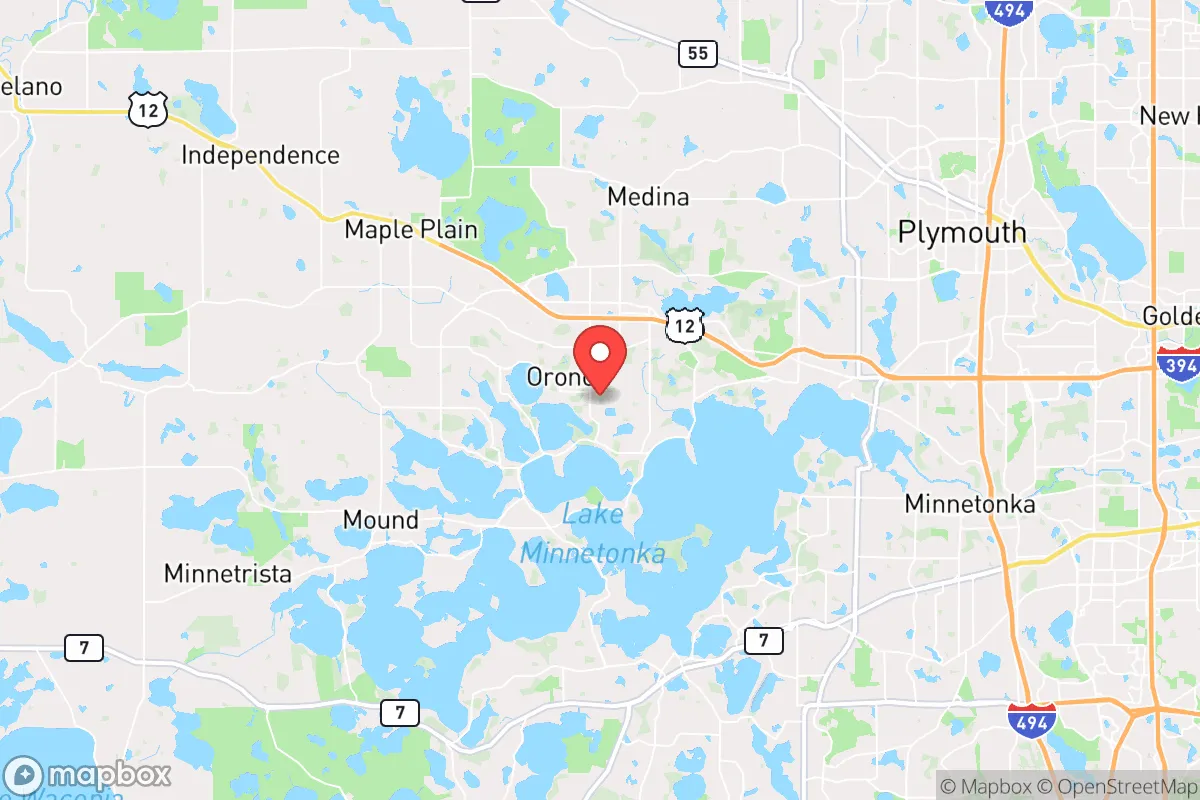
Personal Sovereignty in Orono, MN
Viable for self-reliance. Generally workable, though some barriers may limit total independence.
What does Personal Sovereignty tell us?
Personal Sovereignty measures your capacity for self-reliance and independence with minimal government friction. Higher scores mean fewer barriers between you and the way you want to live... but it assumes you have the space you need and good neighbors.
What does this tell us?
Personal Sovereignty measures your capacity for self-reliance and independence with minimal government friction. Higher scores mean fewer barriers between you and the way you want to live... but it assumes you have the space you need and good neighbors.
State Policy
Energy independence: Importer (20% of energy produced in-state)
Personal Liberty
Homesteading

Personal Liberty Analysis
Orono, Minnesota, offers a nuanced picture of personal sovereignty that requires careful unpacking for anyone serious about self-reliance and limited government. Nestled on the shores of Lake Minnetonka, this affluent western suburb of Minneapolis presents a paradox: it provides significant personal space and property rights relative to denser urban cores, but operates under the full weight of Minnesota’s state-level regulatory and tax apparatus. For the survivalist or prepper, Orono is not a frontier of liberty, but a well-manicured enclave where strategic compliance and quiet autonomy are the order of the day. The key is understanding where the local environment gives you breathing room and where state overreach will demand your attention.
Tax burden and regulatory posture: what you pay for the privilege of space
Orono’s tax environment is a direct reflection of its desirability and Minnesota’s progressive fiscal structure. Property taxes here are among the highest in the state, driven by lakefront valuations and a robust local school system. A typical home in Orono carries an effective property tax rate around 1.2% to 1.5% of assessed value, which on a $700,000 property means annual payments of $8,400 to $10,500. This is a significant recurring cost that funds local services but also represents a substantial transfer of wealth to the government. Minnesota’s state income tax is progressive, with a top marginal rate of 9.85% on income over $200,000 (single) or $250,000 (married filing jointly), which directly impacts high-earning residents. Sales tax in Orono is the state rate of 6.875%, with no additional local sales tax, offering a small reprieve. The regulatory posture at the city level is generally pro-order: strict zoning, building codes, and environmental regulations around the lake are enforced. This is not a place for unpermitted structures or off-grid experimentation without a fight. The trade-off is clear: you pay a premium for low crime, excellent schools, and large lots, but the state’s hand is deep in your pocket, and local ordinances leave little room for regulatory avoidance.
Self-defense and gun law specifics: navigating Minnesota's restrictions
For the individual focused on self-defense, Orono sits within Minnesota’s state-level legal framework, which is a mixed bag for gun owners. The state is a “shall-issue” jurisdiction for permits to carry, meaning that if you meet the requirements (age 21, no disqualifying criminal record, completed a training course), the county sheriff must issue a permit. This is a positive for personal sovereignty. However, Minnesota has a permit-to-purchase requirement for handguns and assault weapons, and private sales of handguns require a background check through a licensed dealer. There is no universal background check for long guns, which is a small win. Magazine capacity is not restricted at the state level, and there is no state-level assault weapons ban, though local city ordinances can be more restrictive—Orono itself does not have a standalone ban, but it’s wise to check city code for any park or building-specific restrictions. The biggest concern for the prepper is the state’s “red flag” law (Extreme Risk Protection Order), enacted in 2023, which allows law enforcement or family members to petition a court to temporarily seize firearms from an individual deemed a risk. This is a direct threat to due process and a tool that can be abused. Orono’s police department is professional but operates within this framework. For daily carry, you are legal with a permit, but you must be aware of prohibited places (schools, government buildings, private property with posted signs). The bottom line: you can defend yourself, but the state retains significant power to disarm you through administrative processes.
Self-reliance and homesteading viability: lot sizes, zoning, and off-grid feasibility
Orono’s zoning and land use policies offer a mixed picture for the serious homesteader. The city is characterized by large residential lots—typically one to five acres in the more rural sections, with some estate properties exceeding ten acres. This provides genuine space for gardening, small-scale livestock (chickens are generally allowed, subject to setback and noise ordinances), and private food production. However, the city’s zoning code is detailed and enforced. Raising pigs, goats, or cattle is likely prohibited on standard residential lots, and any agricultural activity must be secondary to residential use. Off-grid living is effectively impossible within city limits. Orono requires connection to municipal water and sewer in most areas, and building codes mandate grid-tied electrical systems. Solar panels are allowed but must be permitted and grid-tied; battery storage for backup is legal but does not exempt you from the grid connection requirement. Rainwater collection is restricted by state law for potable use, though non-potable collection for gardening is generally permitted. For the prepper seeking true self-reliance, Orono’s regulatory environment is a barrier. The best strategy is to use the large lot for intensive gardening and small animal husbandry while maintaining a low profile. The nearby rural townships in western Hennepin or eastern Carver County offer more freedom for off-grid systems and larger livestock, but Orono itself is a place for suburban self-reliance, not wilderness independence.
Personal liberties: parental rights, medical autonomy, speech, and property
On the spectrum of personal liberties, Orono reflects the broader Minnesota political culture, which leans left on social issues but respects property rights. Parental rights are a flashpoint. Minnesota law grants parents broad authority over their children’s education and medical decisions, but recent state legislation has eroded some of that autonomy. For example, Minnesota passed a law in 2023 that prohibits school districts from notifying parents if a student changes their name or pronouns without the student’s consent, a direct challenge to parental authority. Orono Public Schools, while highly rated, operate under these state mandates. Parents must be proactive and engaged to maintain control. Medical autonomy took a hit during the COVID-19 era, with Minnesota implementing vaccine mandates for healthcare workers and school staff, though no broad mandates for the general public. The state has not passed any laws restricting medical freedom for adults, but the precedent of government overreach is concerning. Speech is protected under the First Amendment, and Orono has no local ordinances that suppress political expression. However, the broader cultural environment in the Twin Cities metro can be hostile to conservative viewpoints, and social pressure is a real factor. Property rights are the strongest pillar of sovereignty here. Orono’s zoning is predictable and enforced, but it protects your investment. Eminent domain is rare, and the city respects private property boundaries. The key takeaway: your home and land are secure, but your parental and medical autonomy are under constant pressure from state-level progressive legislation.
In the final analysis, Orono offers a moderate-to-low level of personal sovereignty compared to rural Minnesota or states like South Dakota or Wyoming. The large lots and low crime provide a secure base for family and property, but the tax burden, state-level gun restrictions, and erosion of parental rights are significant negatives for the liberty-minded individual. For the prepper or survivalist, Orono is a place to build a comfortable, low-profile life with good neighbors and ample space for gardening and storage, but it is not a sanctuary from government overreach. The best approach is to treat Orono as a strategic location—close to resources and employment, with a strong community—while maintaining a low political profile and preparing for the possibility that state-level restrictions will continue to tighten. If absolute sovereignty is your goal, look further west or north. If you need a defensible, affluent suburb with decent autonomy, Orono can work, but only with eyes wide open.

* Values derived from national, state, county, city and local statistics and may differ in a specific area. Last updated: 2026-04-27T14:40:29.000Z
Narrative content on this page is AI-generated and may contain mistakes. Verify any details that matter before acting on them.
ReloMaps may earn a commission from affiliate links at no extra cost to you.

