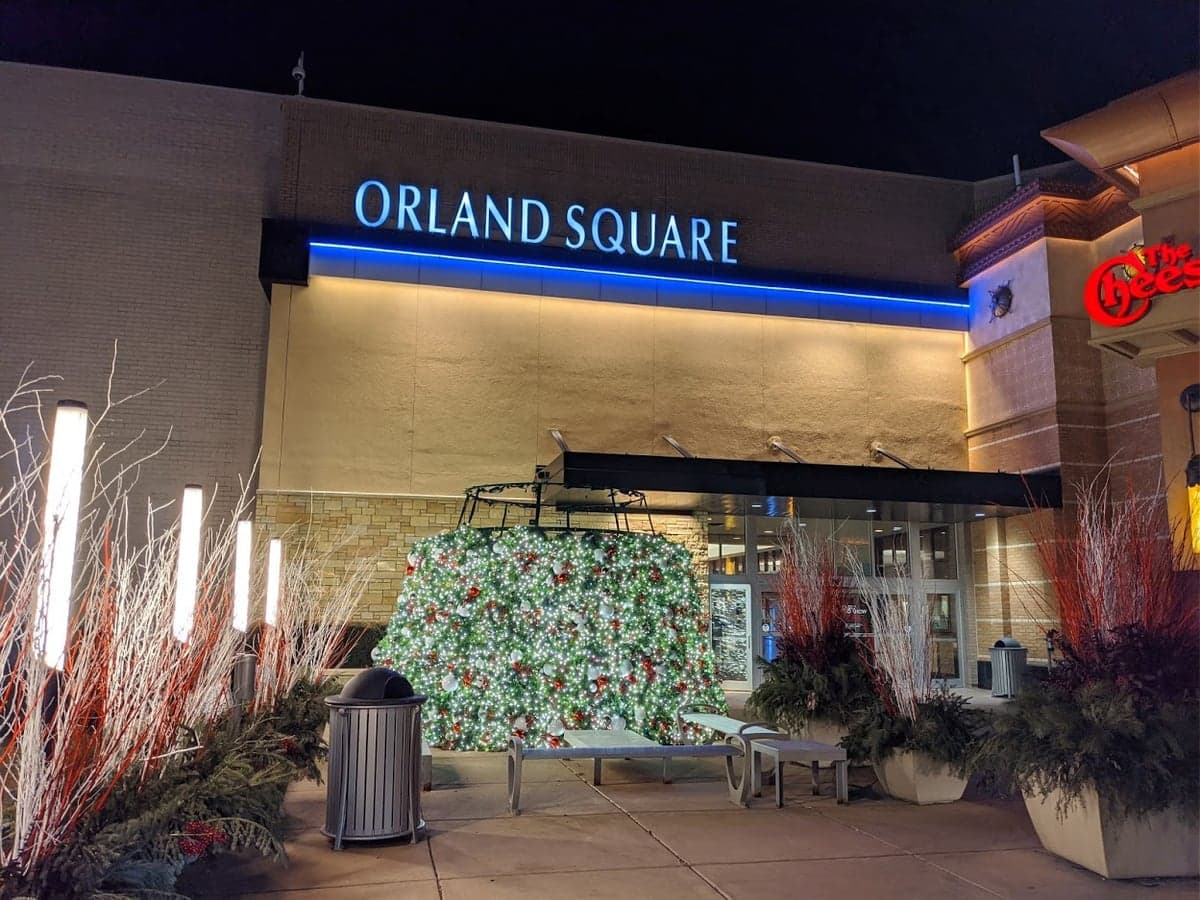
Photo: Wikipedia
Political ClimatePolitical Climate in Orland Park, IL
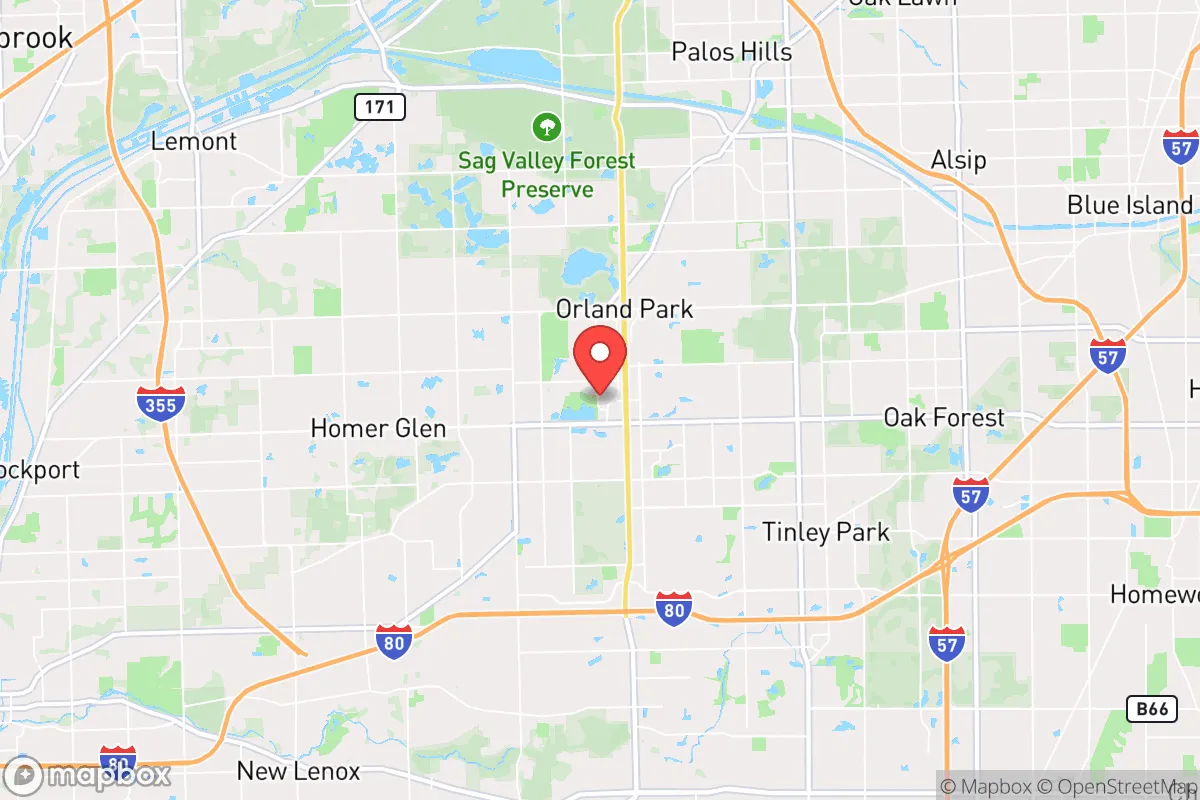
District shown is the primary district for this city’s centroid. Cities may span multiple districts.
Local Political AnalysisPolitical Analysis of Orland Park, IL
Orland Park has long been a bit of a political island in Cook County, a place where common-sense, fiscally conservative values used to be the default, not the exception. For decades, this village was a reliable Republican stronghold in a county that was trending blue, but the last few election cycles have shown a slow, steady shift leftward, mirroring the broader suburbanization of Chicago politics. The Cook County Partisan Voter Index (PVI) now sits at D+3, meaning the district as a whole leans three points more Democratic than the national average—a far cry from the deep-red sentiment you’d still hear at the local diner or hardware store. If you’ve lived here as long as I have, you’ve watched the old guard of independent-minded residents get outnumbered by newcomers who seem to bring Chicago’s city hall mentality with them.
How it compares
To really understand Orland Park’s political climate, you have to look at the towns around it. Head west a few miles to Tinley Park or Mokena, and you’ll find communities that have held onto their conservative roots much more stubbornly—those areas still vote reliably red in local races and school board elections. Drive north toward Oak Lawn or Palos Hills, and you’re in territory that’s been solidly blue for years, with higher taxes and more government programs as the norm. Orland Park sits right in the middle of this tug-of-war, and it shows in the local elections. You’ll see candidates who talk a good game about low taxes and personal freedom, but once they’re in office, they often cave to the county’s progressive pressure—whether it’s on zoning, school curriculum, or public safety policies. The contrast with nearby Will County towns is stark; out there, the message is still “keep the government out of my backyard,” while here, we’re seeing more “let’s form a committee to study it.”
What this means for residents
For the average family in Orland Park, this political drift has real consequences. Property taxes have crept up faster than inflation, and there’s a growing push to bring in more “equity” initiatives in the schools—things that sound good on paper but often mean more bureaucracy and less local control over what your kids are taught. The village board has also shown a willingness to impose new regulations on small businesses, from signage rules to mask mandates that lingered longer than they did in neighboring towns. If you value the freedom to run your life without a government official telling you how to do it, you’ve probably noticed the leash getting a little shorter each year. The long-term trend is concerning: as more development brings in higher-density housing and younger voters from the city, the political center of gravity will keep shifting left, making it harder to push back against overreach.
One cultural distinction that still sets Orland Park apart is its strong sense of community around local events and the village’s historic downtown area—places like the Orland Park Crossing and the annual summer festivals where neighbors actually know each other. That’s the part worth holding onto. But the policy direction is clear: the old “live and let live” ethos is being replaced by a more activist government that sees itself as a solution to every problem. If you’re thinking of moving here, just know that you’re buying into a community that’s fighting to keep its conservative soul, but the battle is getting tougher every election cycle. Keep an eye on the school board races and the village trustee elections—that’s where the real fight for your freedoms is happening.

State Political ClimatePolitical Climate in Illinois
State Political AnalysisPolitical Environment in the State
Illinois is a deeply blue state in statewide elections, but that label hides a fierce internal war between the Chicago machine and the rest of the state. The Democratic coalition—anchored by Cook County and the collar counties—has held a lock on the governor’s mansion and legislature for most of the last two decades, but the margins have been shrinking in rural and exurban areas. Since 2010, the state has lost a net of roughly 200,000 residents, many of them fleeing to red states like Texas and Florida, and the political map has become a tale of two Illinoises: a dense, progressive Chicago metro and a sprawling, increasingly conservative downstate.
Urban vs. rural divide
The political fault line runs straight through the middle of the state. Chicago and its immediate suburbs—places like Evanston, Oak Park, and Naperville—vote overwhelmingly Democratic, often by 70-80% margins. Cook County alone delivers about 40% of the state’s total vote, and it’s the engine that powers every statewide Democratic win. The collar counties (DuPage, Lake, Kane, Will) have been trending blue since the 1990s, though some exurbs like Oswego and Yorkville still lean Republican. Drive an hour south or west, and the landscape flips. Downstate counties like Williamson, Jefferson, and Macoupin vote Republican by 20-30 points. The city of Springfield is a blue dot in a red sea, but the surrounding Sangamon County is competitive. The real story is the exodus: counties like St. Clair (East St. Louis area) and Madison (Alton) have seen population declines of 5-10% since 2020, and the remaining voters are older, whiter, and more conservative. The 2024 presidential race saw Trump win 58 of Illinois’s 102 counties, but lose the state by 17 points because Cook County alone gave Biden a 1.2 million vote margin.
Policy environment
Illinois’s policy environment is a textbook case of progressive governance colliding with fiscal reality. The state has the second-highest property tax burden in the nation (average effective rate of 2.07%), and the state income tax is a flat 4.95%—but a 2020 constitutional amendment allowed a progressive income tax, which was rejected by voters. The regulatory posture is heavy: Illinois has some of the strictest gun laws in the country (including a 2023 ban on assault weapons and high-capacity magazines), a $15 minimum wage (phased in by 2025), and a sanctuary state law (the TRUST Act) that limits local cooperation with federal immigration enforcement. Education policy is dominated by the Chicago Teachers Union, which has pushed for progressive funding formulas and charter school restrictions. Election laws are among the most liberal: no-excuse mail voting, automatic voter registration, and same-day registration are all in place. The state also has a “blue alert” system for officer-involved shootings and a strict FOIA regime. For a conservative-leaning resident, the policy environment feels like a constant expansion of government reach into daily life—especially on guns, taxes, and school choice.
Trajectory & freedom
Illinois is becoming less free by almost any measure. The 2023 assault weapons ban (HB 5471) was a major flashpoint, passing with no Republican support and facing immediate legal challenges—it’s currently tied up in federal court. The state also expanded its red flag law in 2022, allowing family members and law enforcement to petition for temporary firearm removal. On parental rights, Illinois has moved in the opposite direction of states like Florida: a 2023 law (SB 1900) requires schools to adopt policies affirming LGBTQ+ students, including allowing them to use preferred names and pronouns without parental consent. Medical autonomy took a hit with the 2019 Reproductive Health Act, which codified abortion access and removed parental notification requirements for minors. Property rights are under pressure from the state’s aggressive use of eminent domain for private development, particularly in Chicago’s “TIF” districts. Taxation is the biggest freedom drain: property taxes have risen an average of 3-4% annually for the last decade, and the state’s unfunded pension liability ($140 billion) means future tax hikes are almost certain. The trajectory is clear: more mandates, more taxes, and less room for individual choice.
Civil unrest & political movements
Illinois has seen its share of political turbulence. The 2020 George Floyd protests in Chicago turned into widespread looting and property damage, with over $60 million in damages reported. The city’s response—including a curfew and National Guard deployment—was criticized from both sides. On the right, the “Illinois Freedom Caucus” formed in 2021 to push back against COVID mandates and gun restrictions, and they’ve gained traction in downstate districts. Immigration politics are a constant flashpoint: the TRUST Act has led to clashes between state and local law enforcement, particularly in counties like McHenry and Kendall, where sheriffs have refused to comply with state limits on ICE cooperation. The “sanctuary state” label has become a rallying cry for conservatives, and several downstate counties have passed symbolic “Second Amendment sanctuary” resolutions. Election integrity controversies flared in 2020 and 2022, with Republican candidates alleging irregularities in Cook County vote counts—though no widespread fraud was proven. The most visible flashpoint for a new resident would be the constant tension between Chicago’s progressive politics and the rest of the state’s more traditional values, visible in everything from school board meetings to county board votes.
Projection
Over the next 5-10 years, Illinois will likely continue its slow-motion political realignment. The Chicago metro will become even more Democratic as younger, progressive voters move in and older, conservative-leaning residents move out. Downstate will become more Republican, but with a shrinking population base. The state’s fiscal crisis—driven by the pension debt and a declining tax base—will force either massive tax hikes or severe service cuts. The most likely outcome is a combination of both, with property taxes rising another 10-15% by 2030. The assault weapons ban will probably survive legal challenges, but enforcement will be uneven. The parental rights battles will intensify, with more school board takeovers by conservative parents in suburbs like Naperville and Downers Grove. The biggest wildcard is the state’s population loss: if the exodus accelerates, Illinois could lose a congressional seat after 2030, further weakening its national influence. For someone moving in now, expect to live in a state where your vote in statewide elections is effectively meaningless, but your local vote—especially in county and school board races—matters more than ever.
The bottom line for a conservative-leaning new resident: Illinois offers a high cost of living, heavy regulation, and a political environment that is actively hostile to many traditional values. If you’re moving here for a job in Chicago or a university town like Champaign-Urbana, be prepared to pay high taxes and navigate a thicket of state mandates. If you’re looking at downstate areas like Quincy, Carbondale, or the Metro East, you’ll find a more conservative community, but you’ll still be subject to state laws on guns, taxes, and education that you can’t change at the local level. The best advice: buy a house in a county with a strong local conservative movement, get involved in your school board, and budget for property tax increases every year. Illinois is not getting redder—it’s getting bluer at the state level and more polarized at the local level. If that sounds like a fight you’re up for, you’ll find plenty of allies. If not, you might want to look at Indiana or Missouri instead.
* Values derived from national, state, county, city and local statistics and may differ in a specific area. Last updated: 2026-04-23T12:19:05.000Z
Narrative content on this page is AI-generated and may contain mistakes. Verify any details that matter before acting on them.
ReloMaps may earn a commission from affiliate links at no extra cost to you.

