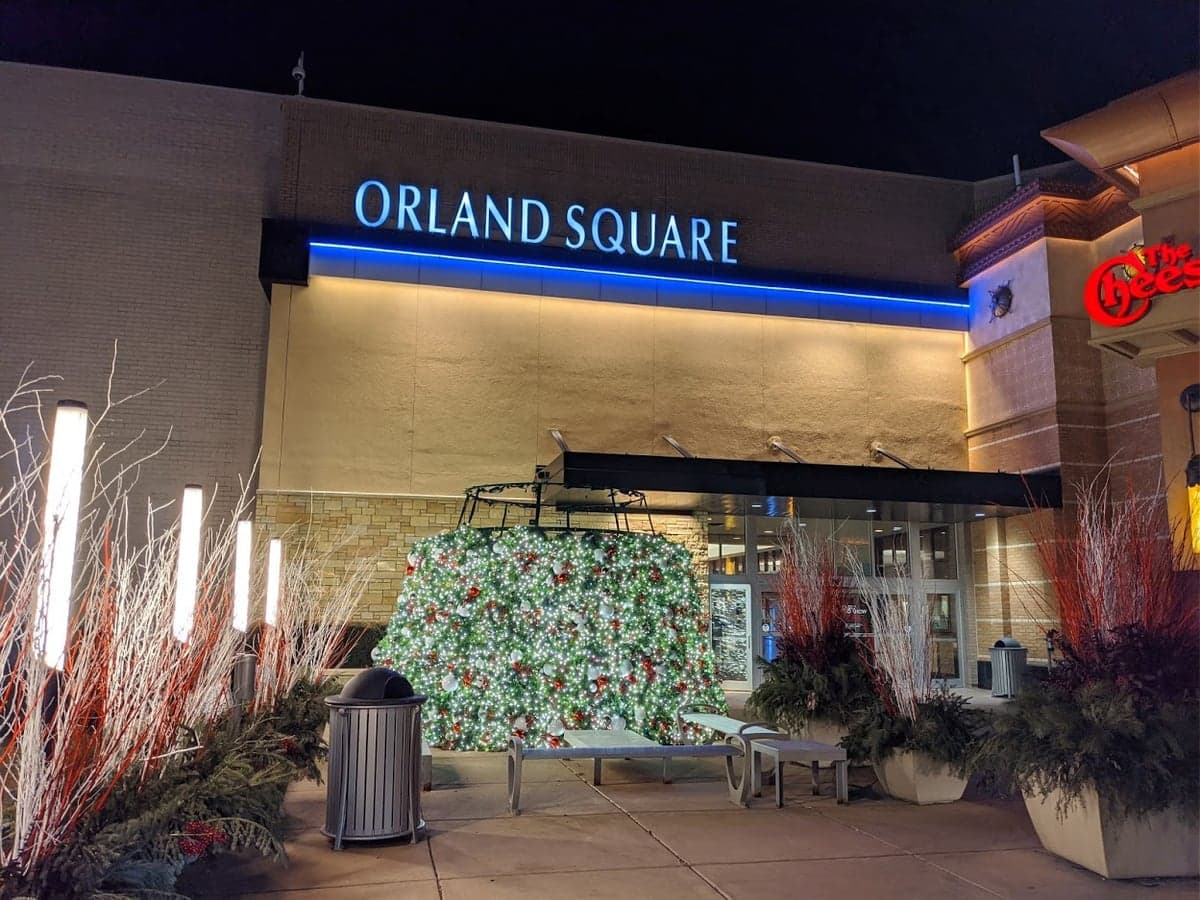
Photo: Wikipedia
Personal Sovereignty in Orland Park, IL
Viable for self-reliance. Generally workable, though some barriers may limit total independence.
What does Personal Sovereignty tell us?
Personal Sovereignty measures your capacity for self-reliance and independence with minimal government friction. Higher scores mean fewer barriers between you and the way you want to live... but it assumes you have the space you need and good neighbors.
What does this tell us?
Personal Sovereignty measures your capacity for self-reliance and independence with minimal government friction. Higher scores mean fewer barriers between you and the way you want to live... but it assumes you have the space you need and good neighbors.
State Policy
Energy independence: Importer (45% of energy produced in-state)
Personal Liberty
Homesteading

Personal Liberty Analysis
Orland Park, Illinois, presents a mixed picture for those prioritizing personal sovereignty. While the village itself maintains a relatively orderly, family-oriented environment, the broader regulatory and tax climate of Cook County and the state of Illinois imposes significant constraints on individual autonomy. For a survivalist or prepper mindset, the key question is whether the community’s local advantages can outweigh the heavy hand of state-level governance. The answer depends heavily on your specific priorities—tax burden, self-defense rights, and the ability to live off-grid.
Tax burden and regulatory posture in Cook County
The most immediate challenge to personal sovereignty in Orland Park is the tax burden. Cook County has some of the highest property tax rates in the nation, with effective rates often exceeding 2% of a home’s assessed value annually. For a family in a median-priced home around $350,000, that means roughly $7,000 to $8,000 per year in property taxes alone. This is a direct, recurring claim on your earnings and property—something a prepper would view as a vulnerability, not a strength. The state income tax is a flat 4.95%, and sales taxes in Cook County can push total rates above 10% in some areas. Regulatory posture is similarly heavy: Illinois has strict building codes, environmental regulations, and a complex permitting process for home improvements or land use changes. For someone wanting to build a root cellar, install solar panels, or keep livestock, the bureaucratic hurdles are real and time-consuming. The village itself is generally business-friendly, but the county and state layers add friction that erodes self-reliance.
Self-defense and gun law specifics in Illinois
Illinois is not a gun-friendly state, and this is a critical consideration for anyone serious about self-defense. The state requires a Firearm Owner’s Identification (FOID) card to possess any firearm or ammunition, a process that involves background checks and can take months. Concealed carry is legal only with a license, and Illinois is a “may-issue” state in practice, though the law is “shall-issue” on paper. Orland Park itself has local ordinances that restrict where firearms can be carried, including parks and public buildings. Magazine capacity is limited to 10 rounds for long guns and 15 for handguns. The state also has a “red flag” law allowing for temporary firearm seizure without a criminal conviction. For a prepper, this means your ability to stockpile ammunition, own standard-capacity magazines, or carry a firearm for personal protection is significantly curtailed compared to states like Texas or Florida. The legal landscape requires careful navigation and a willingness to comply with paperwork and restrictions that would be unthinkable in more liberty-oriented jurisdictions.
Self-reliance and homesteading viability in Orland Park
Orland Park is a suburban community, not a rural homesteading zone. Typical lot sizes in established neighborhoods range from one-quarter to one-half acre, with newer subdivisions often having smaller lots. Zoning is strictly residential, and the village code prohibits keeping livestock like chickens, goats, or pigs in most areas. Gardening is allowed, but there are limits on fence height, shed size, and the use of outbuildings. Off-grid living is essentially impossible: the village requires connection to municipal water and sewer, and solar panels must comply with building codes and HOA rules in many subdivisions. For a survivalist, this means you cannot achieve meaningful food or energy independence within the village limits. However, the surrounding Will County and rural areas south of Orland Park offer larger parcels—five to ten acres—where zoning is more permissive. A strategic relocation might involve living in Orland Park for its schools and community but owning a separate rural property for gardening, rainwater collection, and livestock. The trade-off is time and distance, but it’s a viable compromise for those who want both suburban amenities and a prepper’s fallback.
Personal liberties: parental rights, medical autonomy, speech, and property
Illinois has a mixed record on personal liberties. Parental rights are relatively strong in Orland Park’s school district (Consolidated High School District 230), which generally respects parental input on curriculum and health decisions. However, the state has mandated comprehensive sex education and LGBTQ-inclusive policies in schools, which some conservative parents view as overreach. Medical autonomy is constrained: Illinois has strict vaccine mandates for school attendance, and during the COVID-19 pandemic, the state imposed some of the longest-lasting mask and vaccine requirements in the Midwest. For a prepper concerned about medical freedom, this is a red flag. Free speech is protected under the First Amendment, but local ordinances in Orland Park regulate noise, signage, and public gatherings in ways that could limit protest or political expression. Property rights are the weakest link: the state’s eminent domain laws are broad, and Cook County’s property tax system effectively means you never truly own your home—you rent it from the government. For a survivalist, this lack of permanent, unencumbered ownership is a fundamental sovereignty issue.
Overall, Orland Park offers a decent quality of life for those willing to work within the system, but it is not a high-sovereignty location. The tax burden, gun restrictions, and zoning limitations are significant drawbacks for a prepper or conservative individualist. Compared to rural areas in Indiana or Missouri, where property taxes are lower, gun laws are more permissive, and zoning allows for self-sufficient living, Orland Park falls short. However, for someone who needs to stay in the Chicago metro area for work or family, it is one of the better options in Cook County—provided you are prepared to navigate the regulatory landscape and accept the trade-offs. The key is to view Orland Park as a base of operations, not a final redoubt, and to plan accordingly with legal compliance and strategic property ownership outside the village limits.

* Values derived from national, state, county, city and local statistics and may differ in a specific area. Last updated: 2026-04-23T12:19:05.000Z
Narrative content on this page is AI-generated and may contain mistakes. Verify any details that matter before acting on them.
ReloMaps may earn a commission from affiliate links at no extra cost to you.

