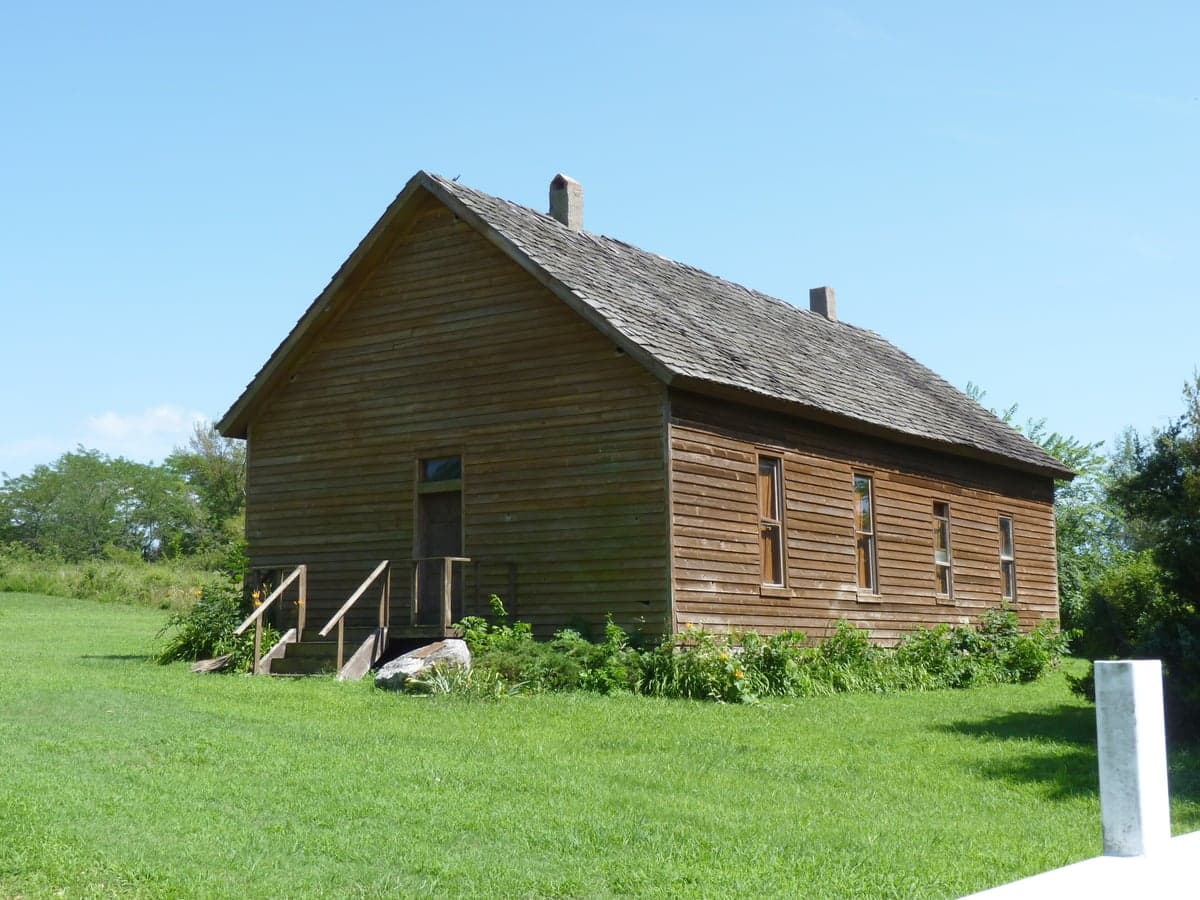
Photo: Wikipedia
Personal Sovereignty in Ottawa County
Strong independent fundamentals that actively favor personal liberty and low regulation.
What does Personal Sovereignty tell us?
Personal Sovereignty measures your capacity for self-reliance and independence with minimal government friction. Higher scores mean fewer barriers between you and the way you want to live... but it assumes you have the space you need and good neighbors.
What does this tell us?
Personal Sovereignty measures your capacity for self-reliance and independence with minimal government friction. Higher scores mean fewer barriers between you and the way you want to live... but it assumes you have the space you need and good neighbors.
State Policy
Energy independence: Net exporter (180% of energy produced in-state)
Personal Liberty
Homesteading

Personal Liberty Analysis
Ottawa County, Oklahoma, offers a notably high degree of personal sovereignty compared to much of the urbanized Midwest and coastal states, making it a serious consideration for those prioritizing autonomy over government convenience. The county’s rural character, combined with Oklahoma’s generally pro-liberty state preemption laws, creates an environment where individuals can live with minimal interference in daily life, property use, and personal defense. For the survivalist or prepper mindset, this area presents a tangible alternative to jurisdictions where local ordinances increasingly restrict self-reliance, though the specific level of freedom varies between the county’s small towns and unincorporated areas.
Tax burden and regulatory posture: How Ottawa County compares to surrounding areas
Oklahoma’s state-level tax structure is a major draw for those seeking to keep more of their earnings and reduce government dependency. There is no state income tax on retirement income, and the flat personal income tax rate is a competitive 4.75% as of 2026, with ongoing legislative efforts to reduce it further. Property taxes in Ottawa County are among the lowest in the nation, typically ranging from 0.6% to 0.9% of assessed value, which is a fraction of rates found in neighboring Missouri or Kansas. Sales tax is manageable at a state rate of 4.5%, with local options adding 2-4% depending on the municipality—Miami, the county seat, levies a combined rate near 9%, while smaller towns like Commerce and Fairland have lower combined rates. Critically, Oklahoma is a strong right-to-work state with minimal business licensing hurdles, and the county’s planning and zoning departments are generally hands-off outside incorporated city limits. For a prepper or homesteader, this means fewer permit delays for building a workshop, installing a rainwater catchment system, or keeping livestock—activities that would trigger bureaucratic pushback in more regulated counties like Tulsa or Oklahoma City.
Self-defense and gun law specifics: What the Second Sanctuary status means for residents
Ottawa County is a Second Amendment Sanctuary, with the sheriff’s office publicly stating it will not enforce federal gun laws deemed unconstitutional. Oklahoma is a constitutional carry state, meaning no permit is required to carry a concealed or open firearm for anyone legally allowed to possess one. This is a foundational liberty for those concerned about government overreach. There is no state-level red flag law, no magazine capacity restrictions, and no firearm registration. The county’s culture strongly supports armed self-defense, and the local sheriff’s office in Miami and substations in Wyandotte and Afton are known for a pro-Second Amendment stance. Stand-your-ground laws apply statewide, with no duty to retreat in any place where a person is lawfully present. For those building a defensive capability, the lack of restrictive local ordinances means you can legally store firearms in vehicles, on private property, and in outbuildings without fear of overzealous code enforcement. The only practical limitation is the federal prohibition on felons possessing firearms, which is enforced uniformly.
Self-reliance and homesteading viability: Lot sizes, zoning, and off-grid feasibility
Ottawa County’s rural zoning and abundant land availability make it a prime location for self-sufficient living. Unincorporated areas have no minimum lot size requirements for agricultural use, and parcels of 5 to 40 acres are common and affordable—often under $3,000 per acre for raw land. Towns like Quapaw and Picher (the latter still recovering from Superfund cleanup) offer some of the cheapest land in the state, though soil quality varies. Off-grid living is fully feasible: Oklahoma has no state law prohibiting rainwater collection, and many rural residents rely on private wells and septic systems. Solar panel installation requires no special permits outside city limits, and net metering is available through local electric cooperatives. The county’s agricultural exemption allows for reduced property taxes on land used for farming or livestock, which can include beekeeping, orchards, or pasture for goats and cattle. However, note that the Miami city limits enforce standard building codes and require permits for structural additions, so those seeking maximum autonomy should target properties in the unincorporated areas near Dotyville or Narcissa.
Personal liberties: Parental rights, medical autonomy, speech, and property
Oklahoma has strong statutory protections for parental rights, including a 2024 law that requires school districts to notify parents of any medical or mental health services offered to minors and to obtain parental consent before administering surveys on sensitive topics. Ottawa County’s school districts—including Miami, Commerce, and Wyandotte—generally align with conservative values, with school boards that resist federal overreach on curriculum and health mandates. Medical autonomy is bolstered by Oklahoma’s broad conscience clause for healthcare providers and the absence of vaccine mandates for adults or children in public spaces. Free speech is protected by state law that prohibits local governments from restricting political speech on public property, and the county’s public meetings are open with minimal restrictions. Property rights are robust: Oklahoma’s private property rights protection act requires government to compensate landowners for any regulatory taking that reduces property value by more than 20%. This means no surprise zoning changes that could shut down a home-based business or a private shooting range on your land. The county’s small-town atmosphere in Fairland and Afton also means neighbors generally respect privacy, and local law enforcement rarely intervenes in private disputes unless violence is involved.
Overall, Ottawa County ranks among the top 10% of U.S. counties for personal sovereignty, particularly for those willing to live outside incorporated city limits. The combination of low taxes, constitutional carry, minimal zoning, and strong parental rights creates a buffer against the creeping regulatory state seen in more populated areas. While no location is a perfect libertarian utopia—federal laws still apply, and the county’s infrastructure is basic—this area offers a genuine alternative for those who value self-reliance over government-provided services. For the prepper or conservative individual assessing relocation options, Ottawa County provides a legal and cultural foundation that allows you to live as you see fit, provided you respect your neighbors’ equal rights to do the same.

* Values derived from national, state, county, city and local statistics and may differ in a specific area. Last updated: 2026-06-01T08:35:52.000Z
Narrative content on this page is AI-generated and may contain mistakes. Verify any details that matter before acting on them.
ReloMaps may earn a commission from affiliate links at no extra cost to you.

