Photo: Wikipedia
Personal Sovereignty in Okemah, OK
Strong independent fundamentals that actively favor personal liberty and low regulation.
What does Personal Sovereignty tell us?
Personal Sovereignty measures your capacity for self-reliance and independence with minimal government friction. Higher scores mean fewer barriers between you and the way you want to live... but it assumes you have the space you need and good neighbors.
What does this tell us?
Personal Sovereignty measures your capacity for self-reliance and independence with minimal government friction. Higher scores mean fewer barriers between you and the way you want to live... but it assumes you have the space you need and good neighbors.
State Policy
Energy independence: Net exporter (180% of energy produced in-state)
Personal Liberty
Homesteading

Personal Liberty Analysis
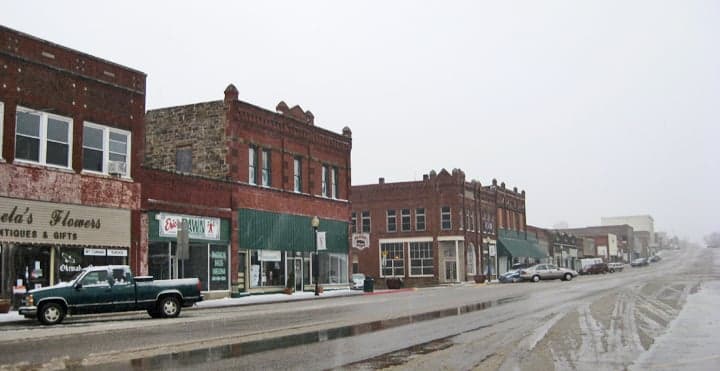
Okemah, Oklahoma offers a personal sovereignty environment that stands out sharply from the coastal and urban jurisdictions many readers are looking to exit. As the seat of Okfuskee County, this small town of roughly 3,200 people sits in a state that consistently ranks among the most liberty-oriented in the nation. For those approaching relocation from a survivalist or prepper mindset, Okemah provides a legal and cultural framework where government overreach into daily life is minimal, self-reliance is the norm, and the path to securing your family’s autonomy is far less obstructed than in blue states or even many purple counties. The trade-offs involve limited economic opportunity and a slower pace of life, but for those prioritizing freedom over convenience, the calculus here is favorable.
Tax burden and regulatory posture in Okfuskee County
Oklahoma’s overall tax climate is a major draw for those seeking to minimize state interference in their finances. The state levies a flat income tax of 4.75% (down from 5% in 2022 and scheduled to drop further as revenue triggers are met), and Okemah residents pay no local income tax. Property taxes are among the lowest in the nation — the effective rate in Okfuskee County hovers around 0.7% of assessed value, meaning a $150,000 home carries an annual tax bill of roughly $1,050. Sales tax is 8.5% (4.5% state plus 4% local), which is moderate but noticeable on everyday purchases. More importantly for the prepper mindset, Oklahoma’s regulatory posture is light. The state has a right-to-work law, no state-level occupational licensing for many trades, and a permitting environment that generally defers to landowners. Zoning in Okemah is minimal — the town has basic land-use rules but does not impose the kind of hyper-specific building codes or environmental restrictions that plague counties in California, Oregon, or New York. For someone wanting to build a shop, install a rainwater catchment system, or park an RV on their own property, the bureaucratic hurdles are low. The state also has no estate tax and no inheritance tax, preserving generational wealth transfer without government taking a cut.
Self-defense and gun law specifics in Oklahoma
Oklahoma is a constitutional carry state — no permit is required to carry a firearm openly or concealed for anyone 21 or older who can legally possess a firearm. This went into full effect in 2019, and Okemah law enforcement generally respects that right. There is no state-level red flag law, no magazine capacity restrictions, and no assault weapon ban. The state preempts local firearm ordinances, meaning Okemah city council cannot pass its own gun control measures. Stand-your-ground law is on the books, with no duty to retreat in any place you are lawfully present. For preppers, this means you can maintain a defensive firearms inventory without worrying about compliance with ever-shifting state rules. Oklahoma also has a strong castle doctrine — deadly force is presumed justified if someone unlawfully enters your home, vehicle, or place of business. The state does not require registration of firearms, and private sales between individuals require no background check. For those with NFA items (suppressors, short-barreled rifles), Oklahoma law explicitly protects the right to own them, and the state has a law prohibiting local authorities from enforcing federal bans that don’t exist under state law. The sheriff’s office in Okfuskee County is generally pro-2A, and concealed carry permit applications (still available for reciprocity with other states) are processed without ideological friction.
Self-reliance and homesteading viability in Okemah
Okemah’s rural character makes it a strong candidate for those wanting to live off-grid or semi-off-grid. Lot sizes in town vary, but many residential parcels are a quarter-acre or larger, and undeveloped land within a 10-minute drive of downtown can be had for $2,000–$5,000 per acre. Zoning is loose — there are no prohibitions on keeping chickens, goats, or even a small number of livestock within city limits, though larger animals like cattle or horses are better suited to the unincorporated county. Off-grid feasibility is high: Oklahoma has no state law prohibiting rainwater collection (in fact, the state encourages it with tax incentives for cisterns), and solar panel installation requires no special permit beyond standard electrical work. The county does not enforce building codes outside of the small incorporated areas, so you can construct a cabin, workshop, or greenhouse without plan review or inspection. Well water is accessible in most parts of Okfuskee County, and septic systems are permitted through the county health department with a straightforward process. For preppers concerned about grid-down scenarios, the local climate supports gardening from April through October, and deer hunting is abundant on public land in the nearby Deep Fork Wildlife Management Area. The town’s water supply comes from the Okemah Lake system, but having a backup well or rainwater storage is a realistic hedge against municipal failure. The main limitation is that the area is tornado-prone, so any serious homestead plan should include a storm shelter — many rural properties already have them, and new ones can be installed for $3,000–$6,000.
Personal liberties: parental rights, medical autonomy, speech, and property
Oklahoma has been a battleground for parental rights, and the current legal climate strongly favors family autonomy. The state passed the Parental Bill of Rights in 2014, which affirms that parents have the fundamental right to direct their children’s education, healthcare, and upbringing. In practice, this means Okemah parents can opt their kids out of any curriculum they find objectionable without needing to provide a reason, and the school district (Okemah Public Schools, around 900 students) has not been aggressive about pushing controversial content. Homeschooling is straightforward — no notification required, no standardized testing mandates, and no curriculum approval. Medical autonomy is more mixed. Oklahoma has not expanded Medicaid under the ACA, which limits options for low-income residents, but for those with private insurance or cash-pay arrangements, the state does not mandate COVID-19 vaccines for adults and has banned vaccine passports. The state also has a broad health freedom law that allows patients to access experimental treatments and prohibits discrimination against those who decline vaccines. Speech protections are strong — Oklahoma has no hate speech laws that criminalize political or religious expression, and the state’s public universities generally respect free speech zones. Property rights are reinforced by Oklahoma’s version of the Private Property Protection Act, which requires government to compensate landowners for any regulatory taking that reduces property value by more than 20%. Eminent domain abuse is limited by state law that restricts its use to traditional public works projects, not private economic development. For those concerned about government overreach into medical decisions, educational content, or land use, Okemah sits in a state that has consistently pushed back against federal overreach and maintained a high degree of local control.
Overall, Okemah offers a level of personal sovereignty that is increasingly rare in the United States. Compared to rural areas in the Northeast, West Coast, or even parts of the Midwest that have been overrun by county-level regulations, Okfuskee County remains a place where the default assumption is that you can do what you want on your own property unless there is a compelling reason to stop you. The tax burden is low, gun laws are among the most permissive in the country, homesteading is practical and affordable, and the legal framework supports parental authority and medical choice. The trade-offs are real — economic opportunity is limited, healthcare access requires driving 30–60 minutes to larger towns like Okmulgee or Shawnee, and the social scene is quiet. But for a strategic relocation aimed at maximizing freedom and minimizing government entanglement, Okemah deserves serious consideration from anyone who values autonomy over amenities.

* Values derived from national, state, county, city and local statistics and may differ in a specific area. Last updated: 2026-04-11T19:47:19.000Z
Narrative content on this page is AI-generated and may contain mistakes. Verify any details that matter before acting on them.
ReloMaps may earn a commission from affiliate links at no extra cost to you.

