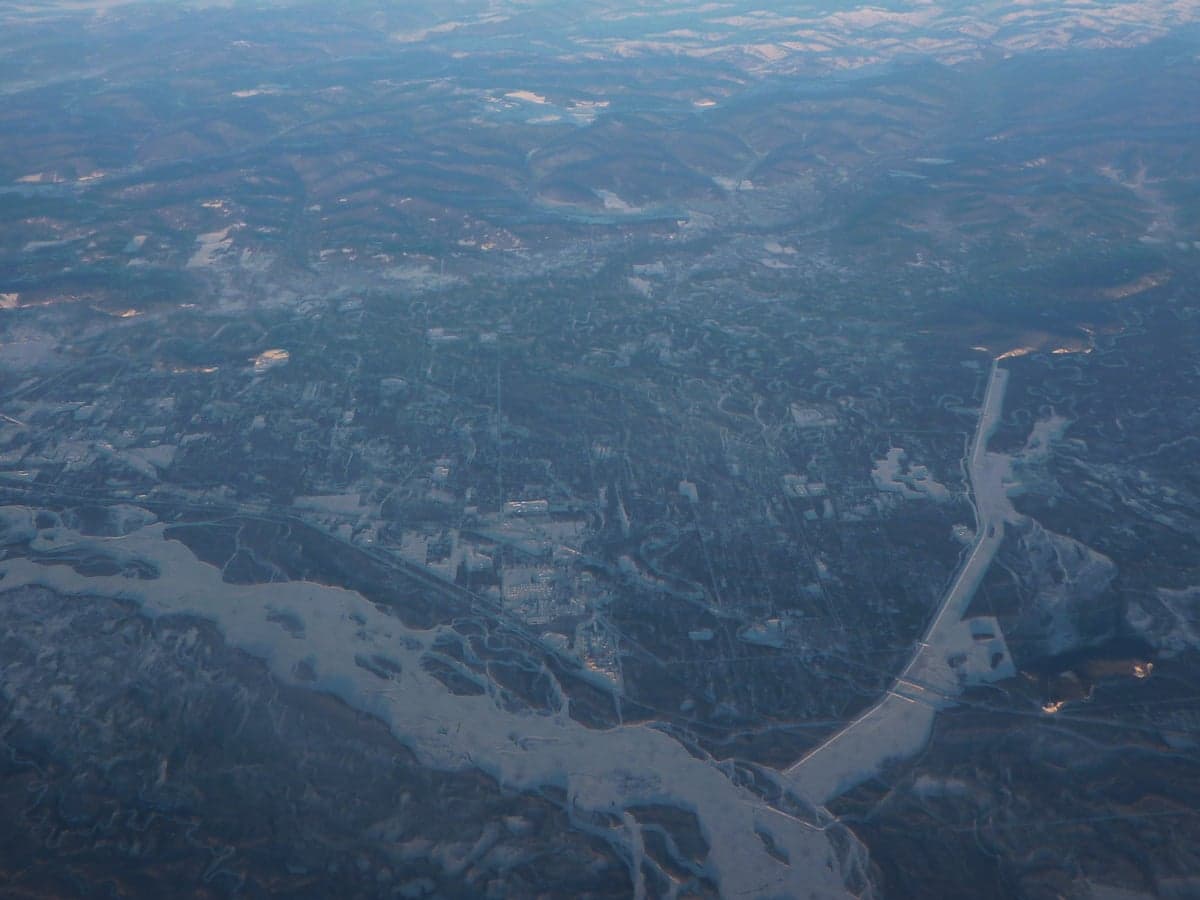
Photo: Wikipedia
Political ClimatePolitical Climate in North Pole, AK
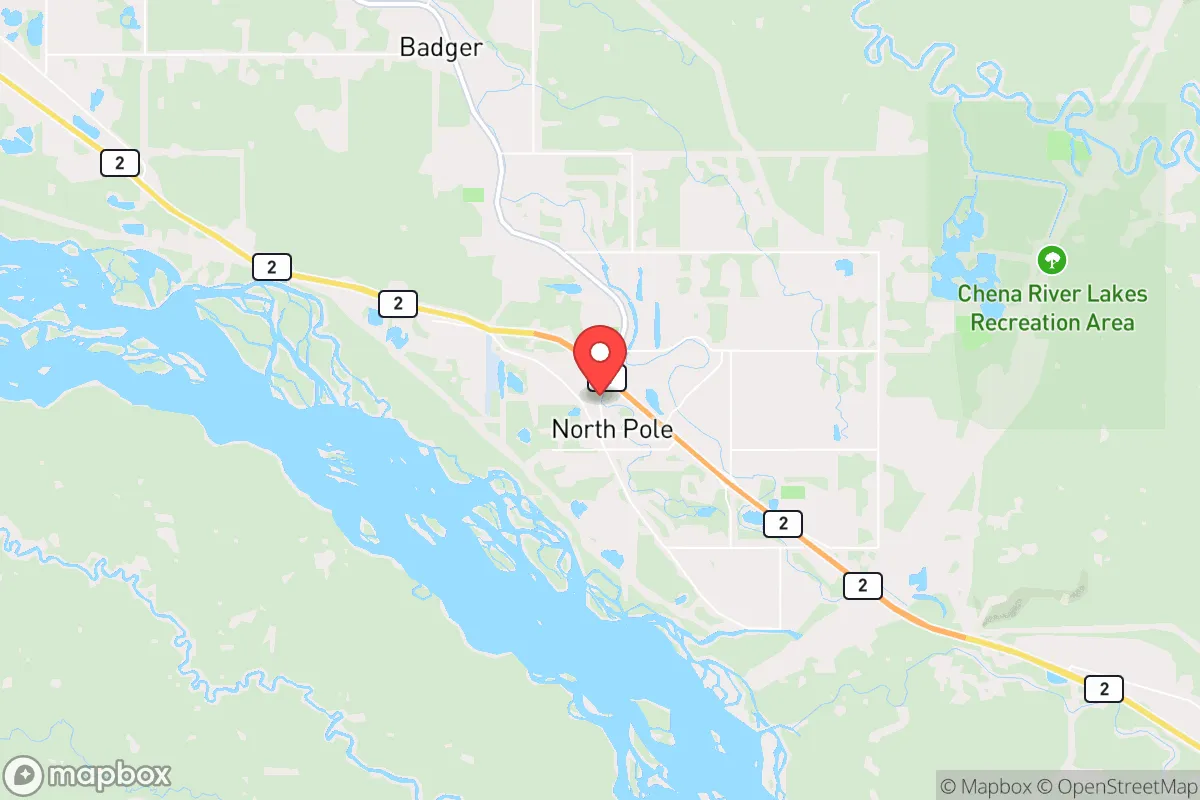
District shown is the primary district for this city’s centroid. Cities may span multiple districts.
Inherited from parent state — no local data available.
Local Political AnalysisPolitical Analysis of North Pole, AK
North Pole, Alaska, has long been a solidly conservative community, and that hasn't changed much despite some national trends. The Cook PVI of R+6 tells you the basics—this area leans Republican by a comfortable margin, and that's reflected in local elections, school board decisions, and the general vibe around town. If you're looking at the political trajectory, it's been fairly stable, though you do see some of the same cultural pressures creeping in from Fairbanks and Anchorage that make you wonder how long that'll hold.
How it compares
North Pole sits in the Fairbanks North Star Borough, which as a whole is more purple than the city itself. Fairbanks proper, just 15 miles west, has a noticeable progressive streak—especially around the university and downtown areas—that can feel like a different world. Anchorage, 360 miles south, is even more polarized, with a strong liberal base in the city core and conservative suburbs. But North Pole? It's still the kind of place where the Second Amendment is a given, where property rights are taken seriously, and where folks get uneasy when the borough starts talking about zoning or land-use restrictions that feel like overreach. The contrast with Fairbanks is sharp: you'll see more "Keep the Government Out of My Healthcare" signs in North Pole yards than you will in most of the borough.
What this means for residents
For someone moving here, the political climate means a few practical things. Taxes are low—Alaska has no state income tax, and the borough keeps property taxes reasonable. There's no talk of city-level income taxes or the kind of progressive revenue schemes you see in places like Juneau. The school board has been a battleground lately, with debates over curriculum transparency and parental rights, but conservative voices still hold the majority. If you're worried about government overreach into personal freedoms—whether that's vaccine mandates, business closures, or land-use restrictions—North Pole is still a place where those concerns are taken seriously by local leadership. The downside? Infrastructure can feel neglected because the political culture prioritizes low taxes over big projects. Roads, water, and sewer systems aren't always kept up the way they might be in a more liberal, higher-tax area.
One thing that stands out culturally is the strong military and veteran presence—Fort Wainwright and Eielson Air Force Base are nearby, and that reinforces a conservative, patriotic, and self-reliant mindset. You'll also notice a libertarian streak among longtime residents: they want the government out of their business, but they also don't expect much from it. That can be a double-edged sword. In the long term, the biggest concern is whether the borough's growing population—driven by military families and people fleeing higher-cost states—will shift the balance. Some of those newcomers bring progressive voting habits with them, and if that trend continues, you could see the political center of gravity move. For now, though, North Pole remains a place where personal responsibility and local control still carry the day, and where most folks would rather solve their own problems than ask the government for help.

State Political ClimatePolitical Climate in Alaska
State Political AnalysisPolitical Environment in the State
Alaska has long been a politically unique state, leaning Republican in presidential elections but with a fierce independent streak that makes it less predictable than many red states. Over the past 20 years, the state has shifted from reliably red to a more volatile mix, with the 2020 election seeing Joe Biden win a single electoral vote (the state’s at-large district) while Donald Trump carried the state overall by 10 points. The 2022 Senate race, where Republican Lisa Murkowski won as a write-in candidate against a Trump-backed challenger, highlights the state’s resistance to national partisan trends. However, the dominant coalition remains conservative on resource development, gun rights, and limited government, though urban centers like Anchorage and Juneau are pulling leftward, creating a growing urban-rural tension.
Urban vs. rural divide
The political map of Alaska is starkly divided between its few urban hubs and the vast rural expanse. Anchorage, home to about 40% of the state’s population, is a swing area that has trended left in recent cycles. The city’s Assembly is now controlled by a progressive majority, and in 2024, Anchorage’s state house districts flipped several seats to Democrats. Juneau, the capital, is solidly blue, driven by state government workers and a strong environmental activist presence. Fairbanks, the interior’s main city, is more conservative but has a growing university population that moderates its lean. The true conservative strongholds are the Mat-Su Valley (Wasilla, Palmer, and the surrounding boroughs), which votes +30 to +40 points Republican, and the Kenai Peninsula (Soldotna, Homer, Kenai), where resource extraction and fishing communities keep politics red. Rural villages, many of which are predominantly Alaska Native, tend to vote Democratic due to strong ties to federal programs and subsistence rights, but their turnout is low and often unreliable.
Policy environment
Alaska’s policy environment is a mixed bag for conservatives. On the plus side, there is no state income tax and no state sales tax, making it one of the most tax-friendly states in the nation. The Permanent Fund Dividend (PFD) – an annual check to every resident from oil revenues – is a cherished institution that keeps government spending in check, as any attempt to cut it is political suicide. Gun rights are strong: Alaska is a constitutional carry state, with no permit required to carry a concealed firearm, and it has a strong Castle Doctrine law. However, the state’s education system is a growing concern. The Anchorage School District has adopted progressive curricula, including critical race theory elements and gender identity policies that allow students to change names and pronouns without parental consent. The state’s healthcare system is heavily regulated, with a state-run insurance exchange and Medicaid expansion under the ACA, which many conservatives view as government overreach. Election laws are relatively secure: Alaska uses a top-four primary system and ranked-choice voting for general elections, which was passed by ballot initiative in 2020. This system has been criticized by conservatives for diluting party power and allowing moderate Republicans like Murkowski to survive primary challenges.
Trajectory & freedom
Alaska’s trajectory on personal freedom is a mixed picture. On the positive side, the state has expanded gun rights in recent years, with 2022 legislation allowing firearms in public buildings and on school grounds with a permit. Property rights remain strong, with no statewide zoning and minimal land-use regulation outside of urban areas. However, there are concerning trends. The 2020 ballot initiative that instituted ranked-choice voting was seen by many conservatives as a power grab by out-of-state interests, and there have been ongoing efforts to repeal it. The state’s COVID-19 response was a flashpoint: Governor Mike Dunleavy (R) resisted lockdowns and mask mandates, but the Anchorage Assembly imposed its own mandates, leading to a bitter standoff. Parental rights are under threat in the education system, with the Anchorage School Board adopting policies that allow students to hide gender transitions from parents. Medical autonomy has been curtailed by the state’s strict vaccine mandates for healthcare workers, which were upheld by the courts. On the whole, Alaska remains freer than most states, but the urban centers are pushing for more government control, and the state’s reliance on federal funding (about 40% of the budget) creates a vulnerability to federal overreach.
Civil unrest & political movements
Alaska has seen relatively little civil unrest compared to the Lower 48, but there have been notable flashpoints. The 2020 Black Lives Matter protests in Anchorage were large and occasionally violent, with property damage downtown. In response, a strong “Back the Blue” movement emerged, with large counter-protests in Wasilla and Palmer. The state has a vibrant secessionist movement, the Alaska Independence Party, which advocates for a vote on secession from the United States. While fringe, it reflects a deep distrust of federal control, especially over land use and resource extraction. Immigration politics are less visible here than in border states, but there is a growing concern about illegal immigration via the Canadian border, with the state’s remote border crossings seeing increased traffic. Election integrity has been a hot topic since the 2020 ranked-choice voting system was implemented. The 2022 election saw a recount in the governor’s race, and there have been allegations of voter fraud in rural precincts, though none have been substantiated. The most visible political movement is the fight over the Pebble Mine in Bristol Bay, which pits resource development against environmental activism, with the Biden administration blocking the project – a decision that infuriated many rural Alaskans who see it as federal overreach.
Projection
Over the next 5-10 years, Alaska is likely to become more politically polarized, with the urban-rural divide deepening. Anchorage will continue to trend left, driven by in-migration from progressive states and a growing government sector. The Mat-Su Valley and Kenai Peninsula will remain conservative strongholds, but they are also growing, attracting families and retirees from blue states who are fleeing high taxes and crime. The wildcard is the state’s economy: if oil prices stay high, the PFD will remain generous, keeping the state’s libertarian-leaning voters happy. But if oil declines, the state will face a fiscal crisis, and the debate over new taxes (including a state income tax) will become a major political battleground. The ranked-choice voting system is likely to be repealed or modified, as it has alienated both the far right and the far left. The biggest threat to freedom is the growing influence of the Anchorage Assembly and the Juneau bureaucracy, which are pushing for more regulations on housing, land use, and education. A new resident moving to Alaska today should expect to find a state that is still freer than most, but where the battle for control is intensifying, and where the outcome will depend on whether the conservative rural and suburban areas can outvote the progressive urban centers.
For a new resident, the bottom line is this: Alaska offers a unique blend of personal freedom, low taxes, and strong gun rights that is increasingly rare in the United States. But the state is not immune to the progressive trends sweeping the country, and the urban centers – particularly Anchorage – are becoming battlegrounds for government overreach. If you’re looking for a place where you can live your life without the state telling you what to do, the Mat-Su Valley or the Kenai Peninsula are your best bets. If you move to Anchorage or Juneau, be prepared to fight for your rights at the local level. The state’s future depends on whether the conservative spirit of the frontier can withstand the encroaching tide of bureaucracy and regulation. It’s still a great place to raise a family, but you’ll need to stay engaged and vote in every election – especially the local ones.
* Values derived from national, state, county, city and local statistics and may differ in a specific area. Last updated: 2026-04-19T19:33:38.000Z
Narrative content on this page is AI-generated and may contain mistakes. Verify any details that matter before acting on them.
ReloMaps may earn a commission from affiliate links at no extra cost to you.

