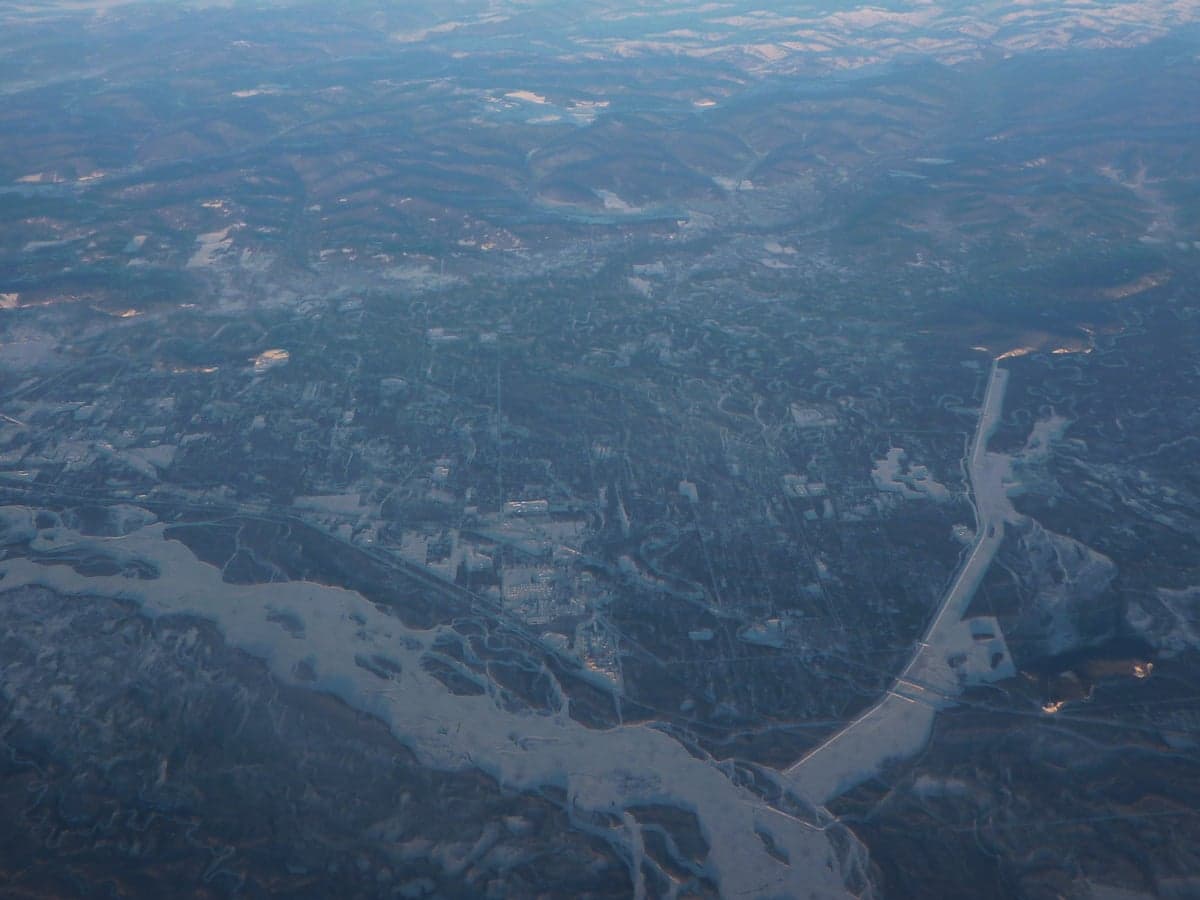
Photo: Wikipedia
Demographics of North Pole, AK
Affluence Level in North Pole, AK
A middle-class area roughly in line with national averages across income, home values, education, and employment.
People of North Pole, AK
The people of North Pole, Alaska, today number 2,663, forming a tight-knit, predominantly white community with a distinctive small-town character shaped by its military and transportation roots. With a foreign-born population of just 0.1%, the city is overwhelmingly native-born, and its 57.1% white majority is complemented by a 14.9% Hispanic population and smaller shares of Black (3.2%) and East/Southeast Asian (1.9%) residents. The city’s identity is heavily tied to its Christmas-themed branding and its role as a bedroom community for nearby Fort Wainwright and Eielson Air Force Base, giving it a practical, family-oriented feel. Only 27.1% of adults hold a college degree, reflecting a workforce concentrated in trades, military service, and logistics.
How the city was settled and grew
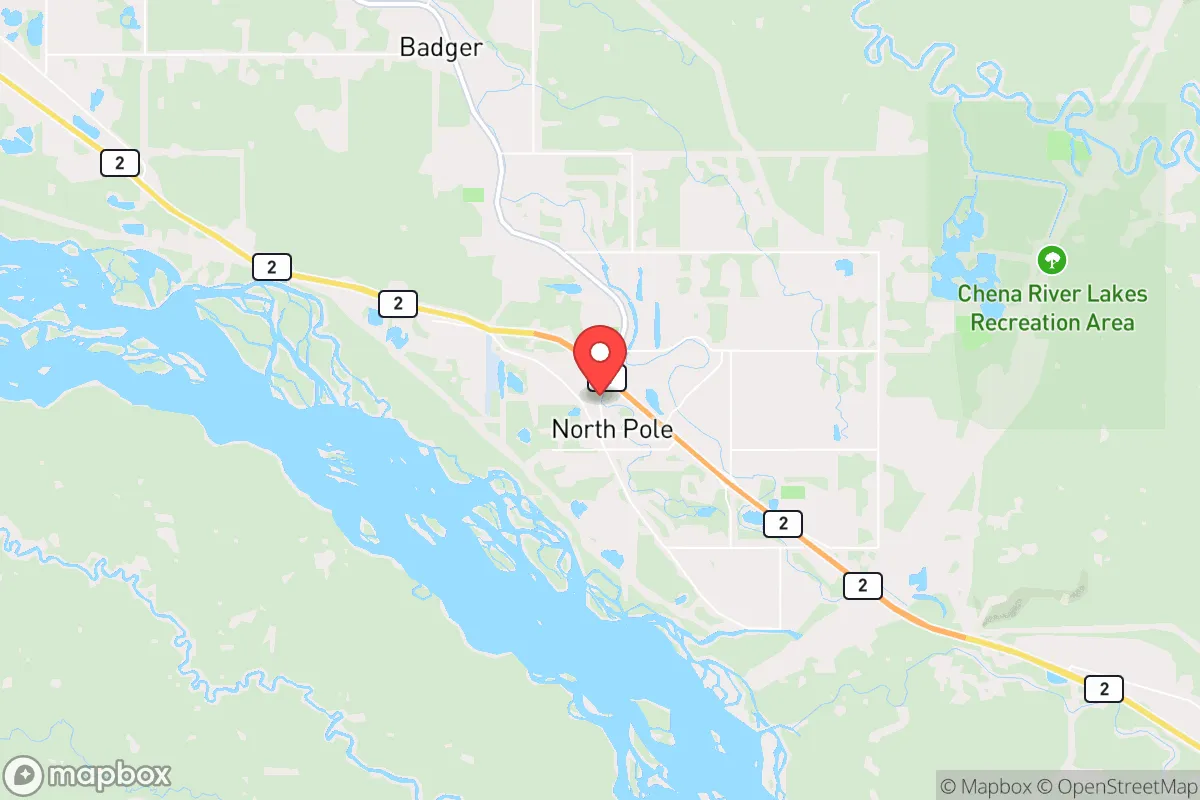
North Pole was founded in the early 1950s as a planned community, explicitly created to capitalize on its name and attract businesses and families to the Alaska interior. The original settlers were a mix of homesteaders, small business owners, and workers drawn by the construction of the Richardson Highway and the nearby military installations. The first wave of residents clustered around the original townsite, now known as Santa Claus Lane, where the city’s iconic Christmas-themed shops and post office were established. By the 1960s, a second wave of families—many from the Lower 48—settled in the Badger Road area, drawn by affordable land and the promise of a quiet, self-sufficient lifestyle. This area remains a hub for multi-generational families and those working in the oil and gas industry, which boomed in the 1970s. The city’s growth was steady but modest, as it never attracted the large-scale immigration seen in Anchorage or Fairbanks.
Modern era (post-1965)
After the 1965 Immigration and Nationality Act, North Pole saw little change in its foreign-born population, which remains negligible. Instead, domestic in-migration—particularly from the Midwest and Pacific Northwest—drove population shifts. The 1980s and 1990s brought a wave of military families assigned to Fort Wainwright and Eielson AFB, many of whom settled in the Harding Lake and Eielson Farm Road neighborhoods, where larger lots and newer housing stock appealed to those seeking space. The Hispanic population, now 14.9%, grew primarily through internal migration from other U.S. states, especially Texas and California, with families moving for construction and service jobs. These households concentrated in the North Pole Estates subdivision, a mid-priced area developed in the 1990s. The Black and East/Southeast Asian communities, each small, are largely tied to military rotations and tend to live near the bases rather than in North Pole proper. The city’s racial composition has remained stable, with no significant enclave formation—most residents live in mixed, owner-occupied single-family homes.
The future
North Pole’s population is likely to remain stable or grow slowly, driven by military transfers and Alaskans seeking affordable housing away from Fairbanks. The city is not homogenizing into distinct ethnic enclaves; instead, it is becoming slightly more diverse through the gradual in-migration of Hispanic and Black families, though the white majority will persist. The East/Southeast Asian and Indian subcontinent populations are too small to trend meaningfully. The biggest demographic shift will be generational: younger families are moving in, drawn by lower home prices compared to Fairbanks, while older residents age in place in Santa Claus Lane and Badger Road. The city’s future character will remain that of a practical, military-adjacent community with a quirky holiday theme—not a melting pot, but a stable, family-oriented enclave.
For someone moving to North Pole now, the city offers a predictable, low-diversity environment where community ties are strong and change is gradual. It is becoming slightly more Hispanic and slightly less white, but the overall demographic trajectory is one of stability rather than transformation. New residents should expect a place where military and trade work dominate, and where the population’s character is defined by self-reliance and a shared appreciation for the Alaska interior’s quiet rhythms.

* Values derived from national, state, county, city and local statistics and may differ in a specific area. Last updated: 2026-04-19T19:33:38.000Z
Narrative content on this page is AI-generated and may contain mistakes. Verify any details that matter before acting on them.
ReloMaps may earn a commission from affiliate links at no extra cost to you.

