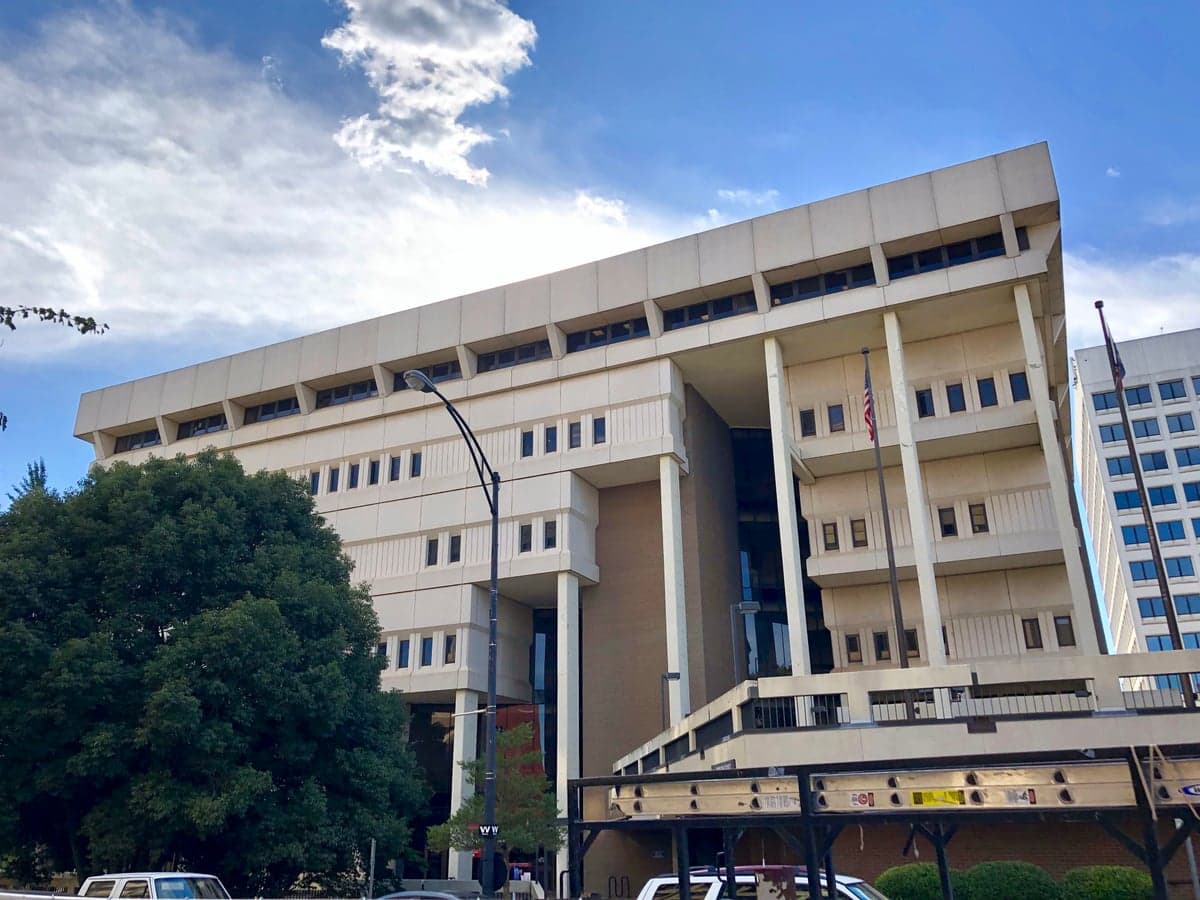
Photo: Wikipedia
Personal Sovereignty in Forsyth County
Viable for self-reliance. Generally workable, though some barriers may limit total independence.
What does Personal Sovereignty tell us?
Personal Sovereignty measures your capacity for self-reliance and independence with minimal government friction. Higher scores mean fewer barriers between you and the way you want to live... but it assumes you have the space you need and good neighbors.
What does this tell us?
Personal Sovereignty measures your capacity for self-reliance and independence with minimal government friction. Higher scores mean fewer barriers between you and the way you want to live... but it assumes you have the space you need and good neighbors.
State Policy
Energy independence: Importer (15% of energy produced in-state)
Personal Liberty
Homesteading

Personal Liberty Analysis
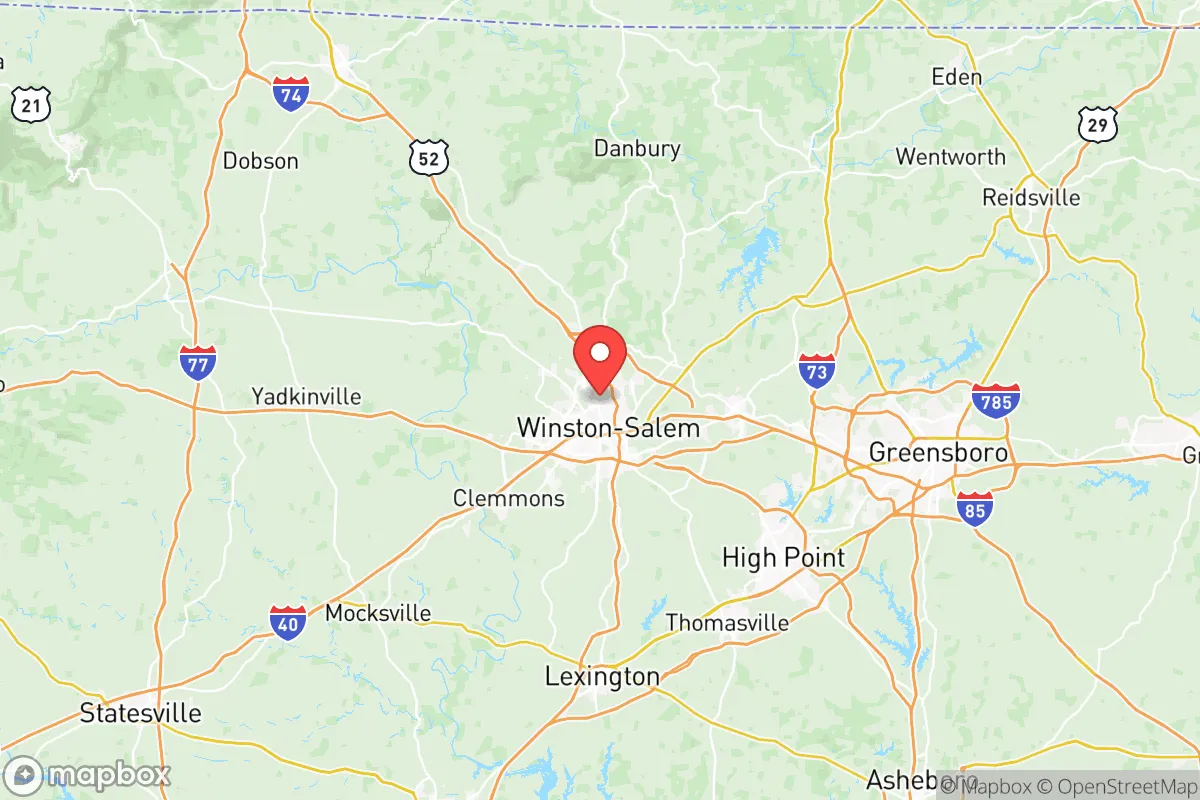
Forsyth County, anchored by the city of Winston-Salem, presents a nuanced environment for personal sovereignty that blends North Carolina’s generally permissive state-level framework with a moderately active local regulatory posture. While the state constitution and recent legislation provide strong protections for gun rights, parental authority, and property use, the county’s urban core and more densely populated townships impose zoning and code restrictions that can limit the full expression of self-reliance. For individuals and families weighing autonomy, the key variable is location within the county: the rural edges offer a far lighter touch than the city limits of Winston-Salem or the inner-ring suburbs like Kernersville and Lewisville.
Tax burden and regulatory posture in Forsyth County
North Carolina’s flat state income tax rate of 4.5% (as of 2025) and a state sales tax of 4.75% (with local add-ons bringing the total to 7% in Forsyth County) keep the overall tax burden moderate compared to high-tax states like New York or California. Forsyth County’s property tax rate is approximately 0.66% of assessed value, which is slightly above the state median but still well below rates in nearby Guilford County (Greensboro) or Mecklenburg County (Charlotte). The county does not impose a local income tax. Regulatory posture is mixed: Winston-Salem enforces a citywide rental registration program and has adopted the 2018 International Building Code with local amendments, which can add costs for new construction or major renovations. However, the county’s planning department is generally efficient, with typical permit review times of 2-4 weeks for standard residential projects. For those seeking minimal interference, the unincorporated areas of the county—particularly around Rural Hall, Tobaccoville, and the western edge near Pfafftown—offer fewer zoning overlays and no city-level business license requirements for home-based enterprises.
Self-defense and gun law specifics in Forsyth County
North Carolina is a “shall-issue” state for concealed carry permits, and Forsyth County’s sheriff’s office processes applications within the statutory 45-day window. The state does not require a permit to open carry a handgun, though local ordinances in Winston-Salem prohibit open carry within city parks and government buildings. Stand-your-ground laws are in full effect, with no duty to retreat in any place where the individual is lawfully present. The county has a robust firearms culture: there are at least six indoor shooting ranges within 20 minutes of downtown Winston-Salem, and the Piedmont Handgunners Association operates a private outdoor range near Lewisville. Magazine capacity is not restricted by state law, and there is no state-level firearm registration. However, Forsyth County does have a higher-than-average number of concealed carry permit holders per capita compared to more urbanized counties like Mecklenburg, reflecting a strong local tradition of personal defense. For those living in the more rural townships of Vienna and Donnaha, discharging a firearm on private property is generally permitted, provided the discharge is not within 100 yards of an occupied dwelling—a rule that is rarely enforced on larger parcels.
Self-reliance and homesteading viability: lot sizes, zoning, and off-grid feasibility
Homesteading viability in Forsyth County is highly location-dependent. Within Winston-Salem city limits, minimum lot sizes are typically 6,000-8,000 square feet for single-family homes, and raising chickens is allowed only with a permit and limited to four hens (no roosters). Beekeeping is permitted but requires registration with the county. In contrast, the unincorporated areas of the county—particularly Rural Hall, Tobaccoville, and the Bethania area—have minimum lot sizes of 1-2 acres in most residential zoning districts, and there are no county-level restrictions on keeping goats, sheep, or up to two horses per acre. Off-grid living is legally feasible but practically constrained: Forsyth County requires connection to public water and sewer in subdivisions platted after 1995, but on parcels of 2 acres or more, private wells and septic systems are permitted. Solar panels are allowed without special permitting in unincorporated areas, though the county’s building code requires grid-tied systems to meet National Electrical Code standards. Rainwater collection is unrestricted for non-potable uses, and the state’s Rainwater Harvesting Act explicitly permits it for irrigation. For those seeking true self-reliance, the most viable parcels are in the northwestern quadrant of the county, near the Yadkin River, where agricultural zoning allows for larger outbuildings and livestock without the density restrictions found closer to Winston-Salem.
Personal liberties: parental rights, medical autonomy, speech, and property
North Carolina has enacted several laws that strengthen parental rights in education, including the Parents’ Bill of Rights (2023), which requires schools to notify parents of any changes in a child’s health or well-being and prohibits instruction on gender identity and sexuality in K-4 classrooms. Forsyth County Schools generally comply with these statutes, though the district has faced some local controversy over implementation. Medical autonomy is more limited: North Carolina has not expanded Medicaid under the Affordable Care Act (though a partial expansion took effect in 2023), and the state maintains strict licensing requirements for alternative healthcare providers. Direct primary care (DPC) practices are present in Winston-Salem and Kernersville, offering an alternative to insurance-based care for those willing to pay monthly fees. Free speech protections are robust, with no county-level restrictions on political signage or public assembly beyond standard time-place-manner regulations. Property rights are generally strong: Forsyth County does not have a countywide tree ordinance, and there are no rent control measures. However, the city of Winston-Salem does enforce a minimum housing code that can require costly repairs on older properties, and the county’s floodplain regulations (adopted from FEMA maps) restrict development in certain areas near the Yadkin River and its tributaries.
Overall, Forsyth County offers a moderate-to-high level of personal sovereignty relative to other mid-sized metropolitan areas in the Southeast. It is significantly more permissive than urban counties in Virginia or Maryland, but less so than the truly rural counties of western North Carolina like Ashe or Watauga. The tradeoff is access to urban amenities—healthcare, employment, and education—without the heavy regulatory hand found in cities like Raleigh or Charlotte. For the reader who values autonomy but also wants a functioning job market and school system, the county’s best strategy is to choose a home in the unincorporated townships—Rural Hall, Tobaccoville, or Pfafftown—where the regulatory touch is lightest and the path to self-reliance is clearest.

* Values derived from national, state, county, city and local statistics and may differ in a specific area. Last updated: 2026-06-12T18:23:59.000Z
Narrative content on this page is AI-generated and may contain mistakes. Verify any details that matter before acting on them.
ReloMaps may earn a commission from affiliate links at no extra cost to you.

