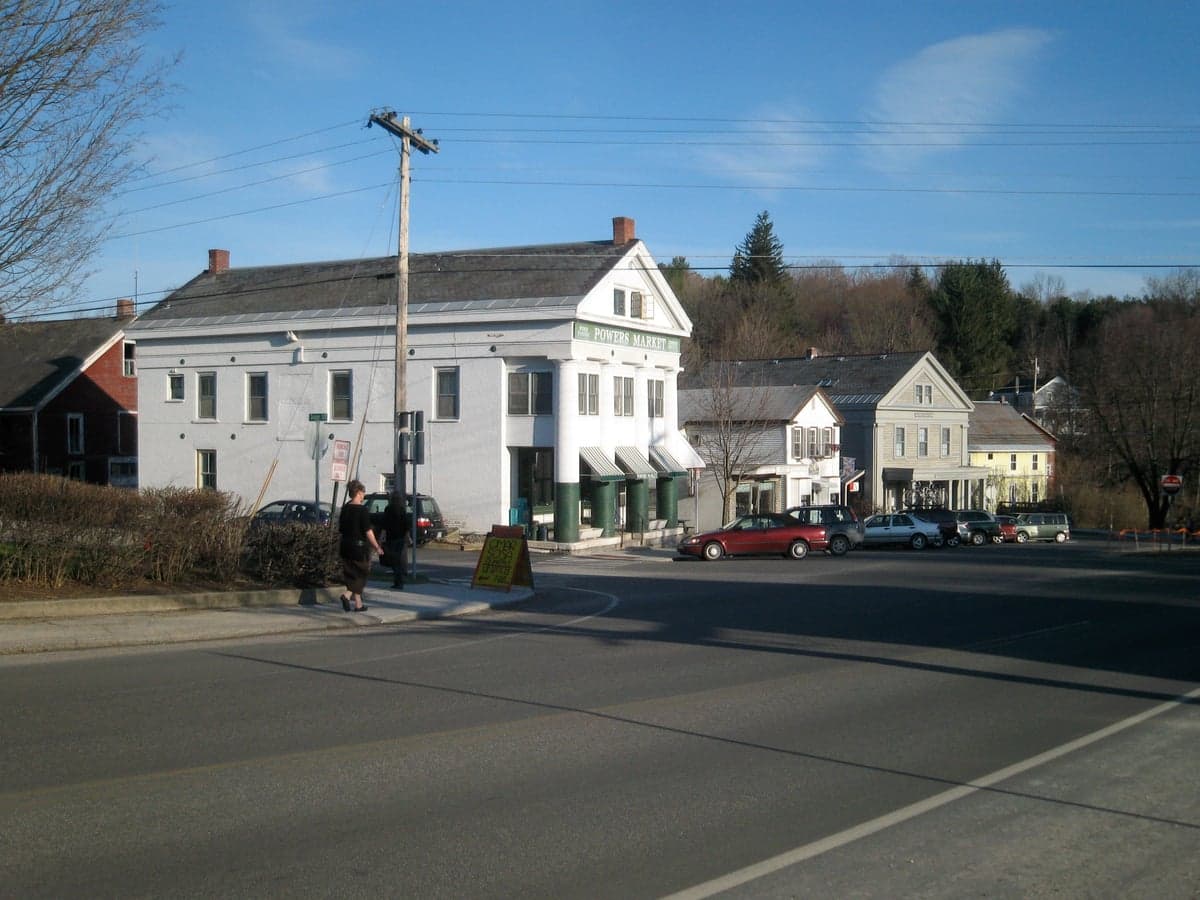
Photo: Wikipedia
Quality of Life in North Bennington, VT
A high quality of life with strong walkability, manageable living costs, healthy neighborhood signals, and solid amenity access.
What does Quality of Life tell us?
Quality of Life blends cost of living, nearby amenities, socioeconomic signals, and neighborhood character. City-level scores represent the whole municipality; individual neighborhoods can differ.
What does this tell us?
Quality of Life blends cost of living, nearby amenities, socioeconomic signals, and neighborhood character. City-level scores represent the whole municipality; individual neighborhoods can differ.
Cost of Living
16% above national average
The Real Cost of Living in North Bennington, VT for 2026
| Tier | Individual | Family (4) |
|---|---|---|
| Survival | $24k | $45k |
| Comfortable | $53k | $79k |
| Luxury | $114k+ | $177k+ |
| Elite (Top 5%) | $135k+ | $209k+ |
86%
The Area Signal
A metric tracking the socioeconomic signals of the area.
Hobbies
Explore the areaGroceries
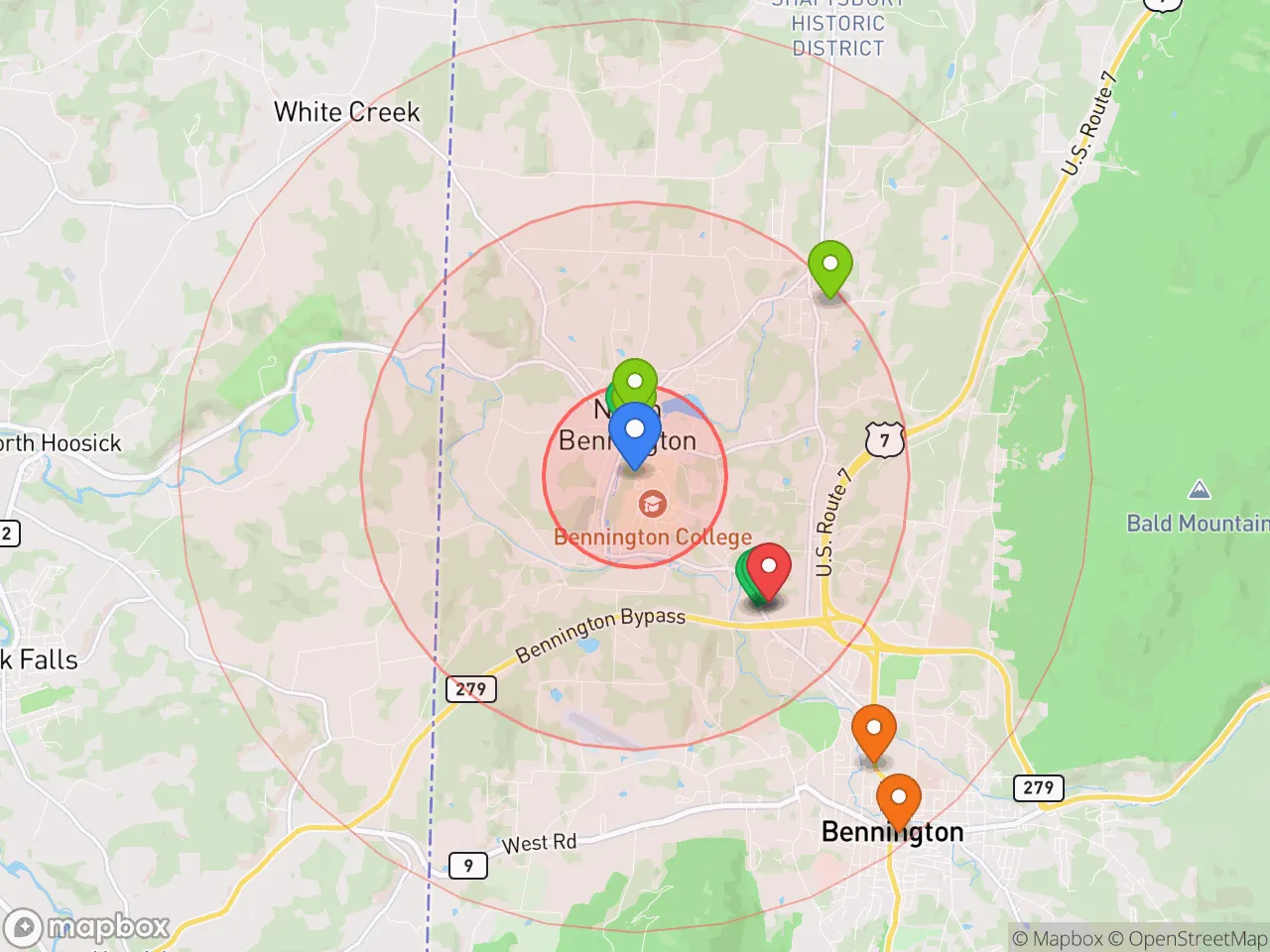
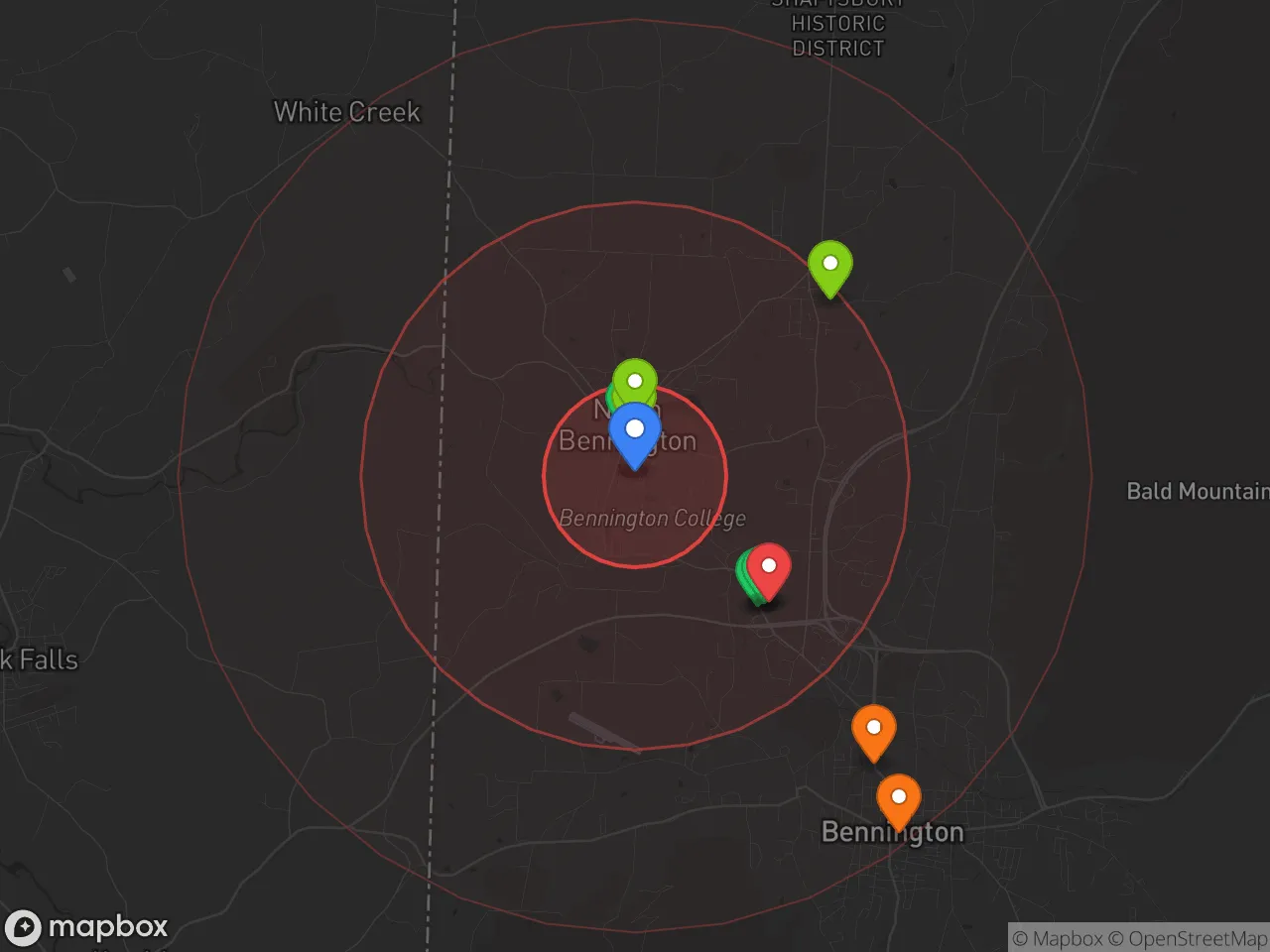
4 within 10 miles
Gas
14 within 10 miles
Hospital
2 within 20 miles
Airport
PDX — Portland International Jetport
Post Office
USPS — North Bennington, VT
Critical Amenities
Quality-of-Life Analysis
North Bennington, Vermont, presents a quality of life defined by quiet affluence and a strong sense of place, attracting a mix of academics, artists, and professionals who value small-town character over urban convenience. With a cost of living index of 116 (16% above the U.S. average), the area is more expensive than the national norm but remains notably more affordable than many other parts of southern Vermont and the Berkshires. The population skews educated and civically engaged, with a median household income that supports a stable, low-turnover community centered around Bennington College and local creative industries.
Cost of living, housing, and affordability compared to nearby towns
Housing in North Bennington is a relative bargain within the region. The median home value sits at $275,000, which is significantly lower than in nearby Manchester ($450,000+) or Williamstown, Massachusetts ($380,000+). This price point makes homeownership attainable for middle-income buyers, particularly those employed at Bennington College or commuting to Albany (about 50 minutes). Median rent is $1,500, comparable to Bennington village but below the $1,800+ averages in Arlington or Shaftsbury. The average commute of 23 minutes is short by Vermont standards, reflecting the area's self-contained employment base. However, property taxes in Bennington County are among the highest in the state (roughly 2.1% of assessed value), which offsets some of the housing savings. Groceries and utilities also run above the national average, so overall monthly expenses for a family of four typically land between $4,500 and $5,500.
Local amenities, schools, and what daily life feels like
Daily life in North Bennington revolves around a walkable village center anchored by the historic Park-McCullough House, a handful of locally owned shops, and the Blue Benn Diner—a landmark for regional comfort food. The area's primary cultural engine is Bennington College, which hosts public lectures, art exhibitions, and performances that draw residents from across the county. For K-12 education, families rely on the Bennington School District (Vermont's second-largest), which includes Mount Anthony Union High School and Molly Stark Elementary. Test scores are slightly above state averages in reading but below in math, and class sizes are small (15-20 students). Outdoor recreation is immediate: the 254-acre Paran Creek watershed offers hiking and fishing, while the nearby Green Mountain National Forest provides year-round trails. Healthcare access is a notable gap—the nearest hospital, Southwestern Vermont Medical Center, is 20 minutes away in Bennington, and specialized care often requires a 50-minute drive to Albany Medical Center. The village lacks a full-service grocery store, so most residents drive 10 minutes to the Bennington Price Chopper or Hannaford.
North Bennington is best suited for those who prioritize a tight-knit, walkable community with strong cultural ties over urban amenities or low taxes. It works well for college faculty, remote workers, and retirees who can absorb the higher cost of living and don't require frequent access to specialized healthcare or big-box retail. Families with young children may find the school options adequate but limited, and the lack of a local supermarket is a daily inconvenience. For singles or couples who value intellectual stimulation, historic architecture, and easy access to the outdoors, North Bennington offers a distinctive, unhurried quality of life that is increasingly rare in the Northeast.

Crime in North Bennington, VT
Generally safer than 71% of comparable U.S. locations.
Violent CrimeViolent Crime Analysis
Property CrimeProperty Crime Analysis
Crime Analysis
North Bennington, Vermont, presents a mixed safety profile that demands careful consideration from potential residents. With a violent crime rate of 213.8 per 100,000 residents and a property crime rate of 1,415.9 per 100,000, the village sits above many rural Vermont communities in both categories. These figures, while not extreme by national urban standards, are elevated for a small village of roughly 1,800 people and reflect broader challenges tied to the region's proximity to larger metro areas and the prevailing progressive judicial philosophy in Bennington County.
Crime in context
North Bennington's violent crime rate is roughly 40% higher than the Vermont state average of approximately 150 per 100,000, though it remains well below the national average of about 380 per 100,000. Property crime, however, is a more pressing concern: the village's rate of 1,415.9 per 100,000 is nearly double the Vermont average of roughly 750 per 100,000 and approaches the national average of 1,950 per 100,000. This elevated property crime rate is consistent with patterns seen across Bennington County, which has experienced a notable uptick in thefts, burglaries, and vehicle break-ins since 2020. The county's proximity to the Albany, New York metro area—a larger urban center with its own crime challenges—contributes to these numbers, as does the presence of a justice system that, critics argue, prioritizes diversion and rehabilitation over incarceration, potentially reducing deterrence for repeat property offenders.
What residents experience
For those living in North Bennington, the day-to-day reality is one of vigilance rather than fear. Violent crime is rare but not unheard of; incidents typically involve domestic disputes or alcohol-fueled altercations rather than random attacks. Property crime is the more tangible concern. Residents report frequent package thefts, unlocked car break-ins, and occasional shed or garage burglaries, particularly along the village's quieter side streets and near the Vermont Railway line. The village's small size means that many incidents are known locally, fostering a sense of community awareness but also frustration. Local law enforcement, primarily the Bennington Police Department and Vermont State Police, respond to calls but face resource constraints common to rural areas. The progressive approach of Bennington County's judiciary—which emphasizes restorative justice and low bail for nonviolent offenders—has been cited by some residents as a factor in repeat property crimes, as offenders often cycle through the system quickly without meaningful consequences.
Neighborhood-level variation
Crime is not evenly distributed across North Bennington. The area immediately surrounding the village center, including the historic district near the Bennington College campus, tends to see lower crime rates due to higher foot traffic and better lighting. In contrast, the more rural outskirts—particularly along Route 67A and the wooded areas near the New York border—experience higher rates of property crime, likely due to greater isolation and easier access for transient offenders. The presence of Bennington College, a progressive institution, brings a transient population of students and visitors that can sometimes correlate with petty theft and noise complaints, though violent crime on campus is extremely rare. Overall, residents in the denser core enjoy a safer environment, while those on the periphery should invest in security measures like motion-sensor lights and alarm systems.
* Values derived from national, state, county, city and local statistics and may differ in a specific area. Last updated: 2026-04-30T03:08:52.000Z
Narrative content on this page is AI-generated and may contain mistakes. Verify any details that matter before acting on them.
ReloMaps may earn a commission from affiliate links at no extra cost to you.

