 Popular
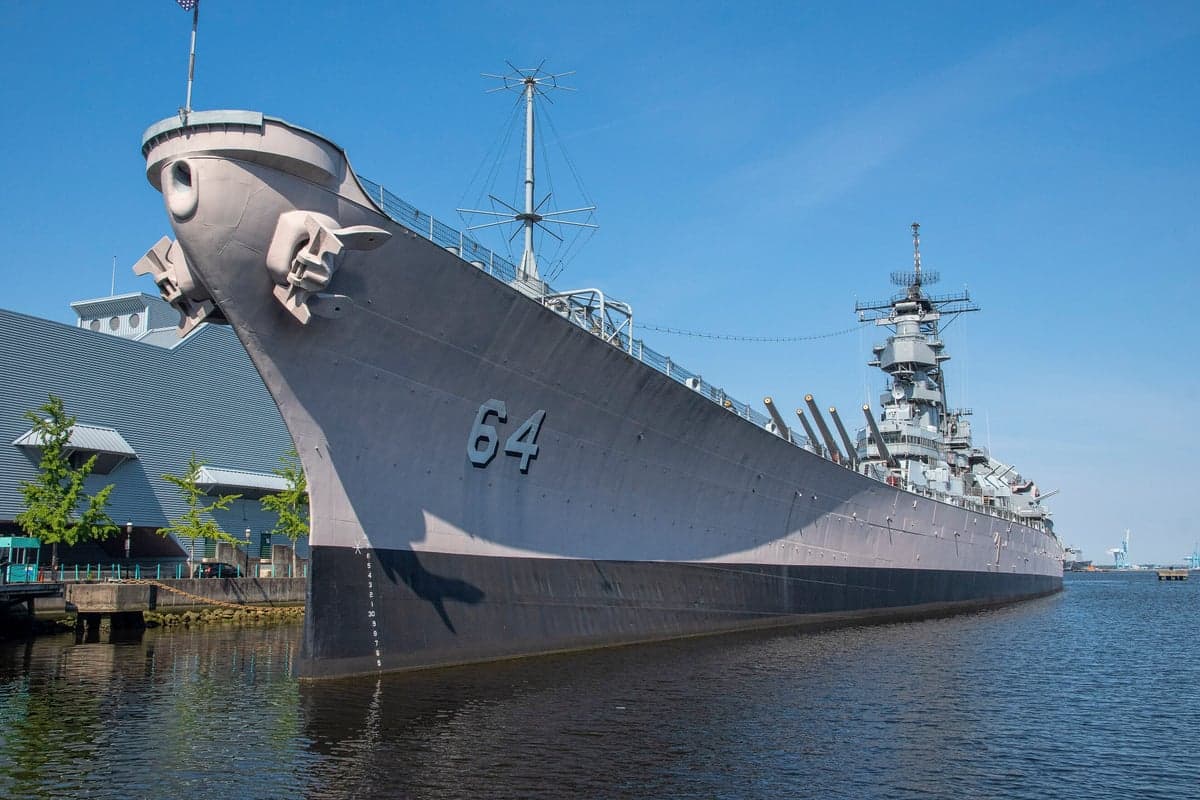
Photo: Wikipedia
Strategic Assessment of Norfolk, VA
Multiple tactical vulnerabilities. Population density, target proximity, or disaster risk are likely compounding. A retreat property and exit planning is required.
What does the Strategic Assessment tell us?
Our Strategic Assessment grades tactical survivability of an area. Major population centers, military targets, fallout zones, natural disasters, and border exposure all drive risk — lower exposure means a more defensible position in a crisis.
This is heavily inspired by Joel Skousen's Strategic Relocation book. Highly recommended you checkout the book ($)What does this tell us?
Our Strategic Assessment grades tactical survivability of an area. Major population centers, military targets, fallout zones, natural disasters, and border exposure all drive risk — lower exposure means a more defensible position in a crisis.
This is heavily inspired by Joel Skousen's Strategic Relocation book. Highly recommended you checkout the book ($)Strategic Pillars

Key Distances
Regional Safe Places
Below is our recommended "safe zones" in Virginia and the surrounding area based on our strategic heuristics. For most people, it's unrealistic to live in a “safe zone” full-time due to work, family or other personal reasons. They tend to be more rural. However, many of these areas are perfect for second homes and retreat properties that double as a vacation home or even a short-term rental.
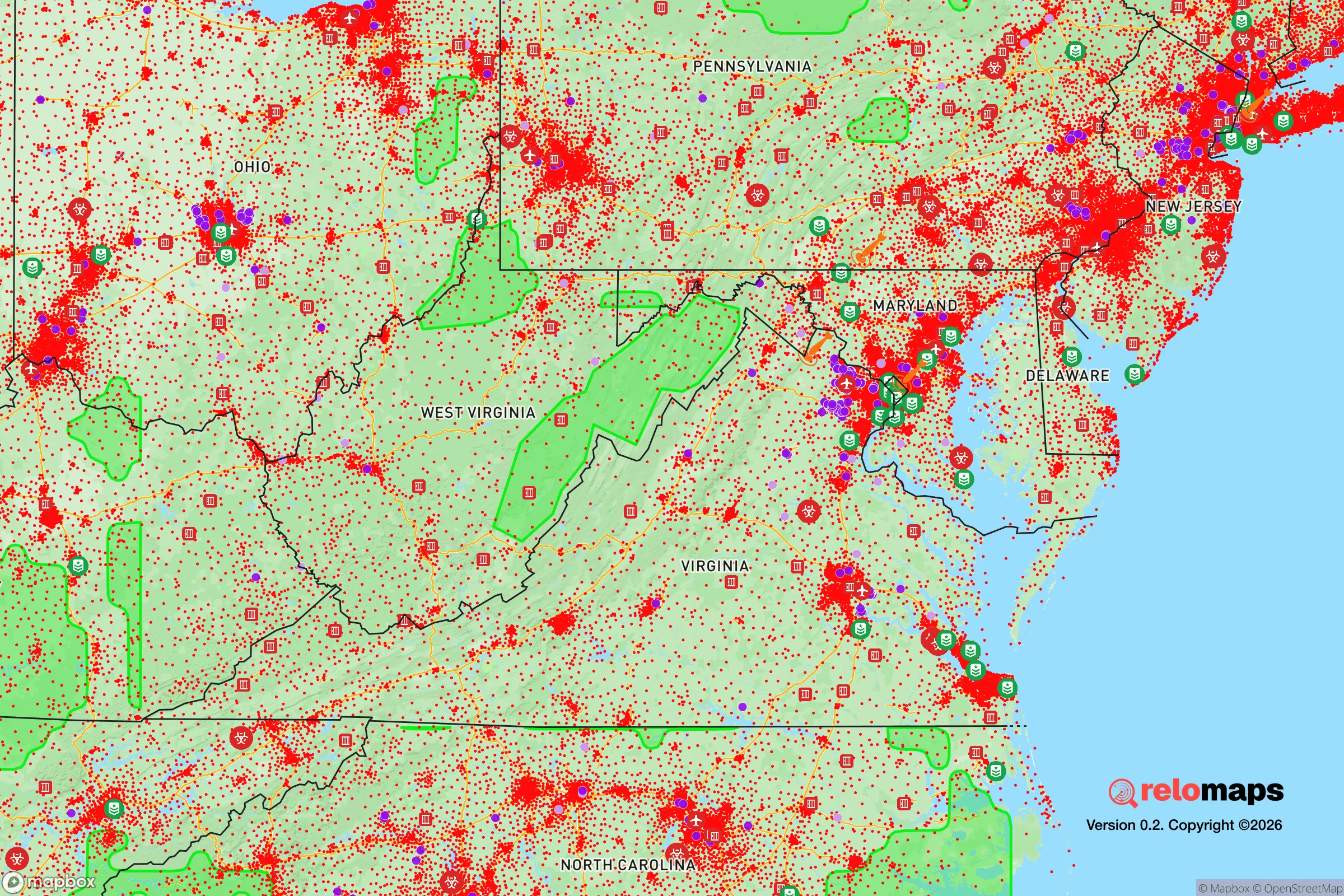
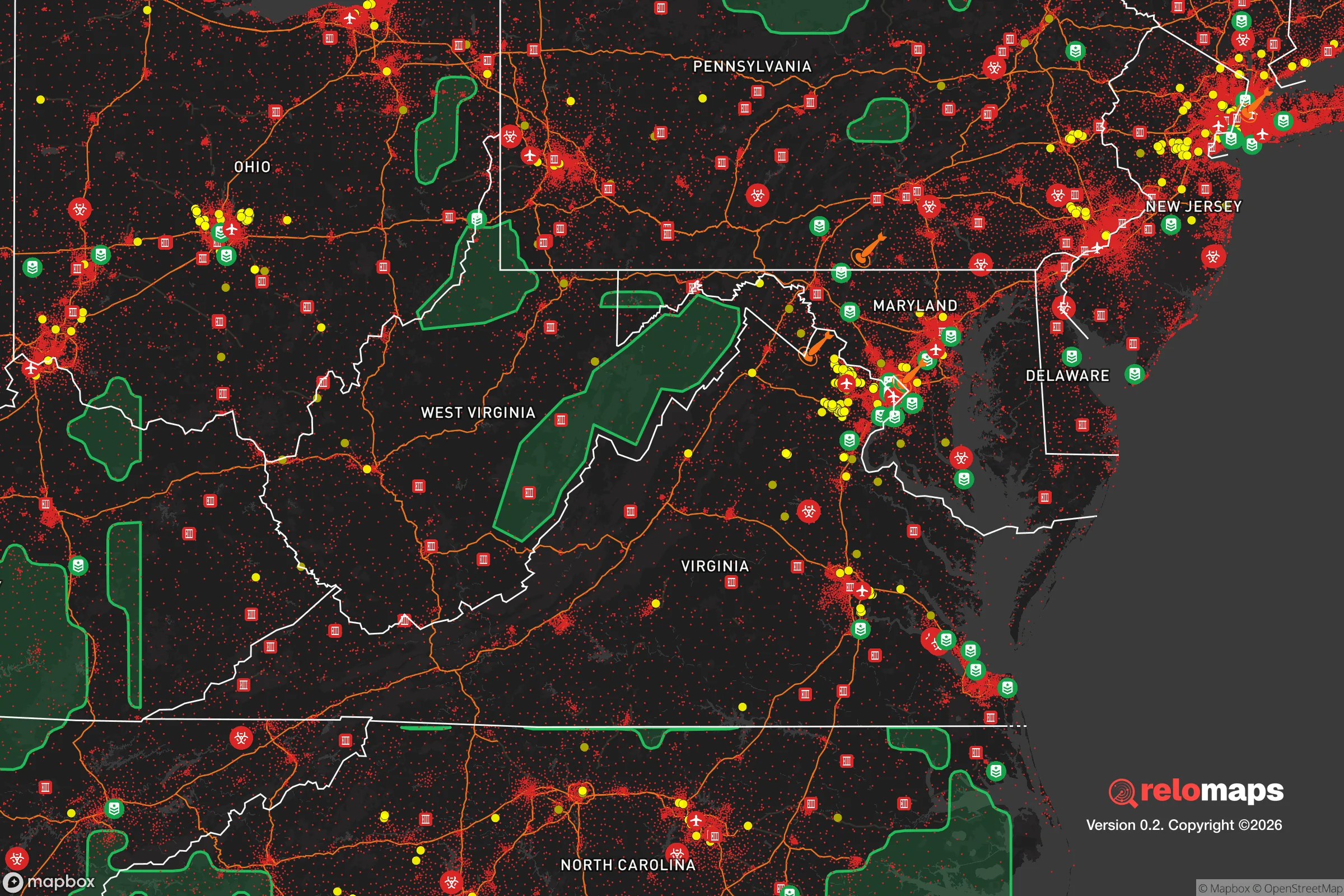


Important Note: For informational purposes only. This does not mean nothing bad ever happens in the green zones. Please use common sense. This is based on public data and modeled with AI. We tried to take a conservative approach but mistakes happen. We update this regularly as new information becomes available.
Solar Generator Recommendations
Backup power matters more here than in safer locations. We've picked three solar generators across budgets and capacity tiers — start with the budget unit if you only need a few essentials, or step up if you want to run a fridge and HVAC for days at a time.

Jackery Portable Power Station Explorer 300
Budget OptionPower on the Go: Weighing only 11 lbs, it's convenient to set up and store with book-sized foldable solar panels

BLUETTI Portable Power Station AC180
Designed for both indoor and outdoor scenarios, AC180 is highly capable as it has a robost capacity and continuous output power.

EF ECOFLOW DELTA Pro Ultra Power Station
Upgraded PickEcoFlow DELTA Pro Ultra is a whole-home energy system designed to grow with your family. Integrated with the Smart Home Panel 2, it scales to meet your evolving energy needs — keeping your home powered, intelligent, and secure through every stage of life.
We earn a commission, at no additional cost to you.
Strategic Assessment Analysis
Norfolk, Virginia, presents a complex strategic picture for the conservative prepper or survivalist. Its primary value lies in its deep-water port and massive military infrastructure, which provide a degree of institutional resilience and potential logistical access, but these same assets make it a high-priority target in any major conflict or period of sustained civil unrest. For a relocator prioritizing long-term security and self-sufficiency, Norfolk’s location is a double-edged sword: it offers proximity to critical supply chains and federal resources, but it also sits squarely in the crosshairs of any adversary seeking to cripple the United States. The city’s fate in a crisis is inextricably tied to the fate of Naval Station Norfolk, the largest naval base in the world, which is both its greatest strength and its most glaring vulnerability.
Geographic position and natural advantages for long-term survival
Norfolk’s location at the mouth of the Chesapeake Bay and the southern end of the Atlantic Seaboard gives it a unique set of natural advantages for a survival-minded relocator. The city is surrounded by a network of rivers, inlets, and the bay itself, which provide abundant water resources and potential for fishing, crabbing, and maritime foraging. The Tidewater region’s relatively mild climate means a longer growing season than most of the northern states, allowing for more reliable food production from backyard gardens or small-scale farming. The flat, coastal terrain makes travel by boat or bicycle feasible if fuel becomes scarce, and the numerous waterways create natural chokepoints that could be used for defense or evasion. However, this same geography makes the area vulnerable to storm surge and flooding from hurricanes, which are a recurring threat. The land is low-lying, and much of the city is built on drained marshland, meaning that a major weather event or a prolonged power outage could quickly turn the area into an impassable swamp. For a prepper, the natural advantages are real but require careful site selection—higher ground, away from flood zones, with access to a reliable well or surface water source.
Risks, exposures, and proximity to fallout-relevant landmarks
The most significant risk for a relocator in Norfolk is its status as a primary military target. Naval Station Norfolk is home to the bulk of the Atlantic Fleet, including aircraft carriers, submarines, and destroyers. In any major conflict—whether conventional war with a peer adversary or a large-scale terrorist attack—this base would be a first-strike target. The fallout from a nuclear or conventional strike on the base would render much of the city uninhabitable for years. Beyond the base itself, Norfolk is surrounded by other high-value targets: the Norfolk Naval Shipyard in Portsmouth, Joint Base Langley-Eustis (home to the Air Force’s 633rd Air Base Wing and Army training commands) about 30 miles north, and the Port of Virginia, one of the busiest container ports on the East Coast. The city also sits within 100 miles of the Pentagon and Washington, D.C., meaning that any major event in the capital would send cascading effects—refugees, supply disruptions, and potential secondary attacks—down the I-95 corridor straight into Hampton Roads. For a prepper, the proximity to these landmarks is a clear negative: the area is a high-probability zone for mass casualty events, civil unrest, and long-term infrastructure collapse. The dense population of over 1.8 million in the Hampton Roads metro area also means that any crisis would trigger a rapid, chaotic evacuation, with limited routes out (primarily I-64 and I-264) that quickly become parking lots.
Practical resilience for a relocator: food, water, energy, and defensibility
For a relocator focused on practical resilience, Norfolk presents a mixed picture. The city’s municipal water supply comes from the Lake Gaston pipeline and several reservoirs, but these systems are vulnerable to power loss, contamination, and sabotage. A well on private property is a must for any serious prepper in the area, but the shallow water table in the Tidewater region means wells are prone to saltwater intrusion and contamination from flooding. Food security is somewhat better: the surrounding rural areas of Virginia’s Eastern Shore and the Piedmont region offer farmland, but the immediate Norfolk area is heavily urbanized with limited agricultural land. Local farmers’ markets and community-supported agriculture (CSA) programs exist, but they would be overwhelmed in a crisis. Energy is a major concern—the grid is old, prone to outages from storms, and heavily dependent on natural gas and coal, which could be disrupted. Solar panels with battery storage are a viable option, but the region’s frequent cloud cover and hurricane risk reduce their reliability. Defensibility is the weakest point: Norfolk is a flat, densely populated city with few natural defensive positions. The waterways provide some chokepoints, but the city’s many bridges and tunnels (the Hampton Roads Bridge-Tunnel, the Monitor-Merrimac Memorial Bridge-Tunnel, and the Downtown Tunnel) are single points of failure that could be blocked or destroyed, trapping residents. A relocator would be better served by a rural property in the surrounding counties—Isle of Wight, Southampton, or even the Eastern Shore—where land is cheaper, water is more accessible, and the population density is lower. In a worst-case scenario, Norfolk is a place to pass through for supplies, not a place to dig in.
The overall strategic picture for Norfolk is one of high risk with limited reward for the survival-minded relocator. The city’s military and port infrastructure offer a veneer of institutional stability, but that same infrastructure makes it a prime target in any major conflict. The natural advantages of water access and mild climate are real, but they are outweighed by the vulnerabilities of low-lying geography, dense population, and proximity to high-value targets like the Pentagon and Washington, D.C. For a conservative prepper concerned with civic unrest, mass casualty events, and long-term societal collapse, Norfolk is best viewed as a resource node—a place to access supplies, medical care, or transportation in the short term, but not a location for a permanent retreat. The surrounding rural areas of southeastern Virginia and northeastern North Carolina offer far better defensibility, water security, and agricultural potential. If you are considering a move to the region, look at the counties west of the James River or north of the Great Dismal Swamp, where you can leverage the area’s natural advantages without sitting on a military target. Norfolk itself is a place to monitor, not to settle.

* Values derived from national, state, county, city and local statistics and may differ in a specific area. Last updated: 2026-05-01T18:44:04.000Z
Narrative content on this page is AI-generated and may contain mistakes. Verify any details that matter before acting on them.
ReloMaps may earn a commission from affiliate links at no extra cost to you.

