 Popular
Photo: Wikipedia
Demographics of Norfolk, VA
Affluence Level in Norfolk, VA
A middle-class area roughly in line with national averages across income, home values, education, and employment.
People of Norfolk, VA
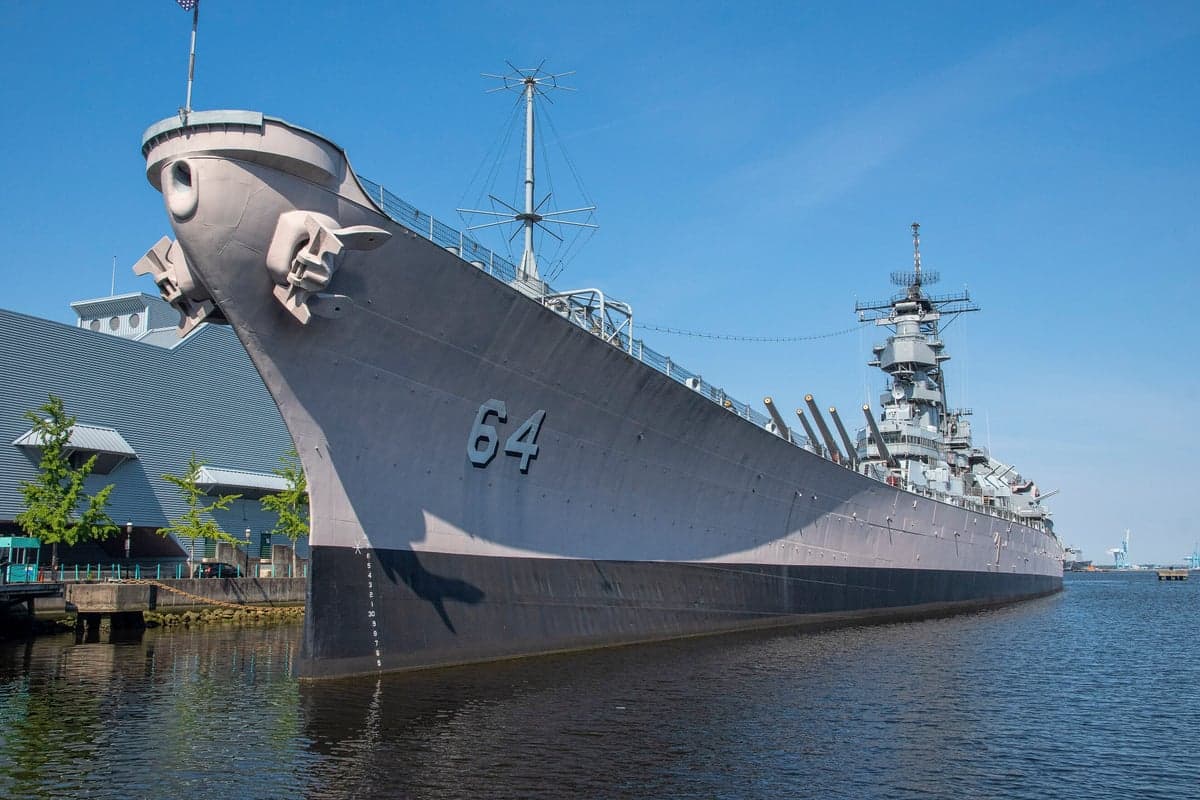
Norfolk, Virginia, is a dense, historically Black-majority city of 235,037 residents where a near-equal split between White (41.5%) and Black (39.0%) populations defines its character, alongside a growing Hispanic community (9.9%) and a small but established East/Southeast Asian presence (3.1%). The city’s identity is shaped by its role as a major military and port hub, giving it a transient, patriotic, and working-class feel distinct from the more suburban Hampton Roads suburbs. With only 3.5% foreign-born and 32.7% college-educated, Norfolk remains a predominantly native-born, middle-income city where military service and shipyard employment anchor the local culture. This is a place where deep-rooted African American heritage and Navy families coexist, creating a community that values stability, service, and tradition.
How the city was settled and grew
Norfolk was founded in 1682 as a port town on the Elizabeth River, drawing English merchants and planters who built the city around tobacco and maritime trade. The original population clustered in what is now Freemason and Ghent, neighborhoods that still contain colonial-era homes and 19th-century rowhouses built by the merchant class. The city’s growth exploded in the early 20th century with the establishment of the Norfolk Naval Base (1917) and the expansion of the Newport News Shipbuilding yards, pulling in waves of White workers from rural Virginia and North Carolina, as well as Black laborers from the Deep South during the Great Migration. By 1940, Norfolk’s Black population had concentrated in Brambleton and Huntersville, neighborhoods that became the heart of the city’s African American community, with churches, businesses, and civic organizations that still anchor those areas today. The post-World War II boom brought more military families and defense contractors, cementing Norfolk’s identity as a Navy town where population turnover was constant.
Modern era (post-1965)
The 1965 Hart-Cellar Act had a muted effect on Norfolk compared to larger cities, as the foreign-born share remains low at 3.5%. Instead, the major demographic shift after 1965 was domestic: White flight to suburban Virginia Beach and Chesapeake accelerated in the 1970s and 1980s, leaving Norfolk with a Black majority that peaked around 45% in the 1990s. The Hispanic population began growing in the 1990s and 2000s, settling primarily in Park Place and Fairmount Park, where Mexican and Central American families opened small businesses and filled service-sector jobs tied to the port and tourism. The East/Southeast Asian community, mostly Vietnamese and Filipino, grew modestly through military ties and refugee resettlement, with a visible cluster in the Wards Corner area near the naval base. The Indian-subcontinent population remains tiny at 0.6%, concentrated among professionals in healthcare and engineering at Sentara Norfolk General Hospital and Old Dominion University. Since 2010, the White population has stabilized and even slightly increased as young professionals and empty-nesters have moved into renovated historic districts like Ghent and Neon District, reversing some of the suburbanization trend.
The future
Norfolk’s population is slowly diversifying but remains bifurcated by race and class. The Black population is plateauing near 39%, while the Hispanic share is projected to grow to 12-14% by 2035, driven by natural increase and continued migration from Central America. The East/Southeast Asian share is likely to hold steady at 3-4%, sustained by military families and a small but stable Vietnamese community. The White population is aging in place in Ghent and Freemason, but younger White families are still choosing Virginia Beach or Chesapeake for schools, limiting White growth. The city is not homogenizing; instead, it is tribalizing into distinct enclaves: Brambleton and Huntersville remain heavily Black and working-class, Park Place is becoming a Hispanic corridor, and Ghent is increasingly White and college-educated. The foreign-born share will likely rise only to 5-6% by 2035, as Norfolk lacks the immigrant-heavy industries or refugee resettlement programs of larger cities. The biggest wildcard is the military: any base realignment or reduction in Navy presence could shrink the population and accelerate the trend toward a more permanent, less transient resident base.
For someone moving to Norfolk now, the city offers a stable, service-oriented community with deep historical roots and clear neighborhood identities. The population is not rapidly changing in ethnic composition, but it is slowly becoming more Hispanic and more college-educated in certain pockets. The key takeaway is that Norfolk remains a predominantly native-born, Black-White city with a strong military influence, where newcomers will find distinct neighborhoods shaped by decades of migration and settlement patterns.

* Values derived from national, state, county, city and local statistics and may differ in a specific area. Last updated: 2026-05-01T18:44:04.000Z
Narrative content on this page is AI-generated and may contain mistakes. Verify any details that matter before acting on them.
ReloMaps may earn a commission from affiliate links at no extra cost to you.

