
Photo by Nikunj Singh on Unsplash
Demographics of Newport, VT
Affluence Level in Newport, VT
A low-income area with significant economic hardship. Household wealth and educational attainment are well below national averages.
People of Newport, VT
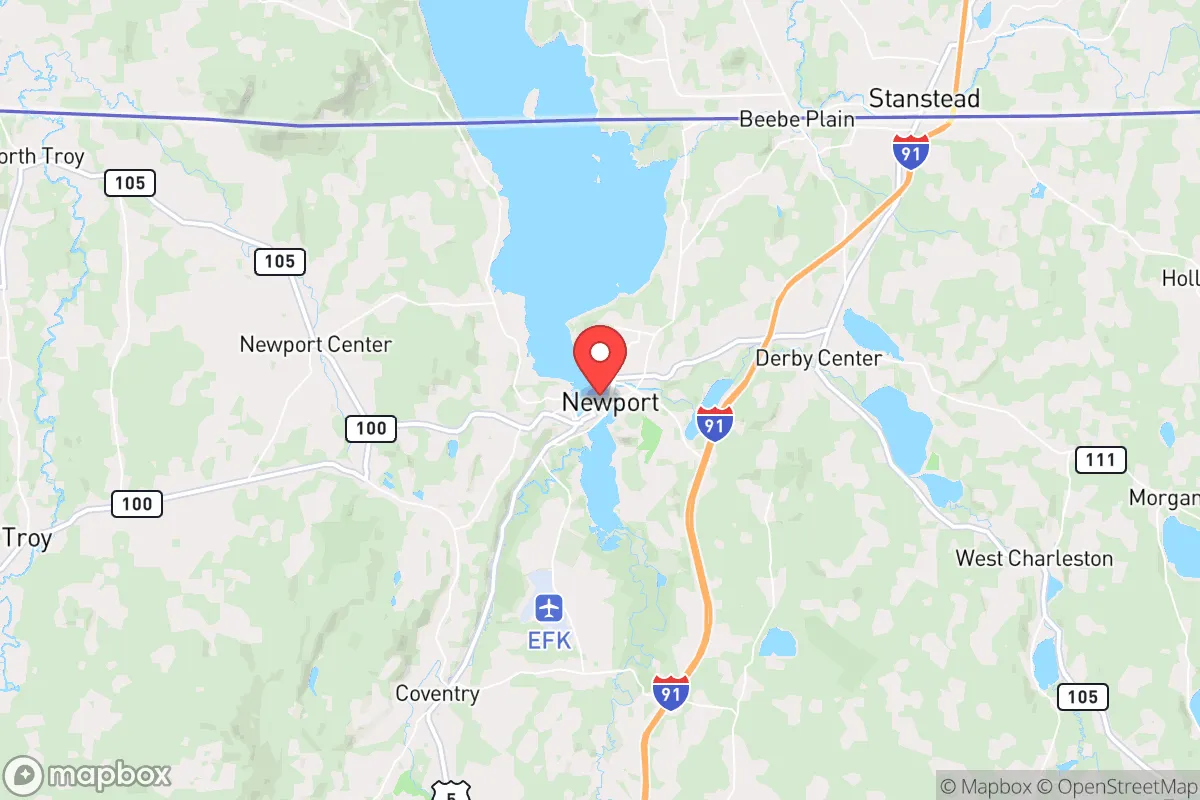
The people of Newport, Vermont, today form a tight-knit, predominantly white community of 4,413 residents, characterized by a strong sense of local identity rooted in the city’s industrial and border-town heritage. With a population that is 91.2% white and a foreign-born share of just 1.2%, Newport is one of the least ethnically diverse cities in the state, reflecting its history as a destination for French-Canadian and European migrants rather than more recent global immigration. The city’s distinctive identity is shaped by its location on Lake Memphremagog, a history of rail and manufacturing, and a population that is notably less college-educated (21.2%) than the Vermont average, giving it a working-class, self-reliant character. For those considering a move, Newport offers a community where longstanding family ties and local institutions still anchor daily life.
How the city was settled and grew
Newport’s population history begins with its 1793 charter as a land grant town, but significant settlement did not accelerate until the mid-19th century, when the arrival of the railroad in 1863 transformed it into a regional transportation and manufacturing hub. The original Yankee settlers from southern New England were soon joined by a major wave of French-Canadian immigrants from Quebec, who crossed the nearby border to work in the city’s burgeoning lumber mills, textile factories, and rail yards. These French-Canadian families concentrated in the South End and along the Lake Shore neighborhoods, where they built St. Mary’s Catholic Church and established a distinct cultural identity that remains strong today. A smaller wave of Irish and Scottish immigrants arrived during the same period, settling near the rail yards in the West Side district, while the city’s Yankee elite built homes on Prospect Street and the hill overlooking the lake. By 1900, Newport’s population had grown to over 3,000, with French-Canadians forming the largest ethnic bloc—a demographic pattern that persisted through the mid-20th century as the city’s manufacturing base held steady.
Modern era (post-1965)
After the 1965 Hart-Cellar Act, Newport saw virtually no new immigration, unlike larger U.S. cities. The foreign-born population today sits at just 1.2%, and the city’s racial composition—91.2% white, 1.6% Black, 1.2% Hispanic, and 0.0% Asian or Indian—has changed little since the 1970s. The major demographic shift of the modern era has been domestic out-migration: as the region’s manufacturing jobs declined in the 1980s and 1990s, younger residents left for Burlington or out of state, leaving an aging population. The South End and West Side neighborhoods, once dense with mill-worker families, have seen population thinning and a rise in vacant properties. A modest counter-trend began in the 2010s, with some out-of-state retirees and remote workers drawn by low housing costs and lake access, settling in the East Side and Lake Shore areas. However, these newcomers remain overwhelmingly white and native-born, reinforcing the city’s demographic homogeneity. The small Black and Hispanic populations are dispersed across the city, with no distinct ethnic enclave forming, and the 0.0% Asian and Indian shares underscore the absence of the immigrant-driven diversity seen in other parts of Vermont.
The future
Newport’s population is likely to continue its slow decline or stagnation, with the current 4,413 residents representing a drop from over 5,000 in the 1960s. The city is not tribalizing into distinct ethnic enclaves—it is too small and too homogeneous for that—but it is experiencing a subtle cultural divide between long-established French-Canadian families and newer arrivals from out of state. The immigrant communities that could drive growth are absent, and the 1.2% foreign-born share is unlikely to rise significantly given the lack of local employment opportunities and the city’s remote location. The next 10-20 years will likely see further aging of the population, with the college-educated share (21.2%) remaining below state averages, as younger adults continue to leave for education and jobs elsewhere. Newport is becoming a quieter, older community, where the descendants of French-Canadian and Yankee settlers still form the core, and where new residents are mostly domestic migrants seeking affordability rather than diversity.
For someone moving in now, Newport is a place where the past still shapes the present—a predominantly white, working-class city with deep French-Canadian roots, little ethnic change, and a population that is slowly shrinking. The city offers a stable, low-cost environment for those who value tradition and small-town life, but it is not a destination for those seeking demographic diversity or rapid growth.

* Values derived from national, state, county, city and local statistics and may differ in a specific area. Last updated: 2026-04-24T06:57:20.000Z
Narrative content on this page is AI-generated and may contain mistakes. Verify any details that matter before acting on them.
ReloMaps may earn a commission from affiliate links at no extra cost to you.

