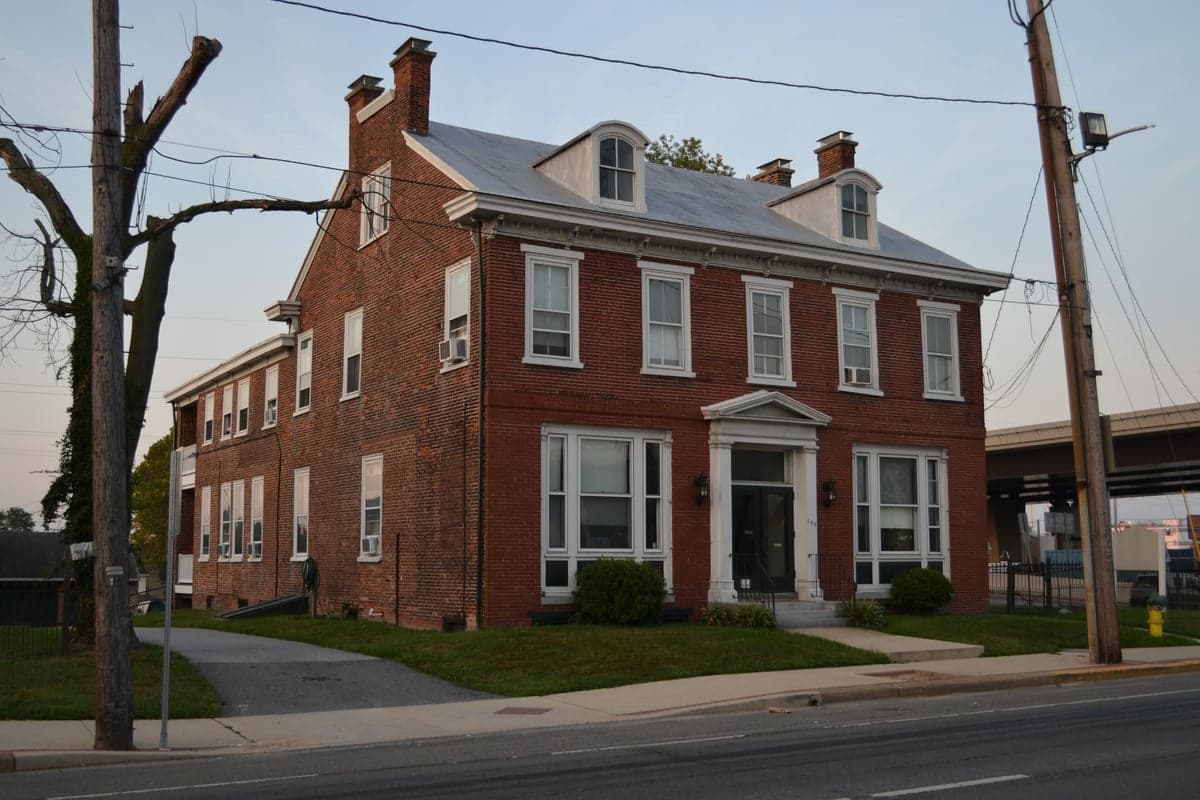
Photo: Wikipedia
Political ClimatePolitical Climate in Newport, DE
District shown is the primary district for this city’s centroid. Cities may span multiple districts.
Inherited from parent state — no local data available.
Local Political AnalysisPolitical Analysis of Newport, DE
Newport, Delaware, leans heavily Democratic with a Cook PVI of D+8, and that number doesn't fully capture how fast the political ground has shifted under our feet. I've lived here long enough to remember when this was a quiet, middle-of-the-road town where folks voted for the person, not the party, and local government mostly stayed out of your business. Now, it's a solidly blue enclave, driven by an influx of commuters from Wilmington and Philadelphia who bring a much more progressive, government-first mindset with them. The trajectory is clear: Newport is getting bluer and more interventionist every cycle, and that's a real concern for anyone who values personal freedom and local control.
How it compares
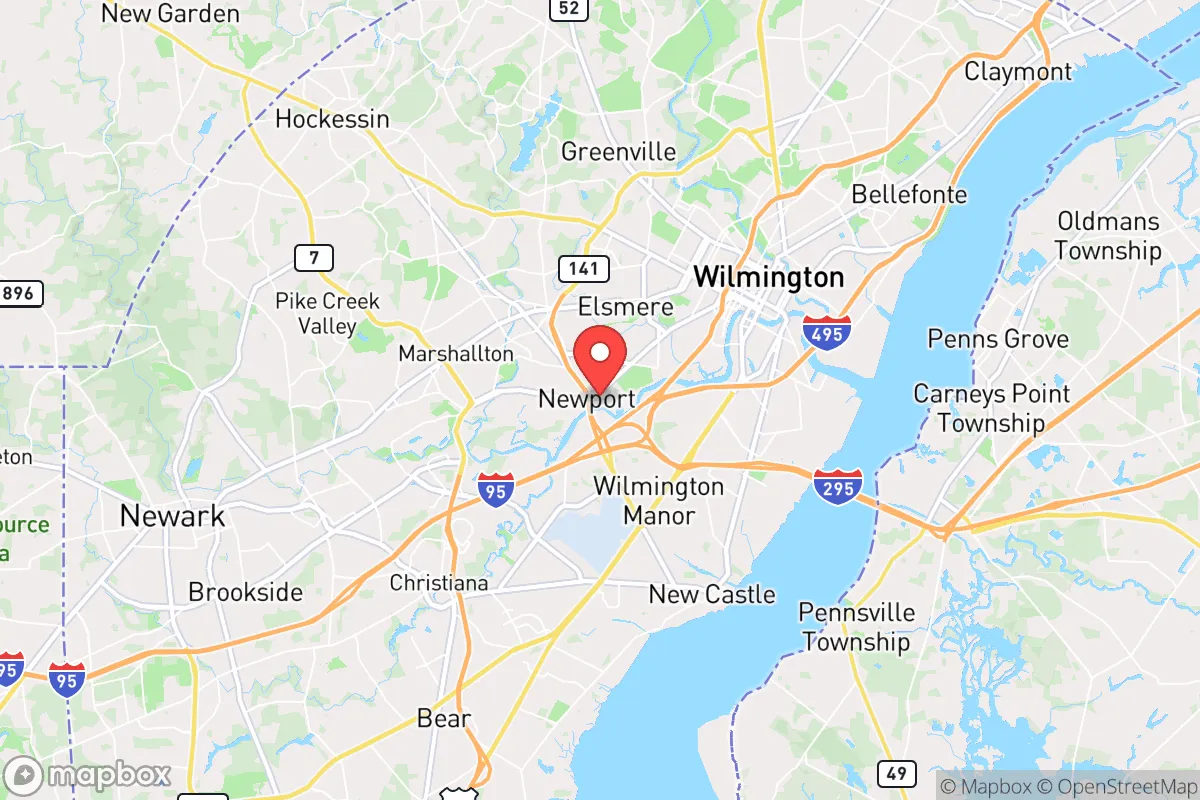
To really understand Newport's politics, you have to look at the towns around it. Drive ten minutes south to Middletown, and you'll find a much more balanced, common-sense electorate where fiscal responsibility and individual rights still get a fair hearing. Head west into rural Glasgow or Bear, and you'll see a similar pattern—more families, more veterans, more people who just want to be left alone. Newport, by contrast, is increasingly becoming an outlier, aligning more with the policies of Wilmington to the north, where taxes are higher, regulations are tighter, and the government feels more comfortable telling you how to live. That D+8 rating isn't just a number; it's a warning that Newport is drifting away from the values that made Delaware a place people actually wanted to settle down in.
What this means for residents
For the average person living here, this political tilt has real, daily consequences. You're seeing more local ordinances that nibble away at property rights—things like stricter rental codes, noise complaints weaponized against neighbors, and zoning changes that make it harder to run a small business out of your home. The school board has become a battleground, with progressive activists pushing curriculum changes that many parents feel bypass their authority. Property taxes are creeping up to fund new social programs, and there's a growing sense that the town council is more interested in signaling virtue than in protecting the freedoms of the people who actually pay the bills. If you value being able to make your own choices without a bureaucrat's permission, you're going to find that harder to do here than it was a decade ago.
The cultural and policy distinctions in Newport are becoming harder to ignore. We used to have a real "live and let live" vibe, but now there's a push for uniformity—mask mandates that lingered longer than necessary, vaccine passport discussions that thankfully fizzled, and a general attitude from local leaders that they know what's best for you. The annual town events feel more like political rallies than community gatherings. For the long haul, I see Newport continuing down this path unless enough folks wake up and start voting for restraint and personal liberty again. If that doesn't happen, the next few years are going to feel a lot more like living in a small city with big-government problems than the quiet, free town it used to be.

State Political ClimatePolitical Climate in Delaware
State Political AnalysisPolitical Environment in the State
Delaware has long been a bit of a political oddball — a small state with a big blue tilt, but one that’s been shifting in ways that matter for anyone considering a move here. The state leans reliably Democratic at the presidential level, with Joe Biden’s home turf voting +19 for him in 2020, but the real story is the widening urban-rural split and a creeping progressive policy agenda that’s making life less free for conservatives. Over the past 20 years, the northern suburbs of Wilmington have pulled the state left, while the southern counties — Kent and Sussex — have stayed red but are losing ground as newcomers from the Northeast flood in.
Urban vs. rural divide
The political map of Delaware is essentially a tale of three counties. New Castle County, anchored by Wilmington and its suburbs like Newark and Bear, is the Democratic stronghold — think 60-65% blue in most elections. This is where the state’s population and economic power are concentrated, and it’s where you’ll find the progressive base: union households, university faculty at the University of Delaware, and a growing number of transplants from Philadelphia and New York. Kent County, home to Dover and the state capital, is a purple battleground that’s been trending left as government workers and military families from Dover Air Force Base mix with rural conservatives. Sussex County, the beach and farming region with towns like Lewes, Rehoboth Beach, and Seaford, is the reddest part of the state — but even there, the influx of retirees and second-home owners from the Mid-Atlantic is slowly diluting the conservative vote. In 2024, Sussex still went +12 for Trump, down from +18 in 2016, a clear sign of demographic creep.
Policy environment
Delaware’s policy environment is a mixed bag that tilts increasingly toward government control. The state has no sales tax, which sounds great, but it makes up for it with high property taxes in New Castle County and a progressive income tax that tops out at 6.6% — not terrible, but paired with a business-friendly corporate code that’s a double-edged sword for residents. The regulatory posture is heavy: Delaware has strict environmental rules, a minimum wage that’s climbing to $15 an hour by 2025, and a housing code that gives local governments broad power over land use. Education policy is a flashpoint — the state’s school funding system is heavily centralized, with little room for charter schools or parental choice, and the teachers’ union is a political powerhouse. Healthcare is dominated by a few large systems, and the state expanded Medicaid under Obamacare, which has driven up costs. Election laws are a concern for conservatives: Delaware has no voter ID requirement, same-day registration, and mail-in voting without an excuse, which critics say opens the door to fraud. The state also has a “blue slip” rule that lets senators block judicial nominees, a relic of old-school patronage that still shapes the legal landscape.
Trajectory & freedom
Delaware is becoming less free, and the trend is accelerating. On gun rights, the state passed a “permit to purchase” law in 2022 that requires a background check and training for handgun buyers, plus a ban on “assault weapons” and high-capacity magazines — a direct hit on Second Amendment freedoms. Parental rights took a blow with the 2023 “Healthy Youth Act,” which mandates comprehensive sex education in public schools, including LGBTQ+ content, without an opt-out for parents. Medical autonomy is under pressure: the state legalized recreational marijuana in 2023, but the regulatory framework is so tight that few dispensaries have opened, and the black market thrives. Property rights are being eroded by a wave of “rent control” proposals in New Castle County, and the state’s estate tax — one of the few left in the country — hits families trying to pass down farms or small businesses. On the plus side, Delaware has no inheritance tax for direct heirs, and the corporate tax structure remains friendly to businesses, but for individuals, the trend is toward more government control over daily life.
Civil unrest & political movements
Delaware isn’t a hotbed of civil unrest, but there are visible flashpoints. The Black Lives Matter protests in Wilmington in 2020 were large and occasionally violent, leading to curfews and a lingering distrust between police and activists. The state’s sanctuary policies are a quiet issue: Delaware doesn’t have a formal sanctuary law, but Wilmington and New Castle County have “trust” policies that limit cooperation with ICE, which has drawn criticism from conservatives who see it as a magnet for illegal immigration. Election integrity remains a sore spot — the 2020 election saw widespread use of mail-in ballots, and a 2024 audit found thousands of duplicate registrations, though officials dismissed concerns. On the right, the “Delaware Patriots” and local Republican clubs are active but struggling to gain traction in a state where the GOP is fractured between moderates and Trump loyalists. The biggest political movement is the slow but steady exodus of conservatives from New Castle County to Sussex County, where they hope to preserve a more traditional way of life.
Projection
Over the next 5-10 years, Delaware will likely continue its leftward drift, driven by in-migration from blue states and the growing influence of the Wilmington metro area. The state’s population is projected to grow by about 5% by 2030, with most of that growth in New Castle and Sussex counties — the former adding more Democrats, the latter seeing a slow but steady shift as retirees from New York and New Jersey bring their politics with them. The state legislature is firmly in Democratic hands, and with no term limits, the same faces keep passing the same bills. Expect more gun control, more mandates on schools, and higher taxes to fund expanding government programs. The one wild card is the corporate tax base: if Delaware’s business-friendly reputation starts to fade — say, if the federal government cracks down on corporate registration — the state could face a fiscal crisis that might force some moderation. But for now, the trajectory is clear: Delaware is becoming a smaller, more expensive, and less free version of its northern neighbors.
For a conservative moving to Delaware, the bottom line is this: you can find your people in Sussex County or the rural parts of Kent, but you’ll be fighting a rear-guard action against a state government that’s increasingly hostile to your values. The schools are a particular concern — if you have kids, expect to either pay for private education or fight for school choice in a system that’s rigged against it. The tax burden is manageable if you live south of the canal, but property taxes are creeping up everywhere. If you value personal freedom, low regulation, and a community that shares your principles, Delaware is a state you’ll need to approach with eyes wide open — and maybe a plan to get involved in local politics before it’s too late.
* Values derived from national, state, county, city and local statistics and may differ in a specific area. Last updated: 2026-04-22T10:36:30.000Z
Narrative content on this page is AI-generated and may contain mistakes. Verify any details that matter before acting on them.
ReloMaps may earn a commission from affiliate links at no extra cost to you.

