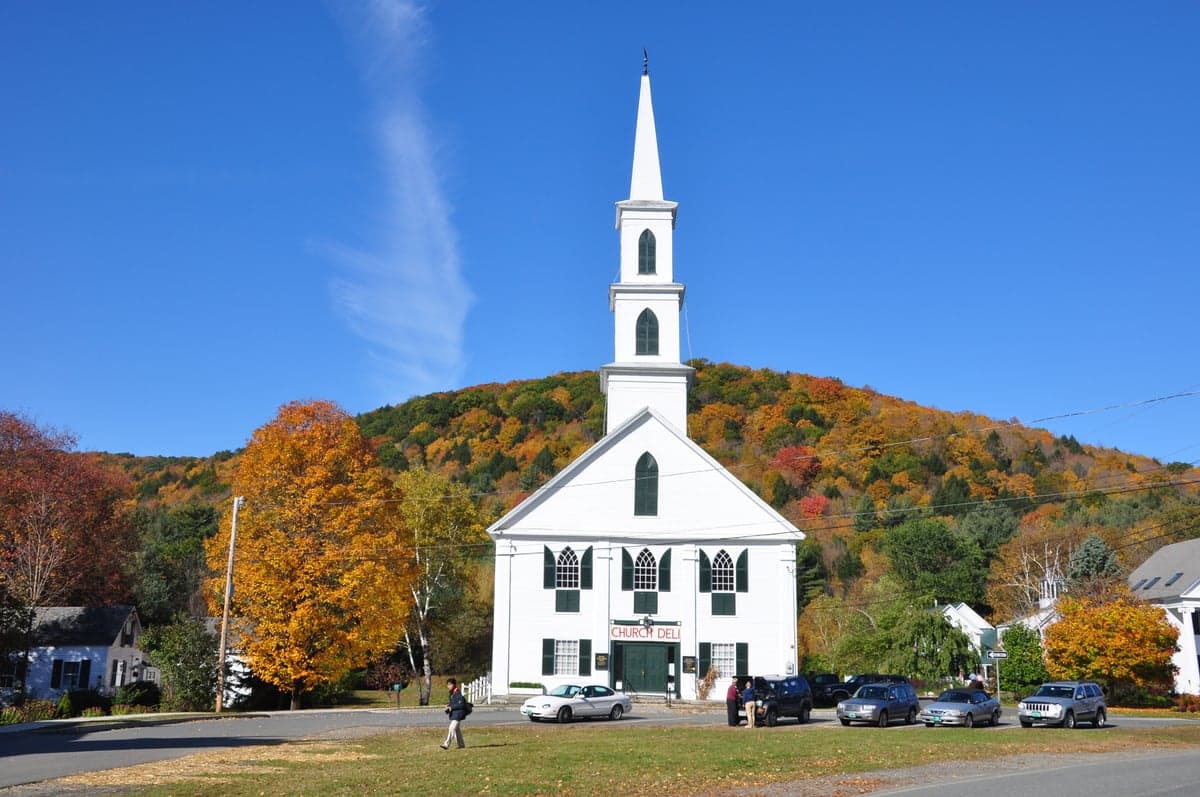
Photo: Wikipedia
Personal Sovereignty in Newfane, VT
Moderate friction. Expect trade-offs in some aspect of personal liberty and independence.
What does Personal Sovereignty tell us?
Personal Sovereignty measures your capacity for self-reliance and independence with minimal government friction. Higher scores mean fewer barriers between you and the way you want to live... but it assumes you have the space you need and good neighbors.
What does this tell us?
Personal Sovereignty measures your capacity for self-reliance and independence with minimal government friction. Higher scores mean fewer barriers between you and the way you want to live... but it assumes you have the space you need and good neighbors.
State Policy
Energy independence: Importer (15% of energy produced in-state)
Personal Liberty
Homesteading

Personal Liberty Analysis
Newfane, Vermont, offers a unique blend of personal sovereignty that appeals to those seeking a deliberate retreat from federal overreach and the chaos of urban centers, but it comes with significant trade-offs that a survivalist or prepper must weigh carefully. Nestled in Windham County, this small town of roughly 1,700 residents sits in a state known for its fierce independence and progressive governance, creating a complex environment for autonomy. The key tension here is between Vermont’s strong localist traditions—where town meetings and neighborly self-reliance still hold sway—and a state-level apparatus that increasingly encroaches on gun rights, medical choice, and economic freedom. For a conservative-leaning individual or family prioritizing self-defense, minimal taxation, and off-grid living, Newfane presents a mixed bag: the land and community ethos support self-reliance, but the legal and fiscal climate demands constant vigilance.
Tax burden and regulatory posture in Windham County
Vermont’s tax burden is among the highest in the nation, and Newfane is no exception. Property taxes in Windham County average around 1.8% of assessed value, which on a median home value of roughly $250,000 means annual payments near $4,500—a heavy hit for those trying to minimize government dependency. The state’s income tax is progressive, topping out at 8.75% for high earners, and sales tax is 6%, though groceries and prescription drugs are exempt. Regulatory posture is equally challenging: Vermont has some of the strictest land-use laws in New England, with Act 250 imposing state-level review on any development that could affect “natural resources” like water, wildlife, or scenic views. For a prepper looking to build a bunker, expand a homestead, or clear land for food production, this means navigating a bureaucratic maze that can delay projects for months. However, Newfane’s town government is relatively hands-off compared to larger municipalities, and local zoning is minimal—most parcels are zoned for rural residential use, allowing for small-scale agriculture, workshops, and even limited commercial activity without heavy permitting, provided you stay under Act 250’s thresholds (typically 10+ acres of development). The bottom line: you’ll pay dearly in taxes, but the regulatory drag is mostly at the state level, not the town level, giving you some breathing room if you keep your footprint modest.
Self-defense and gun law specifics in Vermont
Vermont has a storied history as a gun-friendly state, but recent legislative shifts have eroded that legacy. The state still allows constitutional carry—no permit needed to carry a concealed firearm—and there is no state-level registration or waiting period for long guns. However, in 2023, Vermont passed a ban on “assault weapons” and high-capacity magazines (over 10 rounds for rifles, 15 for handguns), along with a mandatory 72-hour waiting period for handgun purchases. Magazine possession is grandfathered if owned before the ban, but buying or selling them is now illegal. This directly impacts a prepper’s ability to stockpile standard-capacity magazines for defensive rifles like AR-15s. Additionally, Vermont has a “red flag” law (Extreme Risk Protection Order) that allows courts to temporarily seize firearms from individuals deemed a risk, based on a petition from law enforcement or family members—a tool that can be abused by anti-gun activists. On the positive side, Newfane is in a rural county with a strong hunting culture, and local law enforcement is generally supportive of gun rights. The Windham County Sheriff’s Office does not actively enforce magazine bans in a heavy-handed manner, but state police can and do. For self-defense, you can still own handguns, shotguns, and bolt-action rifles freely, but the ban on modern sporting rifles is a real limitation for those who view them as essential for home defense or SHTF scenarios. If you’re moving here, bring your grandfathered magazines and plan to rely on traditional firearms for protection.
Self-reliance and homesteading viability in Newfane
Newfane is a strong candidate for homesteading and off-grid living, thanks to its rural character and permissive local zoning. Minimum lot sizes in the town’s rural districts are typically 2 to 5 acres, but many parcels are 10+ acres, giving you room for gardens, livestock, and timber management. The town allows accessory dwelling units (ADUs) and farm stands without special permits, and there are no bans on rainwater collection or composting toilets—key for off-grid water and waste systems. Solar panels are common, and net metering is available through Green Mountain Power, though the utility’s rates are high (around 18 cents/kWh). For a prepper, the biggest advantage is the lack of restrictive homeowners’ associations (HOAs) in the area—you can build a root cellar, install a wood stove, or keep chickens without neighbor complaints. However, Vermont’s building codes require septic systems to meet state standards (typically a $10,000–$20,000 investment), and any new dwelling must comply with the state’s energy code, which can add costs for insulation and windows. The growing season is short (about 120 days), so you’ll need a greenhouse or cold frames for year-round food production. Water is generally plentiful from wells (average depth 200–400 feet), but drought risk is low. The biggest challenge is access: many properties are on dirt roads that can become impassable in winter, so a 4WD vehicle and a snowplow are non-negotiable. Overall, Newfane supports a high degree of self-reliance if you’re willing to invest in infrastructure and accept the short growing season.
Personal liberties: parental rights, medical autonomy, speech, and property
Vermont’s record on personal liberties is a mixed bag for conservatives. On parental rights, the state has a strong tradition of local control in education, and Newfane’s small school (Newfane Elementary, part of the Windham Southeast Supervisory Union) is generally responsive to parent concerns. However, Vermont law mandates that schools adopt policies supporting LGBTQ+ students, including allowing transgender students to use preferred names and pronouns without parental consent—a flashpoint for parents who believe they should have a say in such matters. Homeschooling is legal and lightly regulated: you must file a simple enrollment notice annually and provide a “narrative” of your curriculum, but there are no standardized tests or home visits. Medical autonomy is more restrictive: Vermont has a vaccine mandate for schoolchildren (with medical and religious exemptions, but not philosophical), and the state’s COVID-era policies included mask mandates and business closures that many conservatives viewed as overreach. The state also has a “right-to-die” law for terminally ill patients, which some see as a slippery slope. On speech, Vermont has no hate-speech laws that criminalize political speech, but the state’s social climate in Windham County is heavily left-leaning, so expressing conservative views publicly may invite social ostracism. Property rights are generally strong: Vermont’s “right to farm” law protects agricultural activities from nuisance lawsuits, and there is no statewide rent control. However, Act 250 can be used by neighbors to block development they don’t like, so building a large structure or starting a business may require public hearings. The bottom line: you have significant freedom in your own home and on your land, but the cultural and legal environment outside your property line can feel hostile to traditional values.
Compared to other rural areas in the Northeast, Newfane offers a relatively high degree of personal sovereignty for those willing to navigate Vermont’s tax and regulatory landscape. The town’s low population density, strong local governance, and permissive zoning for homesteading make it a viable base for self-reliance, while the state’s gun laws—though eroded—still allow for meaningful self-defense. However, the high tax burden, short growing season, and progressive cultural climate mean that Newfane is not a libertarian paradise. For a survivalist or prepper, it’s a place where you can build a resilient lifestyle if you’re prepared to fight for your rights at the ballot box and in town meetings. If you value low taxes and minimal government above all, look to New Hampshire or upstate New York. But if you want a community where neighbors still help each other and the land can sustain a family, Newfane is worth a serious look—just keep your powder dry and your legal counsel on speed dial.

* Values derived from national, state, county, city and local statistics and may differ in a specific area. Last updated: 2026-05-03T20:38:51.000Z
Narrative content on this page is AI-generated and may contain mistakes. Verify any details that matter before acting on them.
ReloMaps may earn a commission from affiliate links at no extra cost to you.

