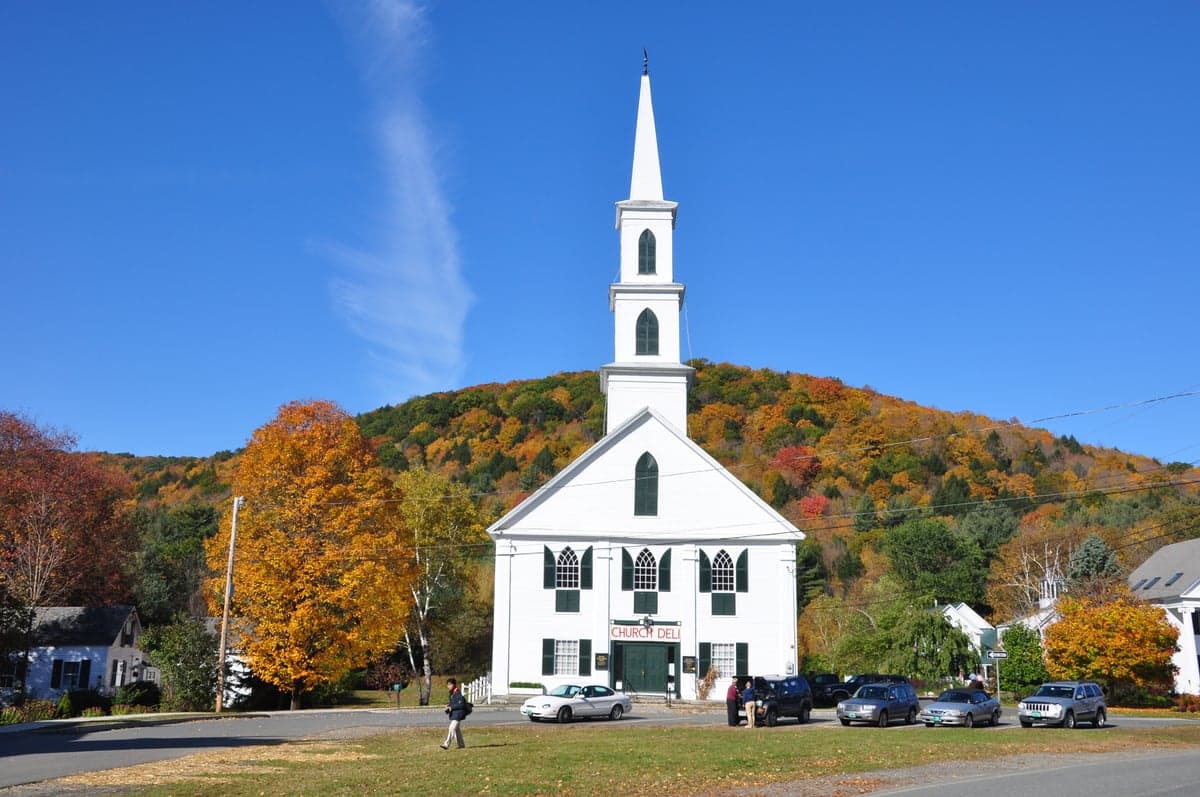
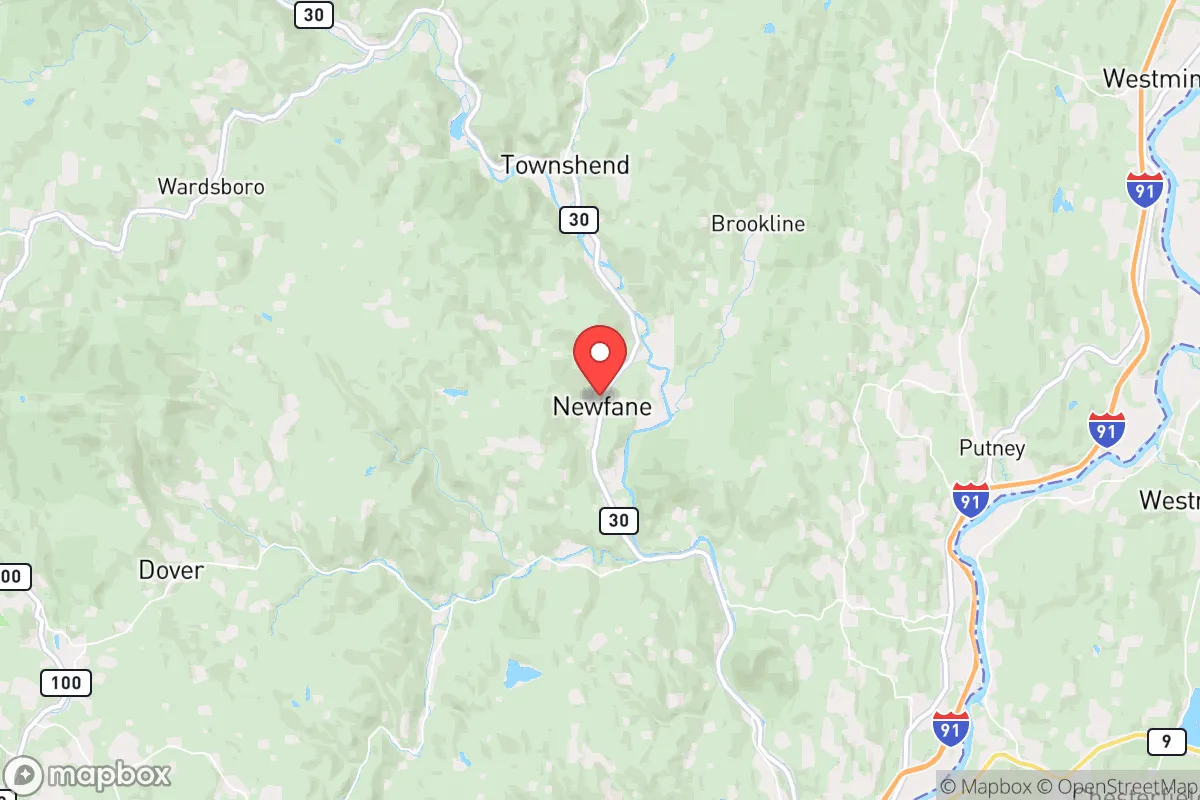
Photo: Wikipedia
Demographics of Newfane, VT
Affluence Level in Newfane, VT
A middle-class area roughly in line with national averages across income, home values, education, and employment.
People of Newfane, VT
Newfane, Vermont, is a small, rural village of just 154 residents, characterized by a predominantly white population (85.7%) and a highly educated workforce, with 57.0% holding a college degree. The community is tight-knit and historically rooted, with a foreign-born population of 5.2% and no measurable Hispanic, Black, or Asian residents. Its identity is shaped by a legacy of Yankee settlement and a quiet, preservation-minded character, making it a place where continuity, not change, defines the population.
How the city was settled and grew
Newfane was chartered in 1753 and first settled in the 1760s by English colonists from Connecticut and Massachusetts, drawn by land grants in the fertile West River Valley. The original village center, now known as Newfane Village, was established around the common and the Windham County Courthouse, which became the county seat in 1827. Early industries—sawmills, gristmills, and small-scale agriculture—supported a population that grew slowly through the 19th century, peaking at around 1,200 in 1850. The construction of the West River Railroad in the 1880s brought a modest wave of Irish and French Canadian laborers, who settled in the South Newfane district, near the rail depot and mill sites. These groups worked in the local lumber and dairy industries, but their numbers remained small, and the town’s Yankee Protestant character persisted. By the early 20th century, population declined as farming consolidated and younger residents moved to industrial cities, leaving Newfane a quiet, rural backwater.
Modern era (post-1965)
After the 1965 Hart-Cellar Act, Newfane saw no significant immigration from new source countries; its foreign-born population remains minimal at 5.2%, and those residents are primarily European retirees or second-home owners. The major demographic shift since the 1970s has been domestic in-migration of counterculture back-to-the-landers and, later, affluent professionals seeking vacation homes. These newcomers settled in the Williamsville and West Townshend areas (the latter technically a neighboring village but part of the Newfane post office area), drawn by cheap land and the town’s historic architecture. The Newfane Hill neighborhood, with its hill farms and panoramic views, became a haven for artists and writers. This wave raised the college-educated share to 57.0%, but it did not diversify the racial makeup—the white share remains 85.7%, with no Hispanic, Black, or Asian populations recorded. The town’s population has hovered around 150 for decades, as zoning and conservation easements limit new development.
The future
The population of Newfane is likely to remain stable or shrink slightly over the next 10–20 years. The aging of the current resident base—many of whom are retirees or second-home owners—will not be offset by significant in-migration of young families, given the lack of employment opportunities and high housing costs. The town shows no signs of homogenizing or tribalizing into distinct ethnic enclaves; instead, it is becoming a more exclusive enclave of wealthy, white, educated homeowners. The foreign-born population is plateauing, as no new immigrant communities are forming. For a conservative-leaning individual or family considering relocation, Newfane offers a stable, safe, and historically rooted environment, but one with very limited demographic diversity, economic opportunity, or population growth.
Newfane is becoming a preserved, high-cost, low-density haven for those who value historic character and rural solitude over community growth or diversity. For a mover seeking a quiet, homogeneous, and educated small town with deep Yankee roots, it is a strong fit—but those looking for a dynamic, growing, or diverse population should look elsewhere.

* Values derived from national, state, county, city and local statistics and may differ in a specific area. Last updated: 2026-05-03T20:38:51.000Z
Narrative content on this page is AI-generated and may contain mistakes. Verify any details that matter before acting on them.
ReloMaps may earn a commission from affiliate links at no extra cost to you.

