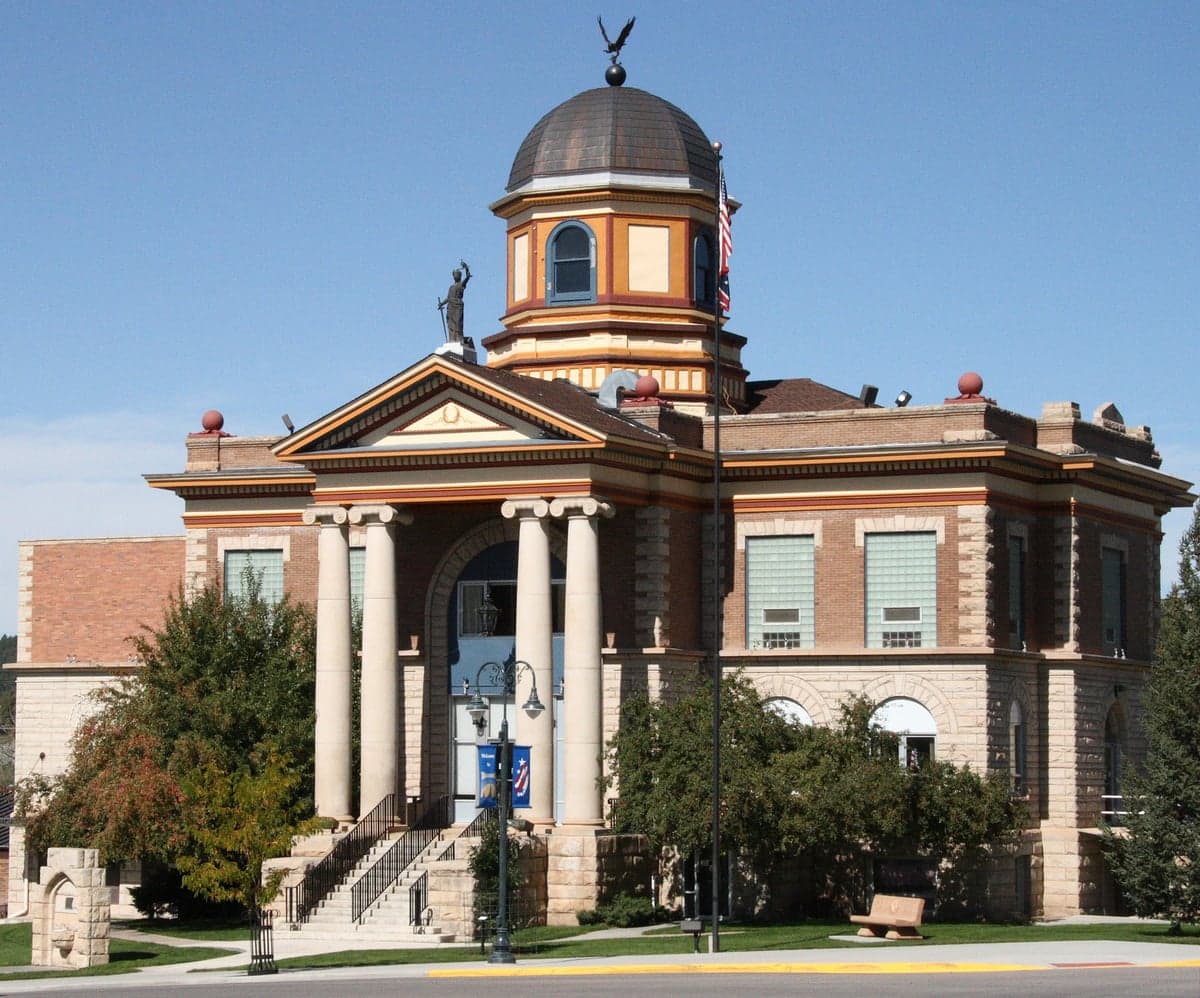
Photo: Wikipedia
Strategic Assessment of Newcastle, WY
Strong survivability profile. Good buffer from population centers, with manageable environmental and tactical risks.
What does the Strategic Assessment tell us?
Our Strategic Assessment grades tactical survivability of an area. Major population centers, military targets, fallout zones, natural disasters, and border exposure all drive risk — lower exposure means a more defensible position in a crisis.
This is heavily inspired by Joel Skousen's Strategic Relocation book. Highly recommended you checkout the book ($)What does this tell us?
Our Strategic Assessment grades tactical survivability of an area. Major population centers, military targets, fallout zones, natural disasters, and border exposure all drive risk — lower exposure means a more defensible position in a crisis.
This is heavily inspired by Joel Skousen's Strategic Relocation book. Highly recommended you checkout the book ($)Strategic Pillars

Key Distances
Regional Safe Places
Below is our recommended "safe zones" in Wyoming and the surrounding area based on our strategic heuristics. For most people, it's unrealistic to live in a “safe zone” full-time due to work, family or other personal reasons. They tend to be more rural. However, many of these areas are perfect for second homes and retreat properties that double as a vacation home or even a short-term rental.
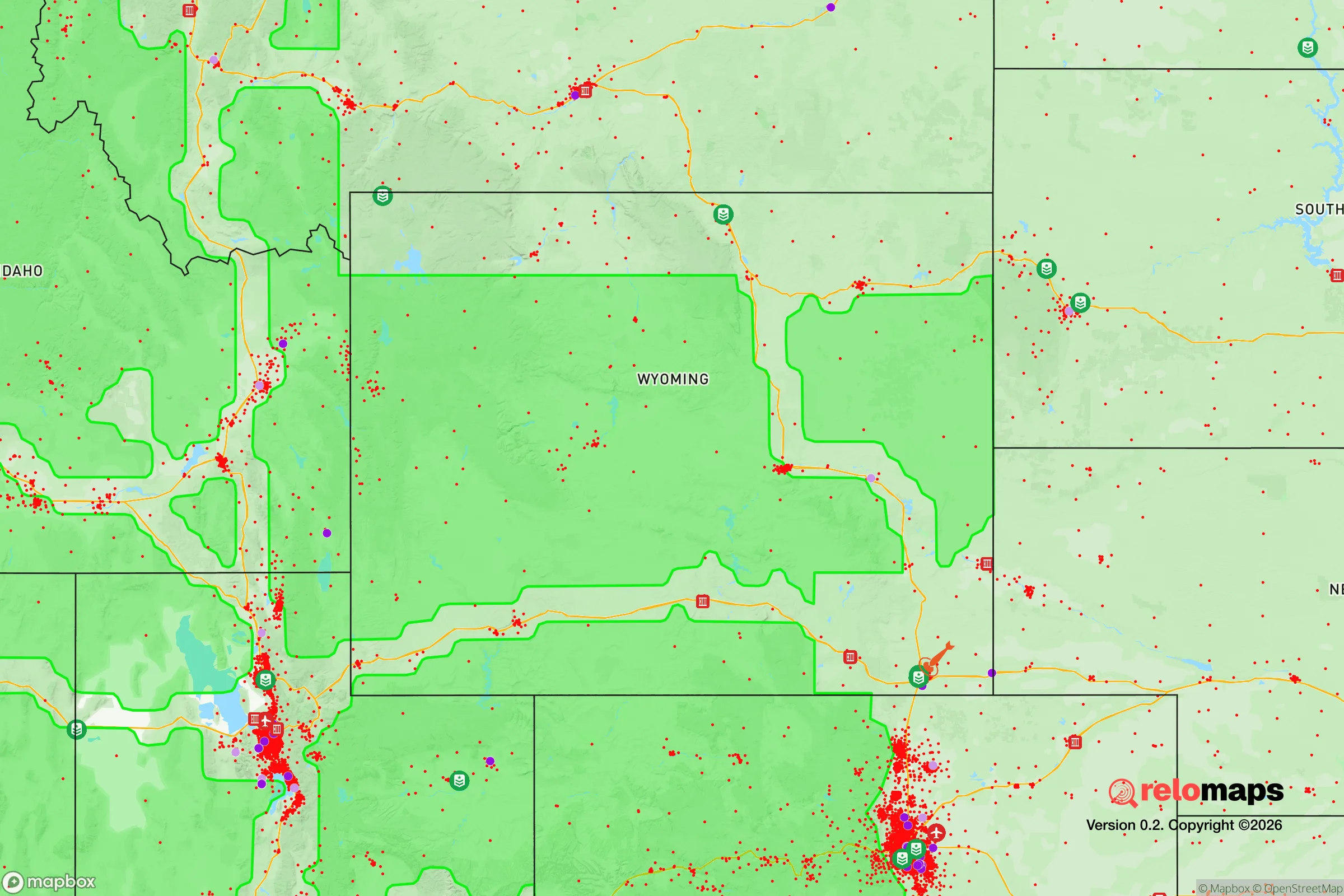
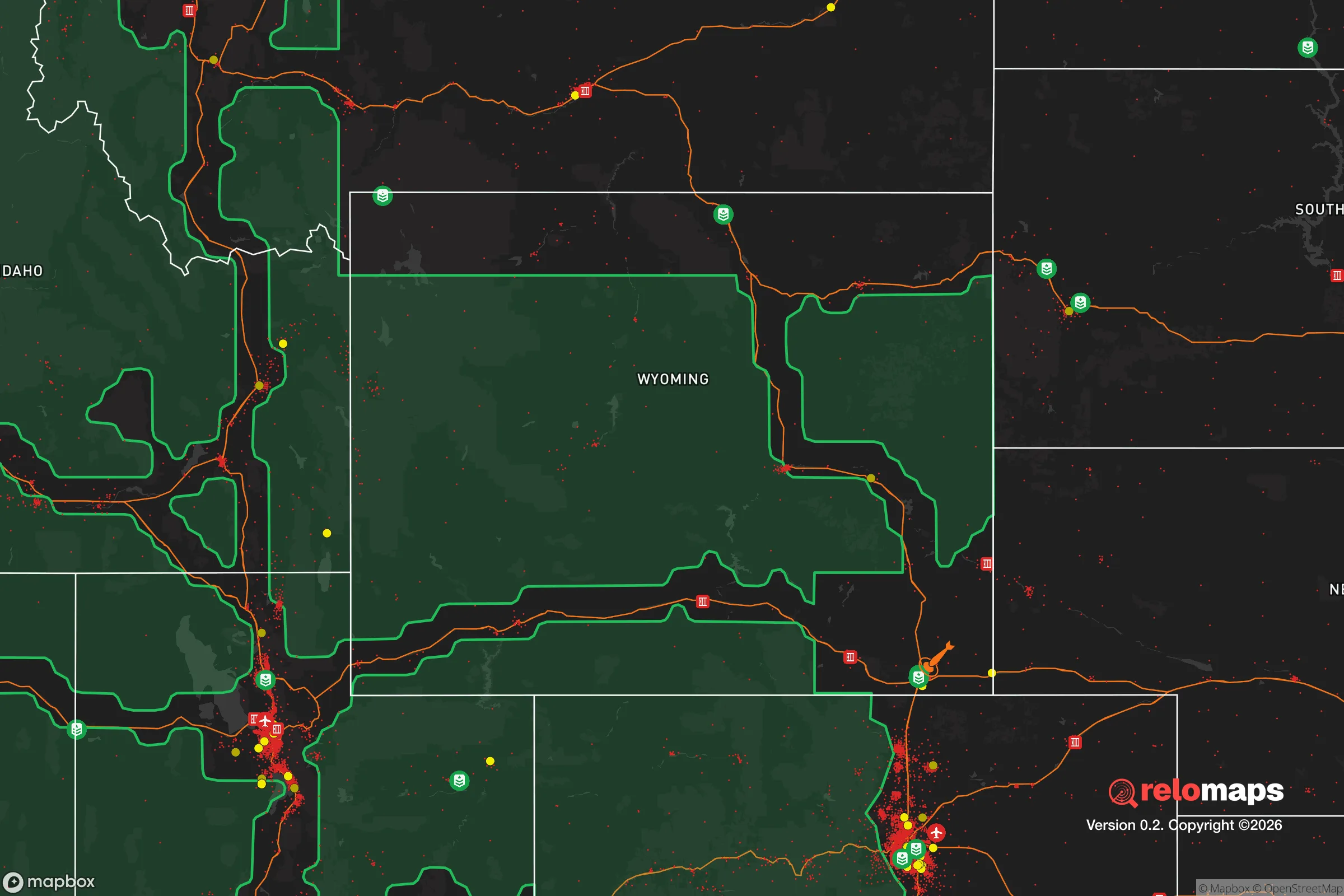


Important Note: For informational purposes only. This does not mean nothing bad ever happens in the green zones. Please use common sense. This is based on public data and modeled with AI. We tried to take a conservative approach but mistakes happen. We update this regularly as new information becomes available.
Solar Generator Recommendations
Backup power matters more here than in safer locations. We've picked three solar generators across budgets and capacity tiers — start with the budget unit if you only need a few essentials, or step up if you want to run a fridge and HVAC for days at a time.

Jackery Portable Power Station Explorer 300
Budget OptionPower on the Go: Weighing only 11 lbs, it's convenient to set up and store with book-sized foldable solar panels

BLUETTI Portable Power Station AC180
Designed for both indoor and outdoor scenarios, AC180 is highly capable as it has a robost capacity and continuous output power.

EF ECOFLOW DELTA Pro Ultra Power Station
Upgraded PickEcoFlow DELTA Pro Ultra is a whole-home energy system designed to grow with your family. Integrated with the Smart Home Panel 2, it scales to meet your evolving energy needs — keeping your home powered, intelligent, and secure through every stage of life.
We earn a commission, at no additional cost to you.
Strategic Assessment Analysis
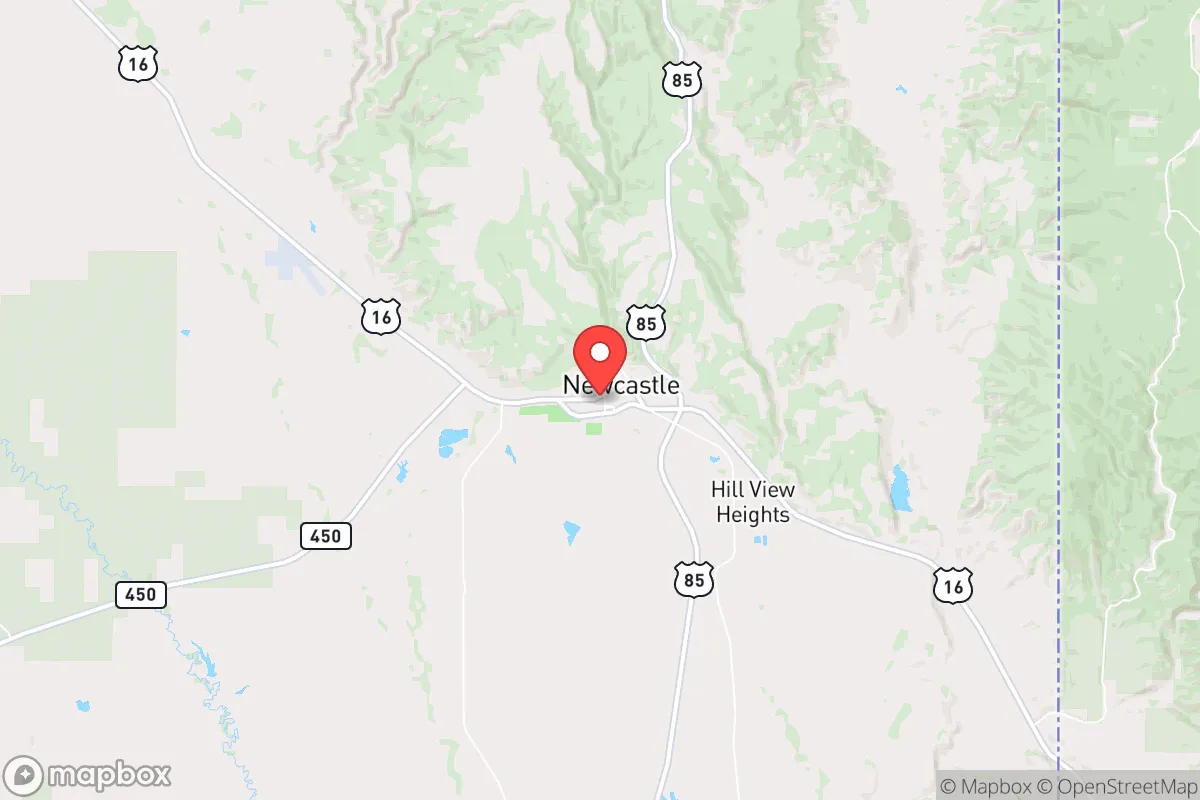
Newcastle, Wyoming, sits as a quiet outlier in the northeastern corner of the state, offering a strategic blend of isolation and access that appeals to those prioritizing long-term resilience. With a population hovering around 3,500, this former coal and timber hub has reinvented itself as a low-key base for those who value self-reliance over convenience. Its location—roughly 60 miles from the South Dakota border and 80 miles from the Montana line—places it far from the chaos of major urban centers, yet within a day's drive of regional resources. For a relocator with a prepper mindset, Newcastle’s key advantage is its position on the edge of the Black Hills, providing natural cover, water access, and a buffer from the fallout zones that plague more populated corridors.
Geographic position and natural advantages for long-term security
Newcastle’s geography is its strongest card. The town sits in the shadow of the Black Hills National Forest, which offers dense timber, rugged terrain, and a natural barrier against unwanted movement. To the west, the Bear Lodge Mountains provide additional cover, while the Belle Fourche River runs through the area, offering a reliable surface water source. This isn’t flat, exposed prairie—it’s rolling, forested hills that make surveillance and approach difficult for anyone unfamiliar with the ground. The elevation, around 4,300 feet, means cooler summers and harsh winters, which naturally filters out those unprepared for the climate. For a relocator, this terrain is defensible: choke points on the few paved roads (US-16 and WY-585) can be monitored, and the surrounding public lands offer room for hunting, foraging, and off-grid living. The area’s low population density—Crook County has fewer than 8,000 residents total—means you’re not competing for resources with a crowd. Newcastle’s history as a mining and railroad town also means the existing infrastructure (rail lines, industrial lots, and older buildings) can be repurposed for storage, workshops, or community defense.
Risks, exposures, and proximity to fallout-relevant landmarks
No location is perfect, and Newcastle has its share of vulnerabilities. The most obvious risk is its proximity to the Black Hills themselves, which house the Ellsworth Air Force Base near Rapid City, South Dakota, about 90 miles east. Ellsworth is a major B-1B Lancer bomber base and a primary target in any large-scale conflict. A strike on Ellsworth would send fallout drifting west and north, potentially affecting Newcastle depending on wind patterns. Similarly, the Minuteman III missile silos scattered across western South Dakota and eastern Wyoming are high-value targets. While Newcastle is not directly in the blast zone of any major city—Rapid City (pop. 75,000) is the closest urban center—the fallout risk from a nuclear exchange is real. The town’s position in a valley along the Belle Fourche River could channel airborne contaminants, so a prepper would need to plan for sheltering in place with adequate filtration. On the plus side, Newcastle is far from the major fault lines of the West, so earthquakes are negligible. Tornado risk is moderate but lower than in the Great Plains proper. The biggest day-to-day threat is winter storms, which can dump several feet of snow and cut off roads for days—a manageable challenge for those with stored supplies and a 4WD vehicle.
Practical resilience for a relocator: food, water, energy, and defensibility
For a relocator serious about self-sufficiency, Newcastle offers a workable foundation. Water is the first concern, and the Belle Fourche River is a perennial stream, though it runs low in late summer. Most homes in the area rely on wells, and the local aquifer is generally reliable, but testing for minerals (high iron and sulfur are common) is wise. Rainwater catchment is feasible, with annual precipitation around 18 inches—not abundant, but enough for supplemental use. Food production is limited by a short growing season (roughly 110 frost-free days) and alkaline soil, but cold-hardy crops like potatoes, carrots, and kale do well. The surrounding national forest offers deer, elk, and turkey for hunting, and fishing in the Belle Fourche and nearby reservoirs is decent. For energy, Newcastle is served by Powder River Energy Corporation, which provides grid power from coal and natural gas. However, the area’s wind resource is excellent—consistent 15-20 mph winds make small-scale wind turbines a viable off-grid option. Solar works but is less efficient in winter due to cloud cover and snow. Defensibility is high: the town has a single main road (US-16) that can be blocked at several points, and the surrounding hills provide natural observation posts. The local population is largely rural, conservative, and armed—Crook County has one of the highest per-capita gun ownership rates in the state. That means a community that won’t panic easily and will likely band together if things go sideways. The downside is that Newcastle is a small town with limited medical facilities (a critical access hospital with basic ER services) and no major supply chains. A serious injury or illness would require a 90-minute drive to Rapid City, which could be a problem if roads are compromised.
Overall strategic picture for the conservative relocator
Newcastle, Wyoming, is not a glamorous choice, but it’s a solid one for those who value distance over convenience. It’s far enough from the major fallout targets—Ellsworth AFB, the missile fields, and the I-90 corridor—to give you a fighting chance in a crisis, yet close enough to the Black Hills for resources and escape routes. The community is small, self-reliant, and unlikely to attract the kind of attention that larger towns do. The trade-offs are real: harsh winters, limited medical care, and a thin local economy that depends on mining, timber, and government jobs. But for a relocator who’s willing to put in the work—digging a well, stocking a root cellar, learning to hunt, and building a network of like-minded neighbors—Newcastle offers a defensible, low-profile base. It’s not a fortress, but it’s a place where you can breathe, plan, and wait out the storm without being in the middle of it. If your goal is to be prepared for civic unrest or a major disaster, this corner of Wyoming deserves a serious look.

* Values derived from national, state, county, city and local statistics and may differ in a specific area. Last updated: 2026-04-21T10:55:21.000Z
Narrative content on this page is AI-generated and may contain mistakes. Verify any details that matter before acting on them.
ReloMaps may earn a commission from affiliate links at no extra cost to you.

